By early September, it became clear that the papers necessary for me to acquire dual Austrian/American citizenship, and in turn an EU passport, were not going to arrive before our Schengen visas ran out. I’d diligently supplied the set of required documents to the Austrian consulate in Los Angeles but at each step the rules seemed to change, and there were more hoops to jump through. Our 90 out of every 180 days spent in the Schengen area would be up by mid-October.
The Schengen Area is a zone where 26 European countries abolished their internal borders. It covers most of the EU countries, except the UK, Ireland and the countries that are soon to be part of the EU: Romania, Bulgaria, Croatia and Cyprus. Although not members of the EU, Norway, Iceland, Switzerland and Lichtenstein are also part of the Schengen zone.
Our 180 days began when our visitor visas were stamped on our entry to France in May to explore the possibility of living there. Every time you go through passport control, your passport is scanned and a computer tells the border agent your Schengen status, so there’s no getting around obeying the rules.
We decided to apply for long term French visas, and we booked a trip to Morocco.

Ocean view from Salé
Casablanca is a noisy, dirty, sprawling, port city in the midst of major reconstruction. We rented an apartment between the port and the center city, a few blocks from the area along the ocean where many big hotels have been built and many more are coming. We could walk to the old medina where we enjoyed an outstanding meal at La Sqala, and sat at a lovely cafe on a small park.

In front of Hotel Central in the old medina

La Sqala

La Sqala

Lunch at La Sqala

From cafe near Hotel Central, old medina
Though it rained a little, we walked for hours, checking out Rick’s Cafe, an elegant reconstruction of the movie set, and Le Cuisto Traditionel, an excellent traditional/modern fusion restaurant in the downtown area. We also visited the Hassan II mosque, which was incredibly enormous and struck me as soulless.
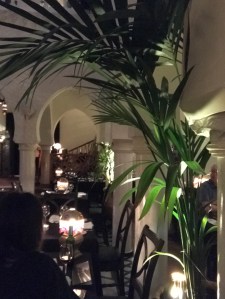
Rick’s Café

Le Cuisto Traditionel
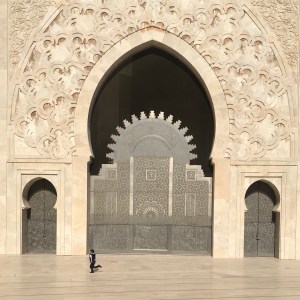
Hassan II mosque
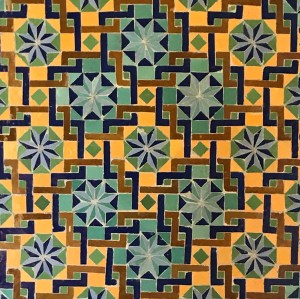
Mosaic tiling at the mosque
Next, we took the train to Rabat/Salé. Rabat is the capital of Morocco and Salé is the huge mostly residential city across the river from it, Oakland to San Francisco.
Our Airbnb apartment was in a middle class neighborhood in walking distance from the old medina, the ocean, and the tram to Rabat.

Tom relaxing in our spacious living room in Salé
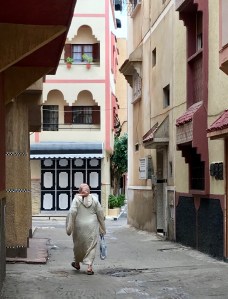
Our street in Salé
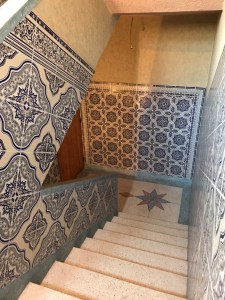
Three flights up and down
Salé is clean, relaxed, and very friendly. The first afternoon we were there, we noticed some construction going on next door. From our fourth floor windows we could see a long tarp over the narrow street below.
That night – it was a Friday – a crowd gathered and a sound system was tested. It was a massive tent they’d set up. From 8 pm that night till long past midnight, our flat was filled with the voices of two men singing long, exquisitely beautiful prayers, interspersed with poetic speech. We fell eventually fell asleep, enchanted.
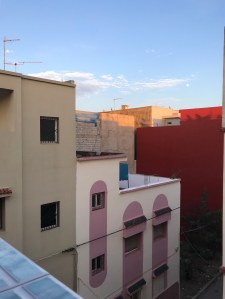
Morning view from our apartment
The next day was beautiful. We bought food at the neighborhood stalls and planned to stay at home, relaxing and cooking.
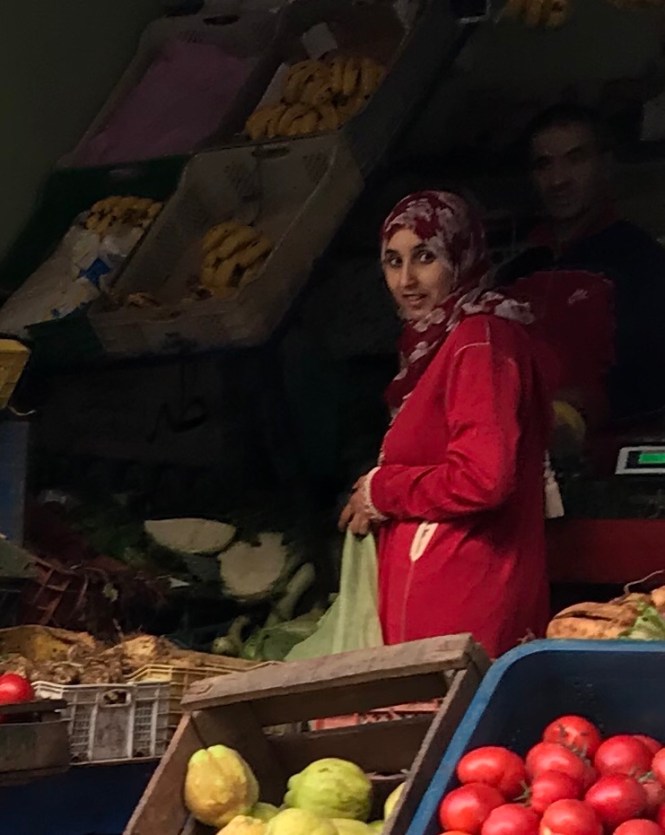
Vegetable stall around the corner
In the early afternoon, though, the tent filled up again, the sound system was turned up, and the celebration began. It was a wedding! The music was live and very loud. Western music would’ve been harder to take for such a long time, but still. In the late afternoon we took the tram into Rabat for a few hours. The routine noise of the busy city seemed wonderfully quiet to us.
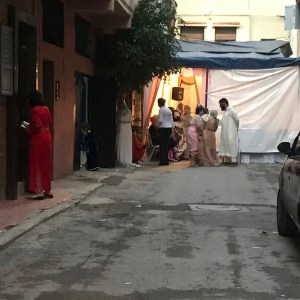
Wedding tent
When we came back and Tom peeked into the back of the tent.
The wedding went on till just before midnight. Clearly, everyone had a great time – even without alcohol!
Over the next days, we made friends with the cashier at the local grocery store, visited the old medina, and sat at a fish restaurant across from the ocean enjoying an enormous meal.

Old medina, Salé

Cart near the old medina, Salé

Wall around Salé
We also explored the beautiful city of Rabat, a stunning combination of ancient and modern. Such an adventure! And now we’re off to Fes.
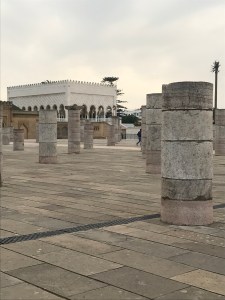
Almohad necropolis – 12th century

At the gas station near our place

Entrance to Chellah: Phoenician, Roman, and Marinide ruins

old mosque near Roman ruins

Cats are everywhere. These are waiting for the remains of eels near the mosque at Chellah

At the old medina in Rabat
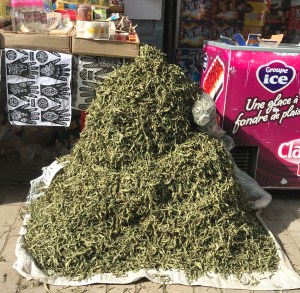
Verveine

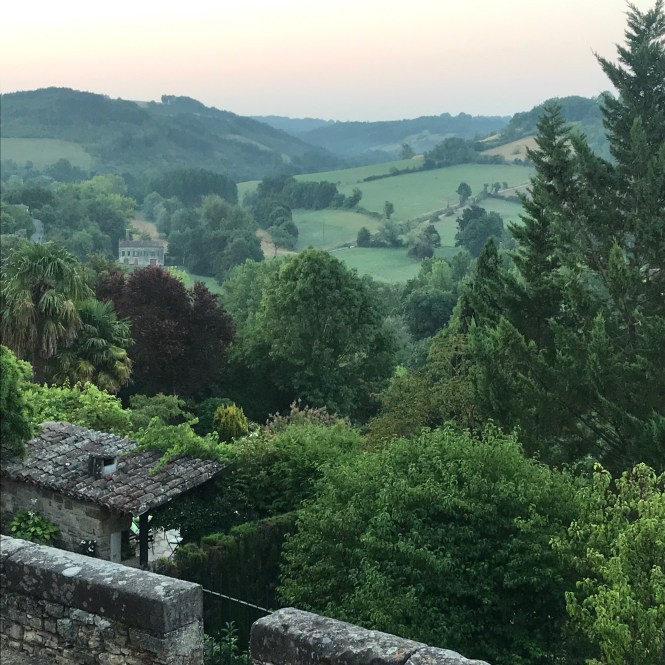
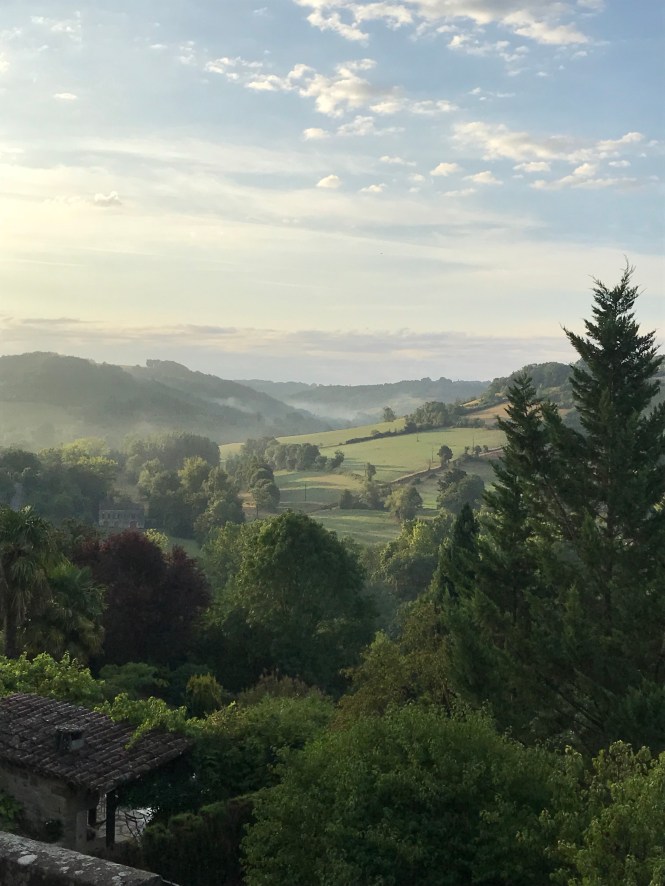
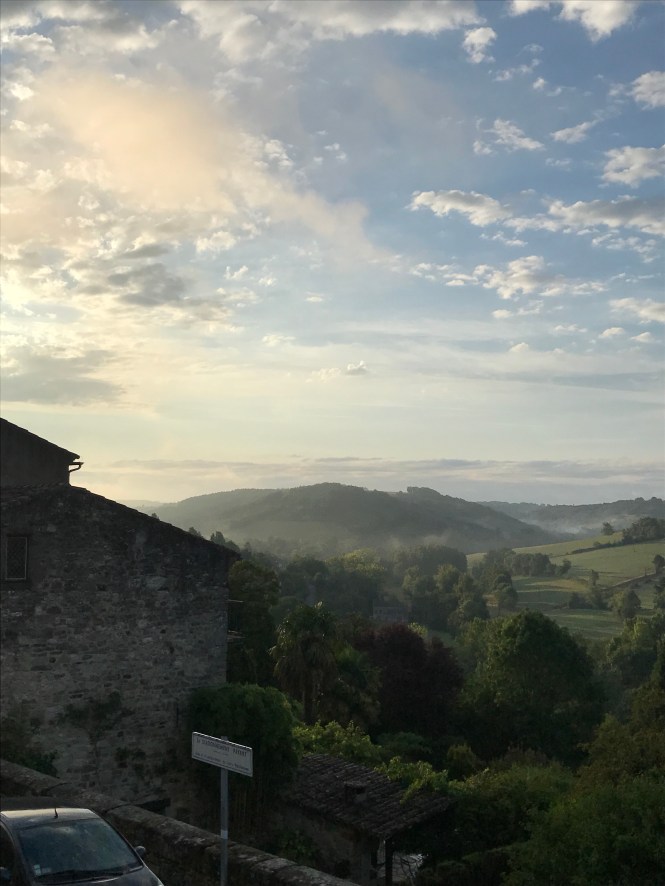
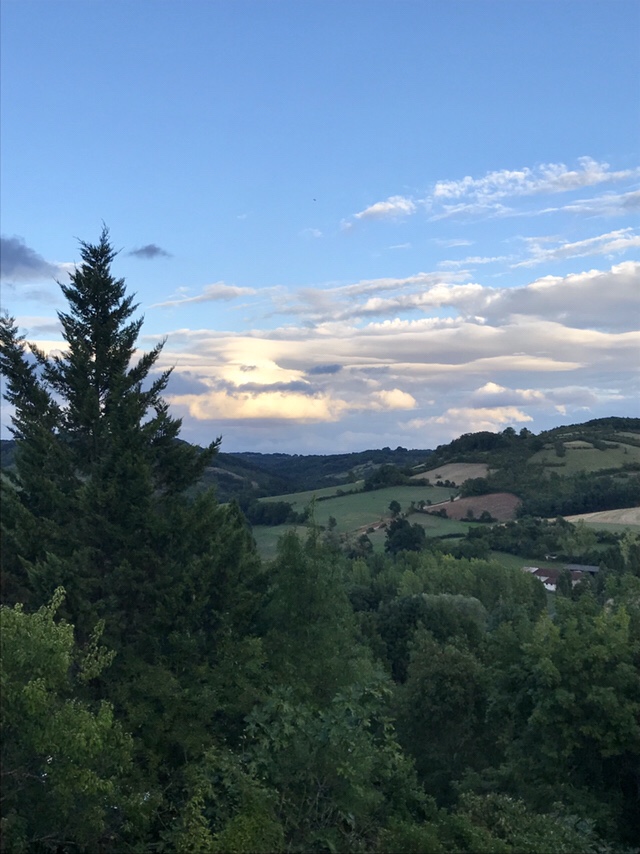

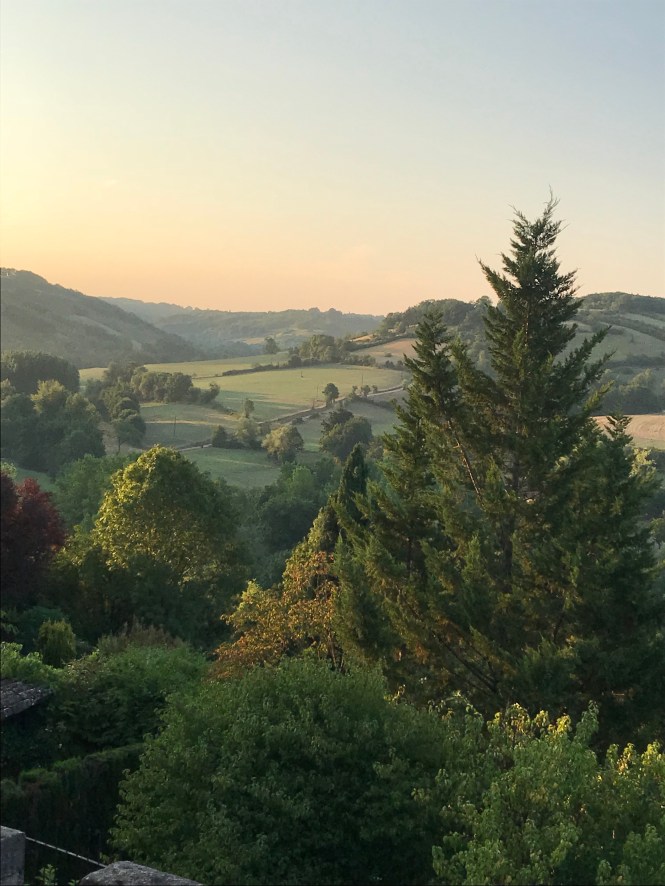
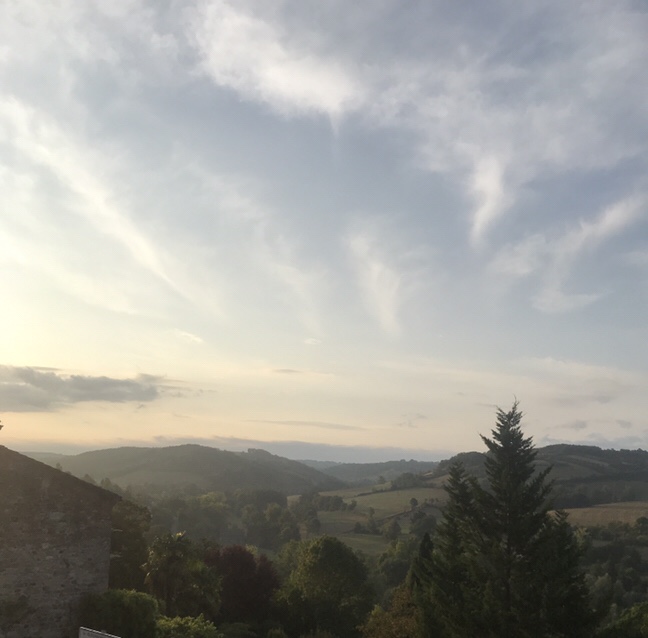


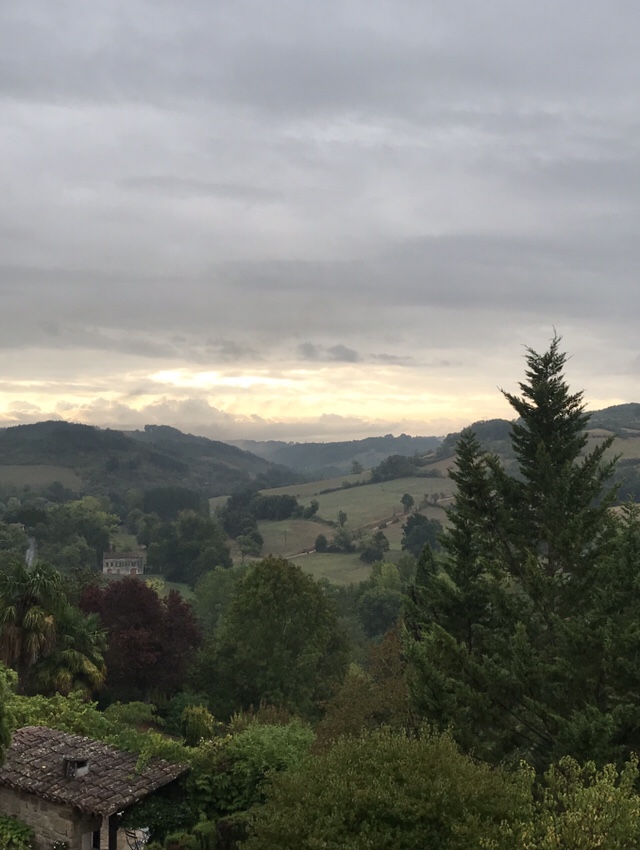
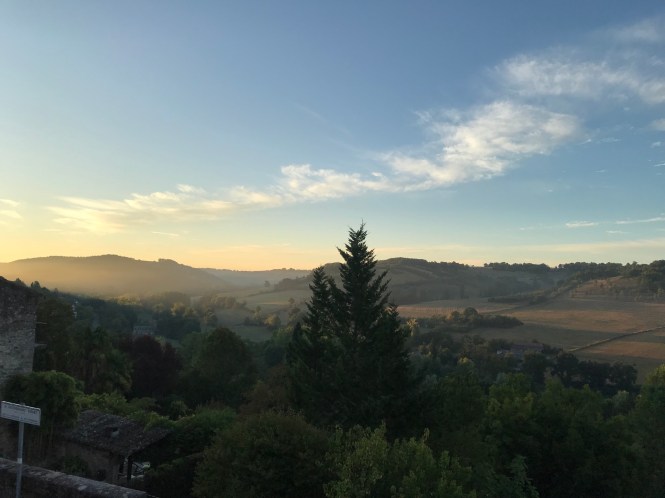

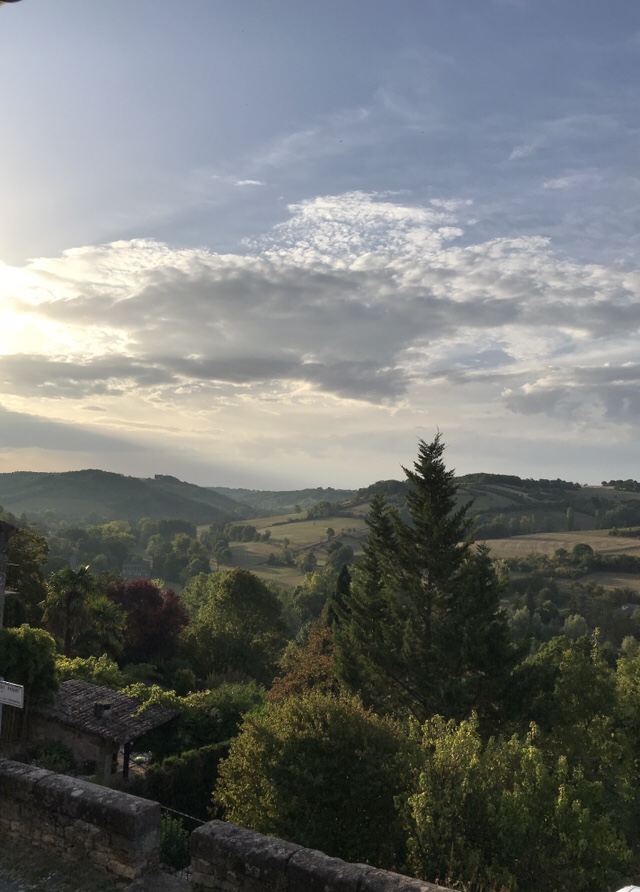
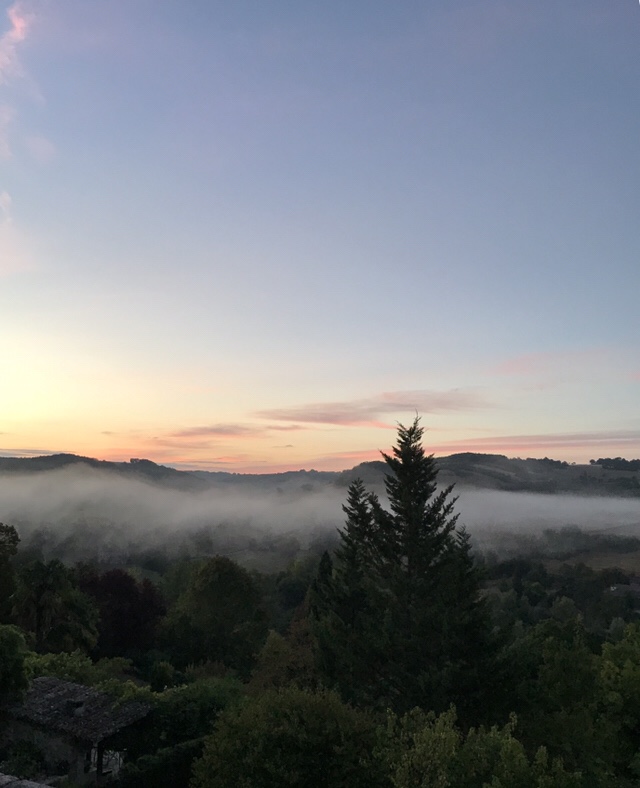


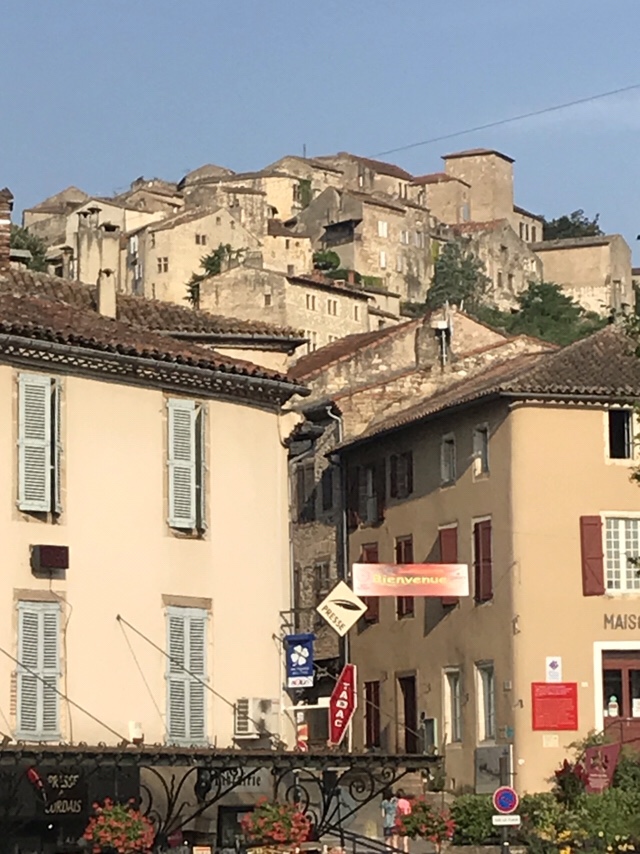
 Our neighbor, Lilliane, who comes from Paris every summer, tells us the best restaurant in the village is at the Hostellerie du Vieux Cordes. Rochelle, Tom, and I sat on the patio there, shaded by a 300 year old wisteria, until a thunderstorm chased us inside. Even inside it was dramatic. As I took the last bite of my oeufs brouillé au truffes (the English menu called them “blurred eggs with truffles”) one of the tall casement windows blew open with a bang, startling everyone in the room.

 When taking the footpath from our house to the lower village, bring a bucket for all the wild fruit: blackberries, plums, quince, apples and grapes.
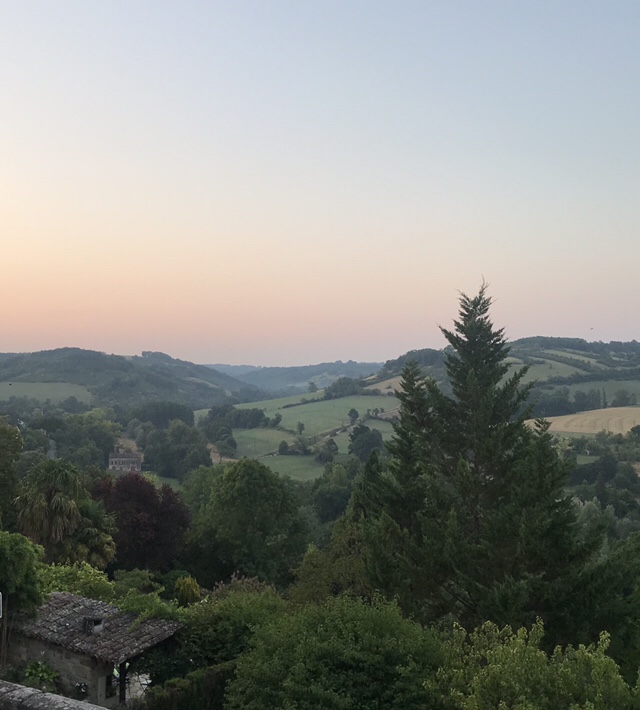
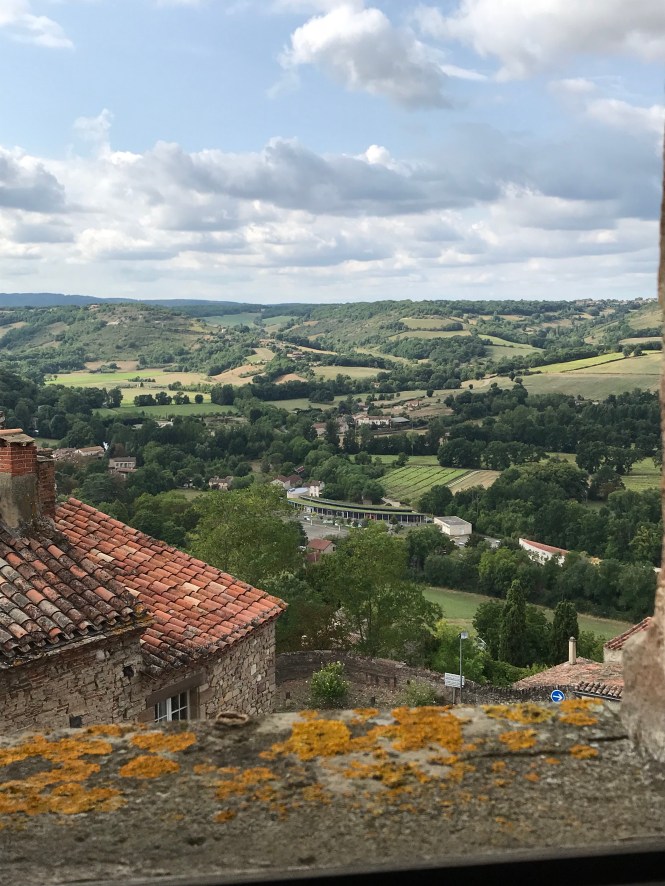
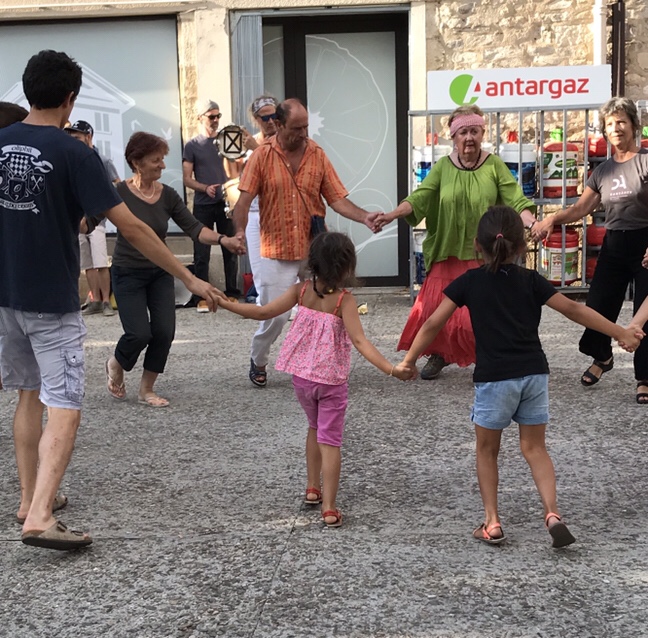 Another view from the window:
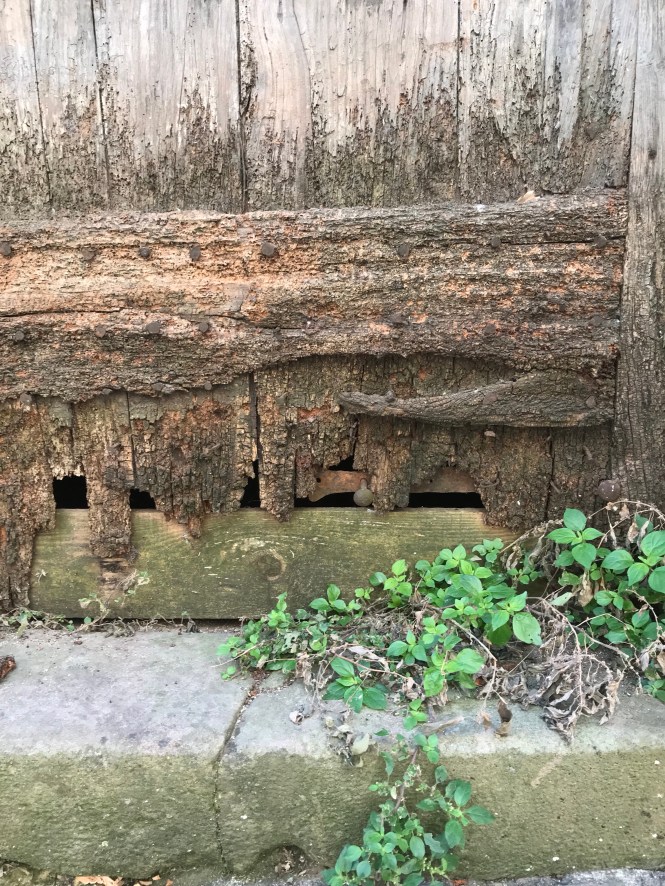

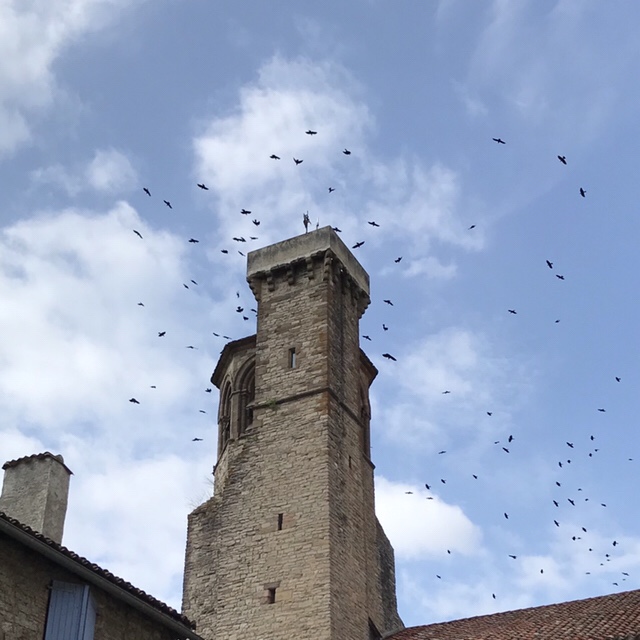




 Who would have guessed that the line to rent a car at the Bordeaux airport would take 2 1/2 hours? Or that not one of the three agents would adjust their customary style to – at the very least – shorten the conversations they usually enjoy with each customer? Imagine how exciting the story of our journey from California would have been. Arnaud at Avis was particularly skilled at drawing out his clients’ stories, but I kept looking over my shoulder at the dozens of families with small children behind us: a sea of impatient grimaces, hungry whines, and tapping feet. I’m not sure it made any difference.











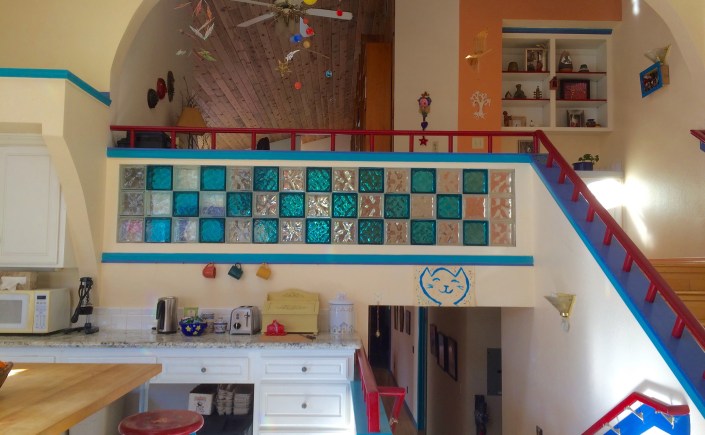

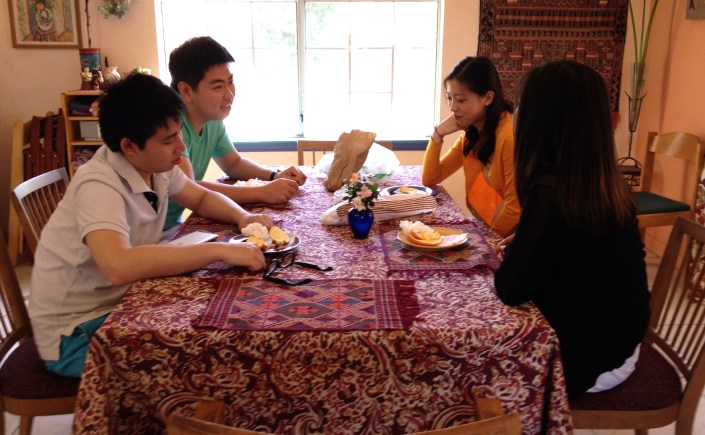
 For four years the house was full of Servas, Warm Showers, and Airbnb visitors from all over the world. I just took down the map because the hundreds of map pins were crowding each other put and falling onto the floor.
 Because we had the space to do it, we hosted hundreds of community dinners, house concerts, book groups, women’s circles, poetry readings and book signings, political meetings, trunk shows, workshops, cooking classes, and celebrations of all kinds.
 Just last year, we hosted a series of neighborhood potlucks that involved knocking on on 250 doors and hand-delivering invitations.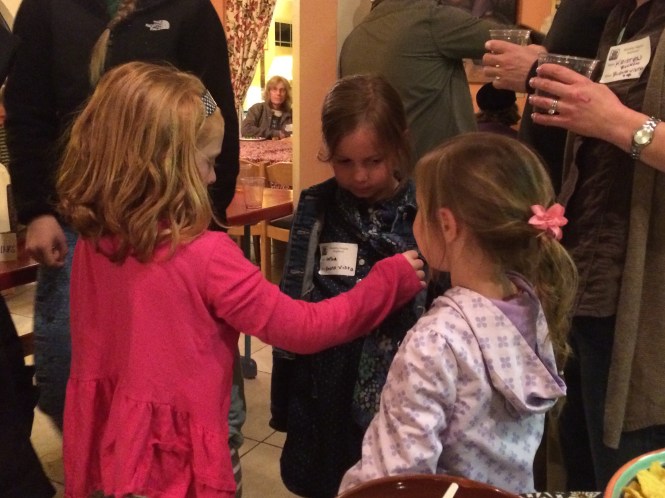






 The setting in which the statement was made completely belied it: the guests at that gathering form a deliciously civilized community. At its heart is a group of friends who’ve been coming to soirees facilitated by





 Eve Neuhaus