This morning I had a surprisingly coherent vision during my morning meditation. It has a number of the same elements as the one I call A Drop of Love here, but call the dickhead vision in less formal settings. (Read the blog about that one and you’ll see why.)
Ce matin, j’ai eu une vision étonnamment cohérente pendant ma méditation matinale. Elle comporte plusieurs éléments communs avec celle que j’appelle ici « Une goutte d’amour », mais que j’appelle « la vision du connard » dans un contexte moins formel. (Lisez l’article de blog à ce sujet et vous comprendrez pourquoi.)
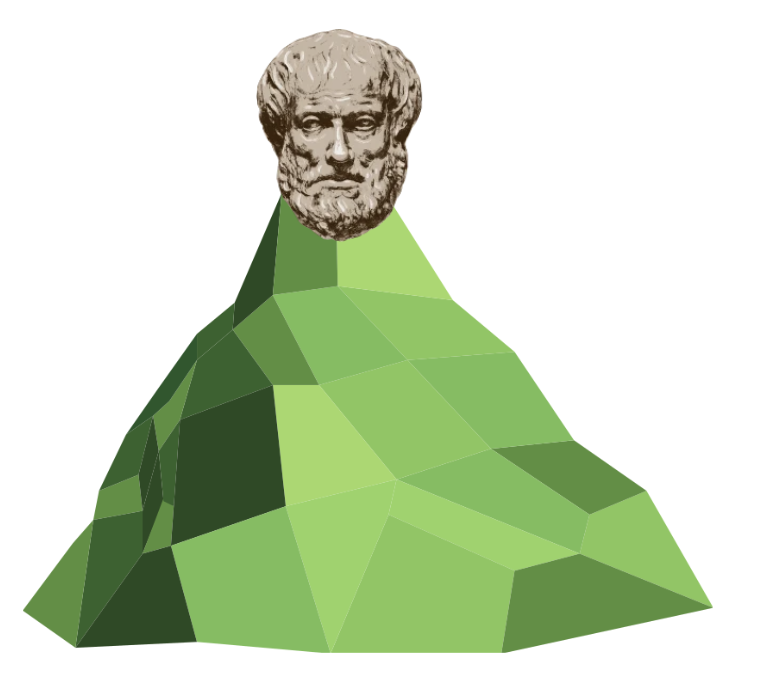
In the new vision, I can see a mountain in the distance. Most of my recent dreams have been set on a mountain, but this time I’m not at the top. I’m standing far enough away to be able to see the whole thing.
Dans cette nouvelle vision, j’aperçois une montagne au loin. La plupart de mes rêves récents se déroulaient sur une montagne, mais cette fois-ci, je ne suis pas au sommet. Je me tiens suffisamment loin pour pouvoir l’admirer dans son intégralité.
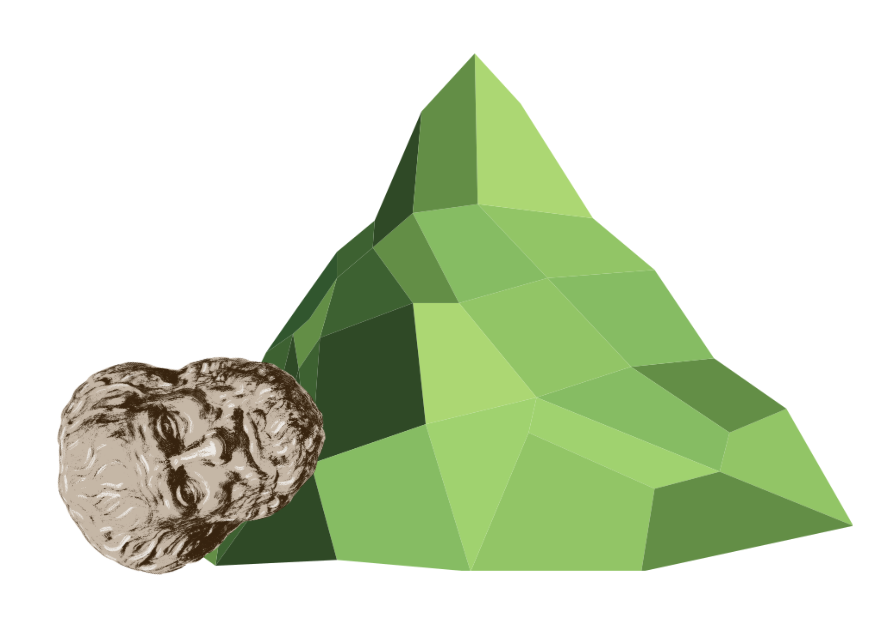
At the top, I can see a man’s head. As I watch, it grows bigger and bigger. I think, is that God? But it’s not a bearded old man – it’s a mature man with a full head of hair and rugged features. A Greek god? It continues to get bigger, like a balloon being blown up, bigger and bigger, until it’s bigger than the mountain. At last it’s so big that it tips to one side and rolls down to the bottom of the mountain.
Tout en haut, j’aperçois la tête d’un homme. À mesure que je la regarde, elle grossit de plus en plus. Je me dis : « Est-ce que c’est Dieu ? » Mais ce n’est pas un vieil homme barbu : c’est un homme d’âge mûr, avec une chevelure abondante et des traits anguleux. Un dieu grec ? Il continue de grossir, comme un ballon qu’on gonfle, de plus en plus, jusqu’à devenir plus grand que la montagne. Finalement, il est si grand qu’il bascule d’un côté et dévale la montagne jusqu’en bas.
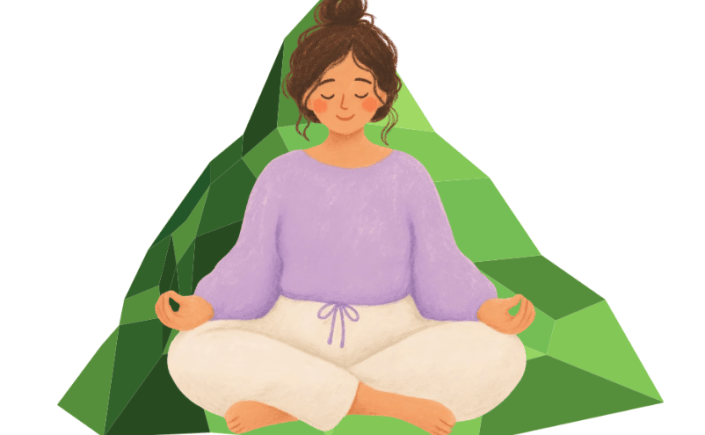
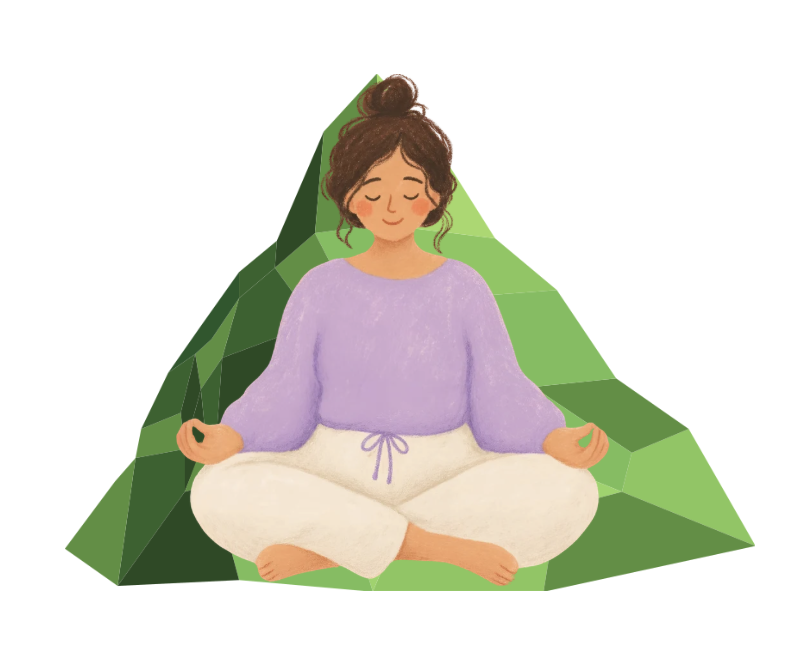
Then I am the mountain, and I sit there for a long time just being the mountain.
Alors je suis la montagne, et je reste assis là pendant un long moment, simplement en étant la montagne.
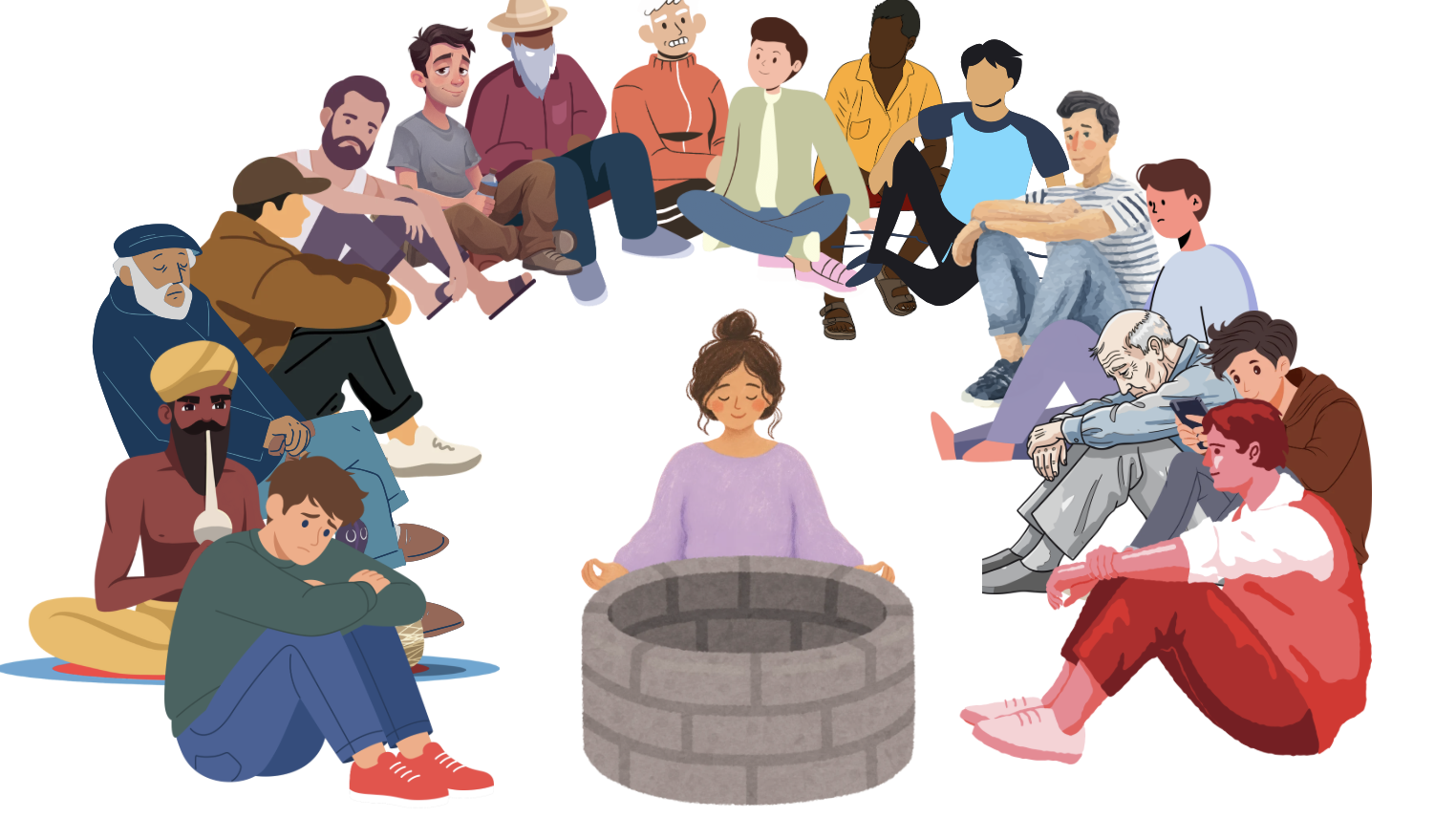
Finally I find myself inside the mountain, right at the center of the base. I’m sitting at a table across from the man who is my size now. I realize that the table is set on a well. We sit opposite each other on either side of a well comfortably. And as I look at the man, he morphs into a different man, and then a different man, and a different man, and a different man. men from all walks of life, all times and places. As each new one appears, the other ones go and sit against the inside wall of the mountain in a circle, until I am completely surrounded by the seated men and I am alone at the well.
Je me retrouve enfin à l’intérieur de la montagne, en plein cœur de la base. Je suis assis à une table en face de l’homme qui a désormais ma taille. Je me rends compte que la table est posée sur un puits. Nous sommes confortablement assis face à face, de part et d’autre du puits. Et tandis que je regarde cet homme, il se transforme en un autre homme, puis en un autre, et encore en un autre, et encore en un autre. Des hommes de tous horizons, de toutes les époques et de tous les lieux. À mesure que chacun d’entre eux apparaît, les autres s’en vont s’asseoir en cercle contre la paroi intérieure de la montagne, jusqu’à ce que je sois complètement entouré par ces hommes assis et que je me retrouve seul près du puits.
I’m going up a mountain path with a big group of people. Some of them are bringing Donald Trump to give a speech. They’re having trouble getting him up the hill. Donald Trump isn’t big. He’s small and round, a lot like those orange Trump balloons you see at protests, and people are sort of carrying him up the mountain by squeezing him between them.
Je remonte un sentier de montagne avec un grand groupe de personnes. Certaines d’entre elles emmènent Donald Trump pour qu’il prononce un discours. Elles ont du mal à le faire monter la colline. Donald Trump n’est pas grand. Il est petit et rond, un peu comme ces ballons orange à l’effigie de Trump qu’on voit lors des manifestations, et les gens le portent en quelque sorte en le serrant entre eux.
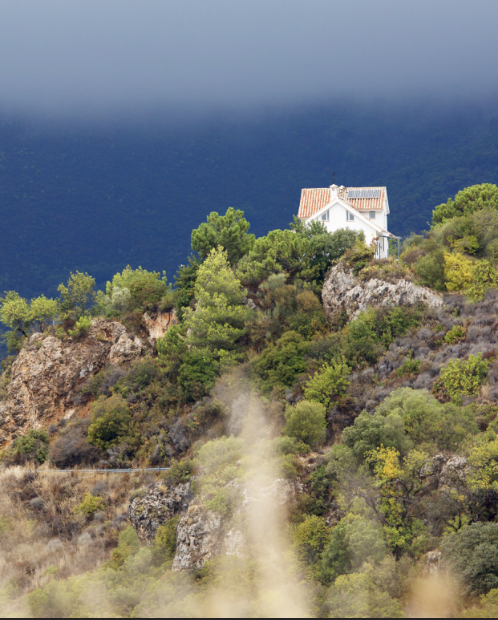
We arrive at our house, the only one on the mountain top. It’s a beautiful, new, white space, very luminous and clean. Trump gets installed in the front bedroom where there’s a bathroom. None of this is easy but I don’t remember the details. Eventually, it’s time for him to speak, and I see that there are so many people crowding onto the top of that mountain that there no way we’re going to be able to go down again.
Nous arrivons chez nous, la seule maison au sommet de la montagne. C’est un bel espace tout neuf, blanc, très lumineux et propre. Trump s’installe dans la chambre du devant, où se trouve une salle de bains. Tout cela n’est pas facile, mais je ne me souviens pas des détails. Finalement, l’heure de son discours arrive, et je constate qu’il y a tellement de monde entassé au sommet de cette montagne qu’il nous sera impossible de redescendre.
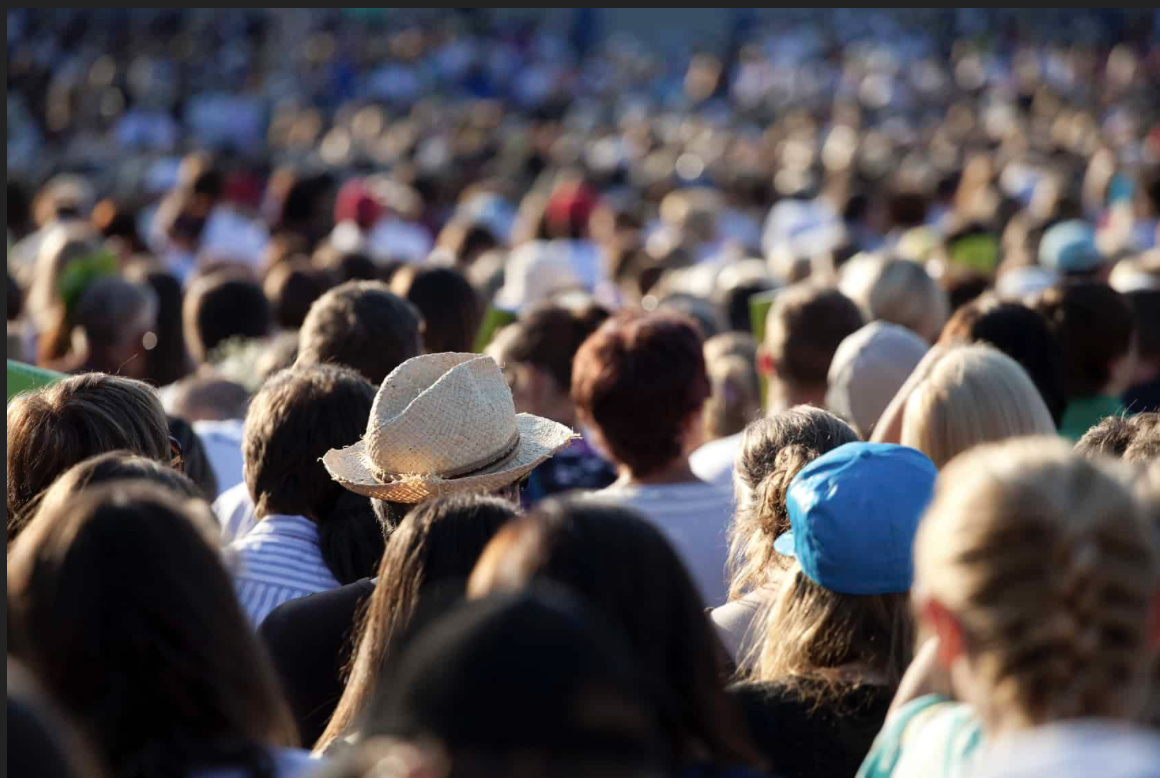
We manage to push through the crowds to get Trump into a central place. Though it’s not elevated like a platform, it’s in a place where people can all face. Trump is helpless – he clearly doesn’t know what to do in that kind of situation. And he refuses do what we ask, or he isn’t able to do what we ask. People have to prop him up. It’s confusing and chaotic.
Nous parvenons à nous frayer un chemin à travers la foule pour amener Trump à un endroit central. Même si ce n’est pas surélevé comme une estrade, c’est un endroit où tout le monde peut se tourner vers lui. Trump est désemparé : il ne sait manifestement pas comment se comporter dans ce genre de situation. Et soit il refuse de faire ce que nous lui demandons, soit il en est incapable. Il faut que des gens le soutiennent. C’est déroutant et chaotique.
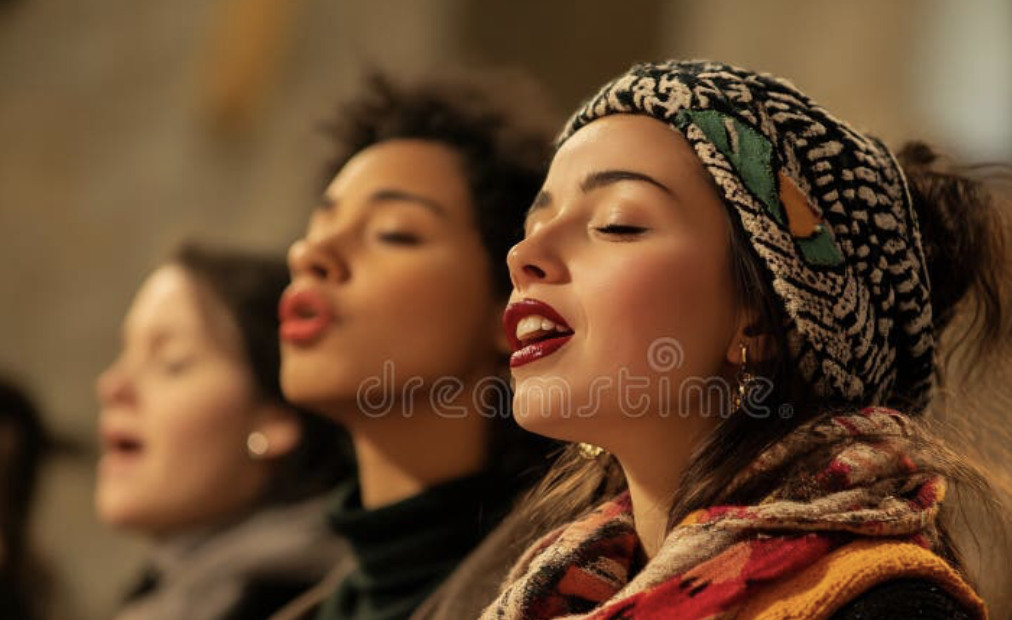
After a while some people take him aside, somewhere just off to the top of the mountain, and he never does give the speech. But people from the audience, people of all different colors and nationalities start coming forward to speak. A beautiful girl in a hijab comes up with two other girls, and they sing the most exquisite song in harmony. And other people stand up and give short speeches about peace and cooperation from wherever they are in the crowd.
Au bout d’un moment des gens l’emmènent à l’écart, quelque part près du sommet de la montagne, et il ne prononce jamais son discours. Mais des personnes du public, de toutes les couleurs et de toutes les nationalités, commencent à s’avancer pour prendre la parole. Une belle jeune fille portant un hijab s’avance avec deux autres jeunes filles, et elles chantent en chœur une chanson d’une beauté exquise. D’autres personnes se lèvent et prononcent de brefs discours sur la paix et la coopération, où qu’elles se trouvent dans la foule.
I don’t know where Trump is, but we can’t leave because more and more people are still coming up the mountain. People start going into our house to use the bathroom, and some women make soup, a potage like the French make out of whatever vegetables there are, and they pass it around in paper cups to everybody. The crowd is no problem, and Trump has completely disappeared.
Je ne sais pas où est Trump, mais on ne peut pas partir car de plus en plus de gens continuent d’arriver en haut de la montagne. Les gens commencent à entrer chez nous pour aller aux toilettes, et les femmes préparent de la soupe, un potage comme le font les Français avec les légumes qu’elles trouvent, et elles la distribuent à tout le monde dans des gobelets en papier. La foule ne pose aucun problème, et Trump a complètement disparu.
In the end, even though we knew we couldn’t leave and resources were limited, everything is working out, and it’s a joyous gathering.
Au final, même si nous savions que nous ne pouvions pas partir et que les ressources étaient limitées, tout s’arrange, et c’est une réunion très joyeuse.
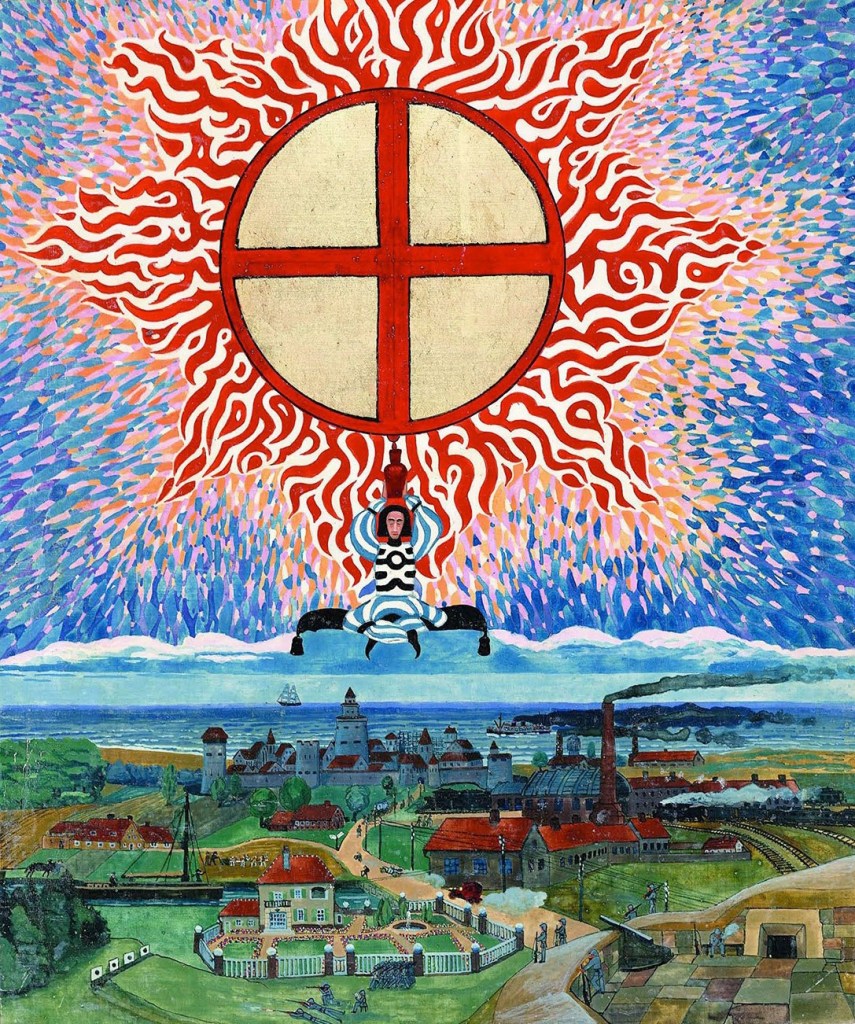
Vivre une vie symbolique : la signification de la croix solaire (3e partie)
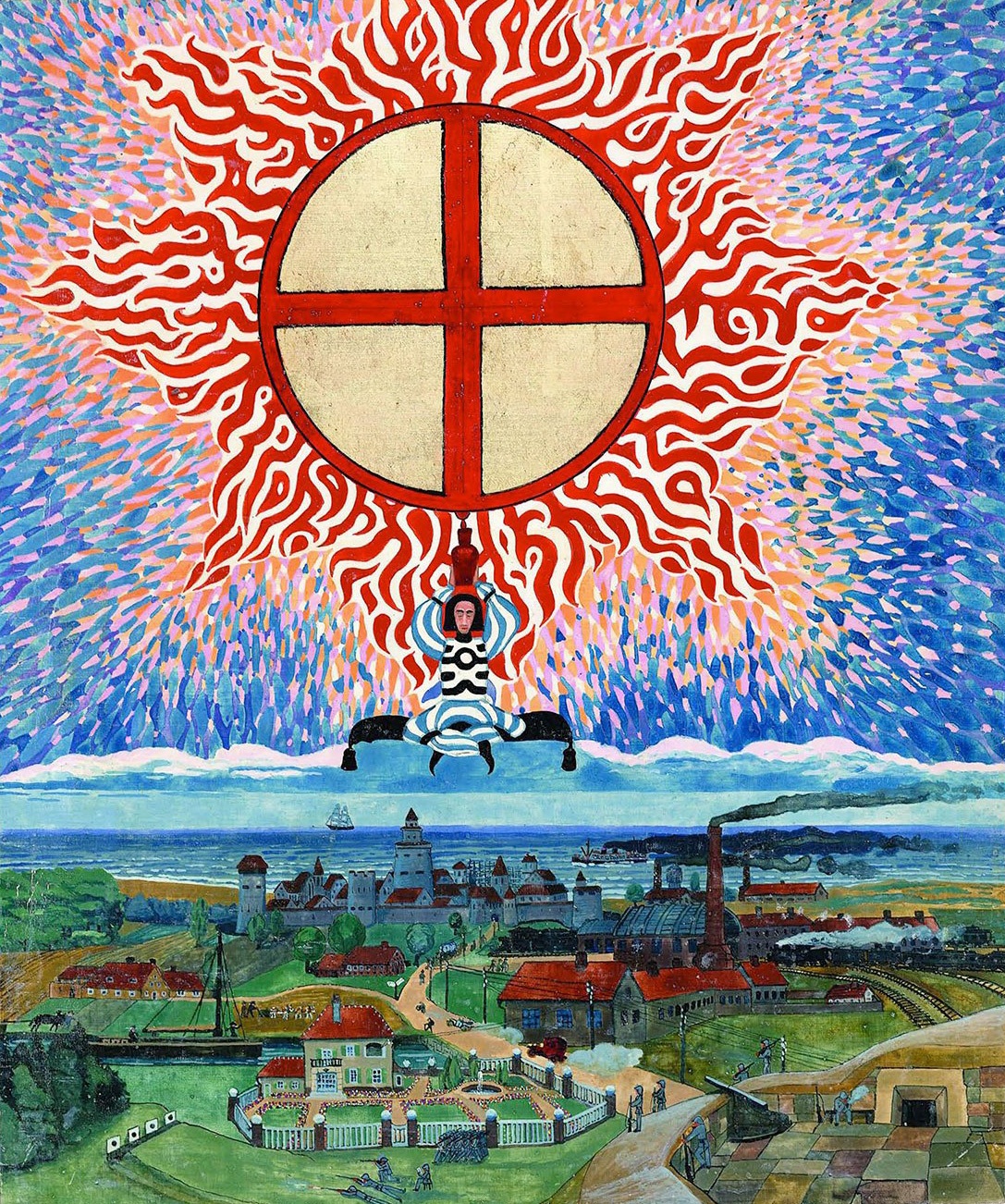
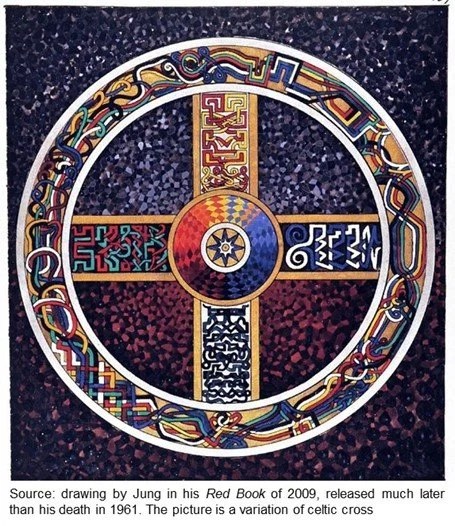
from C.G. Jung’s Red Book
Over the days and weeks leading up to the solar eclipse on August 12, 2026, I unexpectedly found myself surrounded by most of my closest women friends. They flew across the ocean to see me, they sent hand-written letters through the increasingly dysfunctional postal system, we connected in texts, video chats, phone calls, and dog walks. The depth of the gratitude I feel for each one of you and for you all for being with me is almost overwhelming. That fullness, that warmth, that love, has become a touchstone for me whenever I seek heart coherence.
Au cours des jours et des semaines qui ont précédé l’éclipse solaire du 12 août 2026, je me suis retrouvée, de manière inattendue, entourée de la plupart de mes amies les plus proches. Elles ont traversé l’océan en avion pour venir me voir, elles m’ont envoyé des lettres manuscrites via un service postal de plus en plus défaillant, et nous avons gardé le contact par SMS, appels vidéo, coups de fil et promenades avec nos chiens. La profondeur de la gratitude que je ressens envers chacune d’entre vous et envers vous toutes pour avoir été à mes côtés est presque bouleversante. Cette plénitude, cette chaleur, cet amour, sont devenus pour moi une référence chaque fois que je cherche la cohérence du cœur.
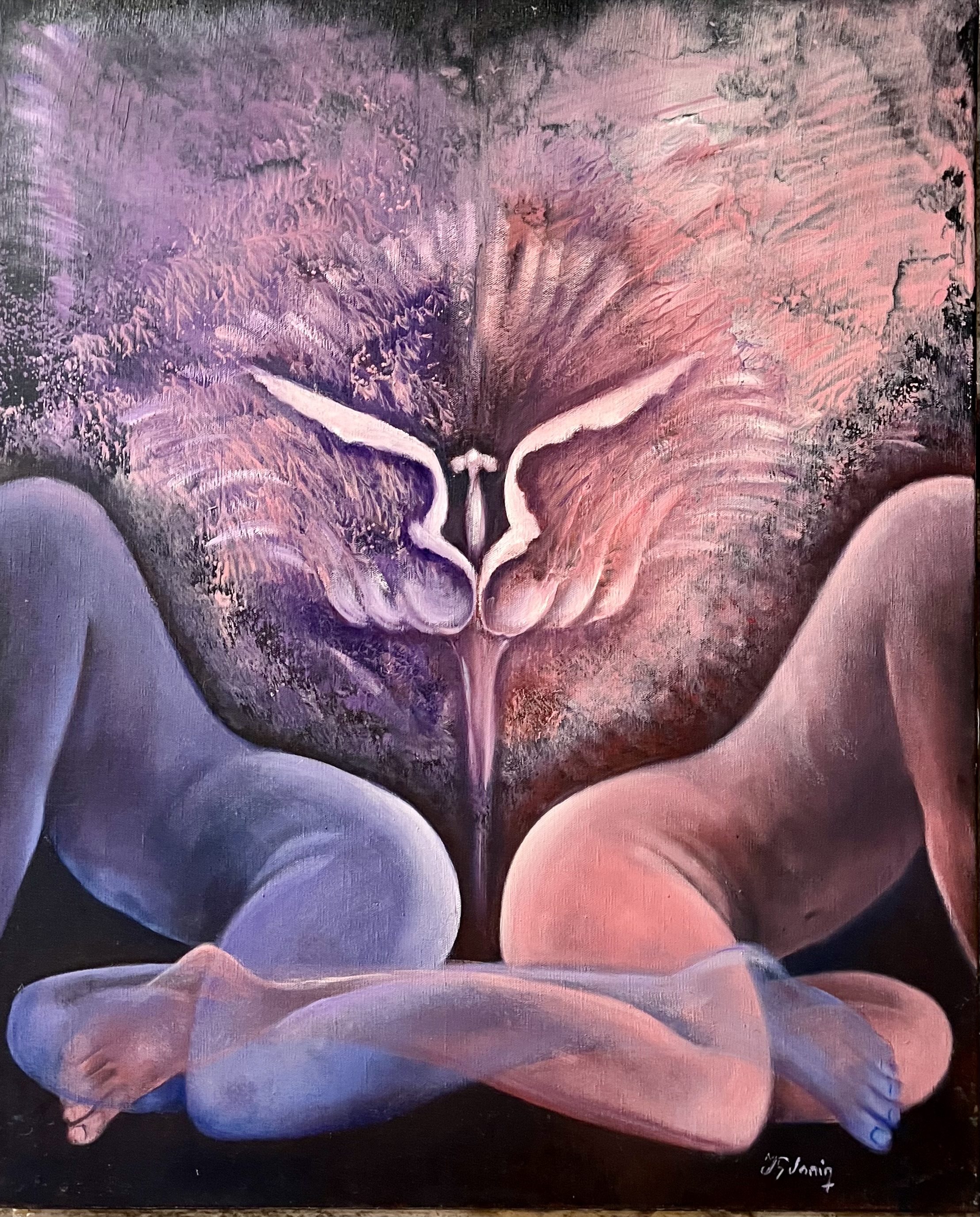
On August 8, several of us attended the opening of an exhibition of the surrealist painter Jean-Gabriel Jonin’s paintings here in my village in France, Cordes-sur-Ciel.
Le 8 août, nous étions plusieurs à assister au vernissage d’une exposition consacrée aux tableaux du peintre surréaliste Jean-Gabriel Jonin, ici même, dans mon village en France, à Cordes-sur-Ciel.
This particular series of Jonin’s works, the last he did before his death in 2014, portrays the coming together of the Sacred Feminine and Masculine. The symbolism is apparent to anyone versed in Jungian and neo-Jungian symbolism as well as tantrism in its many forms. The Masculine enters in the Feminine over and over. It’s an impressive body of work.
Cette série particulière d’œuvres de Jonin, la dernière qu’il a réalisée avant sa mort en 2014, illustre la union du Féminin et Masculin sacré. Le symbolisme est évident pour quiconque connaît bien la symbolique jungienne et néo-jungienne, ainsi que le tantrisme sous ses multiples formes. Le Masculin pénètre sans cesse dans le Féminin. C’est une œuvre impressionnante.
At 4 in the morning following the opening, I woke suddenly, knowing it was exactly 4, with the image of the form I explored in my previous blogs in this series, an equilateral cross in a circle, shining brilliantly on my inner eye.
À 4 heures du matin, au lendemain du vernissage, je me suis réveillé en sursaut, sachant qu’il était exactement 4 heures, tandis que l’image de la forme que j’avais explorée dans mes précédents articles de cette série – une croix équilatérale inscrite dans un cercle – brillait de mille feux dans mon œil intérieur.
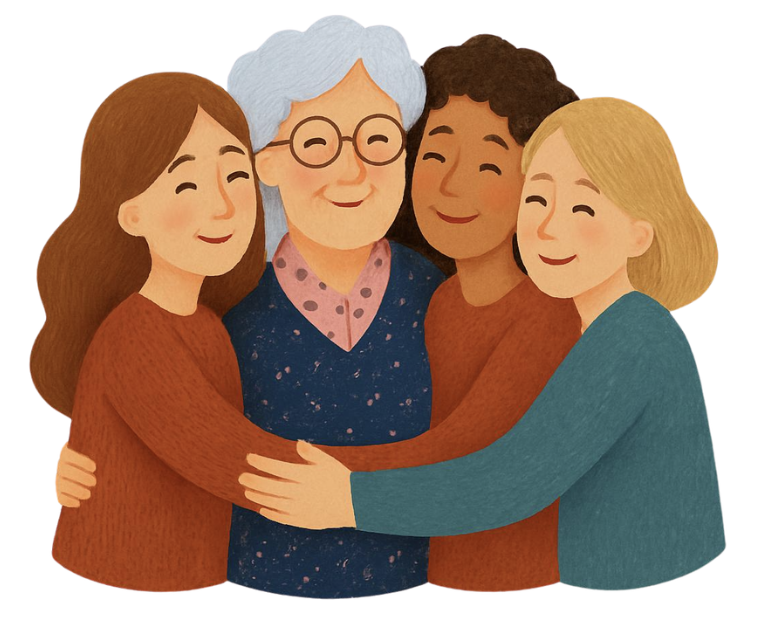
The version of the image below represents four figures in a circle, feet touching, arms open to the outside. It’s my souvenir of February 20, when three woman friends and I were in a Japanese hot tub at the exact moment the Saturn-Neptune conjunction perfected at 1° Aries.
La version de l’image ci-dessous représente quatre personnages formant un cercle, les pieds joints, les bras ouverts vers l’extérieur. C’est mon souvenir du 20 février, jour où trois amies et moi-même étions dans un bain japonais au moment précis où la conjonction Saturne-Neptune s’est réalisée à 1° du Bélier.
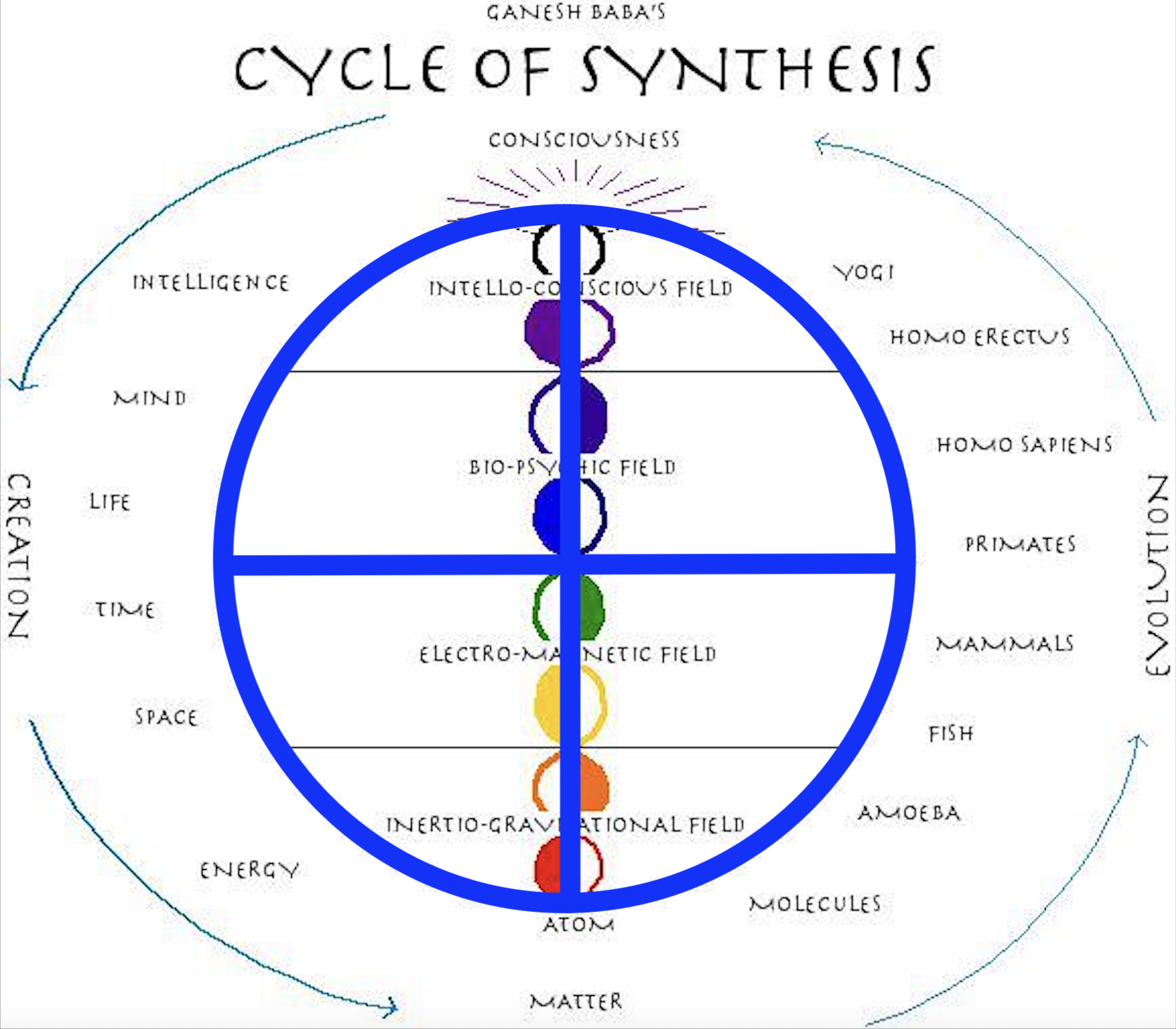
In my previous post in this series, I explore some traditional meanings associated with the cross within a circle. The straight line can represent the masculine, the circle the feminine, or the vertical line could the Masculine, the horizontal the Feminine. The center, the point of connection, is the heart. You can see the horizontal line as time, the vertical as space. The six directions, north, south, east, west, above and below are encompassed within it. It is central to my teacher Ganesh Baba’s theory of everything, Cycle of Synthesis.
Dans mon précédent article de cette série, j’ai exploré certaines significations traditionnelles associées à la croix inscrite dans un cercle. La ligne droite peut représenter le masculin, le cercle le féminin, ou bien la ligne verticale pourrait symboliser le masculin et la ligne horizontale le féminin. Le centre, le point de connexion, est le cœur. On peut considérer la ligne horizontale comme le temps, et la verticale comme l’espace. Les six directions – nord, sud, est, ouest, haut et bas – y sont englobées. Ce concept est au cœur de la théorie du tout de mon maître Ganesh Baba, le « Cycle de la synthèse ».
But I’d thought about all these things before. What came to me at 4 in the morning was the difference between the symbol of the cross in the circle and the symbolism in Jean-Gabriel Jonin’s work.
Mais j’avais déjà réfléchi à tout cela auparavant. Ce qui m’est venu à l’esprit à 4 heures du matin, c’était la différence entre le symbole de la croix dans le cercle et la symbolique présente dans l’œuvre de Jean-Gabriel Jonin.
Both represent the coming together of the Sacred Feminine and Sacred Masculine. In most traditional esoteric understandings, and in Jonin’s work, the Feminine is seen as the physical, the earth, the body, matter, and the masculine is the spirit, the unseeable, the unknowable. A single, tiny, nearly invisible sperm enters the egg. The active man shoots his life-force into the receptive woman, who holds and carries and nurtures their creation into adulthood. In Jonin’s work the Feminine Principle is depicted as the female body. The Masculine is a ray of light. His work is luminous, delightfully geometric, and rich with symbolism. The curves of the Feminine play with the lines of the Masculine.
Ces deux éléments représentent l’union du Féminin sacré et du Masculin sacré. Dans la plupart des conceptions ésotériques traditionnelles, ainsi que dans l’œuvre de Jonin, le Féminin est considéré comme le physique, la terre, le corps, la matière, tandis que le Masculin incarne l’esprit, l’invisible, l’inconnaissable. Un seul spermatozoïde, minuscule et presque invisible, pénètre dans l’ovule. L’homme actif projette sa force vitale dans la femme réceptive, qui accueille, porte et nourrit leur création jusqu’à l’âge adulte. Dans l’œuvre de Jonin, le principe féminin est représenté par le corps féminin. Le principe masculin est un rayon de lumière. Son œuvre est lumineuse, délicieusement géométrique et riche en symbolisme. Les courbes du féminin jouent avec les lignes du masculin.
The unencumbered cross in a circle offers a different interpretation of the same idea.
La croix libre, inscrite dans un cercle, propose une interprétation différente de cette même idée.
The lines are the Masculine, and the circle the Feminine. In this powerful image that has gripped my imagination for months, the Feminine is holding the Masculine.
Les lignes représentent le Masculin, et le cercle, le Féminin. Dans cette image puissante qui occupe mon imagination depuis des mois, le Féminin tient le Masculin dans ses bras.
And, at the heart of the image is the heart, the point of connection, and the doorway to other dimensions. It’s where fertilization and creation take place, where the new is born and where the old dies. It’s the ultimate möbius twist, the coming together of the opposites, the looking glass, the black hole and the newborn star.
Et, au cœur de l’image, se trouve le cœur, le point de connexion et la porte vers d’autres dimensions. C’est là que s’opèrent la fécondation et la création, là où le nouveau naît et où l’ancien meurt. C’est la torsion de Möbius par excellence, la réunion des contraires, le miroir, le trou noir et l’étoile naissante.
No wonder it’s called the Sun Cross.
Pas étonnant qu’on l’appelle la « Croix du Soleil ».
The astrological symbol for the sun is a circle with a dot at the center.
Le symbole astrologique du Soleil est un cercle avec un point au centre.
I began this piece three days before the solar eclipse, when the shadow of the moon crosses the sun.
J’ai commencé cet article trois jours avant l’éclipse solaire, lorsque l’ombre de la Lune passe devant le Soleil.
The eclipse was 92.3% complete in Cordes À Cordes, l’éclipse a atteint un taux de couverture de 92,3 %.
May the Feminine and Masculine Principles, manifest as the women and men on earth now, connect, hold each other, and work together to create a better balanced, more just, and more loving new world.
Puissent les principes féminin et masculin, qui se manifestent aujourd’hui sur Terre sous la forme des femmes et des hommes, se rapprocher, se soutenir mutuellement et œuvrer ensemble pour créer un monde nouveau, plus équilibré, plus juste et plus aimant.
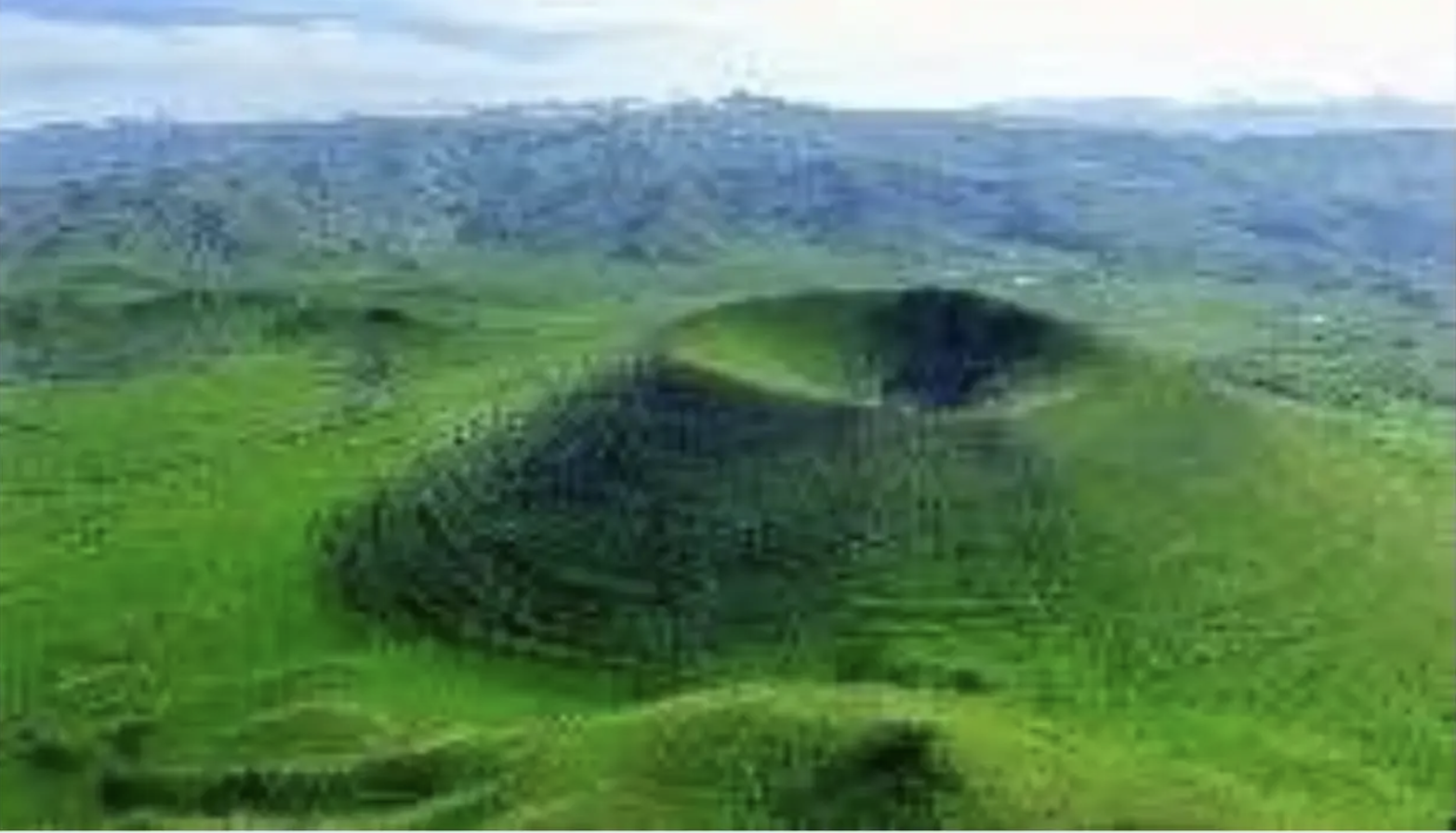
I’m walking up a high hill with a group of friends, all of us carrying baskets. When the path spirals round to the top, I can see that the hill is a volcano, but it’s an inactive one, its crater a gentle dip soft with grass. More people are coming up the path and joining those already spreading blankets and tablecloths on the ground along the rim of the crater.
Je gravis une haute colline avec un groupe d’amis, et nous portons tous des paniers. Lorsque le sentier serpente jusqu’au sommet, je constate que la colline est un volcan, mais inactif : son cratère forme un léger creux recouvert d’herbe. D’autres personnes remontent le sentier et rejoignent celles qui sont déjà en train d’étaler des couvertures et des nappes sur le sol, le long du bord du cratère.
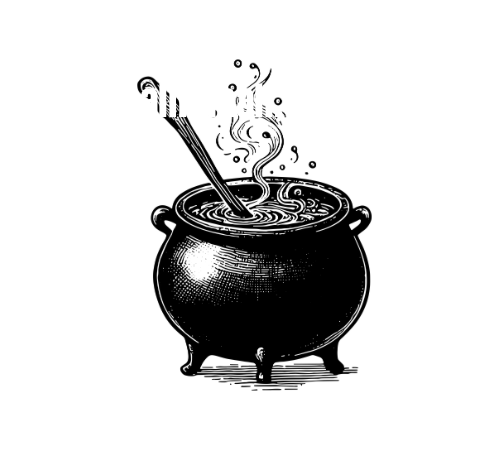
It’s my job to feed them all. There is a huge cauldron filled with something warm. I supervise some women friends who are ladling the soup (or stew?) into smaller cauldrons, which we then take around the circle to fill each of the picnickers’ bowls.
C’est à moi de les nourrir tous. Il y a un immense chaudron rempli d’un plat chaud. Je supervise quelques amies qui servent la soupe (ou le ragoût ?) à la louche dans des chaudrons plus petits, que nous faisons ensuite circuler pour remplir les bols de chacun des pique-niqueurs.
The mood is benign, cheerful, almost ebullient, though we’re all aware that it’s a volcano we’re sitting around.
L’ambiance est sereine, joyeuse, presque exubérante, même si nous sommes tous conscients que nous sommes assis au pied d’un volcan.
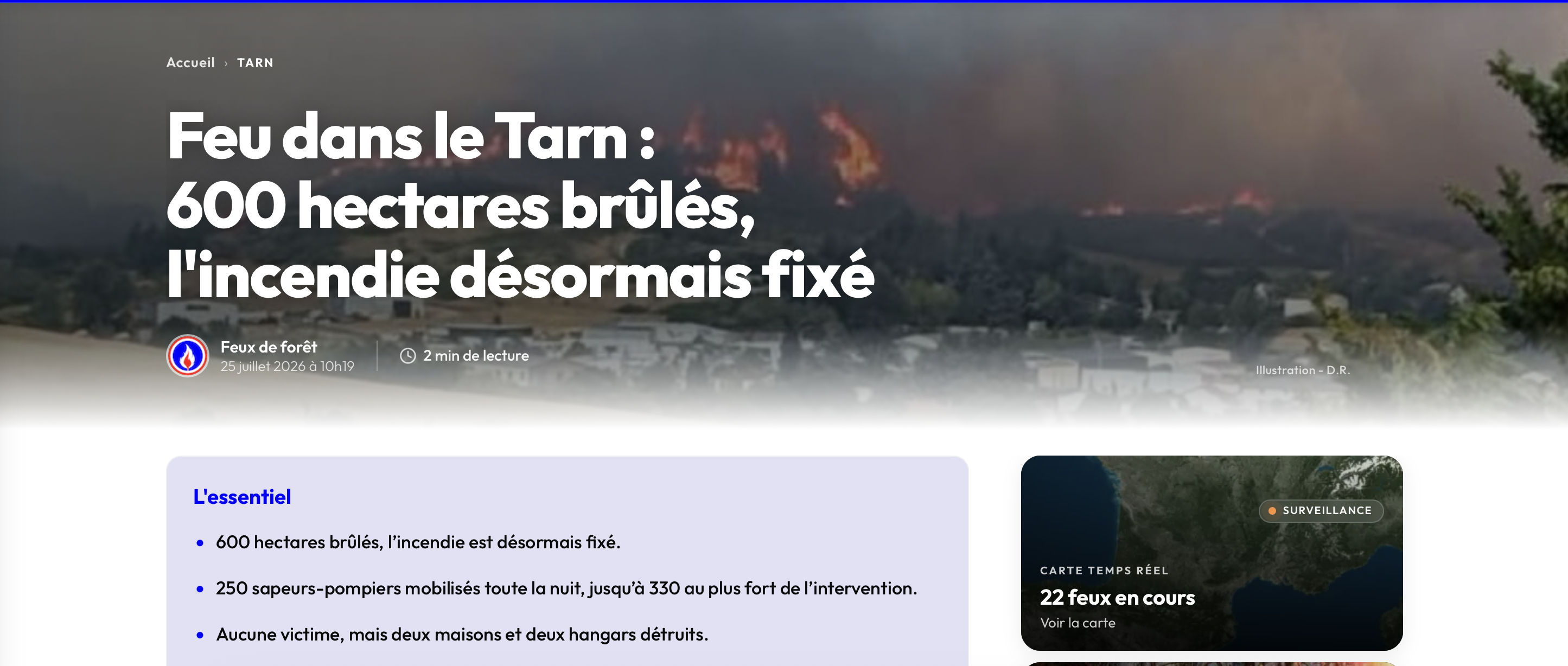
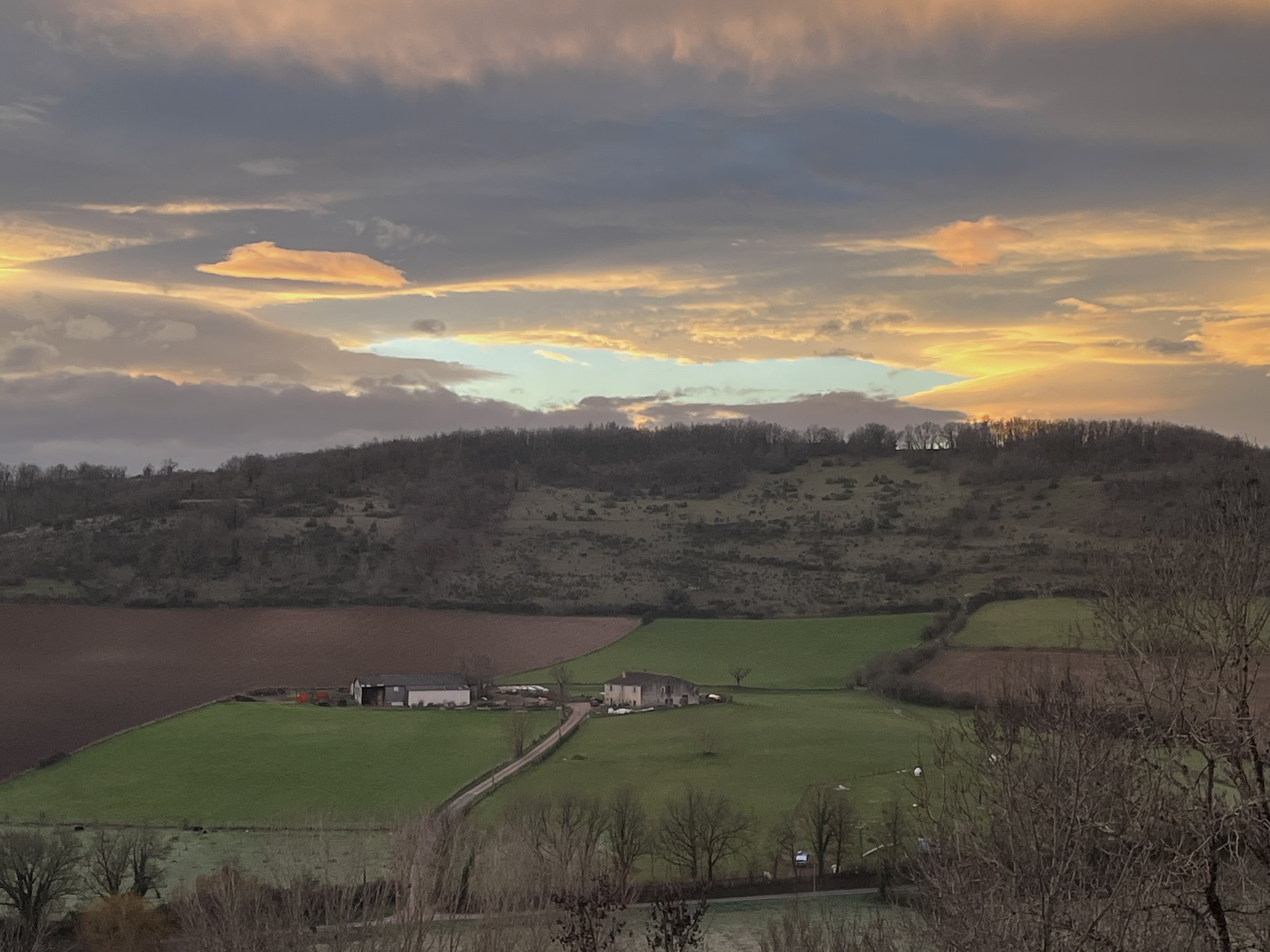
When I wake up, the sky is yellow gray with smoke from the wildfires all over southern Europe, savage wildfires as close as an hour’s drive from our little haven on a hill, Cordes-sur-Ciel. Tom is coughing. We barely glance at the news—it’s too apocalyptic.
À mon réveil, le ciel est d’un gris jaunâtre, chargé de la fumée des incendies qui ravagent tout le sud de l’Europe, des incendies dévastateurs qui font rage à peine à une heure de route de notre petit havre de paix perché sur une colline, à Cordes-sur-Ciel. Tom tousse. Nous jetons à peine un coup d’œil aux informations : c’est trop apocalyptique.
The waking world is falling into chaos. It’s fortunate that the fire nearest our place is contained, but the sister of a friend’s family has been evacuated from a much worse fire a four hour drive from here. Climate change is everywhere, we are in our sixth week of relentless heat, the wars in the Middle East and in Ukraine continue, and there are more earthquakes and erupting volcanoes along the Ring of Fire every day. Not to mention the political situation.
Le monde réel sombre dans le chaos. Heureusement, l’incendie le plus proche de chez nous est maîtrisé, mais la sœur d’un ami a dû être évacuée en raison d’un incendie bien plus grave, à quatre heures de route d’ici. Le changement climatique est omniprésent : nous en sommes à notre sixième semaine de chaleur accablante, les guerres au Moyen-Orient et en Ukraine se poursuivent, et les tremblements de terre et les éruptions volcaniques se multiplient chaque jour le long de la Ceinture de feu. Sans parler de la situation politique.
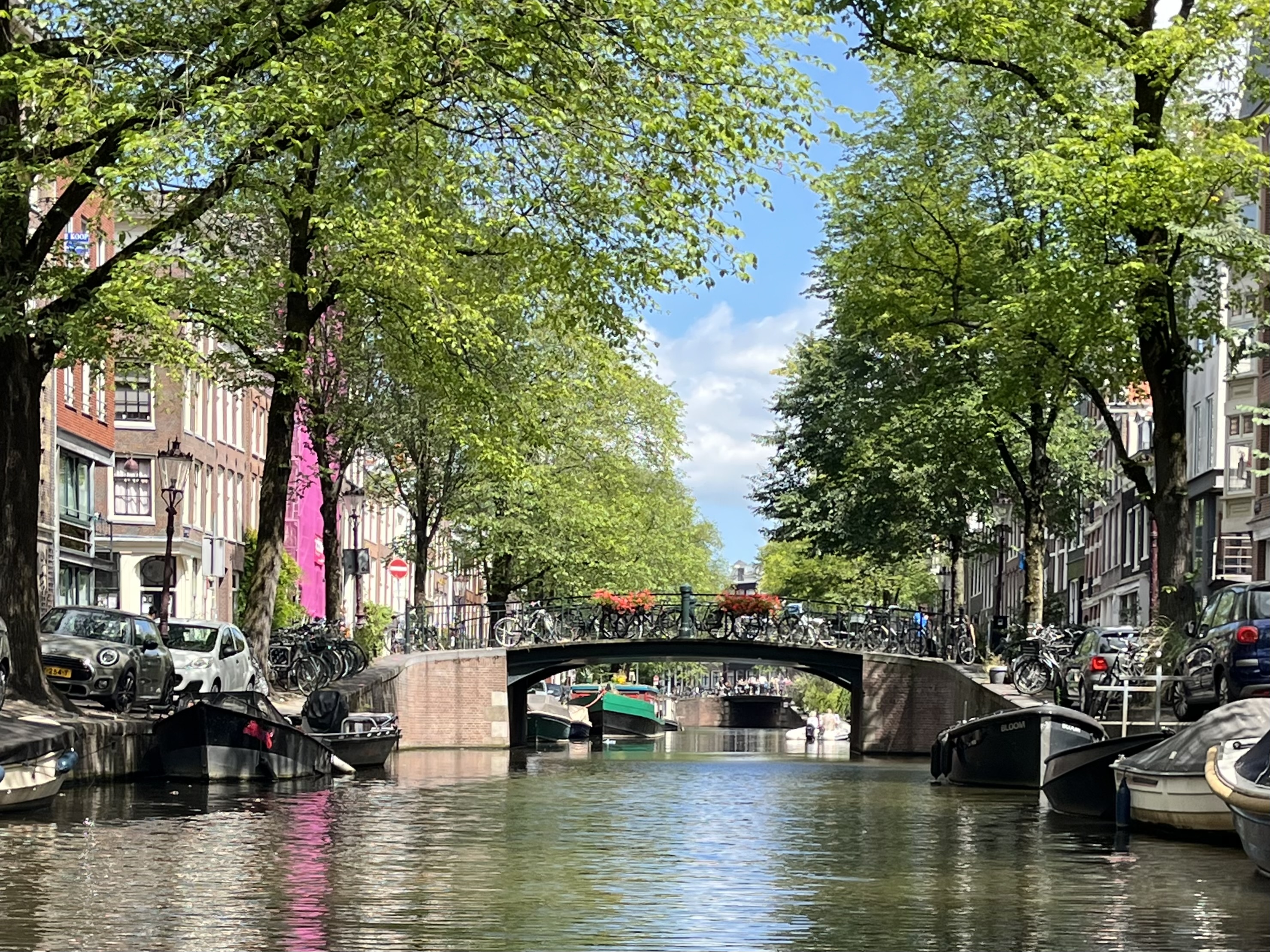
Yet Tom and I just returned from a few idyllic days in Amsterdam with family. The skies were blue and temperatures were well below the searing ones we’re enduring here.
Pourtant, Tom et moi venons tout juste de rentrer d’un séjour idyllique de quelques jours à Amsterdam en famille. Le ciel était bleu et les températures bien inférieures à celles, caniculaires, que nous subissons ici.
We were indeed picnicking on the rim of the volcano.
Nous étions effectivement en train de pique-niquer au bord du cratère du volcan.
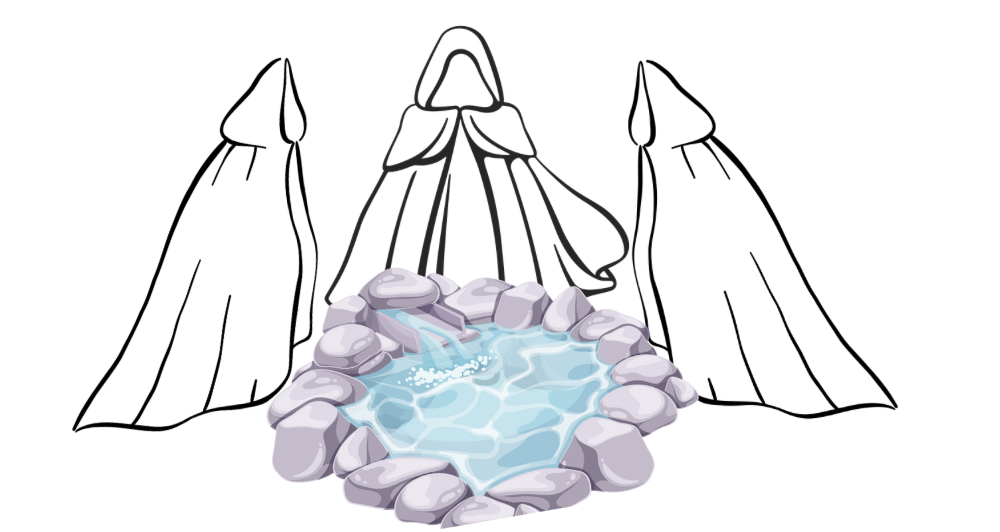
The geometry of the dream bears further examination. There is the hill, the same one I’ve been climbing in my dreams for as long as I can remember. (I write about the series in another blog Spiral dream: Redemption, written a few years ago). At the top of the hill, there is a round indentation, grassy, but similar in form to the spring at the center of the women in white I saw in the vision which I describe in the blog called A Drop of Love, and like the spring, it is surrounded by people. In the vision, the other women and I are meditating while a battle goes on around us. In this dream, both men and women are sitting on the volcano’s rim, and the battle going on around us isn’t evident, though it’s glaring in the waking world.
La géométrie de ce rêve mérite d’être examinée de plus près. Il y a cette colline, celle-là même que je gravis dans mes rêves depuis aussi longtemps que je me souvienne. (J’ai évoqué cette série dans un autre blog intitulé « Spiral Dream: Redemption », rédigé il y a quelques années). Au sommet de la colline, il y a un creux arrondi, recouvert d’herbe, mais dont la forme rappelle celle de la source au centre des femmes en blanc que j’ai vues dans la vision que je décris dans le blog intitulé « Une goutte d’amour » ; et tout comme la source, ce creux est entouré de gens. Dans cette vision, les autres femmes et moi-même méditons tandis qu’une bataille fait rage autour de nous. Dans ce rêve, hommes et femmes sont assis sur le bord du volcan, et la bataille qui fait rage autour de nous n’est pas évidente, bien qu’elle soit flagrante dans le monde éveillé.
Symbols of the Feminine abound: the crater, the cauldrons, the bowls. We women are providing nourishment to the community.
Les symboles du féminin abondent : le cratère, les chaudrons, les bols. Nous, les femmes, nourrissons la communauté.
If the message of the vision, which I refer to fondly as “my dickhead vision,” is that women need to hold the center during period of chaos by remaining calm and focused on the deeper world, the message of this dream is that we also need to be of service by providing sustenance.
Si le message de cette vision, que j’appelle affectueusement « ma vision de con », est que les femmes doivent garder leur équilibre en période de chaos en restant calmes et concentrées sur le monde intérieur, le message de ce rêve est quant à lui que nous devons également nous mettre au service des autres en leur apportant le réconfort nécessaire.
That volcano doesn’t look like it’s about to erupt in my personal dream world, but I’d be a fool to think it’s just a hill.
Dans l’univers onirique qui m’est propre, ce volcan ne semble pas sur le point d’entrer en éruption, mais je serais bien bête de croire qu’il ne s’agit que d’une simple colline.
Get your cauldrons ready, my women friends. There will be work to do.
Préparez vos chaudrons, mes amies. Il y aura du travail à faire.
Il y a environ un mois, j’ai arrêté d’écrire la première partie de cet article parce qu’il était tard et que la page comptait déjà trop de mots. Je pensais m’y remettre le lendemain matin : je savais exactement ce que j’allais dire et comment j’allais m’y prendre.
Mais quand le matin est arrivé, la vie s’en est mêlée, comme c’est souvent le cas, et j’ai perdu le rythme. Si cela m’arrive pendant que je travaille sur un roman, je me mets en mode recherche — c’est donc ce que j’ai fait.
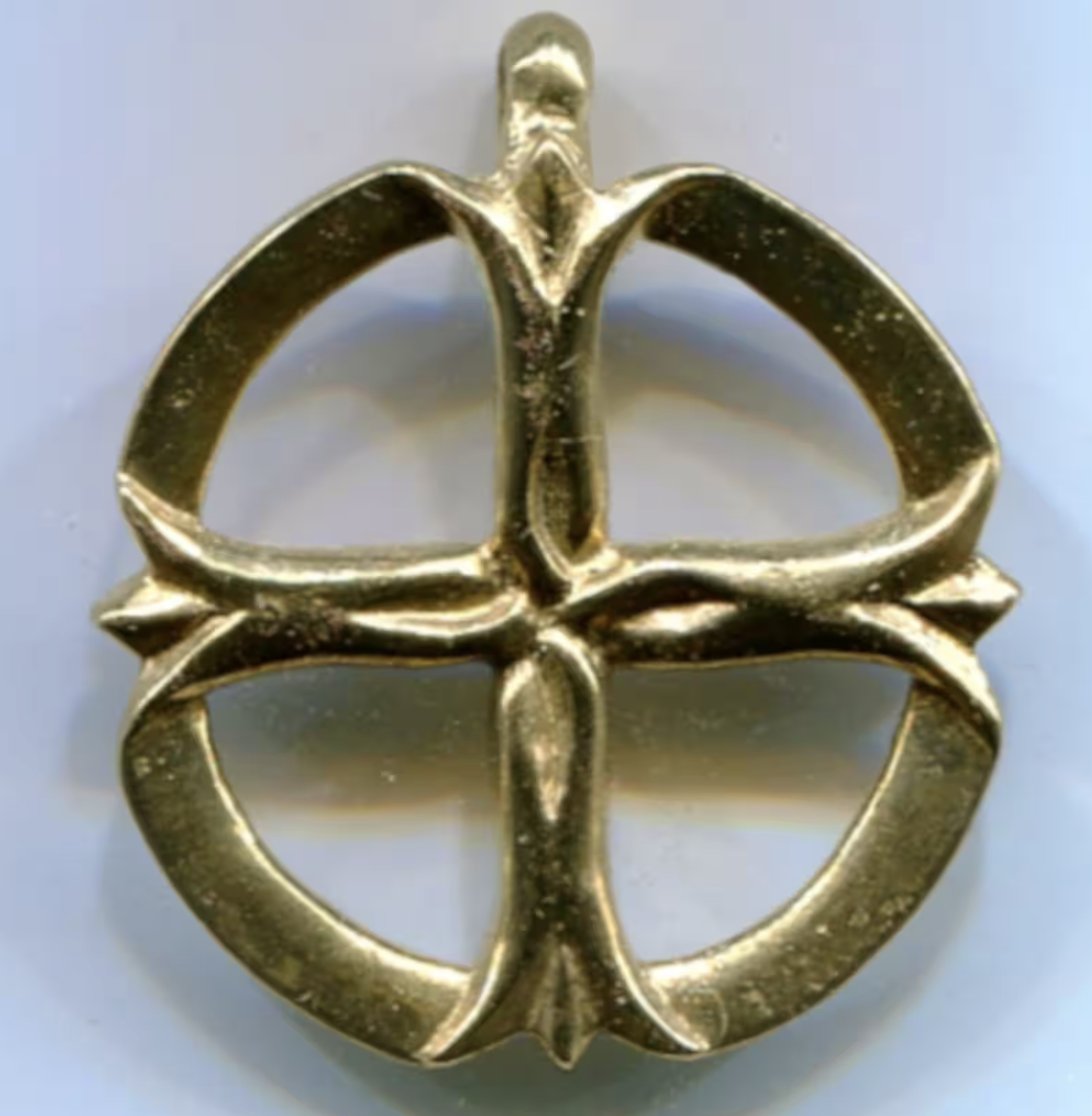
Alors que je cherchais à retrouver la forme que nous avions créée toutes les quatre dans le bain japonais, je suis tombée sur le magnifique pendentif que vous voyez ci-dessus, et j’en ai commandé un pour chacune d’entre nous, les quatre qui étions ensemble dans le jacuzzi à ce moment magique. Tout semblait encore s’arranger, même si je n’écrivais pas.
Voici quelques-unes des choses que j’ai apprises.
La croix équilatérale inscrite dans un cercle, parfois appelée « croix solaire », est l’un des symboles les plus anciens découverts par les archéologues. On en trouve de nombreux exemples anciens à travers le monde, datant pour la plupart du Néolithique à l’âge du bronze.
Les gravures et les pétroglyphes datant d’environ 1800 à 500 avant notre ère sont omniprésents dans tout le monde celtique, de la Scandinavie à l’Irlande, où ils étaient interprétés comme représentant le soleil. On l’appelle également la roue de l’année, la roue solaire, la roue du char du dieu Soleil, le cercle sacré et la roue médicinale. Dans l’Égypte antique, ce symbole désigne un village.
Plus récemment, la croix solaire a été utilisée dans le dessin du drapeau de l’Union paneuropéenne dans les années 1920. Elle a également été adoptée par des groupes néonazis et suprémacistes blancs ; la croix gammée en est une variante.
Mais celle qui me tient le plus à cœur est une autre variante, la croix cathare ou occitane, également appelée croix de Toulouse.
Personnellement, je vois la croix dans un cercle comme le symbole de l’interconnexion, sur un pied d’égalité, de tous les quaternaires et dualités archétypaux : les quatre points cardinaux, le masculin et le féminin sacrés, l’espace et le temps, le haut et le bas, les riches et les pauvres, les femmes et les hommes, le ciel et la terre, l’esprit et la matière, le monde imaginaire et le monde physique, etc. L’équilibre.
Le point d’intersection symbolise la source de toute création. Le cercle qui entoure la croix représente l’éternité et le caractère cyclique de la vie.
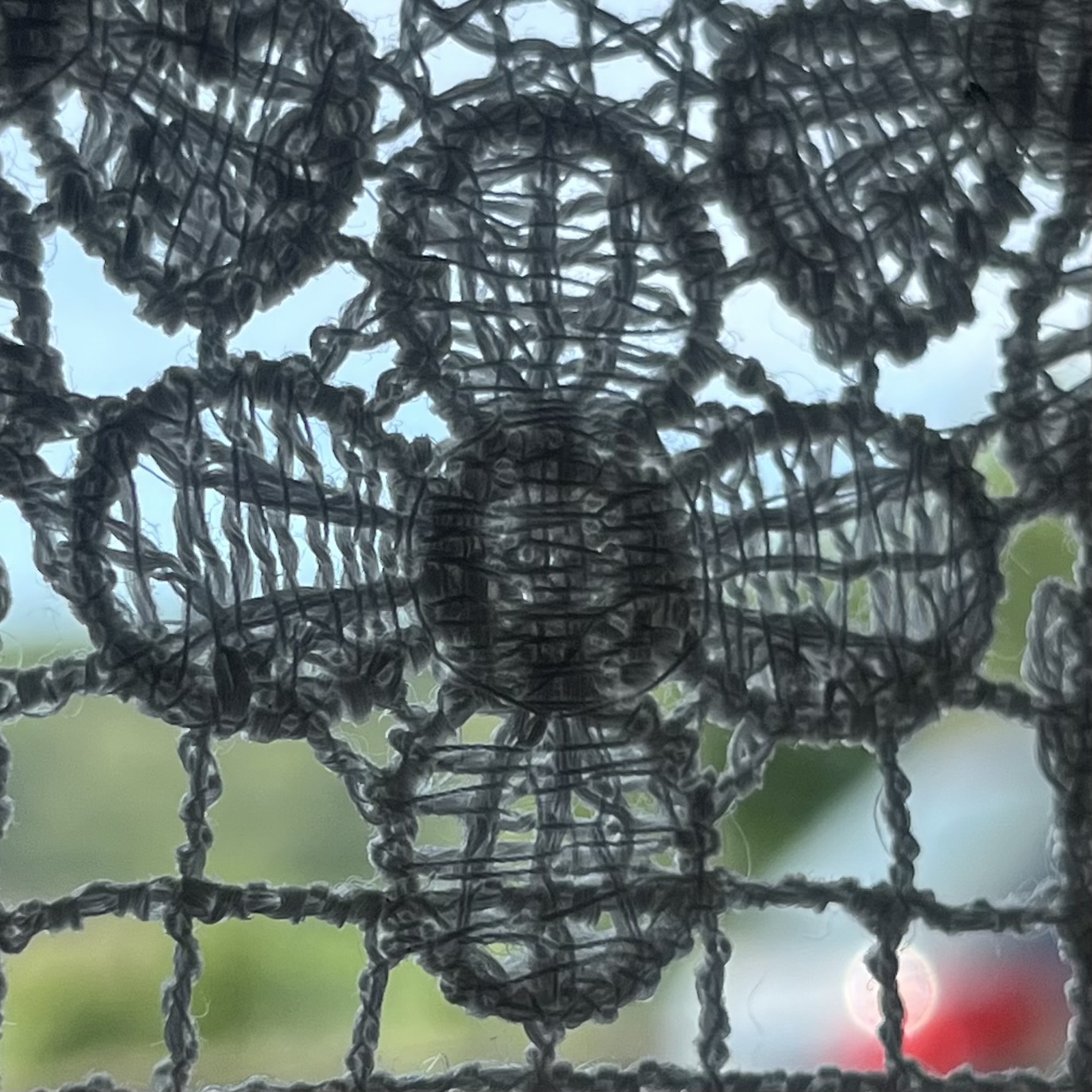
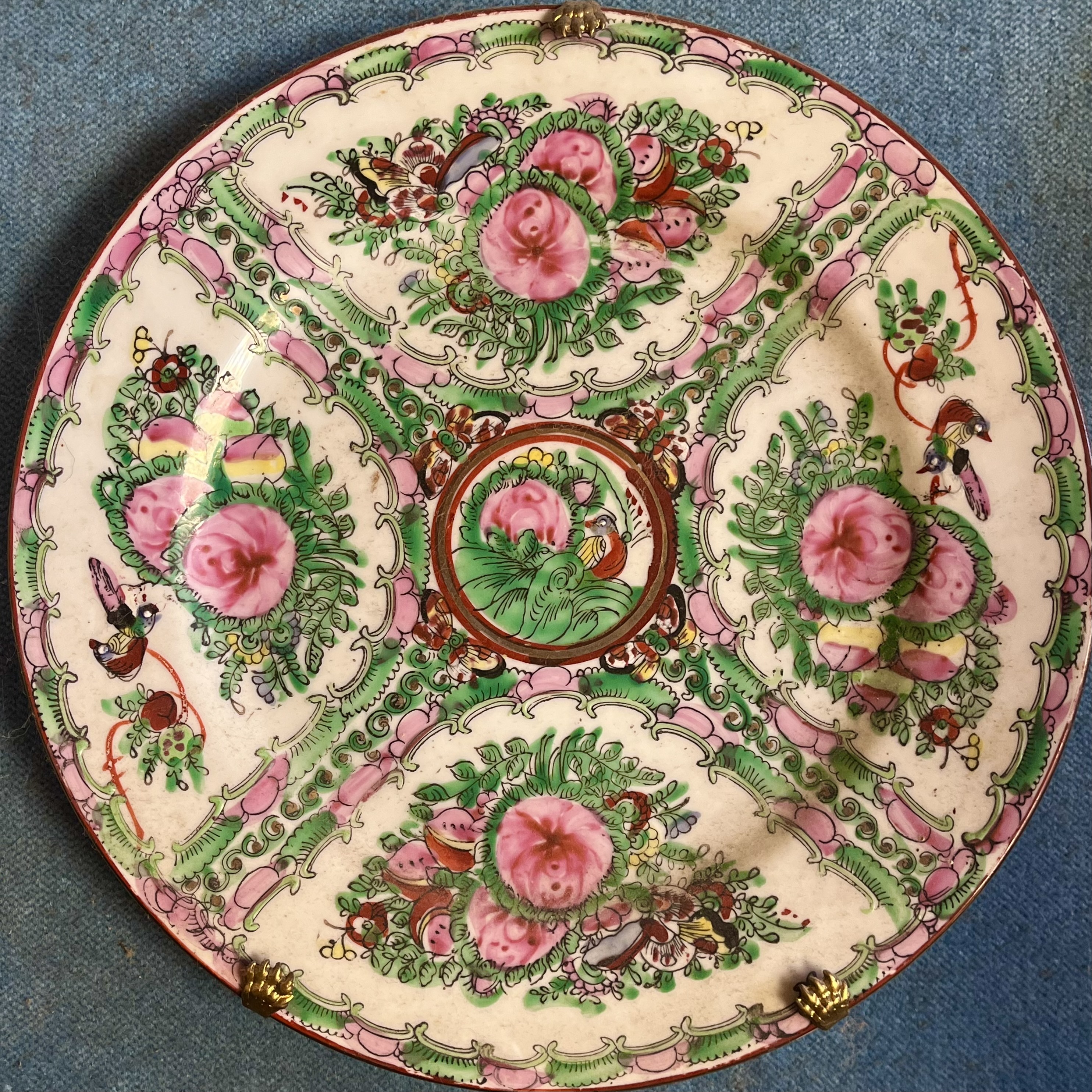
from Jung’s Red BookPhillips head screwLace curtain in my wondowAntique plate on my wall
Même après avoir tant appris sur ce symbole et l’avoir vu partout autour de moi, les mots refusaient de venir. Je suis allé me promener dans les bois tout en réfléchissant à la signification de l’apparition d’un symbole aussi puissant à ce moment précis, par rapport à ma raison d’être.
Un message publié par les anciens Hopis il y a quelques années m’est venu à l’esprit.
« Il y a une rivière qui coule à présent très vite.
Elle est si grande et si rapide
que certains en auront peur.
Ils s’accrocheront à la rive ;
ils auront l’impression d’être déchirés
et souffriront énormément.
Sachez que la rivière a une destination.
Les anciens disent que nous devons lâcher prise,
nous pousser au milieu de la rivière,
garder les yeux ouverts et la tête hors de l’eau.
Et je dis : regardez qui est là avec vous et réjouissez-vous.“
C’est là que nous étions, nous quatre, dans le bain japonais, le 20 février, sortant des eaux de la méditation pour nous embrasser.
Nous sommes devenus une entité, une nouvelle famille, une cellule.
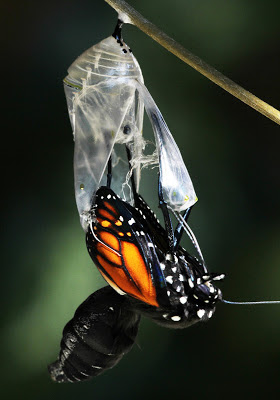
Lorsqu’une chenille se recouvre d’un cocon, l’ADN contenant l’empreinte d’une partie du papillon s’active dans certaines de ses cellules. Les cellules de la chenille dépourvues de cet ADN sécrètent des enzymes pour dissoudre les cellules nouvellement éveillées, qu’elles considèrent comme des envahisseurs. Les cellules imaginales isolées succombent dans un premier temps, mais lorsqu’elles sont attirées en groupes par la fréquence à laquelle elles résonnent, elles parviennent à survivre à l’attaque. Les cellules de la chenille continuent à sécréter l’enzyme jusqu’à ce qu’elles s’y dissolvent, créant ainsi le bouillon qui nourrira les cellules imaginales alors qu’elles accomplissent leur destin : devenir une partie essentielle de la nouvelle forme, le papillon.
En cette époque où les récits, les attentes et toutes les certitudes s’effritent, c’est exactement ce dont nous, les humains, avons besoin.
La prophétie Hopi se poursuit :
À ce moment de l’histoire,
nous ne devons rien prendre personnellement,
et encore moins nous-mêmes,
car dès que nous le faisons,
notre croissance spirituelle et notre cheminement s’arrêtent.
La voie du loup solitaire est révolue.
Rassemblez-vous.
Bannissez le mot « lutte » de votre attitude et de votre vocabulaire.
Tout ce que nous faisons désormais doit être accompli de manière sacrée
et dans la célébration.
NOUS SOMMES CEUX QUE NOUS ATTENDIONS.
Convaincue de cela, je me suis immédiatement attachée à encourager la création de petits groupes de femmes, d’hommes et de femmes, de personnes partageant la même vision, afin qu’ils se réunissent régulièrement, à la fois pour être présents les uns pour les autres pendant la dissolution en cours de cette réalité, et pour en créer les éléments de sa forme transformée.
Je voyais ces groupes comme des « nids », un concept que j’avais découvert il y a des années. Et je me suis rendu compte que j’en faisais déjà partie de plusieurs : des appels Zoom réguliers avec ma famille et mes amis, des cercles de femmes auxquels je participe depuis des décennies, et même mon groupe de conversation en français. Mais j’en voulais plus. Je voulais créer des groupes spécialement destinés à apporter un soutien dans les moments difficiles, ainsi qu’un espace propice à l’épanouissement où de nouvelles idées pourraient naître. Je voulais créer des cellules imaginales.
. Hélas, en l’espace de quelques jours, le premier groupe que j’avais tenté de mettre sur pied s’est effondré. Puis j’ai appris que les pendentifs que j’avais commandés avaient été envoyés à la mauvaise adresse.
J’ai battu en retraite. La certitude, me suis-je rappelée, est presque toujours une erreur. J’ai complètement cessé de travailler sur cet essai pendant deux semaines.
Puis, hier, un petit colis est arrivé par la poste. Les pendentifs n’avaient pas été envoyés à la mauvaise adresse.
Demain, je déjeune avec quelques-unes de mes amies les plus proches. Qui sait ce qui va émerger de ce terrain si fertile ?
About a month ago I stopped writing Part 1 of this blog because it was late and too many words were already on the page. I imagined picking it up in the morning – I knew exactly what I was going to say and how I planned to act on it.
But when morning came life interfered, as it so often does, and I lost the rhythm. If that happens while I’m working on a novel, I go into research mode—so that’s what I did.
While searching for the image we four women created in the hot tub, I found the beautiful pendant pictured above, and I ordered one for each of the four us who were together in the hot tub at that magical moment. Everything still seemed to be falling into place even though I wasn’t writing.
Here’s some of what I learned.
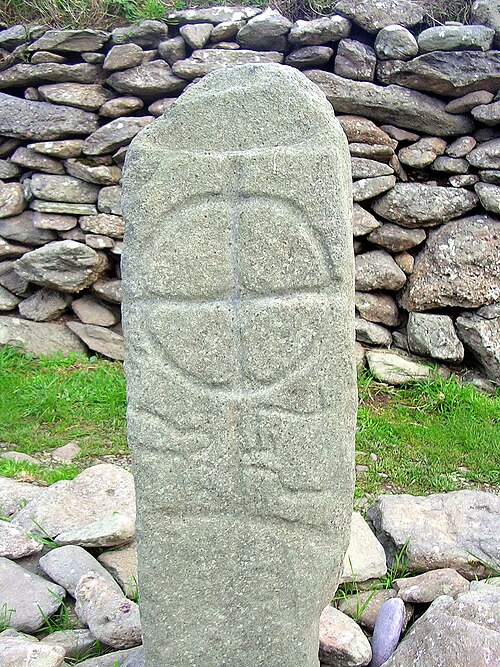
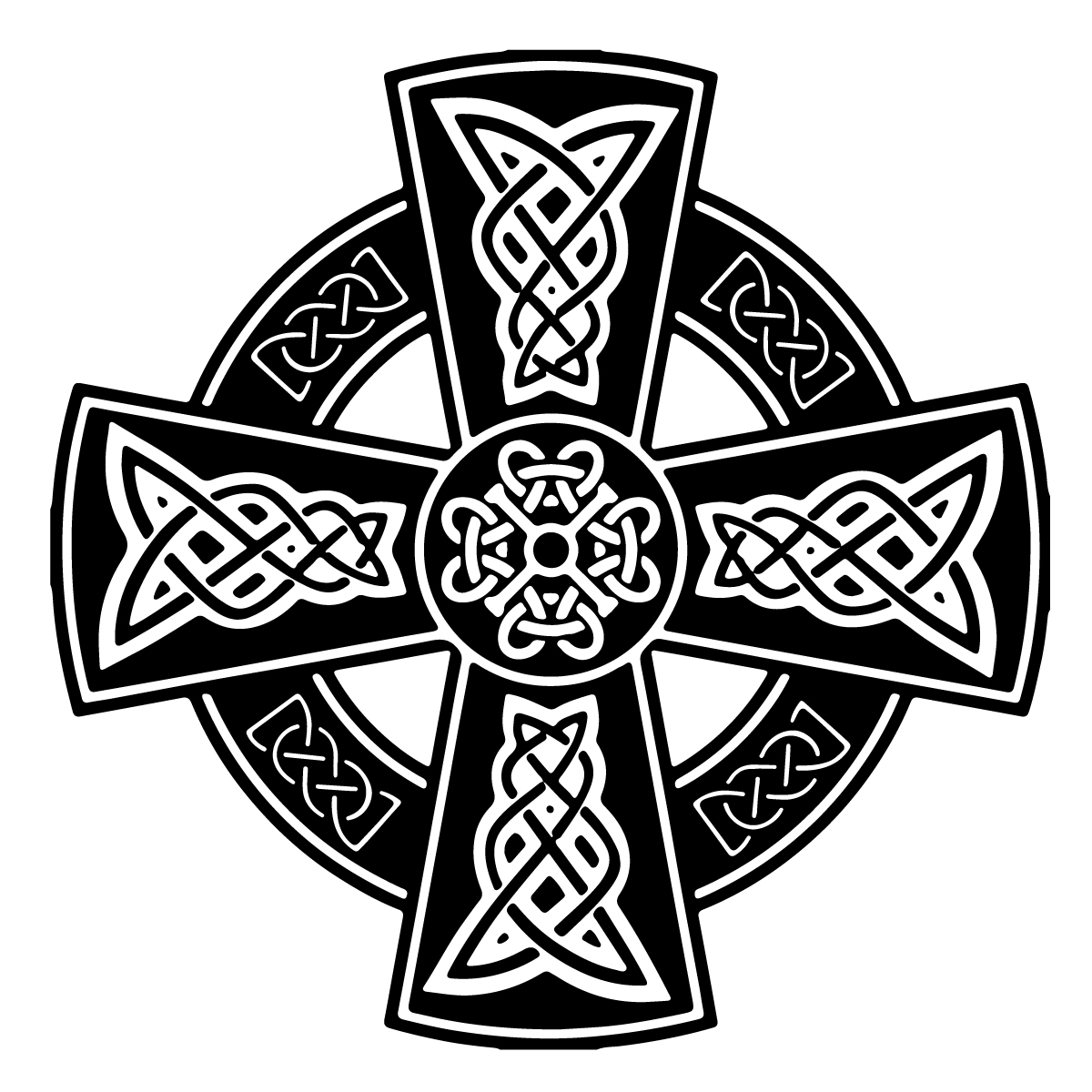
The equilateral cross in a circle, sometimes called a sun cross, is one of the oldest symbols archaeologists have discovered. Ancient examples are common across the globe, dating mostly from the neolithic period to the bronze age.
Carvings and petroglyphs dating from c. 1800–500 BCE are ubiquitous across the Celtic world from Scandinavia to Ireland, where they were interpreted as representing the sun. It is also known as the wheel of the year, the solar wheel, the wheel of the chariot of the sun god, the sacred hoop and the medicine wheel. In ancient Egypt, the symbol means village.
More recently, the Sonnenkreuz was used of the flag design of the Paneuropean Union in the 1920s. The solar cross has also been adopted by neo-Nazi and white supremacist groups—the swastika is a variation of it.
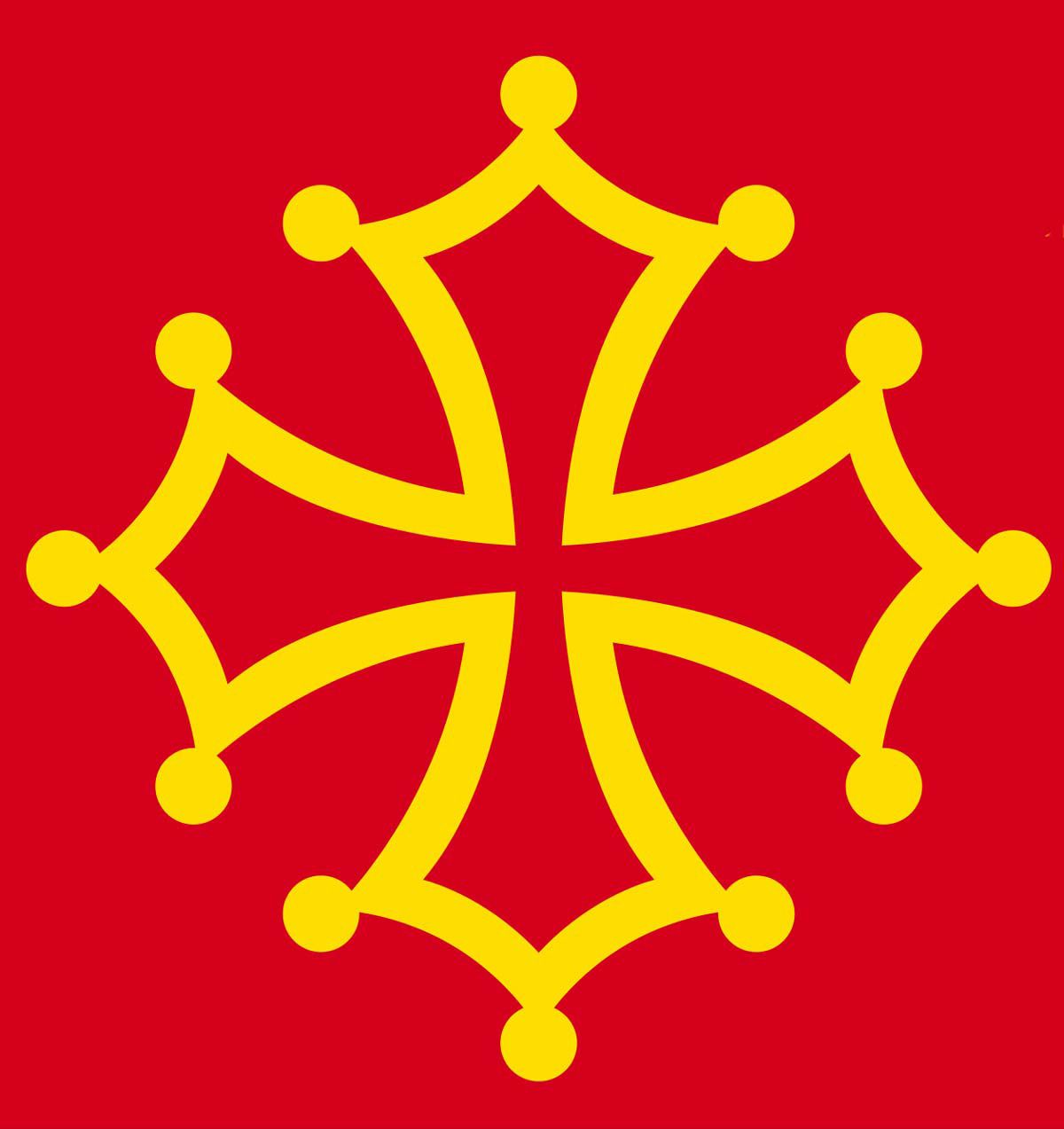
Closer to my heart is another variation, the Cathar or Occitan cross, also called the Cross of Toulouse.
Occitan Cross
Personally, I see the cross-in-a-circle as a symbol of the connectedness to the whole, on an equal basis, of all the archetypal quaternaries and dualities—the four directions, the sacred masculine and feminine, space and time, above and below, the rich and poor, women and men, heaven and earth, spirit and matter, the imaginary world and the physical world, and so on. Balance.
The point of intersection represents the source of all creation. The circle surrounding the cross represents eternity and the cyclic nature of life.
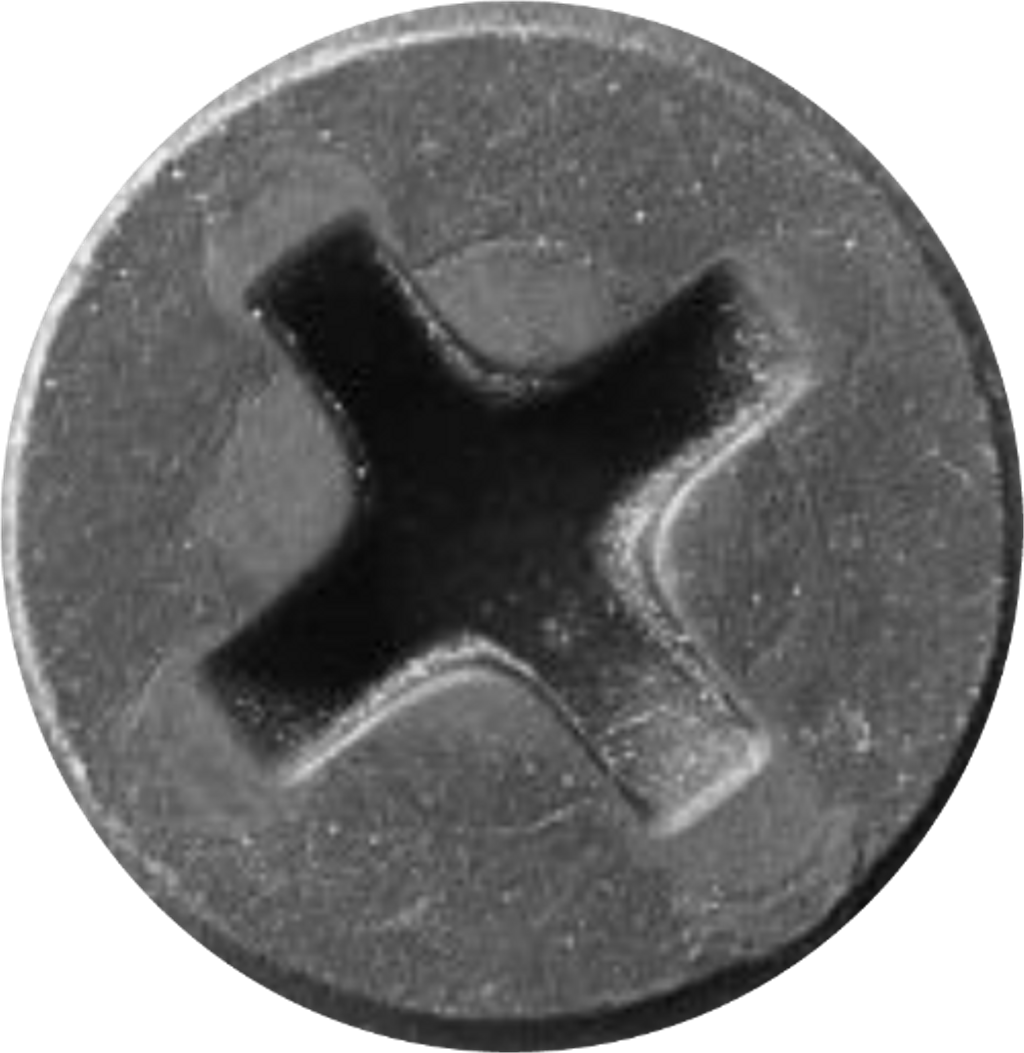
from Jung’s Red BookPhillips head screwLace curtain in my wondow
Antique plate on my wall
Even after learning so much about the symbol and seeing it all around me, written words wouldn’t come. I took a walk in the woods while contemplating the meaning of the manifestation of such a powerful symbol at that particular moment in terms of my purpose in life.
A message published by Hopi elders a few years ago came to me.
There is a river flowing now very fast.
It is so great and swift
that there are those who will be afraid.
They will hold on to the shore;
they will feel they are being torn apart
and will suffer greatly.
Know that the river has its destination.
The elders say we must let go of the shore,
push off into the middle of the river,
keep our eyes open and our heads above the water.
And I say, see who is there with you and celebrate.
That’s where we were, we four women in the Japanese hot tub on the 20th of February, emerging from the waters of meditation to embrace.
We became a unit, a new family, a cell.
When a caterpillar creates a chrysalis around itself, DNA carrying the image of part of the butterfly activates in some of its cells. The caterpillar cells lacking that DNA secrete enzymes to dissolve the newly awakened cells, whom they see as invaders. The isolated imaginal cells succumb at first, but when they’re drawn into groups by the frequency they resonate, they’re able survive the attack. The caterpillar cells continue excreting the enzyme until they dissolve into it, creating the soup that will nourish the imaginal cells as they fulfill their destiny to become an essential part of the new form, the butterfly.
In this time of the dissolution of stories, expectations, and certainty of any sort. that’s exactly what we humans need to do.
The Hopi prophecy continues,
At this time in history,
we are to take nothing personally,
least of all ourselves,
for the moment we do,
our spiritual growth and journey come to a halt.
The way of the lone wolf is over.
Gather yourselves.
Banish the word struggle from your attitude and vocabulary.
All that we do now must be done in a sacred manner
and in celebration.
WE ARE THE ONES WE HAVE BEEN WAITING FOR.
Full of certainty, I immediately set out to encourage the creation of small groups of women, of men and women, of people who resonate on the same frequency, to meet regularly, both to be present for each other during the ongoing dissolution of this reality, and to create parts of its transformed form.
I thought of the groups as “nests,” a concept I’d come across years ago. and realized that I was already part of a few: regularly scheduled zooms calls with family and with friends, women’s circles I’ve participated in for decades, and even my French conversation group. But I wanted more. I wanted to set up groups specifically to provide support in hard times as well as generative space where new ideas might bloom. I wanted to create imaginal cells.
Alas, within days, the first group I tried to set up fell apart. Then I learned that the pendants I had ordered were being sent to the wrong address.
I retreated. Certainty, I recalled, is almost always a mistake. I stopped working on this essay entirely for a couple weeks.
Then, yesterday, a small package came in the mail. The pendants hadn’t gone to the wrong address.
Tomorrow I’m having lunch with some of my closest women friends. Who knows what will emerge from such fertile ground?
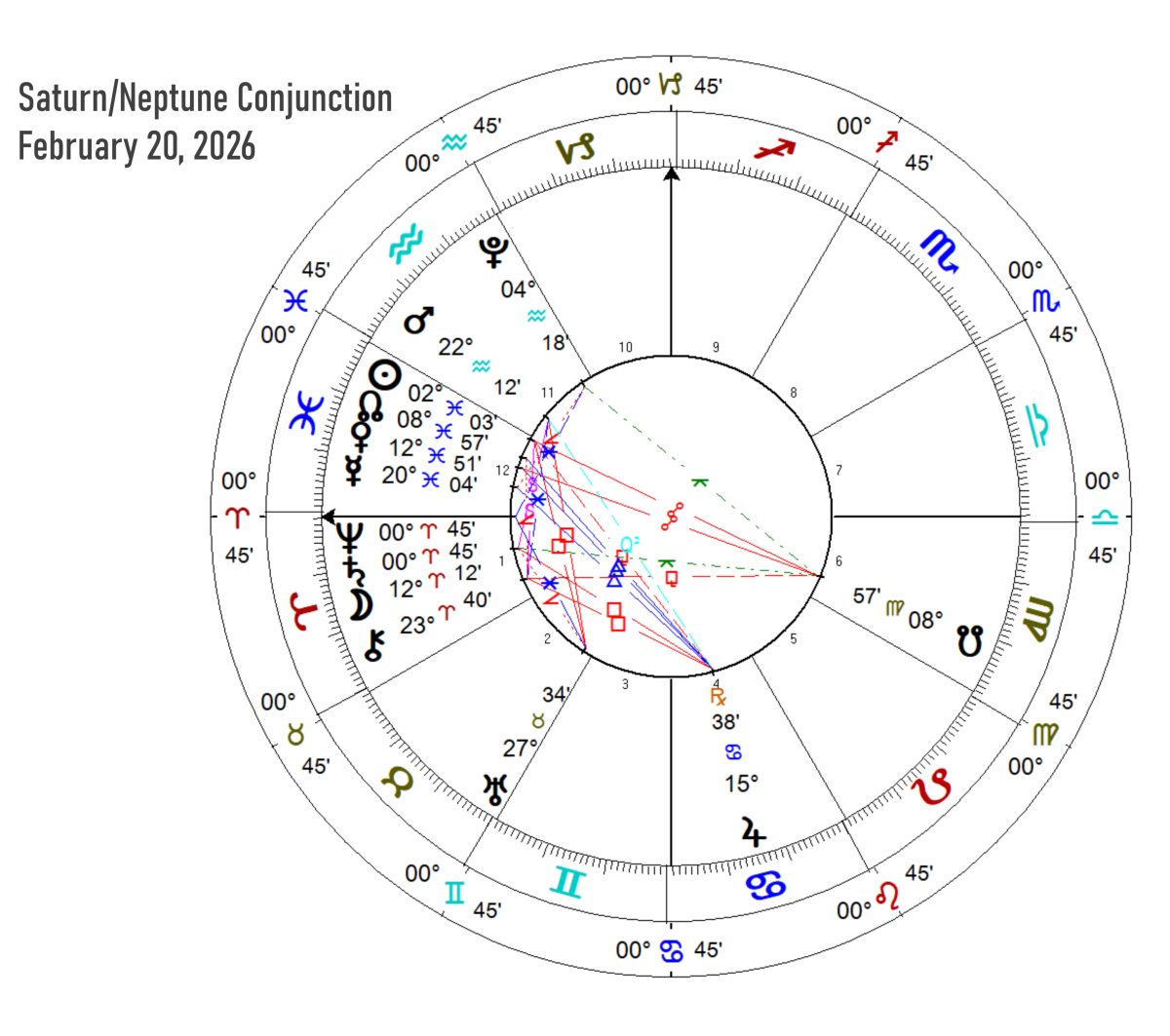
At just before six in the evening on February 20, 2026, I was immersed in a Japanese-style hot tub, perfectly round and not too hot, with three dear women friends. With our legs bobbing in the warm water in front of us, the four of us formed a Celtic cross.
It was a seminal moment. We all knew it.
At just that time, the conjunction of Neptune and Saturn was exact. Not only was it exact, which happens every 36 years, but it was exact at 0° Aries, which only happens every 6000 years.
And, not only was it exact, but it fell exactly on the north node of the moon in my birth chart. And we were at that spa at that moment to celebrate the birthday of one of the other women.
That’s a lot of astrology to unpack, and I’ll do it, but first, take a look the Sabian symbol for 0° Aries:
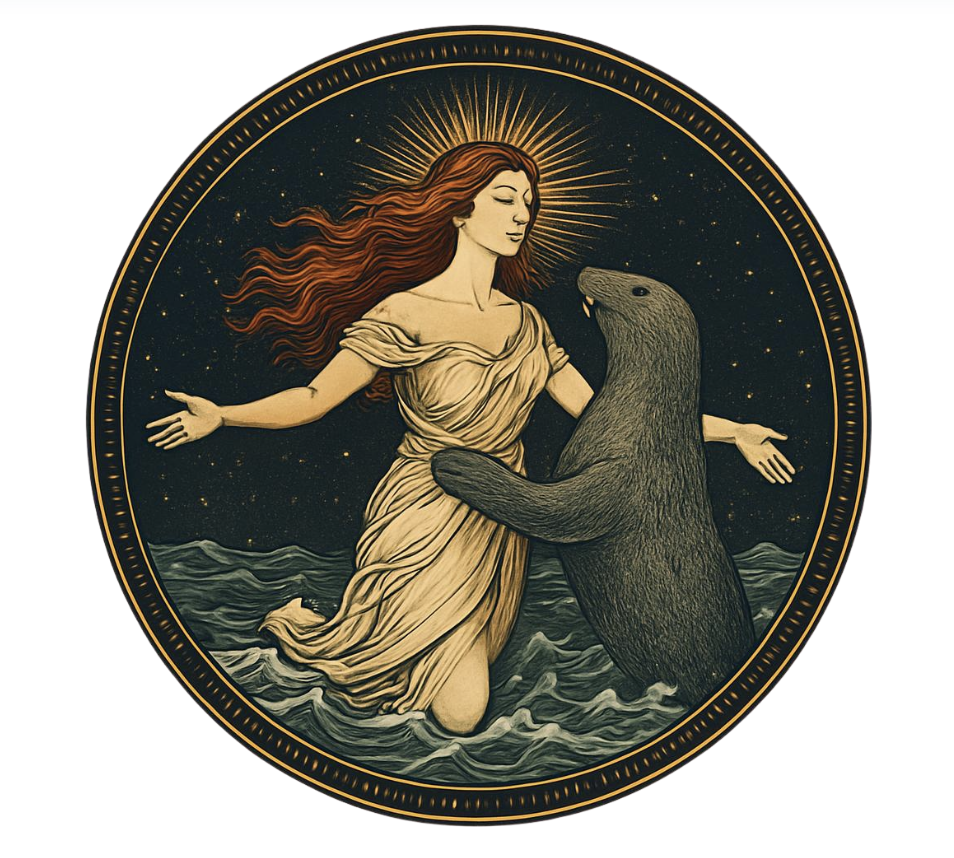
A Woman Just Risen From The Sea; A Seal Is Embracing Her
I hoped the four of us would take that moment to rise from the water and embrace, but, sadly, the water wasn’t welcoming enough for any of us to feel like submerging.
So we meditated and emerged from there to embrace.
What’s the significance of all this?
Last night I dreamed that I was deep in a forest with a group of people. We’d had to escape from somewhere and there was a question about whether we had brought the right stuff with us and whether there was enough food. It was a fairly large group of people, maybe twenty or thirty. I was at the back of the group, walking slowly with a companion. When we caught up with the others, they were cooking and eating. I was happy to see that they had roasted some chicken and that I had a choice of either a leg or a breast piece—I didn’t want them both because it seemed like too much.
Our whole civilization is entering the deep woods of uncertainty, and the question of whether we’re bringing the right things with us matters. The dream is reassuring—there’s enough chicken for us to have a choice, even if we’re the last to be served. Yet it would be a mistake to take it literally. Most of us won’t have to carry chickens along as we navigate the deep woods. We have to take some form of symbolic sustenance.
In the fall, while preparing a presentation for the Seeker’s Compass (watch it here: https://youtu.be/iQIEb5dbF9w), I remembered the profound importance of living symbolically. I’ve appreciated the idea since I was fourteen or so, when the marvelous creative writing teacher at my summer camp introduced us to the power of myth through the work of CG Jung and Joseph Campbell. (My eternal thanks go to Joe Beatty at Lighthouse Art and Music Camp). Ever since, I’ve attended to the metaphors behind details of daily life. I even studied myth at Pacifica and, in my work with Alice O. Howell, focused on seeing the sacred on the commonplace as well as on astrology—but when I used those words “living a symbolic life” in that talk, something powerful reawakened in me.
In the talk I said something like, “In these liminal times, living a symbolic life is surely one of the ways through to the next world.” It wasn’t a phrase I intended to put into that talk, which I gave several times, live and on camera, with and without notes. It wasn’t in my notes.
After the talk, I thought, huh, good thing nobody asked me a question about that—I wouldn’t have known what to say, or who to attribute it to for certain. I thought I remembered hearing it first in a talk by James Hillman at Pacifica, and had assumed it was his. It actually comes from Jung himself. InThe Symbolic Life: a collection of miscellaneous writings, he says,
You see, man is in need of a symbolic life – badly in need. We only live banal, ordinary, rational, or irrational things . . . but we have no symbolic life. Where do we live symbolically? Nowhere except where we participate in the ritual of life. . . .
Have you got a corner somewhere in your house where you perform the rites, as you can see in India? Even the very simple houses there have at least a curtained corner where the members of the household can perform the symbolic life, where they can make their new vows or their meditation. We don’t have it; we have no such corner. We have our own room, of course, – but there is a telephone that can ring us up at any time, and we always must be ready. We have no time, no place.
We have no symbolic life, and we are all badly in need of the symbolic life. Only the symbolic life can express the need of the soul – the daily need of the soul, mind you! And because people have no such thing, they can never step out of this mill – this awful, banal, grinding life in which they are “nothing but.” . . .
Everything is banal; everything is “nothing but,” and that is the reason why people are neurotic. They are simply sick of the whole thing, sick of that banal life, and therefore they want sensation. They even want a war; they all want a war; they are all glad when there is a war; they say, “Thank heaven, now something is going to happen – something bigger than ourselves!”
These things go pretty deep, and no wonder people get neurotic. Life is too rational; there is no symbolic existence in which I am something else, in which I am fulfilling my role, my role as one of the actors in the divine drama of life.
After I copied and pasted the above text into this essay, I thought I’d look for an image to illustrate the concept, maybe something from Jung’s The Red Book. The very first image that came up in my search was this one:
Over the top synchronicity.
But to return to the astrology that marked the moment: when the woods get deep and all the trees look alike, I often look up at the stars. Astrology provides a symbolic map for understanding changes in our personal and civilizational lives.
Astrology divides the celestial sphere into 12 sections or signs of 30 degrees each, for a total of 360 degrees. 0° Aries is considered the first degree of the zodiac, the threshold of a new level in the upward spiral of change. The exact passage, or conjunction, of two planets that appear to be moving slowly through the heavens, occurring at 0° Aries begs exploration.
Saturn is the furthest away of the seven “planets,” which in astrology include the sun and the moon, which are visible to the naked eye. Thus, it’s what holds the “world” together, the outer boundary, the structure.
Neptune, discovered using a telescope in 1846, was assigned the farthest out concepts of the time: imagination, illusions, dreams, the abstract, the mysterious.
The conjunction of Saturn and Neptune indicates a merger of structure with dreams.
In a birth chart, the planets are laid out on the zodiac in the position they were in at a person’s birth, each planet at a certain degree in one of the twelve segments, or signs.
In 1925, an astrologer, Marc Edmund Jones, and a clairvoyant, Elsie Wheeler, created a series of 360 images, one for each of the degrees of the zodiac. They called them the Sabian symbols. Each one is completely unique. For example, the woman rising from the sea embraced by the seal is followed by a man entertaining a group of people, and a few degrees later, by a triangle with wings.
In addition to the planets, there are other markers that are assigned meaning, among them the lunar nodes, which mark the moon’s orbit as it intersects the apparent path of the sun. The south node is said to show what a person comes into life with, and the north node what their purpose is.
One of the basic things astrologers do is to compare the position of the planets in the sky at present, or at any given time, to their positions at the time of one’s birth. Thus, I knew that the rare conjunction of Saturn and Neptune at 0° Aries coincided with the position of the north node in my birth chart at 0° Aries. When I looked up the significance of that, Astrology.com said, “When planetary transits touch your north node directly, you’ll find significant, destined events and meetings take place. The north node is uncharted terrain and unlocks the key to your life’s purpose.”
So, there I was, creating one of the four limbs of that cross in a circle at the exact moment of the structure/dream collaboration, at the exact point in time when I am supposed to come into whatever I came into this life to do. And with three dear friends, one of whose birthday was at the same time.
It’s taken too many words and too much time to get to this point in the story, so I’ll explore where the experience took me in my next post.
This is a vision that came to me not long ago when I was doing longer than usual meditations in the morning. I’d been sitting for maybe 45 minutes when it floated into my head.
C’est une vision qui m’est venue il n’y a pas longtemps, alors que je faisais une méditation plus longue que d’habitude le matin. J’étais assise depuis environ 45 minutes quand elle m’est venue à l’esprit.
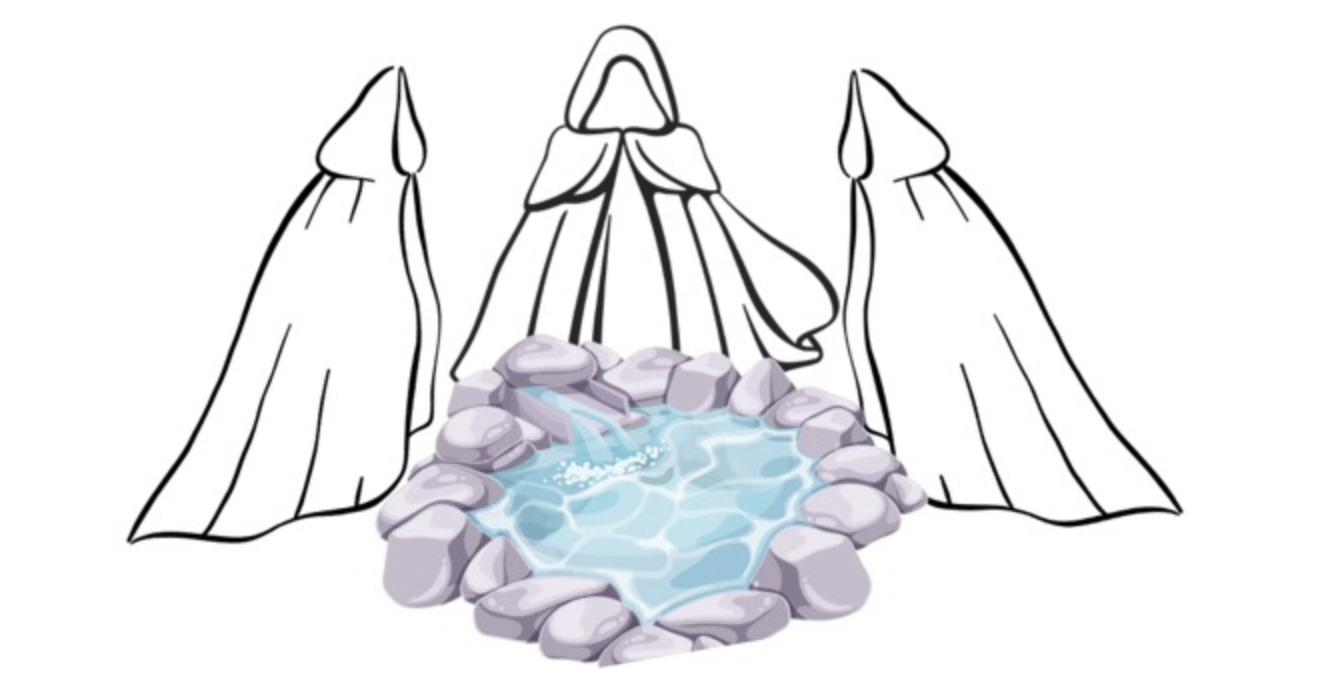
In the vision, I am sitting in front of a spring with low circular wall around it.
Dans cette vision, je suis assise devant une source entourée d’un muret circulaire.
From my left comes a figure in a white cape and hood. Without saying anything, she seats herself on the opposite side of the spring. I see that she is a very, very old woman.
De ma gauche arrive une silhouette vêtue d’une cape blanche à capuche. Sans dire un mot, elle s’assoit à l’autre côté de la source. Je vois qu’il s’agit d’une femme très, très âgée.
We sit together quietly for a while. I close my eyes.
Nous restons assises ensemble en silence pendant un moment. Je ferme les yeux.
When I open them, I see that many women in white have come.
Quand je les rouvre, je vois que de nombreuses femmes vêtues de blanc sont arrivées.
I’m so pleased to be there, I feel full of joy. I love these women. I love being part of a circle of women sitting around a spring. I feel so blessed.
Je suis tellement heureuse d’être là, je me sens remplie de joie. J’aime ces femmes. J’aime faire partie d’un cercle de femmes assises autour d’une source. Je me sens tellement bénie.
Then I remember something I had read the night before.
Puis je me souviens de quelque chose que j’avais lu la veille au soir.
It’s something a friend, Robert Sachs, said in a response on Facebook. His exact words don’t come to me, but what I remember is “One drop of love can overcome all the difficulties going on around you.”
C’était quelque chose qu’un ami, Robert Sachs, avait dit en réponse sur Facebook. Je ne me souvenais pas exactement de ses mots, mais ce dont je me souvenais, c’était : « Une goutte d’amour peut surmonter toutes les difficultés qui vous entourent. »
“One drop of love can overcome all the difficulties going on around you.”
« Une goutte d’amour peut surmonter toutes les difficultés qui vous entourent. »
The idea pleases me. It makes me even happier to have remembered it.
Cette idée me plaît. Je suis encore plus heureux de m’en être souvenu.
.While I’m feeling that ebullient love bubbling up inside me, and that deep, deep comfort that being loved brings, I notice a disturbance off to the right.
Alors que je sentais cet amour bouillonnant monter en moi, et ce profond réconfort que procure le fait d’être aimée, j’ai remarqué une agitation sur ma droite.
A man is coming, a man who, for his head, has the tip of a penis.
Un homme s’approchait, un homme dont la tête était remplacée par le bout d’un pénis.
So I look at him, and while I’m looking at him, lots of other guys join him from all directions. As I watch, all of their penis-heads start growing and getting bigger and bigger, and their necks are stretching longer and longer, until one of them hits another one and then suddenly they’re all bashing each other with their penises, with their long penises.
Je le regarde, et pendant que je le regarde, beaucoup d’autres hommes le rejoignent de tous parts. Alors que je les observe, leurs têtes de pénis commencent à grossir et à devenir de plus en plus grosses, et leurs cous s’allongent de plus en plus, jusqu’à ce que l’un d’eux en frappe un autre et qu’ils se mettent soudainement à se frapper les uns les autres avec leurs pénis, leurs longs pénis.
And we women, we‘re just sitting there, around the source, in meditation, in silence, holding that space.
Et nous, les femmes, nous sommes simplement assises là, autour de la source, en méditation, en silence, gardant cet espace.
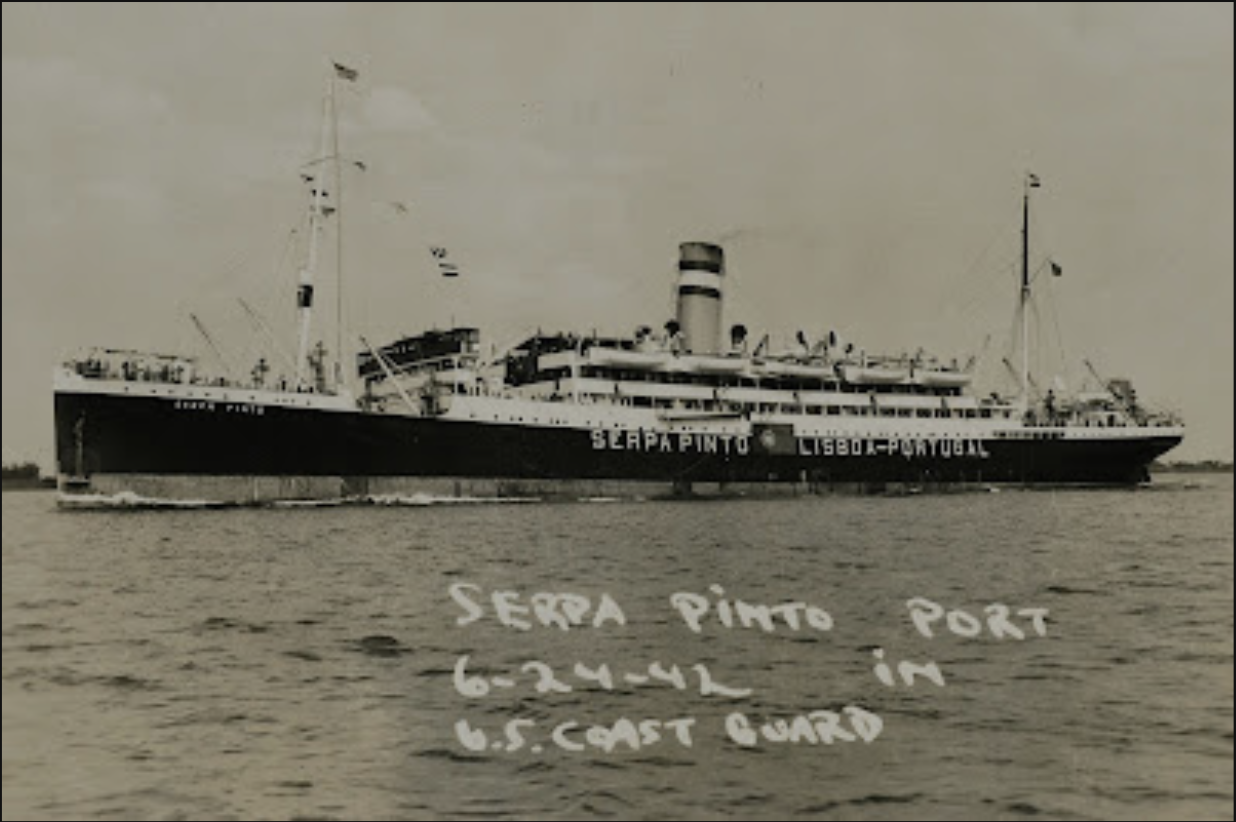
My parents were immigrants. They left Vienna in March, 1938, and arrived in Philadelphia in November, 1942, on a Portuguese ship called the Serpa Pinto.
Mes parents étaient des immigrants. Ils ont quitté Vienne en mars 1938 et sont arrivés à Philadelphie en novembre 1942, à bord d’un navire portugais appelé le Serpa Pinto.
Connected to the Quaker community through their pacifism, they settled in Philadelphia.
Liés à la communauté Quaker par leur pacifisme, ils s’installèrent à Philadelphie.
Though they’d only brought two suitcases with them in 1942, by the mid-1950’s, they’d already sold our rowhouse in a working-class suburb south of the city and built a split-level on a one acre plot in a middle-class suburb in the northwest. My little family truly lived the American dream.
Alors qu’ils n’avaient emporté que deux valises avec eux en 1942, au milieu des années 1950, ils avaient déjà vendu notre maison mitoyenne dans une banlieue ouvrière au sud de la ville et construit une maison à deux niveaux sur un terrain d’un acre dans une banlieue bourgeoise au nord-ouest. Ma petite famille vivait véritablement le rêve américain.
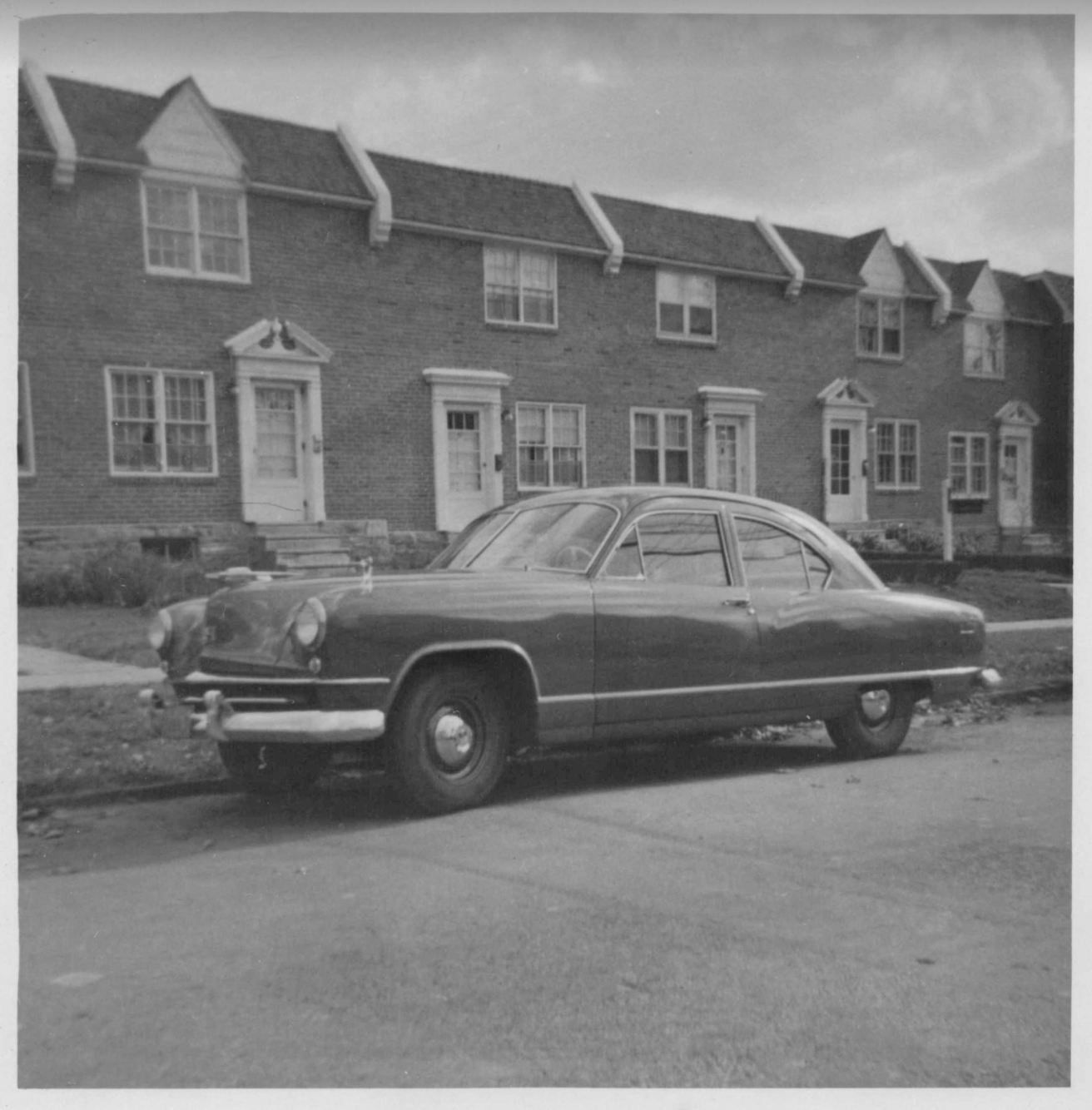
The second car my parents bought, the Kaiser, in front of their house in Morton in the early 1950s – La deuxième voiture achetée par mes parents, la Kaiser, devant leur maison à Morton au début des années 1950
Occasionally, we’d have guests from Europe or other parts of the country, usually other immigrants. After a day in Philadelphia seeing the Liberty Bell, which you could touch then, and Independence Hall, we’d cram into our car, me in the middle of the front seat, guests in the back, and take route 1, or later the turnpike, through New Jersey to New York City, where my father’s sister and most of their social circle had settled.
De temps en temps, nous recevions des invités venus d’Europe ou d’autres régions du pays, généralement d’autres immigrants. Après une journée passée à Philadelphie à visiter la Liberty Bell, que l’on pouvait alors toucher, et l’Independence Hall, nous nous entassions dans notre voiture, moi au milieu du siège avant, les invités à l’arrière, et empruntions la route 1, puis l’autoroute, pour traverser le New Jersey jusqu’à New York, où la sœur de mon père et la plupart de leur cercle social s’étaient installés.
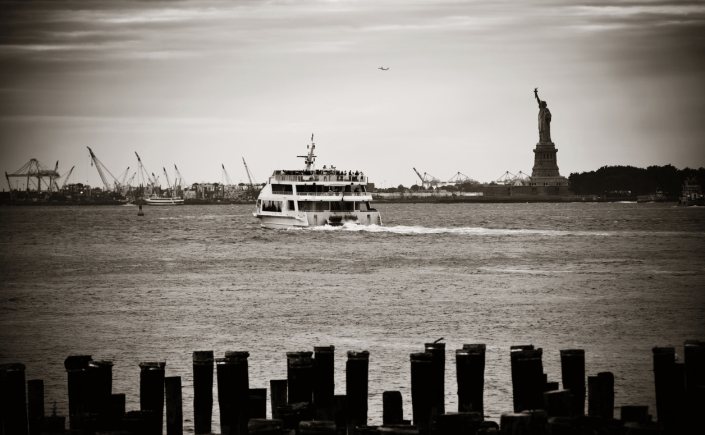
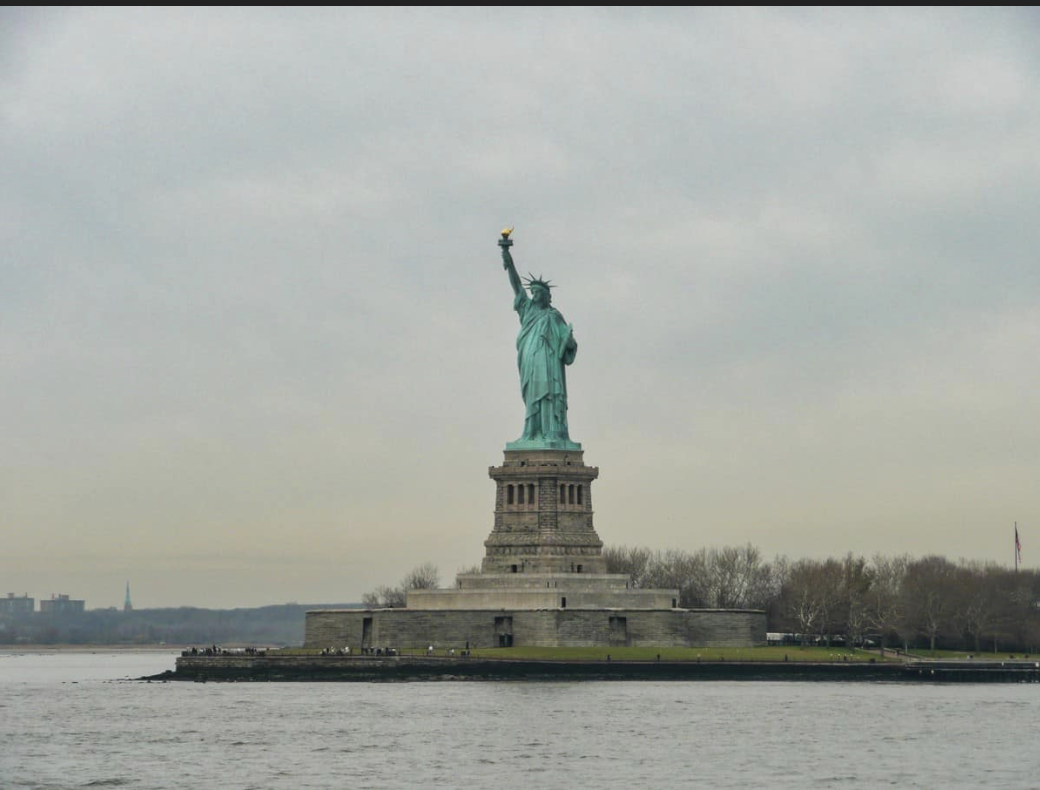
Aside from the visit to Eclair Bakery, the best part of the trip to New York was the ride on the Staten Island Ferry. It cost a quarter round-trip and it went by the Statue of Liberty.
Outre la visite à la boulangerie Eclair, le meilleur moment de notre séjour à New York a été la traversée en ferry de Staten Island. Le billet aller-retour coûtait 25 cents et nous sommes passés devant la Statue de la Liberté.
Most of the other passengers on the ferry were commuters, so it wasn’t too hard to find places to stand on the side where you could see the statue. Every time we passed her, my father would proudly tell the story of how the statue was a gift from France, where he and my mother lived between 1938 and their arrival in America. My favorite part of the tale was where the money came from to build the enormous statue and the pedestal to hold it.
La plupart des autres passagers du ferry étaient des navetteurs, il n’était donc pas trop difficile de trouver des places où se tenir debout sur le côté d’où l’on pouvait voir la statue. Chaque fois que nous passions devant elle, mon père racontait fièrement comment cette statue avait été offerte par la France, où lui et ma mère avaient vécu entre 1938 et leur arrivée en Amérique. Ce que je préférais dans cette histoire, c’était l’origine des fonds qui avaient permis de construire cette statue gigantesque et le piédestal qui la soutenait.
It wasn’t France’s national government that paid for the gift. That would have been considered inappropriate. Instead, hundreds of municipalities, from tiny villages to great cities, gave thousands of francs to build the statue. Schoolchildren saved up and donated centimes. Descendants of French soldiers who fought in the American Revolution contributed. The skin of the statue is made of copper offered by a French copper company.
Ce n’est pas le gouvernement français qui a financé ce cadeau. Cela aurait été considéré comme inapproprié. Ce sont plutôt des centaines de municipalités, des petits villages aux grandes villes, qui ont donné des milliers de francs pour construire la statue. Les écoliers ont économisé et donné des centimes. Les descendants des soldats français qui ont combattu pendant la Révolution américaine ont également contribué. La peau de la statue est faite de cuivre offert par une entreprise française spécialisée dans ce métal.
Yet when the gift was finally ready, it wasn’t certain that the statue would ever be erected in America, Many powerful Americans, including the New York Times, opposed it. But in the end, Joseph Pulitzer organized a campaign asking children to contribute pennies, and enough money was raised to install Lady Liberty in New York Harbor.
Cependant, lorsque le cadeau fut enfin prêt, il n’était pas certain que la statue serait un jour érigée en Amérique. De nombreux Américains influents, dont le New York Times, s’y opposaient. Mais finalement, Joseph Pulitzer organisa une campagne demandant aux enfants de donner quelques centimes, et suffisamment d’argent fut récolté pour installer Lady Liberty dans le port de New York.
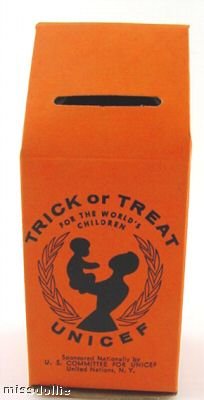
I collected pennies. And I carried a carefully constructed Unicef donation box with me every Halloween. I knew about children contributing to great causes.
Je collectionnais les pièces de monnaie. Et chaque Halloween, je portais avec moi une boîte de dons pour l’Unicef soigneusement fabriquée. Je savais que les enfants pouvaient contribuer à de grandes causes.
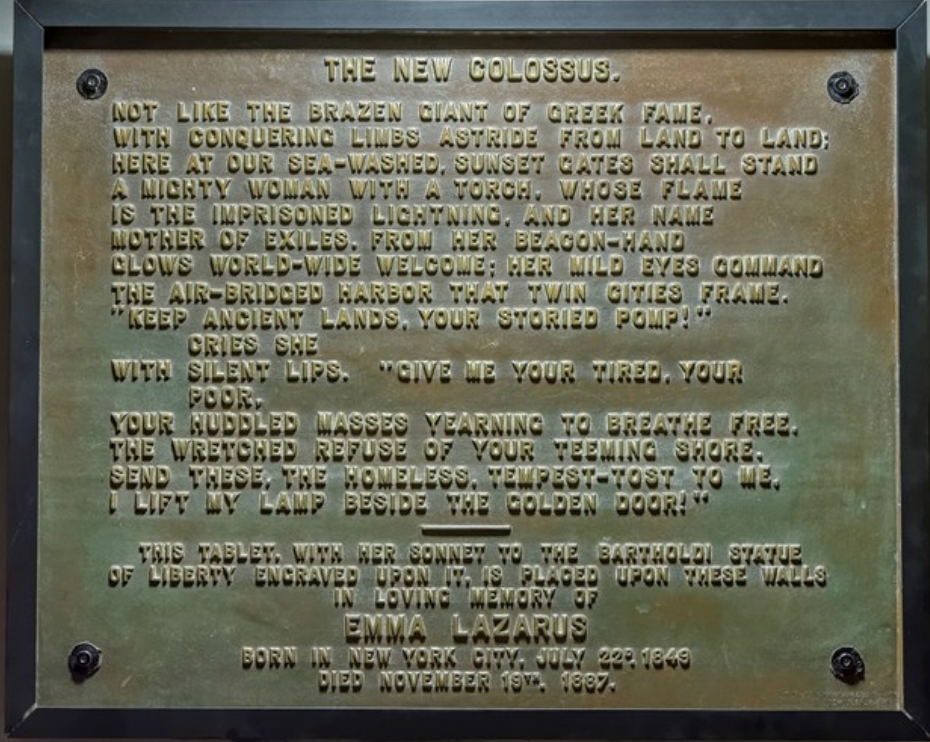
And then there was Emma Lazarus’s poem, The New Colossus, which was written for the statue.
Et puis il y avait le poème d’Emma Lazarus, The New Colossus, qui avait été écrit pour la statue.
“Give me your tired, your poor,
Your huddled masses yearning to breathe free,
The wretched refuse of your teeming shore.
Send these, the homeless, tempest-tost to me,
I lift my lamp beside the golden door!”
« Donnez-moi vos pauvres, vos exténués,
La foule qui aspire à vivre libre,
Le rebut de vos rivages surpeuplés.
Envoyez-moi ces sans-abri, ces victimes de la tempête,
Je lève ma lampe près de la porte dorée ! »
I felt both embraced and empowered by the Statue of Liberty.
Je me suis sentie à la fois étreinte et inspirée par la Statue de la Liberté.
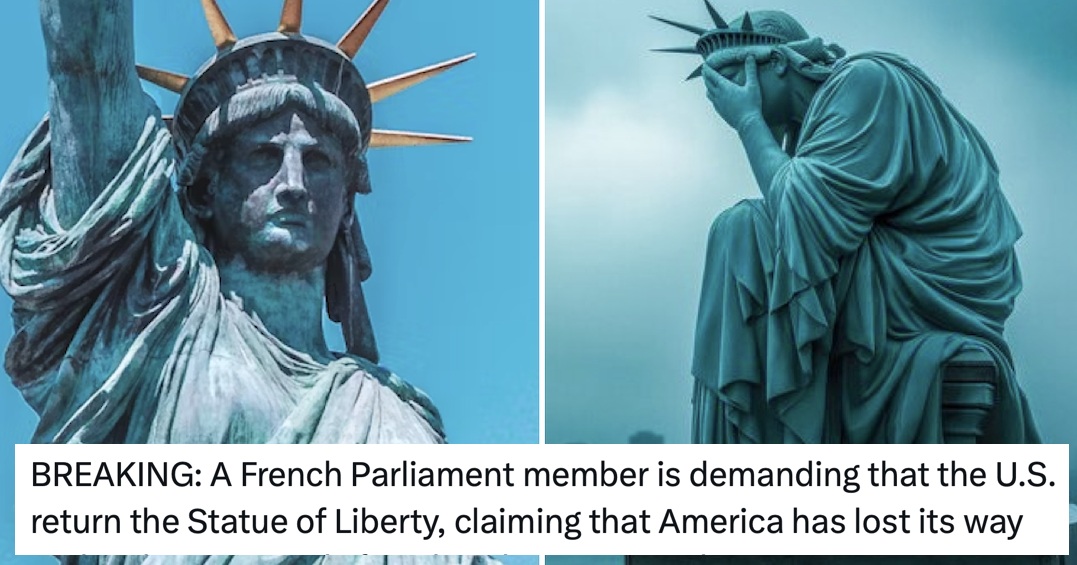
Now, that idealism is gone, the wretched refuse scorned, and immigrants imprisoned. The golden door is closed.
Aujourd’hui, cet idéalisme a disparu, les misérables sont méprisés et les immigrants emprisonnés. La porte dorée est fermée.
My father, a green card holder who was never naturalized, would be living in fear instead of pride.
Mon père, titulaire d’une carte verte qui n’a jamais été naturalisé, vivrait dans la peur plutôt que dans la fierté.
Today I woke up in a different world than I lived in yesterday. Granted it’s two weeks that I’ve been suffering from the terrible flu that’s going around this year, but I do feel much better. Almost myself. Yet today something new is happening. Beyond the lingering cough and minor aches and pains, there’s a delicate sense of vibrancy. My first thought was that I was feeling spring coming, that the seeds and roots, asleep underground for the winter, were waking up. Hope rekindling.
Aujourd’hui, je me suis réveillé dans un monde différent de celui dans lequel je vivais hier. Certes, cela fait deux semaines que je souffre de cette terrible grippe qui sévit cette année, mais je me sens beaucoup mieux. Je suis presque redevenu moi-même. Pourtant, aujourd’hui, quelque chose de nouveau se produit. Au-delà de la toux persistante et des douleurs mineures, je ressens une délicate sensation de vitalité. Ma première pensée a été que je sentais le printemps arriver, que les graines et les racines, endormies sous terre pendant l’hiver, se réveillaient. L’espoir renaissait.
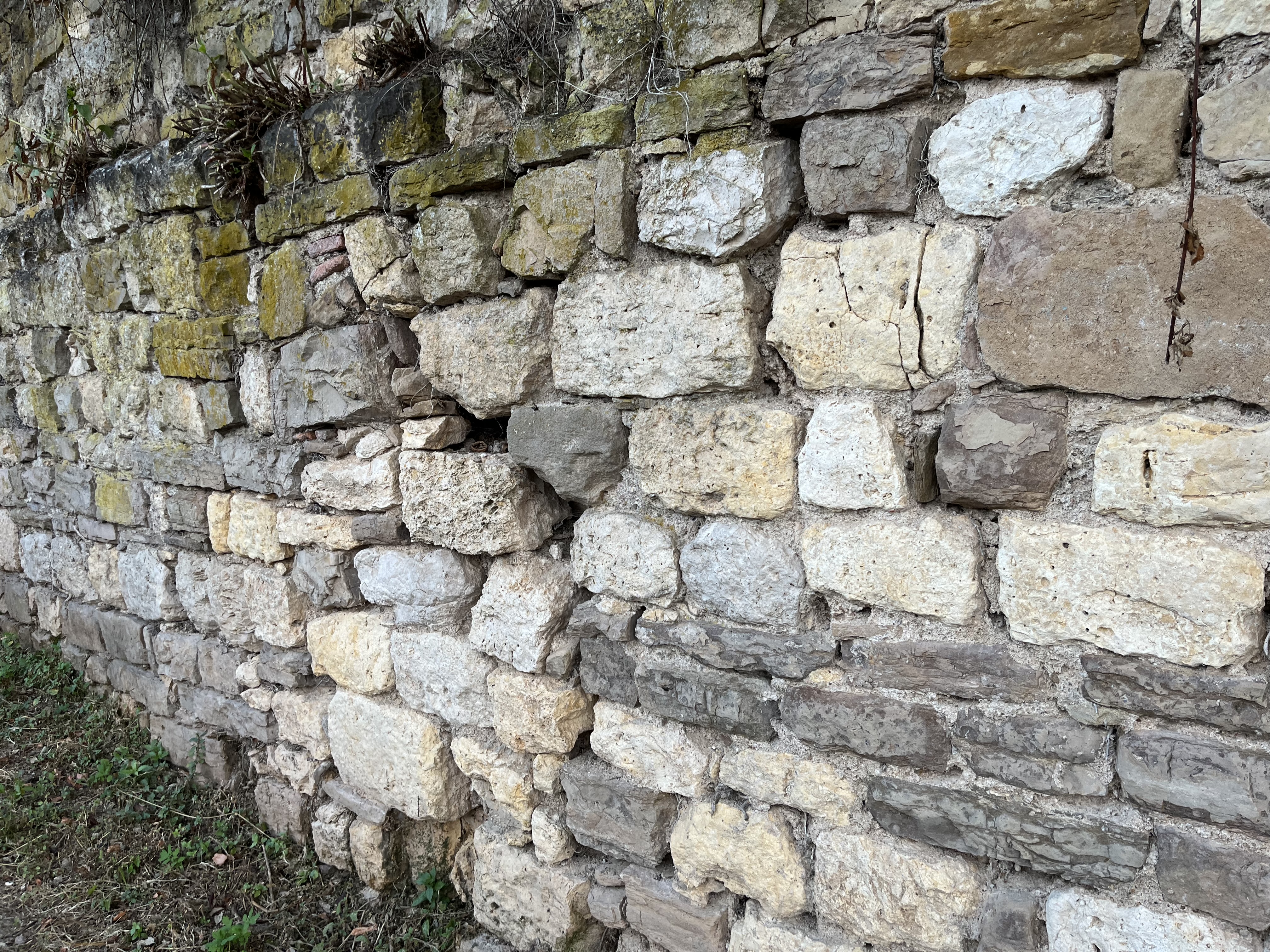
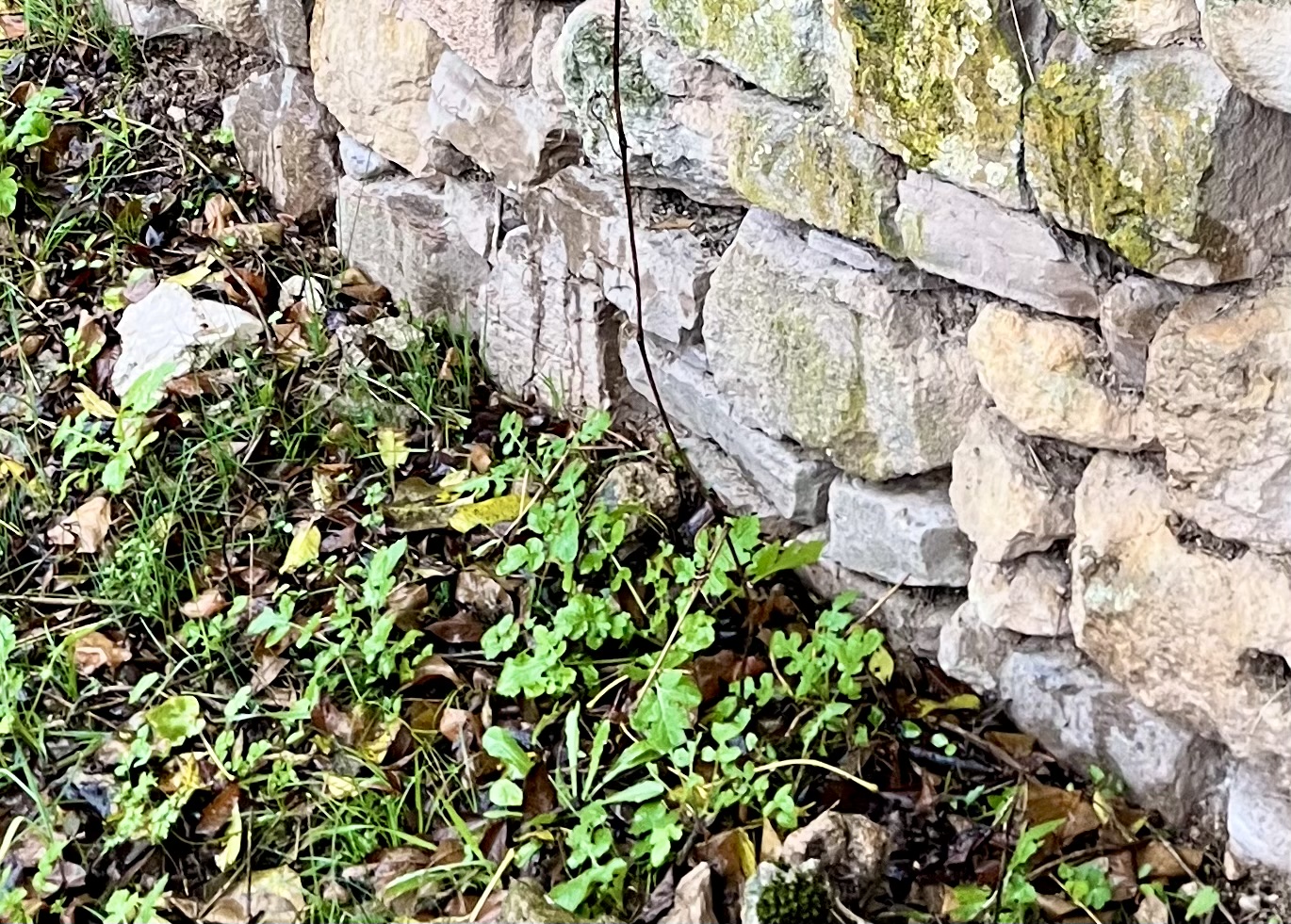
When I went out into the village to take the dog for her morning walk, the sensation expanded. “Good morning,” I said to the stones in the ancient wall as I always do. Immeasurably slowly, in a voice too deep for my ears to hear, one of the stones replied. “Good morning.”
Lorsque je suis sortie dans le village pour promener mon chien, cette sensation s’est amplifiée. « Bonjour », ai-je dit aux pierres du mur ancien, comme je le fais toujours. D’une lenteur infinie, d’une voix trop grave pour que mes oreilles puissent l’entendre, l’une des pierres m’a répondu : « Bonjour ».
“Hello! Hello! Hello” I felt the leaves of little plants at the foot of the wall tinkle. “Hello!” I answered, tickled by the vibration.
« Bonjour ! Bonjour ! Bonjour ! » Je sentais les feuilles des petites plantes au pied du mur vibrer. « Bonjour ! » répondis-je, chatouillé par la vibration.
Over the next few moments, everything around me reached out to greet me. I barely have words to describe it. Rich, orchestral, multi-layered, subtle, vibrant, exciting, joyous. I couldn’t get enough. It lasted through our whole walk. I felt embraced, engulfed, held, welcomed by an enchanted world.
Au cours des instants qui ont suivi, tout ce qui m’entourait s’est mis à m’accueillir. Je n’ai pas vraiment les mots pour décrire ça. C’était riche, orchestral, complexe, subtil, vibrant, exaltant, joyeux. Je n’en avais jamais assez. Ça a duré tout le long de notre balade. Je me sentais enlacé, enveloppé, soutenu, accueilli par un monde enchanté.
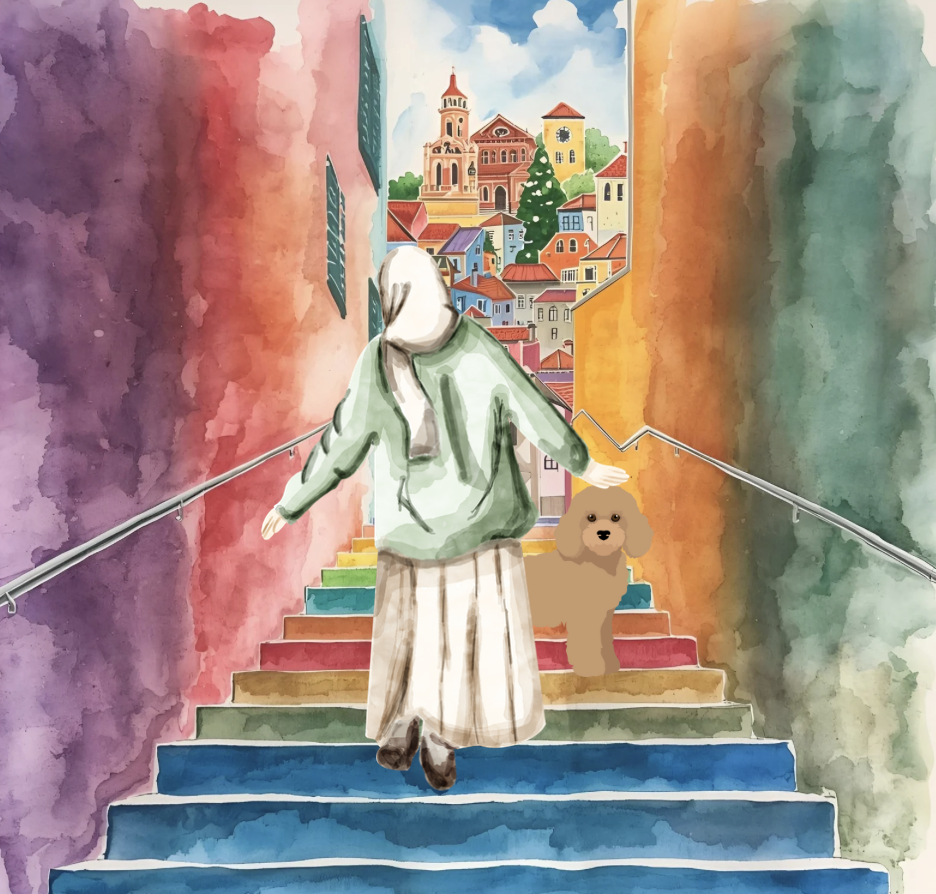
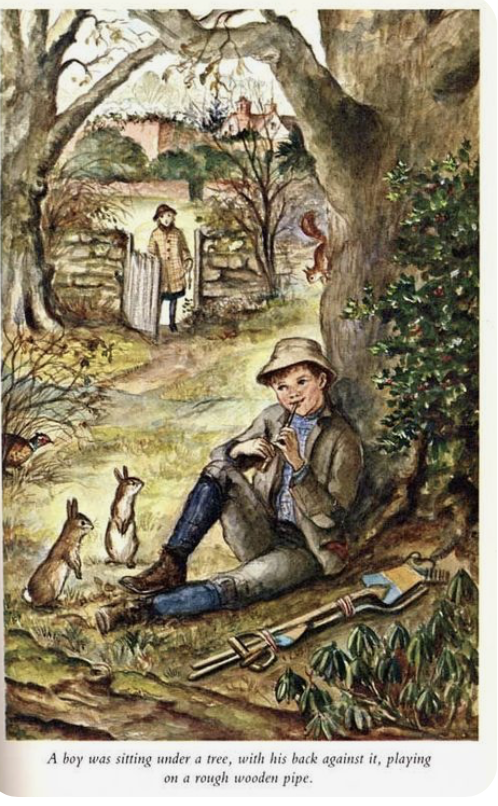
It’s something I’ve wished for as long as I can remember, the world of make-believe I lived in as a solitary child surrounded by dolls, stuffed animals, and toys who all talked. When I outgrew that world, I longed to be like Dickon in The Secret Garden who talked with the animals.
C’est quelque chose que j’ai toujours souhaité, depuis aussi longtemps que je me souvienne : le monde imaginaire dans lequel je vivais quand j’étais une enfant solitaire, entourée de poupées, d’animaux en peluche et de jouets qui parlaient tous. Quand j’ai dépassé cet âge, j’ai rêvé d’être comme Dickon dans Le Jardin Secret, qui parlait avec les animaux.
The Secret Garden, illustration by Tasha Tudor
One of the best parts of visiting Alice O. Howell in her handsome Victorian home in Monterey, Massachusetts, was seeing in person the hand-decorated signs on objects everywhere with their names on them. The names were very clever, often delightfully metaphorical, always charming, sometimes so funny you’d laugh every time you remembered them. Which, unfortunately, I don’t. My favorite of Alice’s books has always been been The Dove in the Stone, which I find speaks to the re-enchantment of the world in more comprehensible language than much of the post-Jungian work on the same subject.
L’un des meilleurs moments de ma visite chez Alice O. Howell, dans sa magnifique maison victorienne de Monterey, dans le Massachusetts, a été de voir de mes propres yeux les étiquettes décorées à la main apposées sur tous les objets, avec leur nom inscrit dessus. Les noms étaient très ingénieux, souvent délicieusement métaphoriques, toujours charmants, parfois si drôles qu’on ne pouvait s’empêcher de rire chaque fois qu’on s’en souvenait. Ce qui, malheureusement, n’est pas mon cas. Mon livre préféré d’Alice a toujours été The Dove in the Stone, qui, selon moi, parle du réenchantement du monde dans un langage plus compréhensible que la plupart des ouvrages post-jungiens sur le même sujet.
Since Mocha and I have been home, the sensation of all-encompassing aliveness has barely abated. “Have a glass of water,” called the faucet as I was taking off my shoes. And I did, greeting and thanking the glass that held the sparkling. living liquid. feeling the water’s aliveness as it traveled through my body.
Depuis que Mocha et moi sommes rentrés à la maison, cette sensation de vitalité omniprésente ne s’est pratiquement pas atténuée. « Bois un verre d’eau », m’a invité le robinet alors que j’enlevais mes chaussures. C’est ce que j’ai fait, en saluant et en remerciant le verre qui contenait ce liquide vivant et pétillant, tout en ressentant la vitalité de l’eau qui parcourait mon corps.
Iain McGilchrist would say that such a sense of connectedness, of amity, of being part of the family of everything, resides in the right brain. It is endemic to the top half of the Cycle of Synthesis, which I’ve been exploring in a recent series of talks.
Iain McGilchrist dirait qu’un tel sentiment d’appartenance, d’amitié, de faire partie de la famille de tout, réside dans le cerveau droit. Il est endémique à la moitié supérieure du Cycle de Synthèse, que j’ai exploré dans une récente série de conférences.
As I write, the feeling is fading a bit, becoming background to a more ordinary foreground.
Au moment où j’écris, ce sentiment s’estompe quelque peu, passant à l’arrière-plan pour laisser place à un premier plan plus ordinaire.
I hope. I believe, I trust, it will come back.
J’espère. Je crois, j’ai confiance, cela reviendra.