Every now and then I’m planning to introduce you to some of the people who live in our neighborhood. My husband Tom kindly agreed to be my guinea pig for the project, so here he is!
I asked him a series of questions beginning with “On a routine day in your life, what give you the most pleasure?”

He takes a sip of his wine and spreads some camembert from Fromagerie Sophie on his cracker.
“The most pleasure? Eating cheese and drinking red wine,” he says.
“And feeling the wind whistle past my ears when I ride my bike. I’m very fond of that. Just feeling the air. And I like the soft light of the evening.”
He eats some more cheese and considers.
“Just simple creature comforts give me the most pleasure.”
After enjoying some of the wine and cheese myself, I ask, “What activities in general give you the greatest joy?”
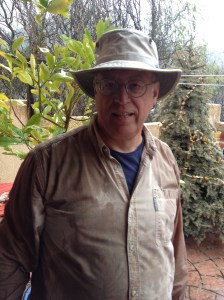
“Diverting water,” he says without hesitation. (This is a guy who spent most of the last few weekends repairing a gray water system he built in our backyard. Lots of water to divert).
He continues, “Walking on the beach, eating great food, sex, GREAT music, oh, listening to great music like Rachmaninov’s 2nd and 3rd piano concertos, oh, I love that!
“All the sensory stuff. I’m not real big into thinking grand thoughts. I’m more emotionally driven than cognitively driven, more into senses than internal cognitive states.”
We finish off the cheese and wine. I ask, “What experiences in your life changed the way you see the world most dramatically?
He barely pauses. “Camping, being outdoors and realizing it doesn’t have to be thought of as God’s creation, but whatever it is, it’s damn beautiful. Canoeing across a lake in upper Minnesota or hiking up in the mountains in Colorado. You just can’t beat that.

“That year in France, speaking foreign languages, meeting other people, eating their food, laughing at their jokes. Humans, I like humans a lot. That’s why I like teaching.
“Going to Africa, being in the villages.
“Reading great books. They open your mind, change how you look at things. It’s very important to read books from many different perspectives. That really opens your mind the most. I’ll read one book about how Europe underdeveloped Africa and then the next book is about the human body. I like that, I really like that.” He pours himself another glass of wine.
“What do you like about the way you make a living?” I ask.
“I love the variety. Running the chocolate business, Mama Ganache, you’re constantly running into all kinds of problems and challenges. Teaching, you’re always trying to be on the edge, trying to do a good job.
“I remember buying some antiques from an old farmhouse in Texas and there was a sign that said Ich will streben nach dem Leben: I will strive to live. I like that Germanic idea of striving. I like trying to do as well as I possibly can. Without being a type A personality, just for the heck of it, just for the variety and the challenge. I like that, I like that.”
I continue, “What was your favorite job?”
“Huh. My favorite job? I liked them all. I liked playing the pipe organ because I like the challenge of making good sounds and the preachiness of organ music; collecting rat urine, well, I wouldn’t say that was my favorite job, but it was fun hanging around scientists. I liked baking, I liked working the line in a French kitchen, getting into arguments with the chef, running a restaurant, having a fun time with Puerto Ricans – the restaurant industry is full of Puerto Ricans in New York, great people, fun to josh around with, I learned a lot of Spanish. Ah, every job has so many good things about it – as long as you stay open-minded – stay curious about the world.”
We drink the last of the wine, a very nice cab from Vina Robles, as the sun goes down behind Bishop’s Peak. Am I fortunate or what?


 Right now, the moment you step outdoors you take a deep breath. The enchanting scent of mock orange is everywhere, a delicate, complex citrus so delicious it stops you in your tracks. Breathe! it says. Breathe again! The scent’s source is
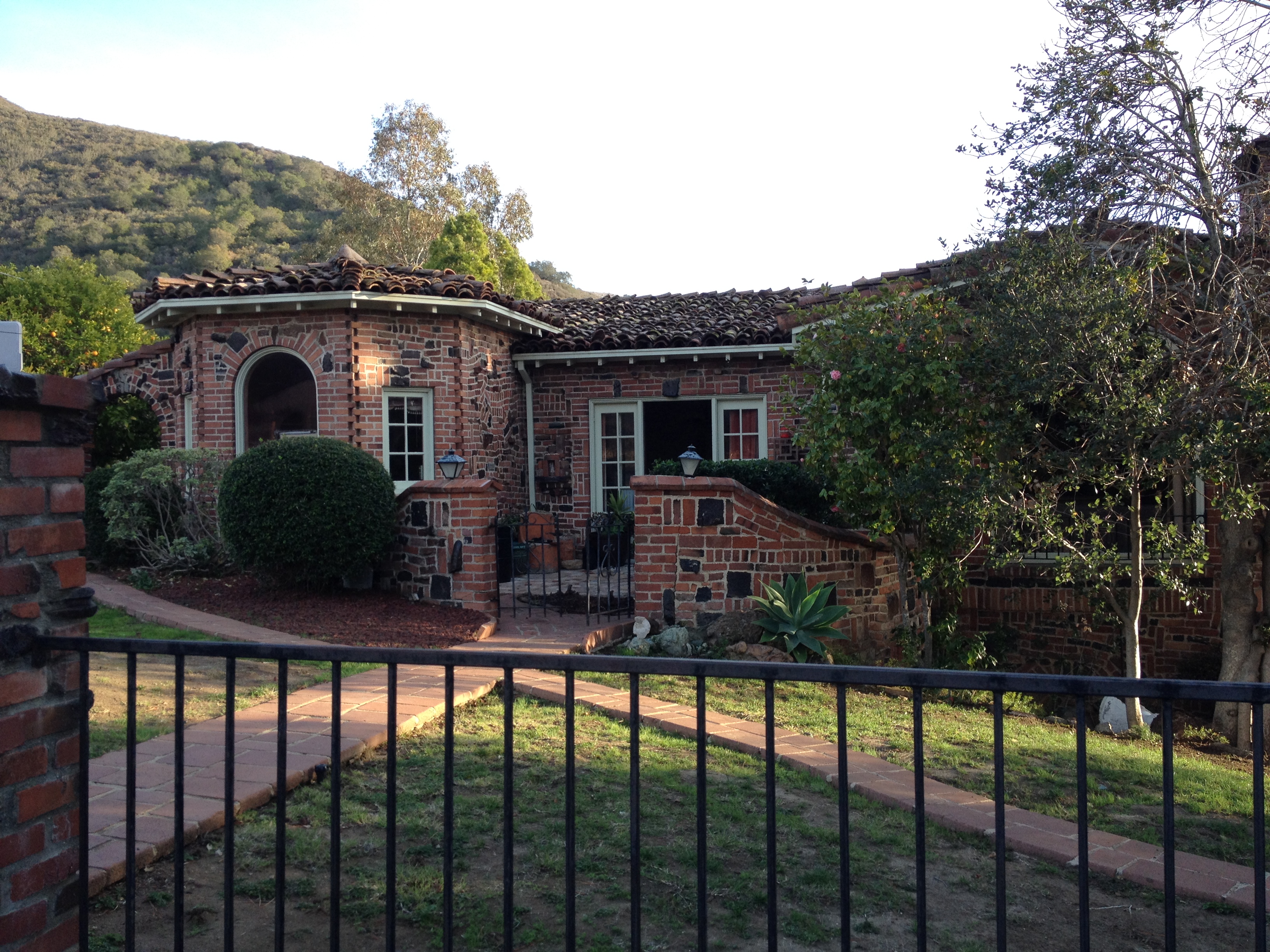
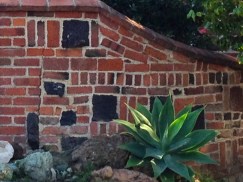 The man who built this fairytale of a house built whimsical walls of misshapen bricks all over town in the 1920’s. I think there are about six.