
La coopération au cœur du chaos : un nouveau rêve
I’m going up a mountain path with a big group of people. Some of them are bringing Donald Trump to give a speech. They’re having trouble getting him up the hill. Donald Trump isn’t big. He’s small and round, a lot like those orange Trump balloons you see at protests, and people are sort of carrying him up the mountain by squeezing him between them.
Je remonte un sentier de montagne avec un grand groupe de personnes. Certaines d’entre elles emmènent Donald Trump pour qu’il prononce un discours. Elles ont du mal à le faire monter la colline. Donald Trump n’est pas grand. Il est petit et rond, un peu comme ces ballons orange à l’effigie de Trump qu’on voit lors des manifestations, et les gens le portent en quelque sorte en le serrant entre eux.
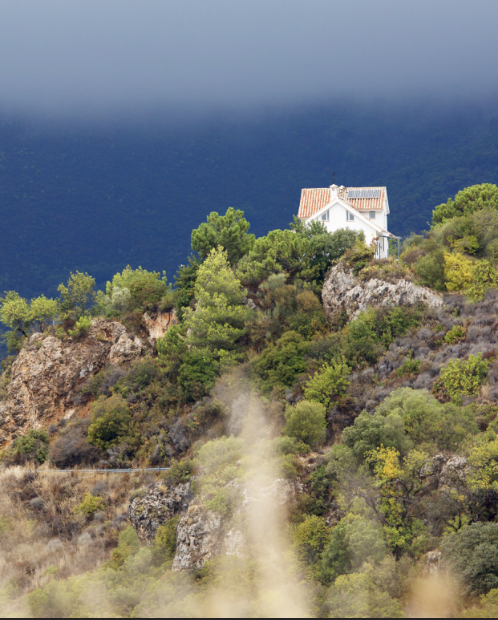
We arrive at our house, the only one on the mountain top. It’s a beautiful, new, white space, very luminous and clean. Trump gets installed in the front bedroom where there’s a bathroom. None of this is easy but I don’t remember the details. Eventually, it’s time for him to speak, and I see that there are so many people crowding onto the top of that mountain that there no way we’re going to be able to go down again.
Nous arrivons chez nous, la seule maison au sommet de la montagne. C’est un bel espace tout neuf, blanc, très lumineux et propre. Trump s’installe dans la chambre du devant, où se trouve une salle de bains. Tout cela n’est pas facile, mais je ne me souviens pas des détails. Finalement, l’heure de son discours arrive, et je constate qu’il y a tellement de monde entassé au sommet de cette montagne qu’il nous sera impossible de redescendre.

We manage to push through the crowds to get Trump into a central place. Though it’s not elevated like a platform, it’s in a place where people can all face. Trump is helpless – he clearly doesn’t know what to do in that kind of situation. And he refuses do what we ask, or he isn’t able to do what we ask. People have to prop him up. It’s confusing and chaotic.
Nous parvenons à nous frayer un chemin à travers la foule pour amener Trump à un endroit central. Même si ce n’est pas surélevé comme une estrade, c’est un endroit où tout le monde peut se tourner vers lui. Trump est désemparé : il ne sait manifestement pas comment se comporter dans ce genre de situation. Et soit il refuse de faire ce que nous lui demandons, soit il en est incapable. Il faut que des gens le soutiennent. C’est déroutant et chaotique.
After a while some people take him aside, somewhere just off to the top of the mountain, and he never does give the speech. But people from the audience, people of all different colors and nationalities start coming forward to speak. A beautiful girl in a hijab comes up with two other girls, and they sing the most exquisite song in harmony. And other people stand up and give short speeches about peace and cooperation from wherever they are in the crowd.
Au bout d’un moment des gens l’emmènent à l’écart, quelque part près du sommet de la montagne, et il ne prononce jamais son discours. Mais des personnes du public, de toutes les couleurs et de toutes les nationalités, commencent à s’avancer pour prendre la parole. Une belle jeune fille portant un hijab s’avance avec deux autres jeunes filles, et elles chantent en chœur une chanson d’une beauté exquise. D’autres personnes se lèvent et prononcent de brefs discours sur la paix et la coopération, où qu’elles se trouvent dans la foule.

I don’t know where Trump is, but we can’t leave because more and more people are still coming up the mountain. People start going into our house to use the bathroom, and some women make soup, a potage like the French make out of whatever vegetables there are, and they pass it around in paper cups to everybody. The crowd is no problem, and Trump has completely disappeared.
Je ne sais pas où est Trump, mais on ne peut pas partir car de plus en plus de gens continuent d’arriver en haut de la montagne. Les gens commencent à entrer chez nous pour aller aux toilettes, et les femmes préparent de la soupe, un potage comme le font les Français avec les légumes qu’elles trouvent, et elles la distribuent à tout le monde dans des gobelets en papier. La foule ne pose aucun problème, et Trump a complètement disparu.
In the end, even though we knew we couldn’t leave and resources were limited, everything is working out, and it’s a joyous gathering.
Au final, même si nous savions que nous ne pouvions pas partir et que les ressources étaient limitées, tout s’arrange, et c’est une réunion très joyeuse.


