Just when you’re not expecting it…

Three days ago a friend suggested I join a Facebook group I’d never heard of, the Dull Women’s Club, so I could read some of the wonderful stories ordinary women from all over the world have posted. After about half an hour of reading, I dashed off an introduction to myself and my quiet world here in rural France. Who knew that a couple days later that post would have so many likes (12.5k this morning) and that it would lead to having contact with so many remarkable women? What an incredible experience.

I spent most of the next two days responding to the comments. I wanted to respond to every single one—so many of them touched my heart so deeply. What’s amazing about the stories is their ordinariness.

My teacher Alice O. Howell‘s book The Dove in the Stone is subtitled Finding the Sacred in the Commonplace, and that’s been my path ever since I first read it. I even facilitated a long-running discussion group about the book at my dining room table on Thursday mornings. But even though I was exploring the book every week and had a reasonable understanding of it, I can remember the exact moment that its importance sank into my bones.

We had a huge house in California then, very different from the little one we live in now. One or two of our five kids were always in college then, causing a major drain on our finances, so I cleaned the house myself. One day I’d climbed up to dust a high shelf and I was thinking about how to present the next chapter in The Dove and the Stone the next day. I picked up a small vase and was turning it in my hand to get the dust out of the cracks when it struck me.

Our big house

The understanding hit me in the heart like an electric shock and then rippled through my body. This is it. This is what I’m here for, to see the sacred in the commonplace. I had to climb down and make a cup of tea.

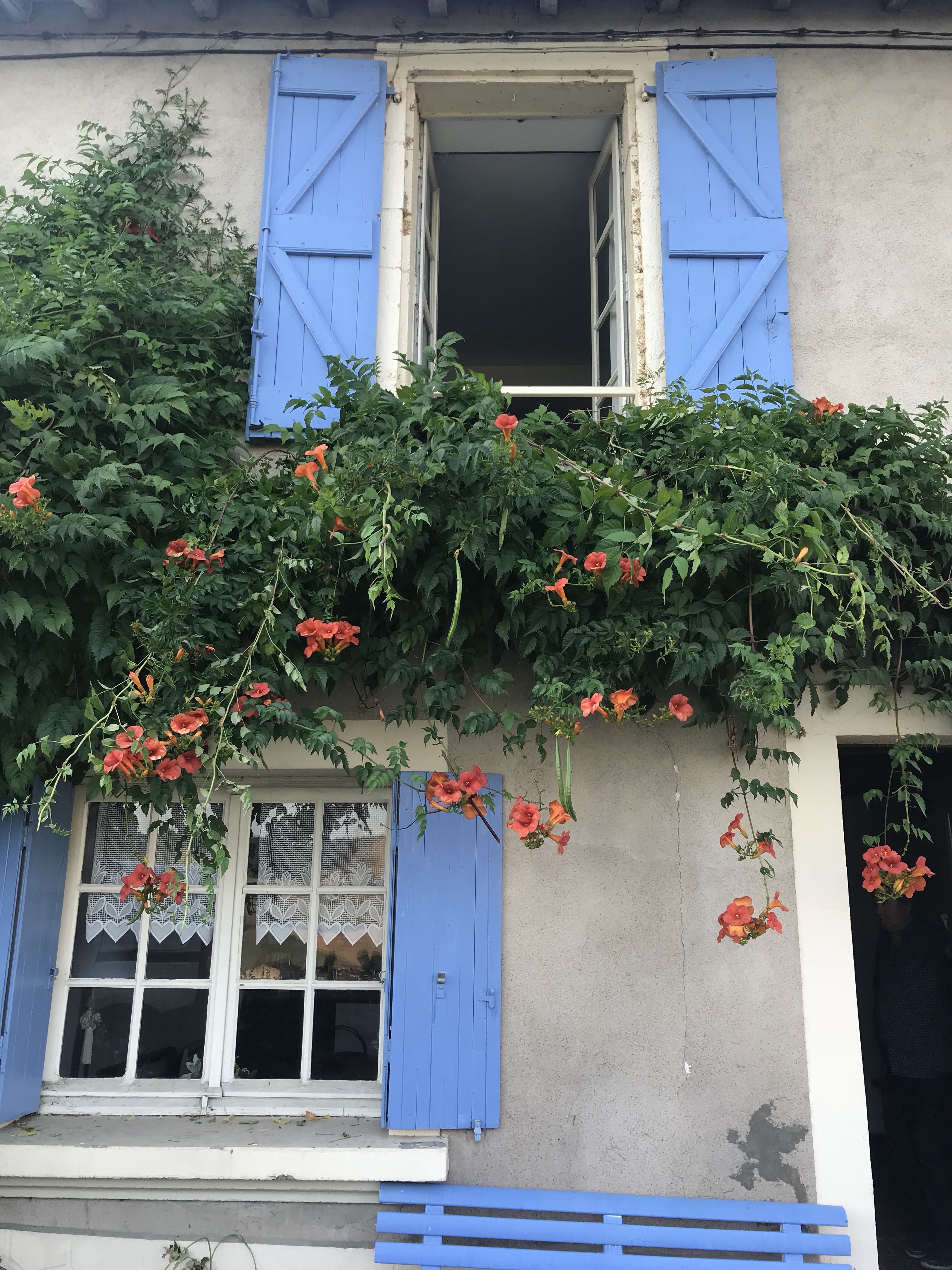
Our little house in France

So, when I came across the Facebook group filled with introductions to ordinary women my heart filled with joy. For the second time in my life I felt that I’d truly met my tribe. (The first was when I was 12 and went to an art and music camp for the first time.) But this time the tribe is hundreds of thousands of women.

Suddenly, as a result of the opportunity of meeting so many people through the facebook group, Red Vienna, is selling well, and lots of people are reading my blog.

On top of that, I found an outstanding narrator to for the audiobook version and her first sample arrived in my mailbox this morning.

I cannot express my gratitude. It’s over the top.

Ninety Days outside the Schengen area – good-bye California

THX MoM - a carving on a park bench at Lake Merritt, Oakland, CA.
THX MoM
Lake Merritt park bench, Oakland, CA

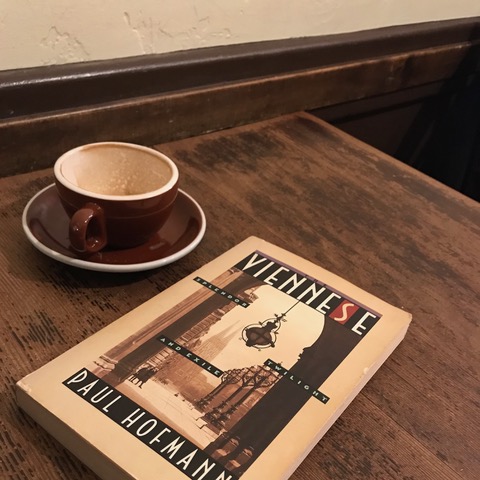
Though I’m sad to be leaving California behind, I’m filled with gratitude that our long term French visas, good for one year, have come. Dual Austrian/American citizenship is still in process, but I’m optimistic about that too, especially as reading The Viennese – Splendor, Twilight, and Exile makes me feel so very Viennese.

Coffee at Linnaea'sCoffee at Linnaea’s Cafe, San Luis Obispo

Once, when I told our retired psychoanalyst friend, Joe Abrahams, that it was my mother, my very Viennese mother, who finally pulled me to the top in a long series of dreams about mountains, he responded without hesitation, yes, that’s your purpose, to fulfill your mother’s dreams.

I’m deeply thankful that my mother passed on her dream of living in the south of France to me, as well as for my rich life in the United States till now. THX MoM.

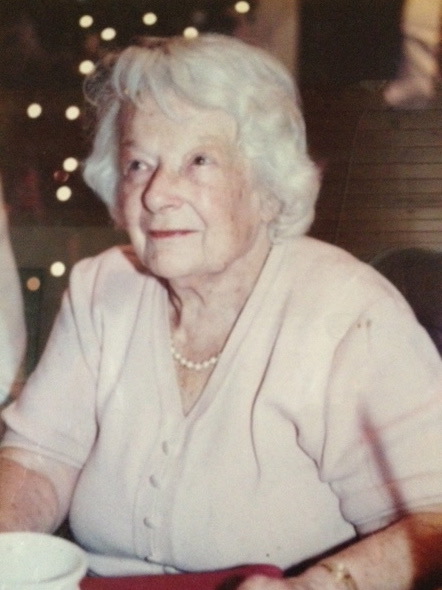
My mother, Trudy Baumohl, in California, near the end of her life

You know the sensation you get when you feel profoundly thankful – when the tests come back and you’re okay, when the car doesn’t hit the dog, when you realize what you’ve got, that tingle that spreads outward from the back of your head as the hypothalamus releases all those healing hormones? As the possibility of putting down roots in Cordes for a good while becomes more real, I feel deeply grateful more and more often. When I am there, I feel it every day as I open the shutters.

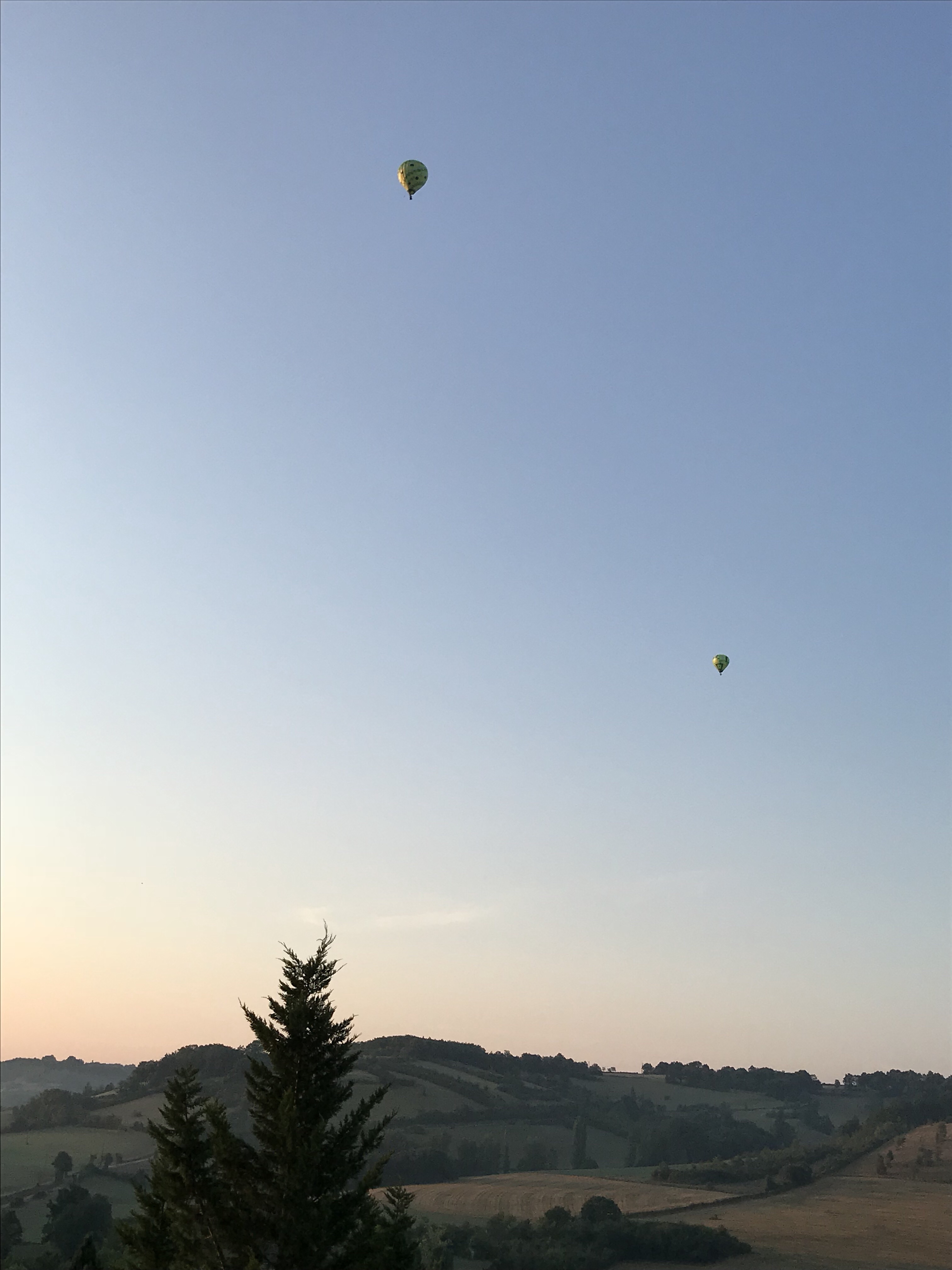
Sometimes there’s a hot balloon out there

Such gratitude cannot be conjured, though it can be courted. Like meditation, it isn’t something you do; it’s something that comes. Practice readies the heart, the mind, and the body; but true meditation and deep gratitude are states that arrive only by grace.

The cycle of giving and receiving gratitude is at the heart of the Iroquois belief system – the prime responsibility of the people to keep the cycle turning.

The yearly cycle of Iroquois Thanksgiving Ceremonies

The next few days will be our last in California for a while. I am grateful to so many of you for your love, laughter, and light during our years in San Luis: twenty years of learning, sharing, and growing.

As things seem pretty much in order for our departure, Tom and I plan to spend our two last afternoons in San Luis at Mama Ganache, where you are welcome to join us. One or the other, or maybe both of us, will be there between 2 and 5 on both Tuesday and Wednesday, January 8 and 9. Stop by.

We’d like to say thank you.

The loss of story – further reflections on the crumbling of perceptual boundaries

When I consider the lessons of our divestment over the past several years, the house on McCollum Street, the house on Park Street, Mama Ganache, a lifetime of acquisitions – I find I always return to the center: what I am, I take with me.

What I am has nothing to do with the things and stories that surround me. It doesn’t need even one suitcase to contain it, much less two. When nostalgia for what I had begins to fill me, wherever I am, I can go to my heart and feel at home with who I am, and that is enough.

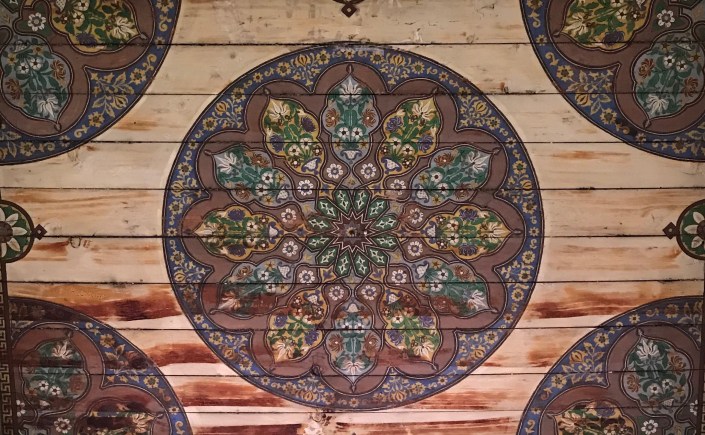
Ceiling tile for sale on a street in Morocco

It’s where I find hope, where I can recover that sense of eager anticipation the Hathors recommend in these times of failing expectations and beliefs, the loss of story, and crumbling perceptual boundaries.

One of the seminal books of my hippie years was a typewritten channeled teaching called Season of Changes. I’ve forgotten the details of the predictions, but I’m sure they’ve been borne out or will be soon enough. It was a dark view of the future, full of cataclysm and apocalypse. Written in question and answer format, the last responses concern how to respond to the changes. As I recall, the advice most forcefully given was to practice meditation.

It’s comforting to imagine that more people than ever are doing that, at least in my own bubble. It’s less comforting to remember how tiny a percentage of the world’s population my bubble contains.

But it’s sound advice. When the now threatening storm of storms is full upon us, when that moment of personal and collective apocalypse that we all feel coming finally arrives, it’s the meditators who will be able to hold the rudder.

Storm coming in at our house in Cordes

Meditation takes you to your center, to the center, the one we all have in common. It takes you out of the chaotic whirl of stories to the place of no story, where energy is conserved instead of fueling the miasma of outer experience.

It takes you beyond imagination, beyond the limits of space and time, and beyond the singular focus of our culture on the physical: on acquisition (growth vs. maintenance), on hierarchy (dominion vs. sharing), beyond your own little bit of the apocryphal elephant.

Letting go of the world as we know it, the world of perception, this particular consensus reality, is necessarily heart-breaking. It’s painful to separate from the things and people and stories we love, and love is, after all, what it’s all about.

The tricky part is to connect love to the universal rather than the particular.

And that’s where meditation can take you.

Ninety days outside the Schengen area – sacred geometry in Morocco

It was in the Nejjarine Museum of Wood Arts in Fès that the thought struck me. The chaos of the crumbling medina, the vibrancy of the souks, the noise, the pollution, the exploding energy of the colors, and the sheer quantity of stuff –

Souk, medina, Marrakech

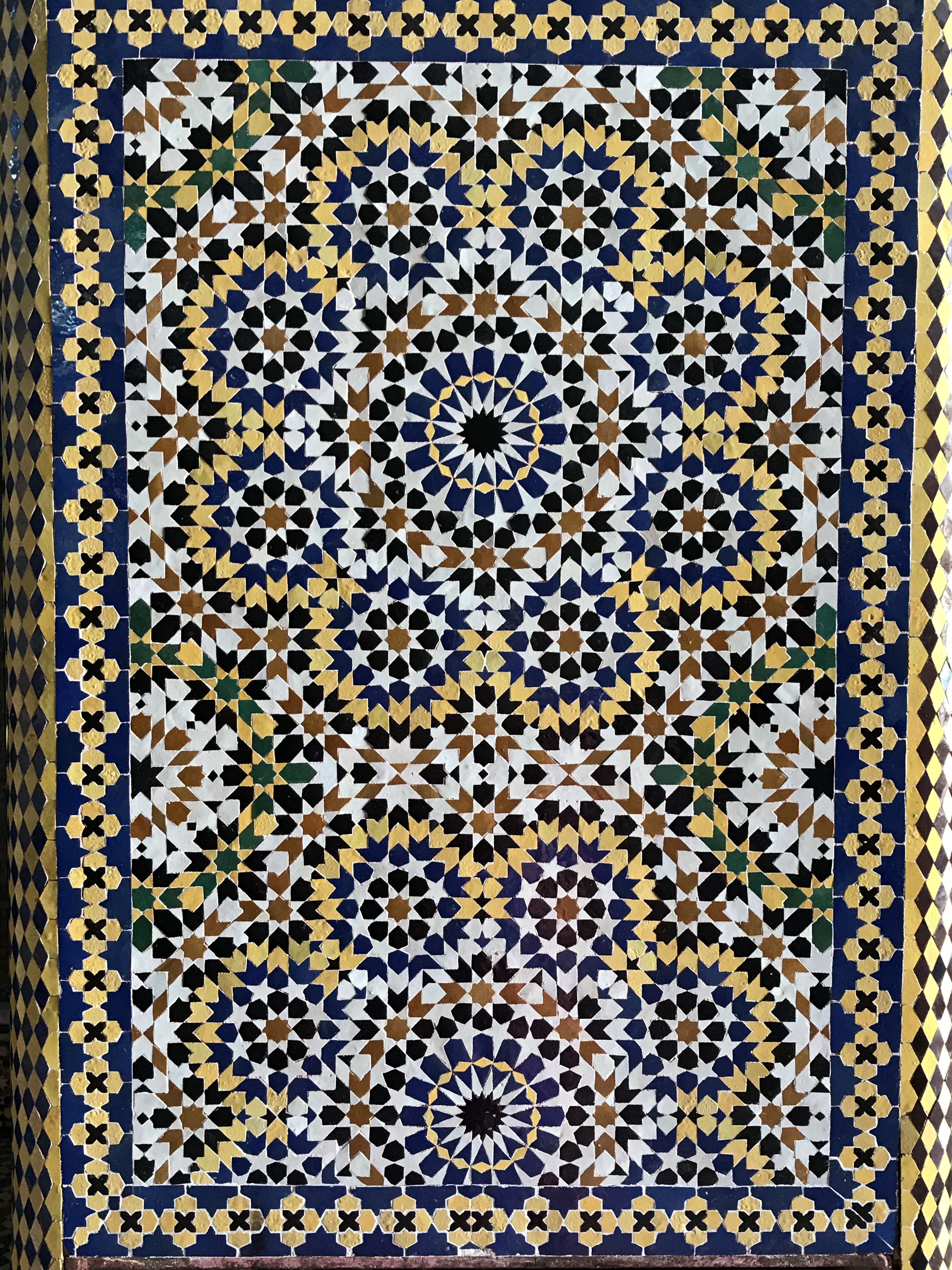
– is beautifully balanced by prevalence of the purposeful geometry, sacred geometry, everywhere.

That’s why Morocco is so enchanting.

Souk, medina, Fès, Morocco

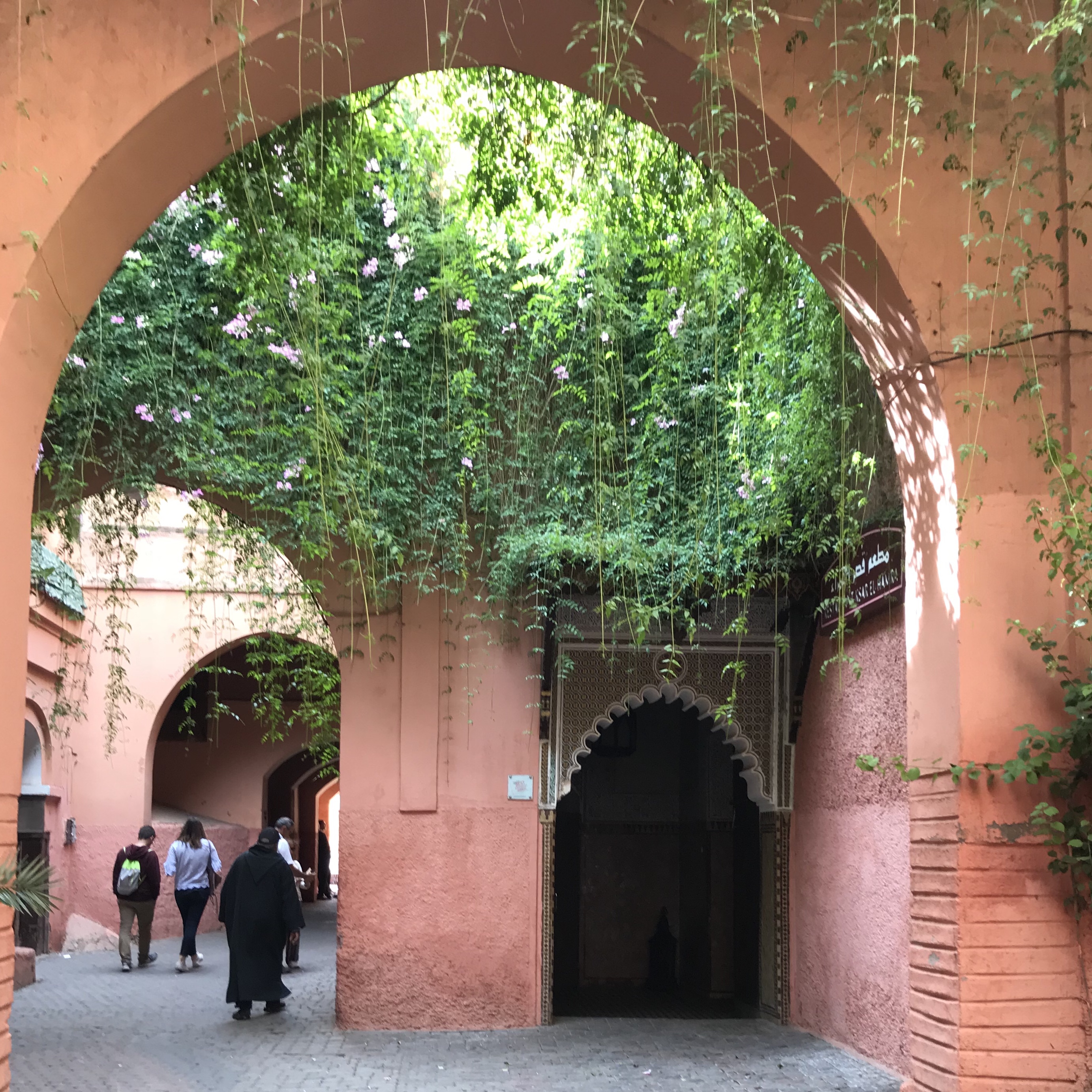
Doorway, Marrakech Musèe

Wall, Palais el Mokri

Islam takes the prohibition of worshipping graven images seriously, and discourages figurative art. Like all of life, art should be dedicated to God, and God is only describable as essence. Geometry is essence.

Fountain, Palais Glaoui, Fès

Who can resist being centered by such design?

All my years of studying sacred geometry, beginning even before my Ganesh Baba days, and then Dan Winter and most deeply with Alice O. Howell, peaked at that moment in the museum. I stood at the center of a ideally proportioned room surrounded by mandalas, exquisite symmetry, perfect curves, rhythmic repetition, and profoundly satisfying rectangles and squares.

I wanted to take dozens of pictures, but photography was not allowed, so I was forced to confront the serene beauty of that room face on. It was transformative.

Since then I’ve consciously attuned myself to noticing and letting the geometry take me in.

Palais el Mokri

Medina, Marrakech

Palais el Mokri, Fes

Pastry, souk, medina, Fès

Even contemporary Moroccan design uses the elements of sacred geometry to create beautiful calm spaces, as exemplified by our current Airbnb in the new part of Marrakech.

Magical!

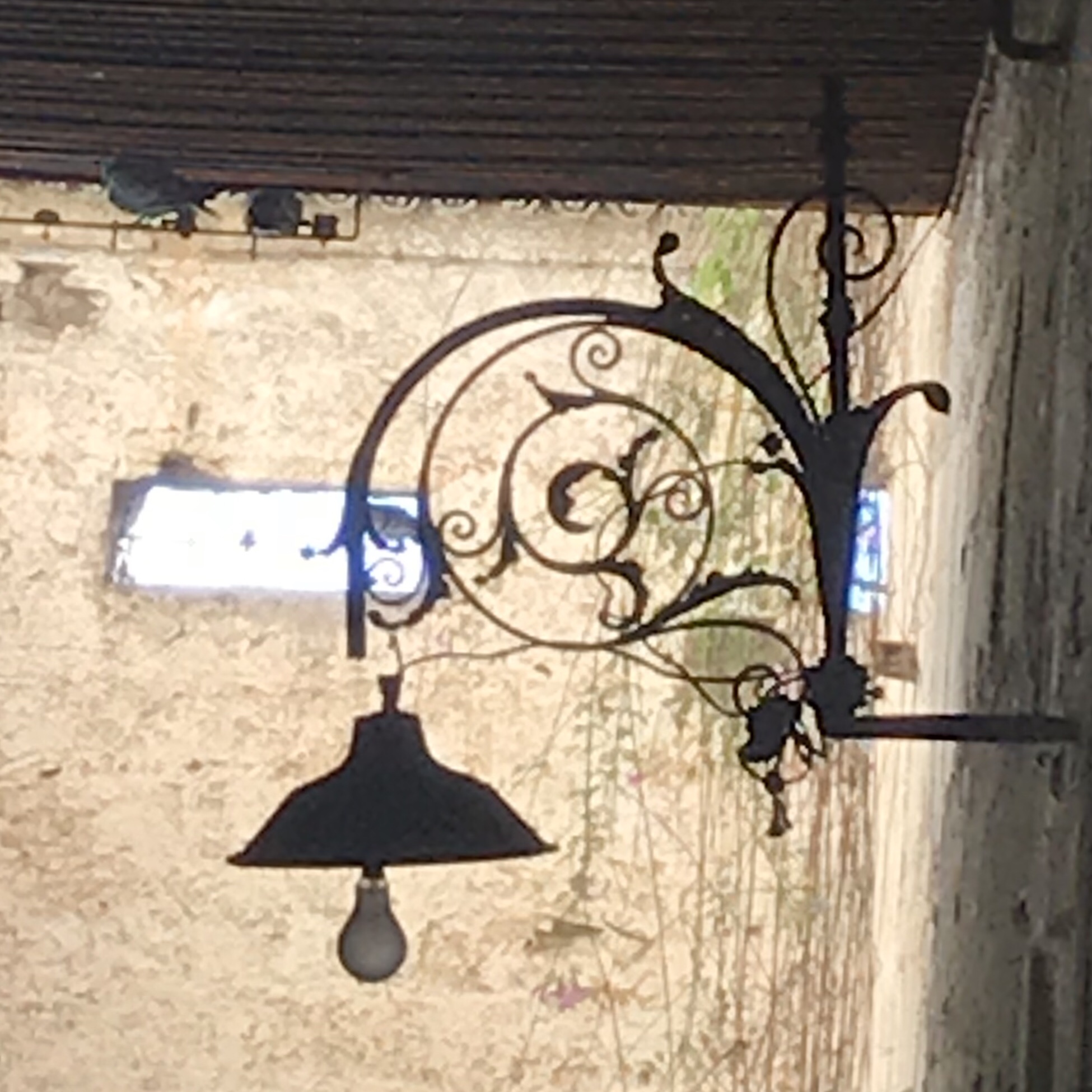
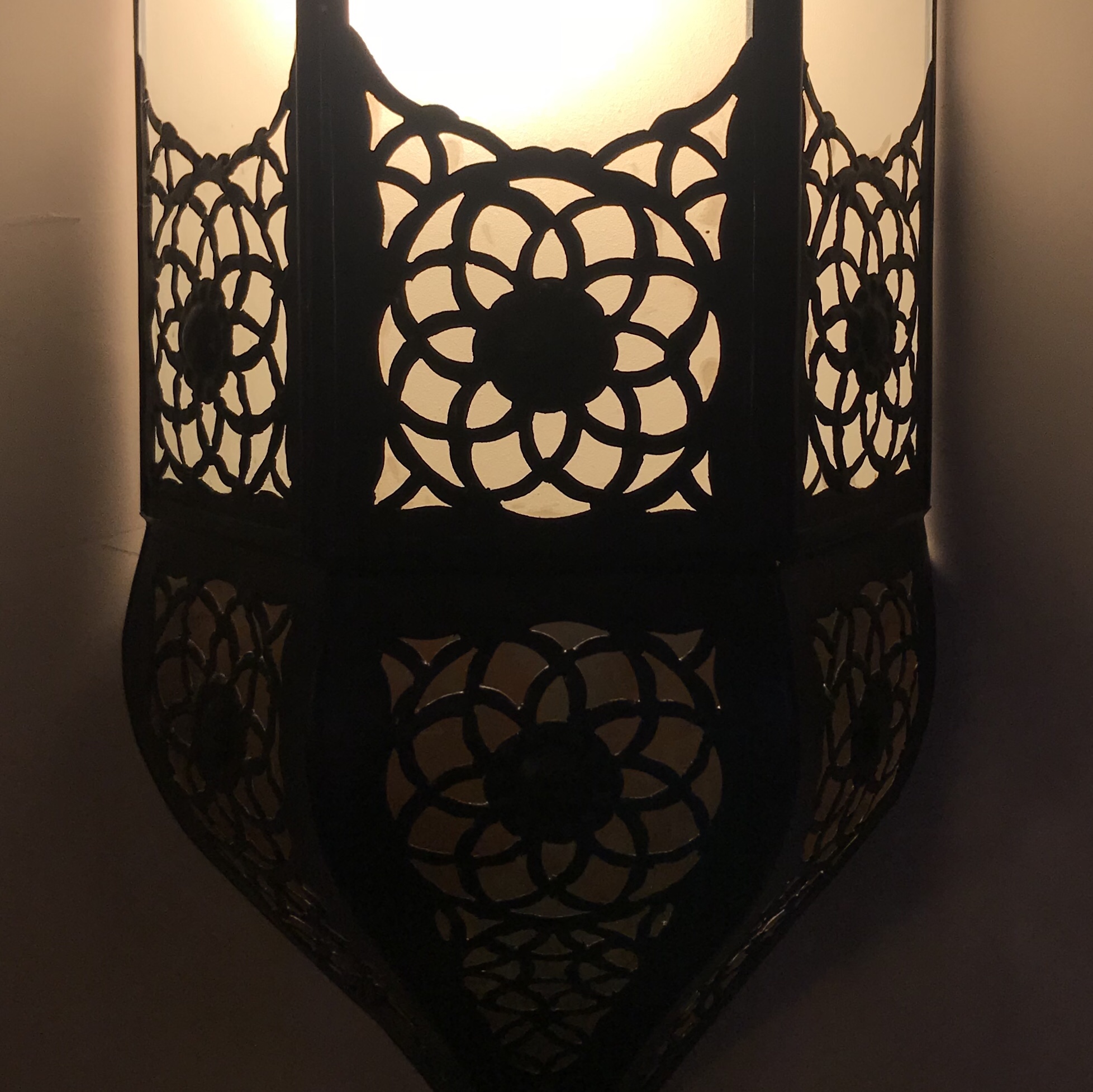
Detail, lamp, Marrakech apartment

Detail, lamp, Marrakech apartment

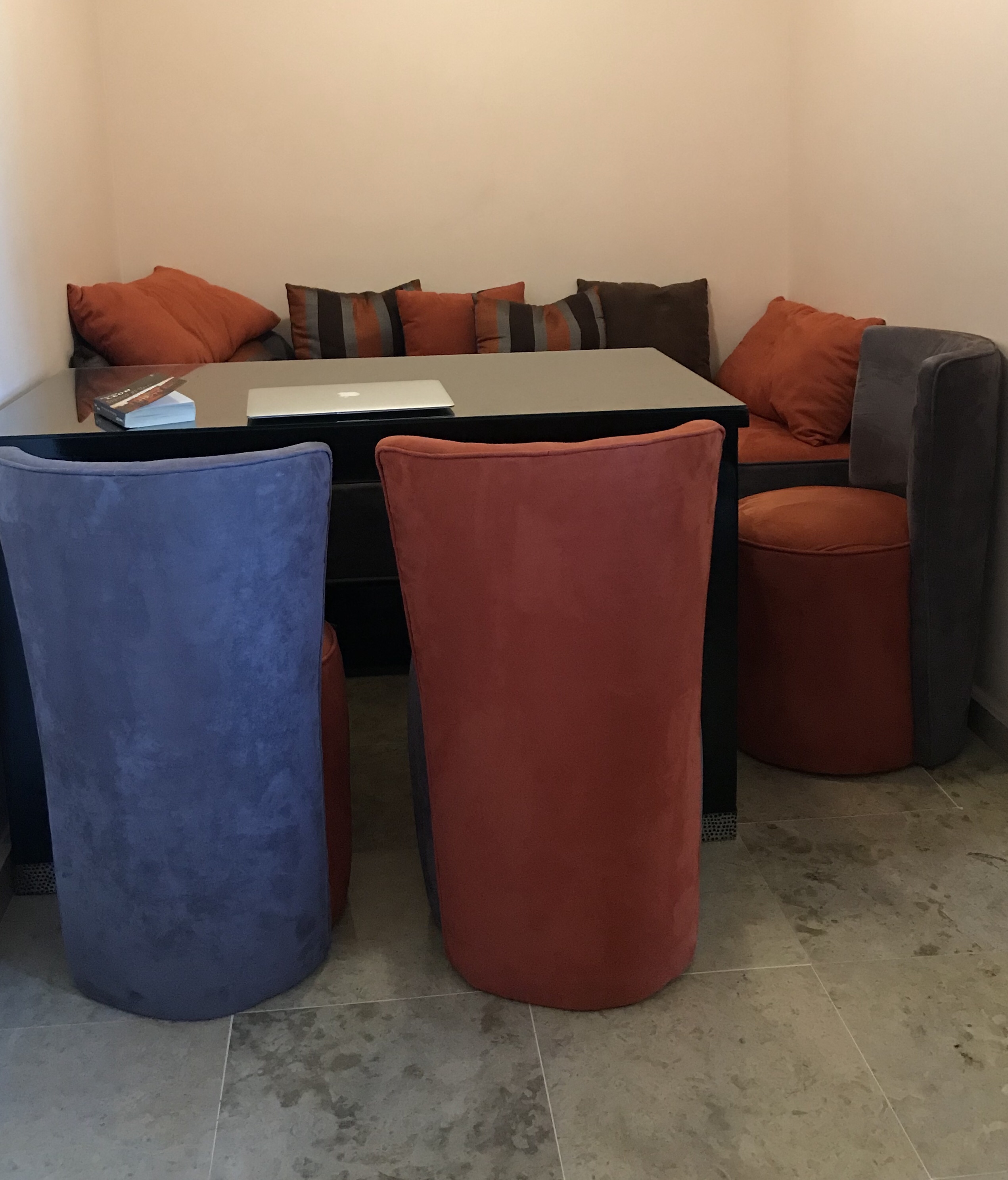
Dining room table and chairs

Dishes

Bedspread

Gate to new apartment building

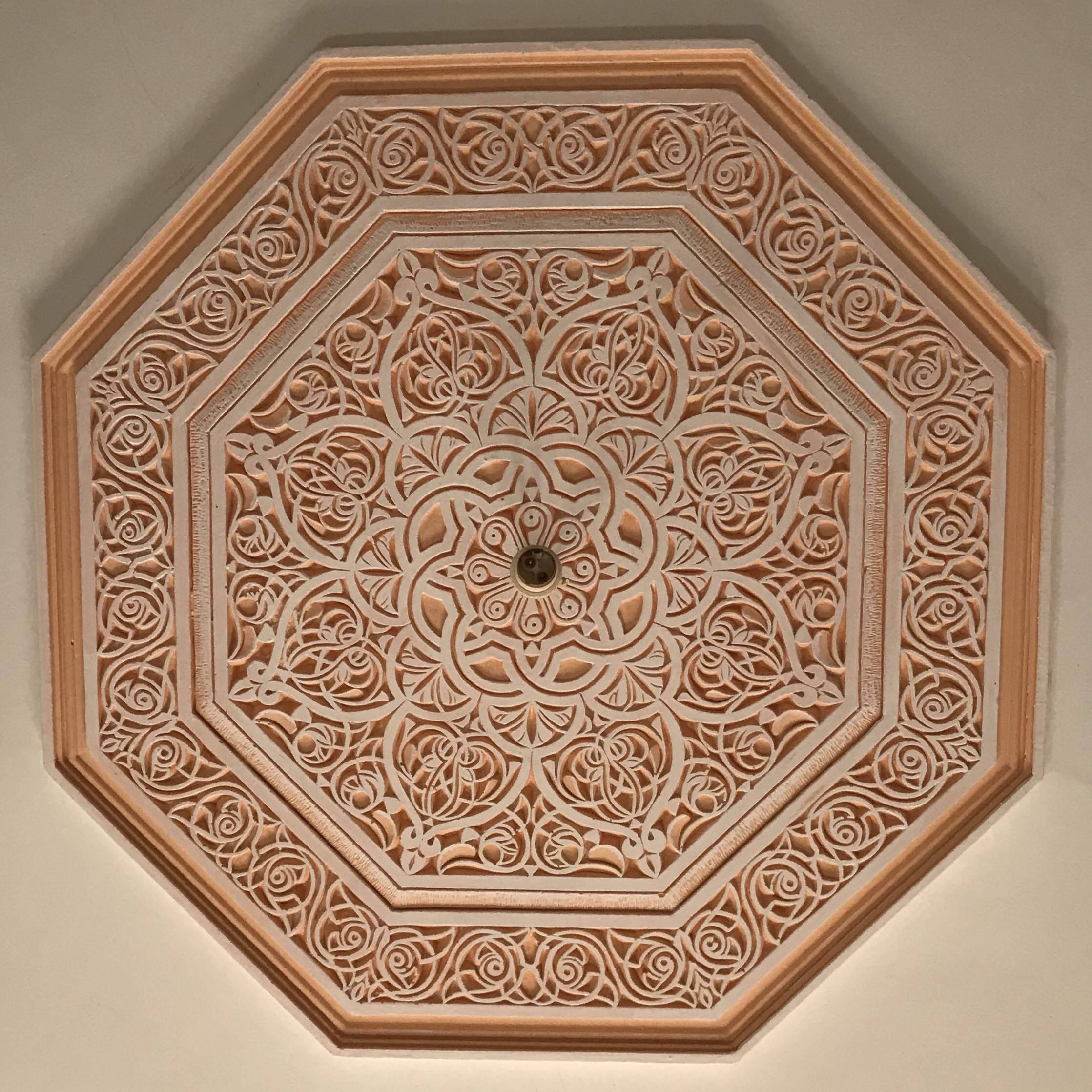
Light fixture in our Airbnb apartment in Tnine, Ourika

Living in Cordes – Stone walls

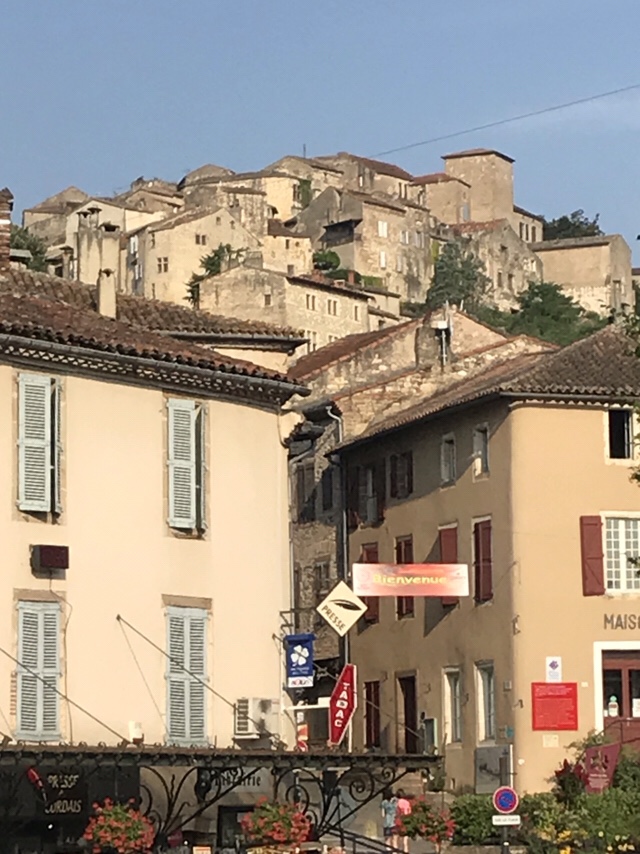
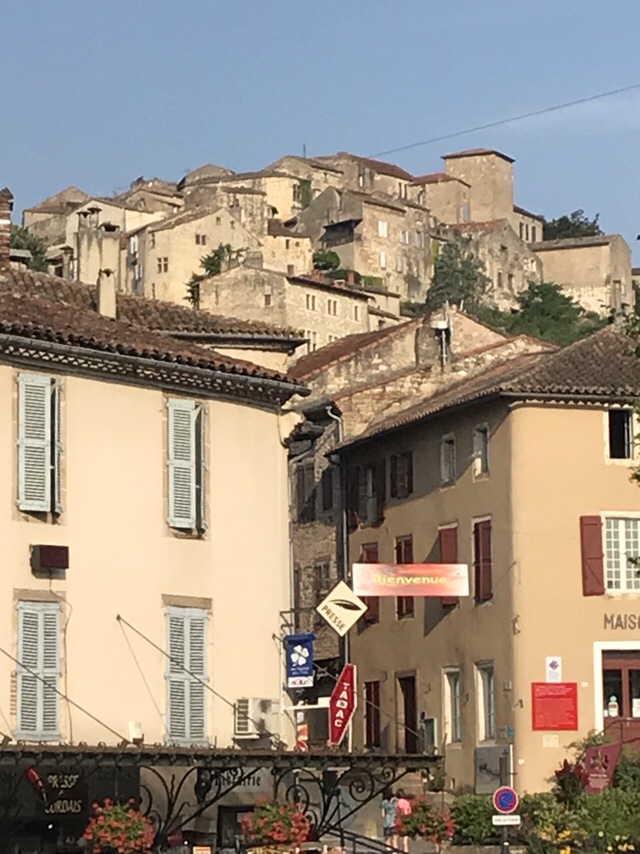
Cordes-sur-Ciel was built as a safe haven for people who lost their homes in the nearby city of Saint Marcel, which was razed during the Albigensian Crusade. Said to be the first of the bastides, it has five walls built in concentric circles.

(More about the history of Cordes-sur-Ciel can be found here.)

A neighbor recently told us that the stone wall across from our home is the unfinished fifth wall. Indeed, our house is just below the Porte de l’Horloge, the eastern entrance to the medieval city, which is in the fourth wall, built between the 14th and 16th century. Our neighborhood, quartier du Barri, is a 17th century suburb of the medieval village.

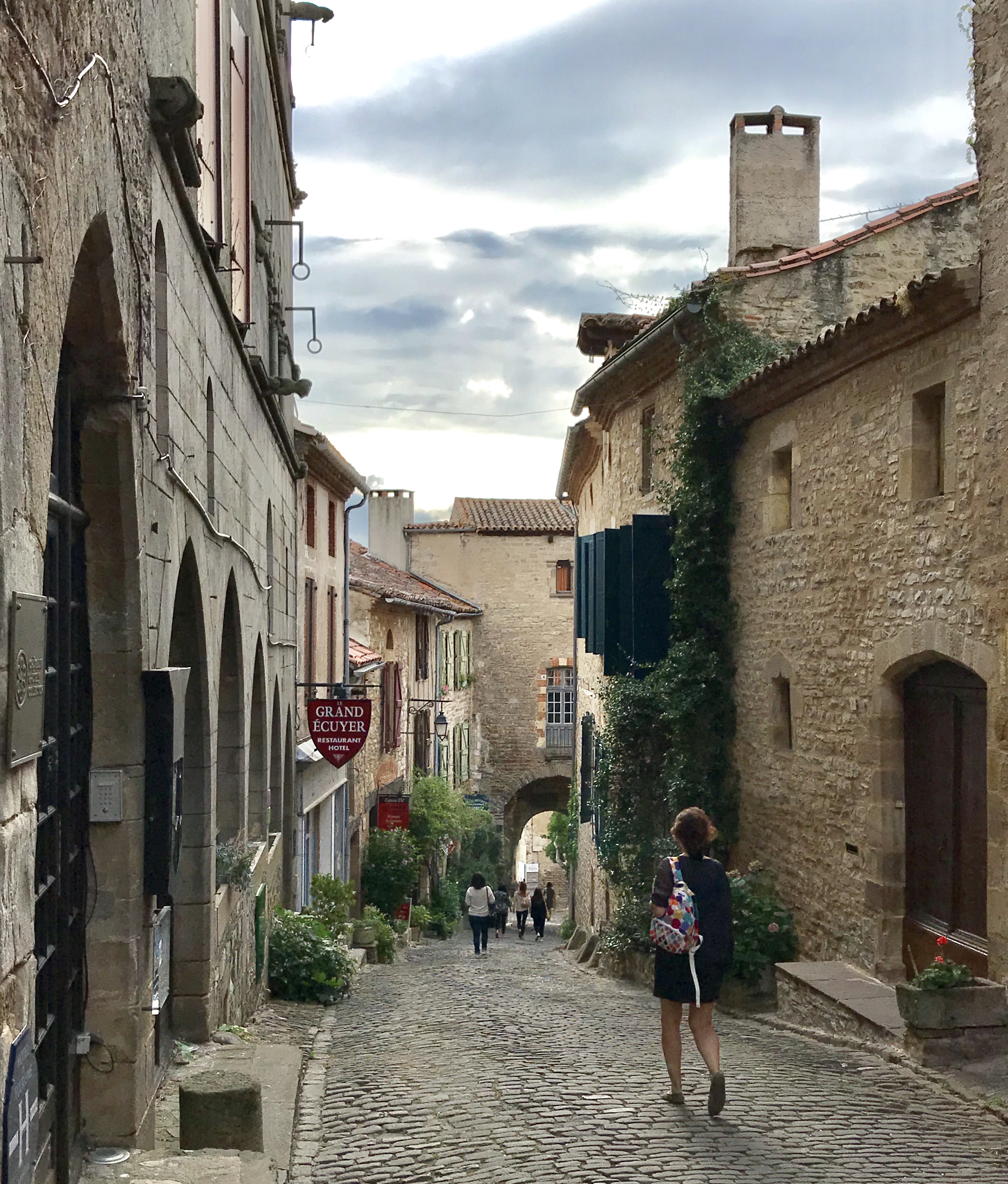
Cordes sits on a rocky outcropping, and is entirely built of local stone: limestone, sandstone, and dolomite. The houses are stone and the streets in the medieval village are cobbled. Walls surround every garden and line every street.

IMG_3621

img_4358.jpg

There are walls upon walls upon walls.

IMG_4083 2

Living without a car gives me plenty of time to appreciate stone walls all around. One of the most delightful things about Cordes is its authenticity: it looks like and is a place that has been continually inhabited since the 13th century. The walls reflect its history.

They bring me peace, connectedness, and a sense of stability. They are the keepers of the stories.

I never tire of their variety, their richness, their complexity.

In a village of art, the stone walls are perhaps the greatest art.


Living in Cordes – Mornings

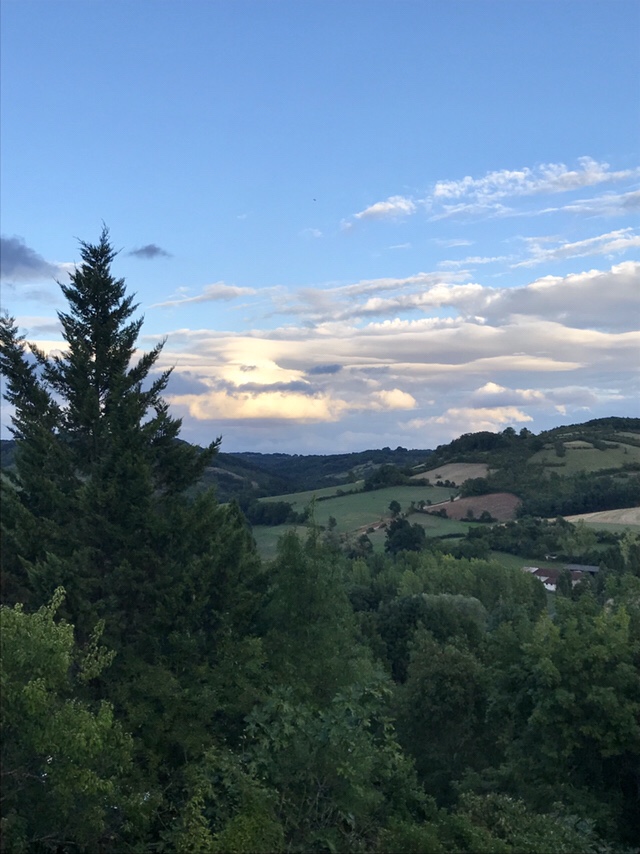
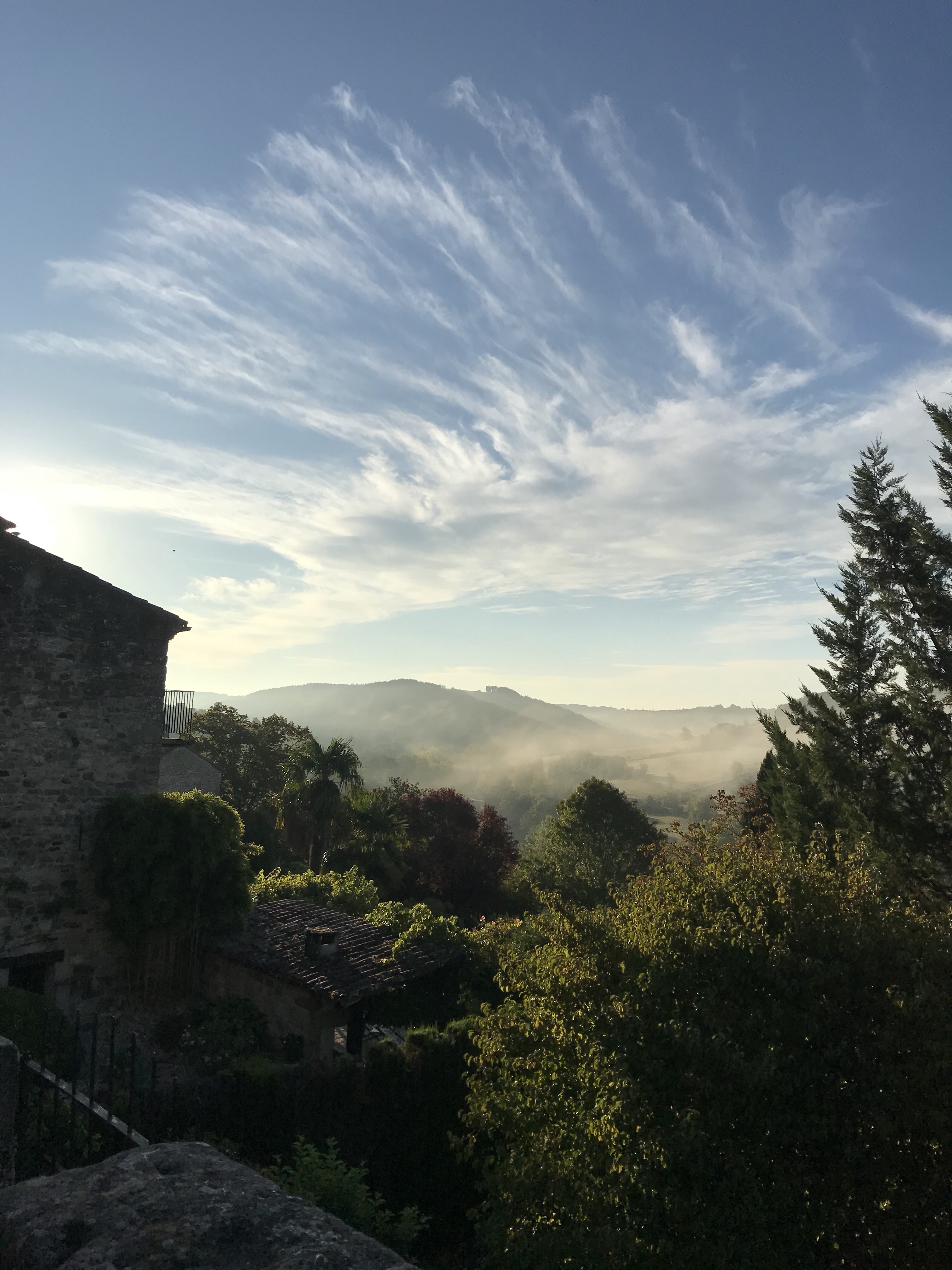
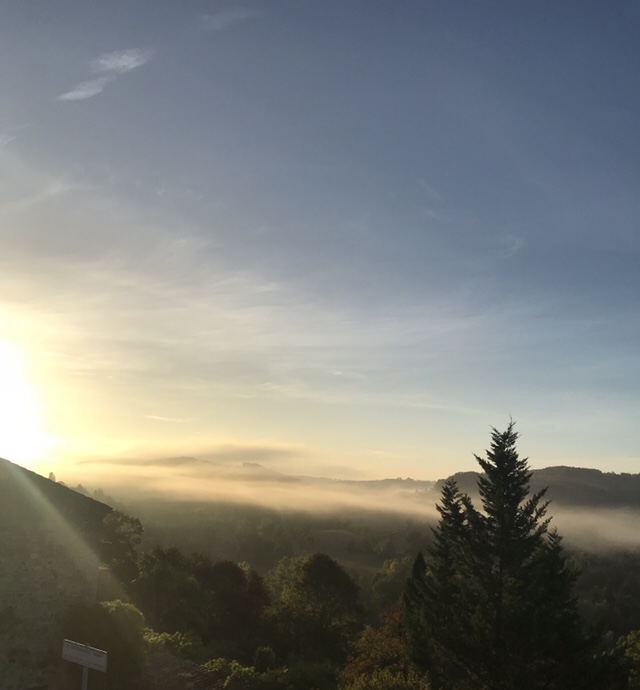
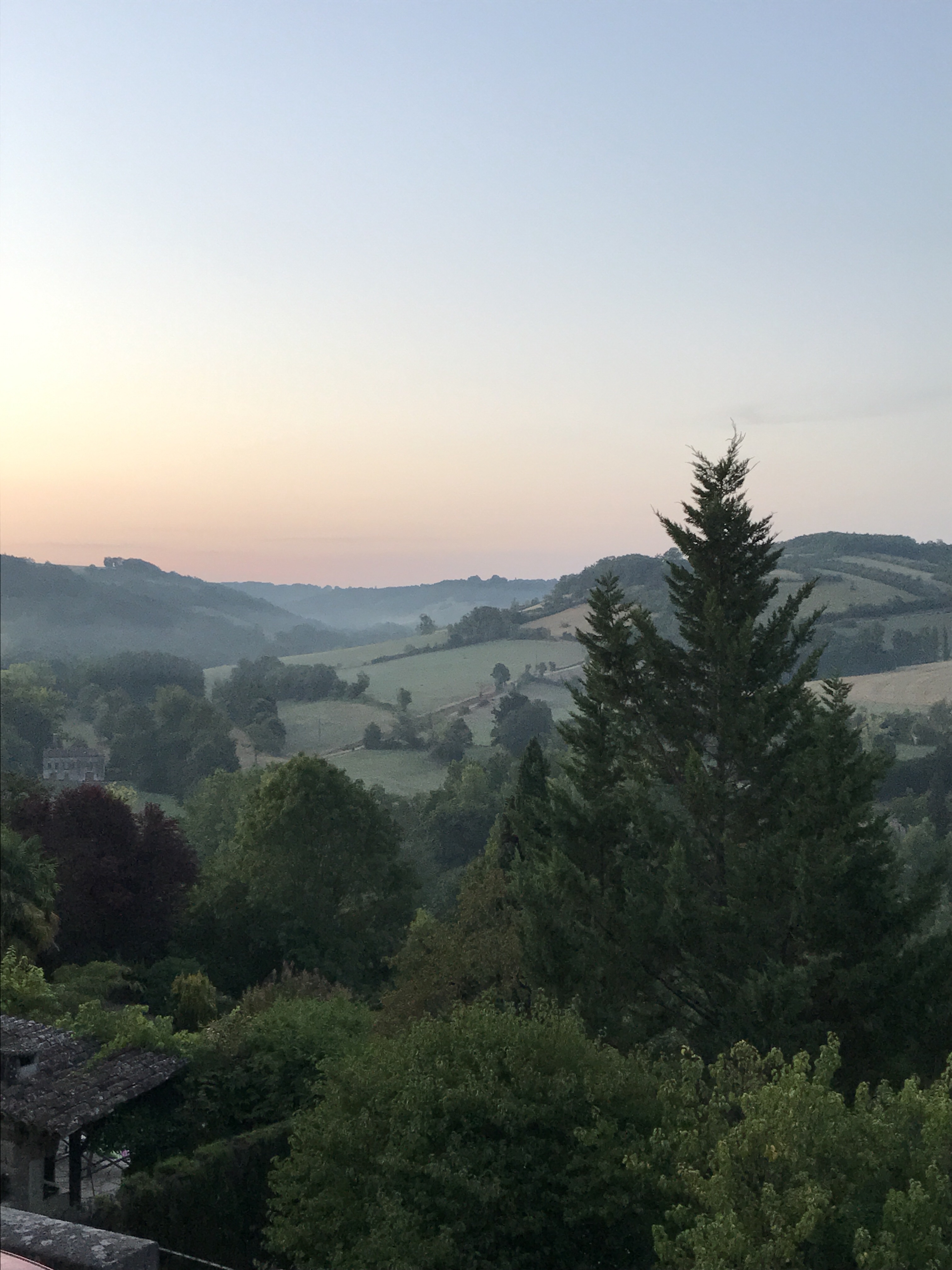
Most mornings I wake up before sunrise, open the shutters, roll out my rug and light a candle, and then do some stretches, breathe, and meditate for a while. When I open my eyes, the sun is up – or on its way up – and the view is so lovely, I try to save it in a photo.

These are some of the morning pictures I’ve taken. They begin in early August. The last one was taken this morning, the first day of fall.

Living in Cordes – Mocha

The evening Tom and I returned from Le Havre with our rented van full of the boxes we’d shipped from Los Angeles, our neighbors Ann and Leif greeted us in front of our house with sad news. Andreas, the other newcomer to our neighborhood, a Swiss artist who’d also moved to Cordes from California, had died suddenly.

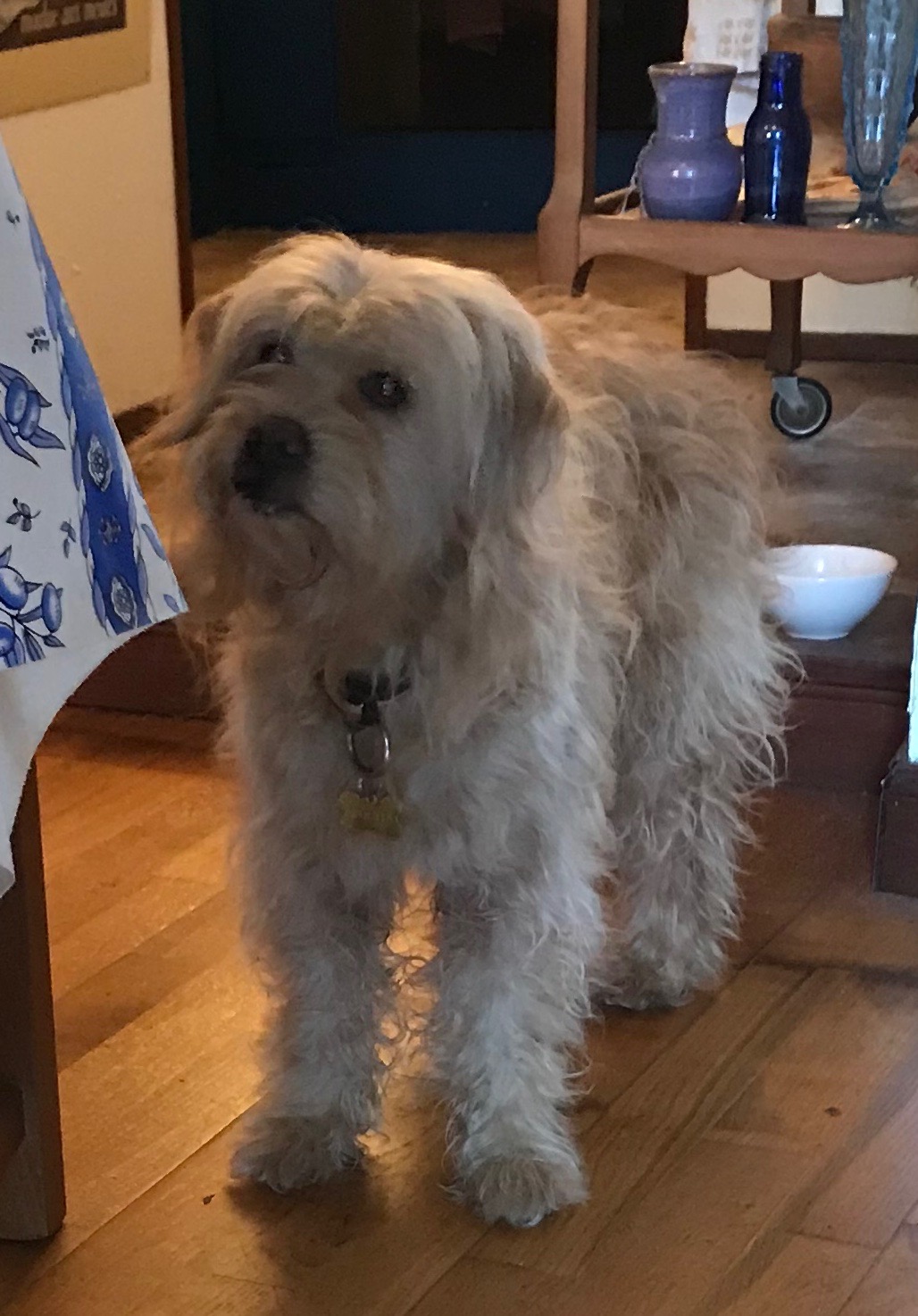
His dog Mocha was staying with another neighbor, Dominique, who couldn’t keep her until Andreas’s relatives came, which could be several weeks. Not only did Pompom the cat object, but Mocha’s barking was bothering Dominique’s guests.

When we saw that the address on Mocha’s address was Bancroft Way, Berkeley, CA, the solution was obvious. Mocha would come to stay with us until Andreas’s family decided where she would go.
IMG_3764 2

The next day, after we returned the van to Albi where we’d rented it, we picked Mocha up at Dominique’s house. Mocha was not happy. She didn’t want to stay with us. It was clear that she loved Andreas very much and was grieving deeply.
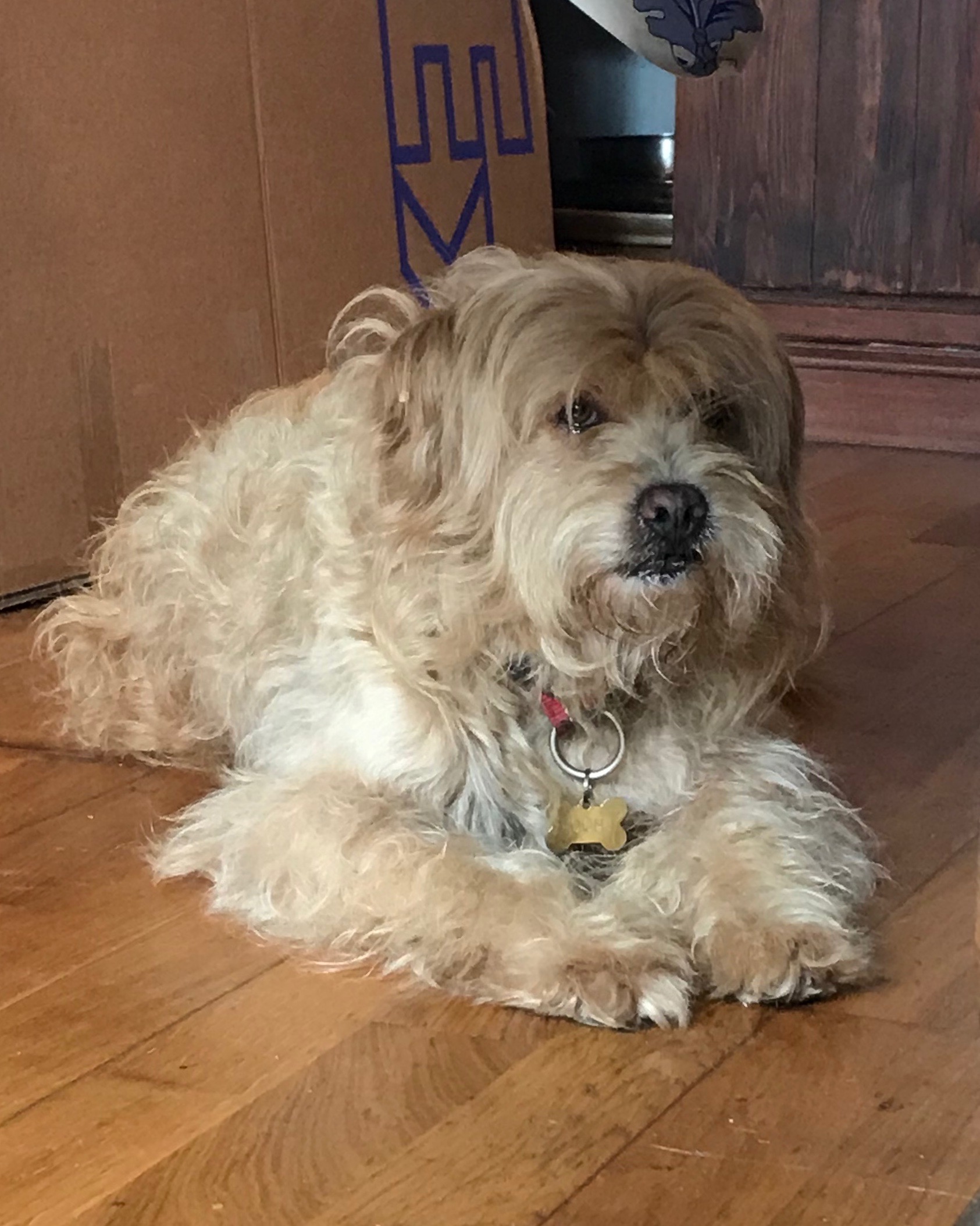
IMG_3765

So, when Tom opened the door take some empty boxes to the recycling, she was out like a flash.

Naturally, she headed back straight to Andreas’s place. Tom and I managed to corner her briefly, but when a car went by and we had to alter our very strategically chosen positions, she took off again, this time down the street toward the bistro where Andreas, like most Cordais, liked to sit.

We had pictures on my phone, and people knew Mocha, but no one had seen her. She was spotted near Andreas’s place several times. We left a note with Tom’s French phone number on his door; people called, but no one could catch her. Pretty soon half the village was involved.

At 10:30 that night we heard voices in front of our house and looked out the window to see Leif, who told us that Dominique found Mocha sleeping on Andreas’s step, scooped her up, and now had her in her car. She’d be right over.

So Mocha came home. She had chopped sausage and a little duck for dinner. And she went to sleep on our bed.

Day by day she is becoming more accustomed to her new home. She no longer pulls on the leash when we go near Andreas’s house. She enjoys hanging out at the bistro, where she’s very popular.

And she loves being groomed! (Not so much the bath.)

IMG_3772

But a long walk, table food, and sleeping on a good bed suits her very well!

Now we’ve heard from the family that we can keep her!

Thank you, Andreas, for this wonderful new family member.

IMG_3823

Living in Cordes – Beauty all around

Perhaps August is the most beautiful month of the year in this medieval village in southwest France, or maybe it only seems so because it’s the beginning of our new life here and we’re seeing everything with fresh eyes.

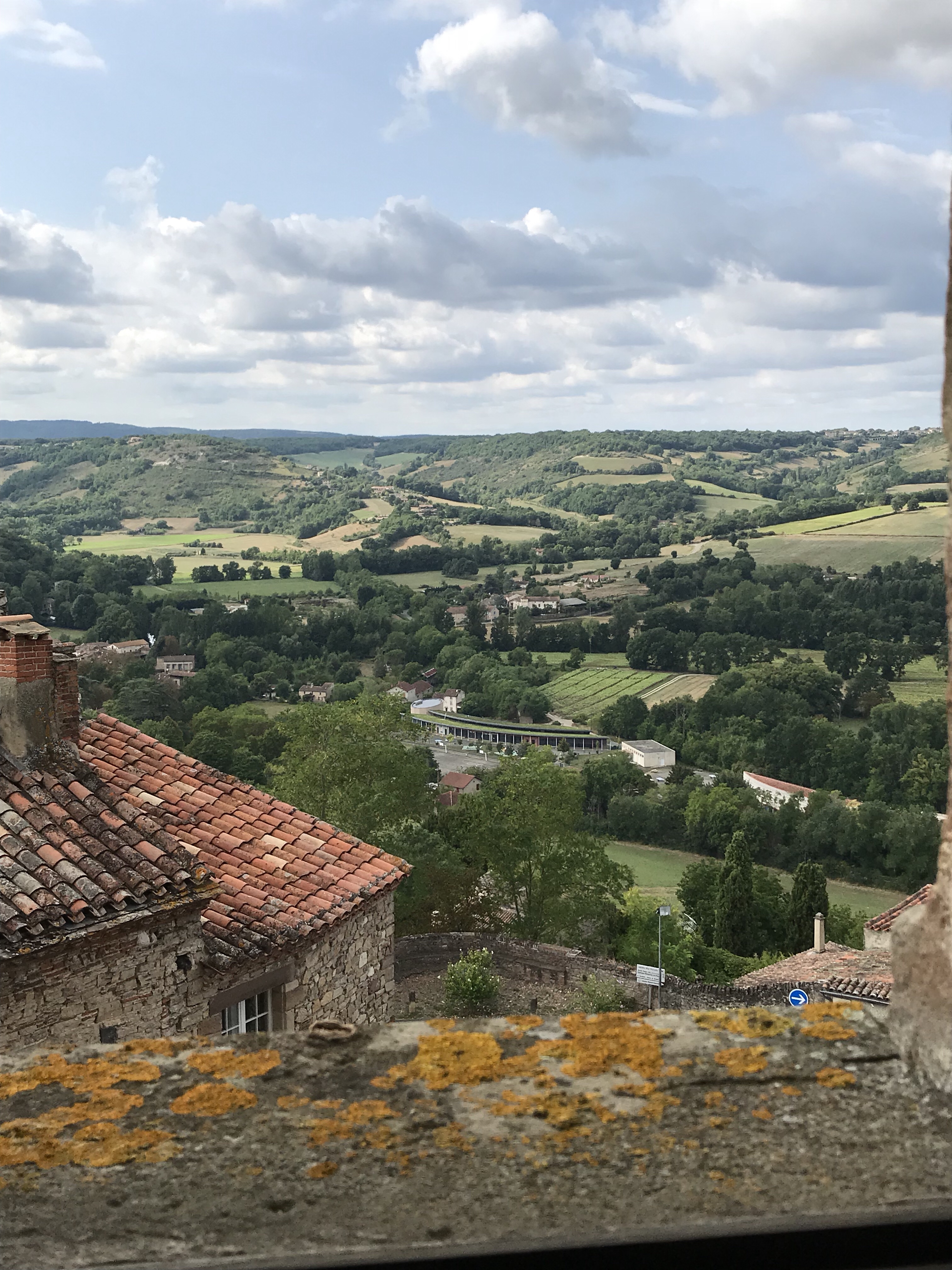
Either way, here’s a series of pictures from our first two weeks. A few, like the one above, were taken from our bedroom window first thing in the morning; the view is enchanting.

After dinner we usually climb the hill behind our house. This picture was taken about half way to the top.Our neighbor, Lilliane, who comes from Paris every summer, tells us the best restaurant in the village is at the Hostellerie du Vieux Cordes. Rochelle, Tom, and I sat on the patio there, shaded by a 300 year old wisteria, until a thunderstorm chased us inside. Even inside it was dramatic. As I took the last bite of my oeufs brouillé au truffes (the English menu called them “blurred eggs with truffles”) one of the tall casement windows blew open with a bang, startling everyone in the room.

Later we sheltered under the roof of Les Halles, the covered square at the top of the village, and watched as lightning lit up the sky above the museum of contemporary art, once one of the grand houses of the village.When taking the footpath from our house to the lower village, bring a bucket for all the wild fruit: blackberries, plums, quince, apples and grapes.

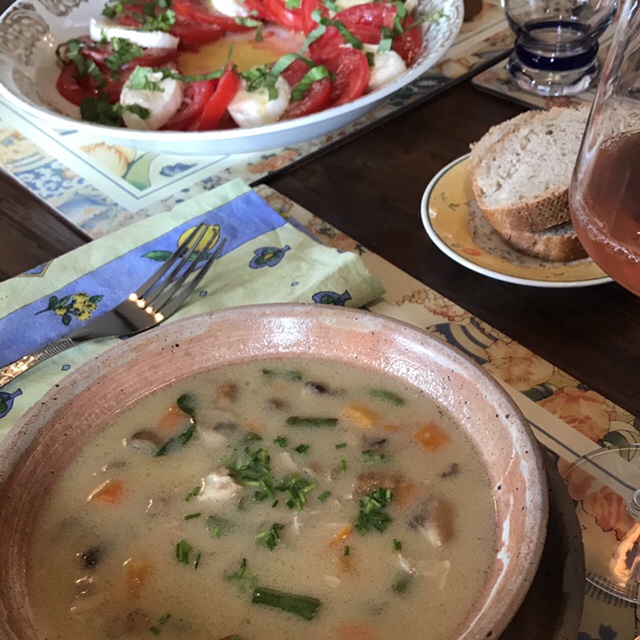
I think my favorite meal is soup, salad, and bread, with a Gaillac rosé.

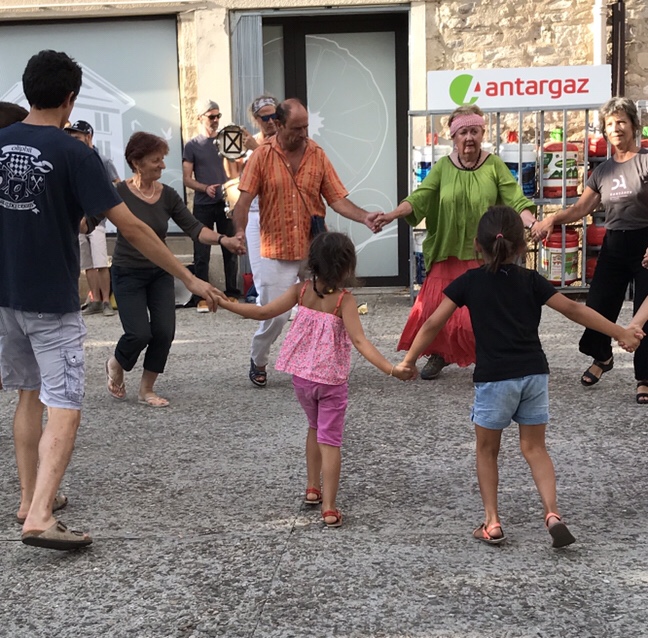
One day we were greeted by traditional Occitan music and dancing when we got off the bus from Albi.

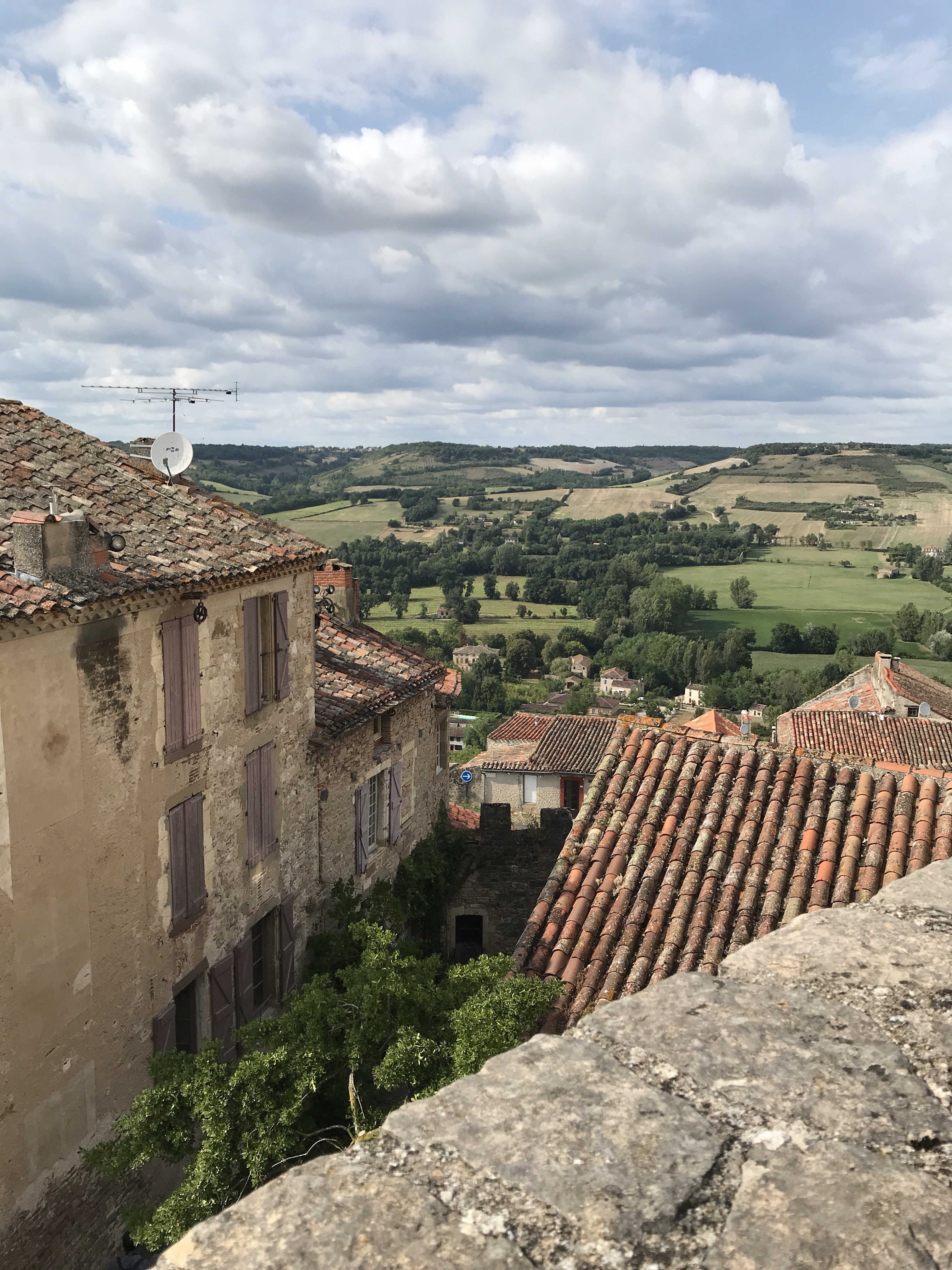
Another view from the window:

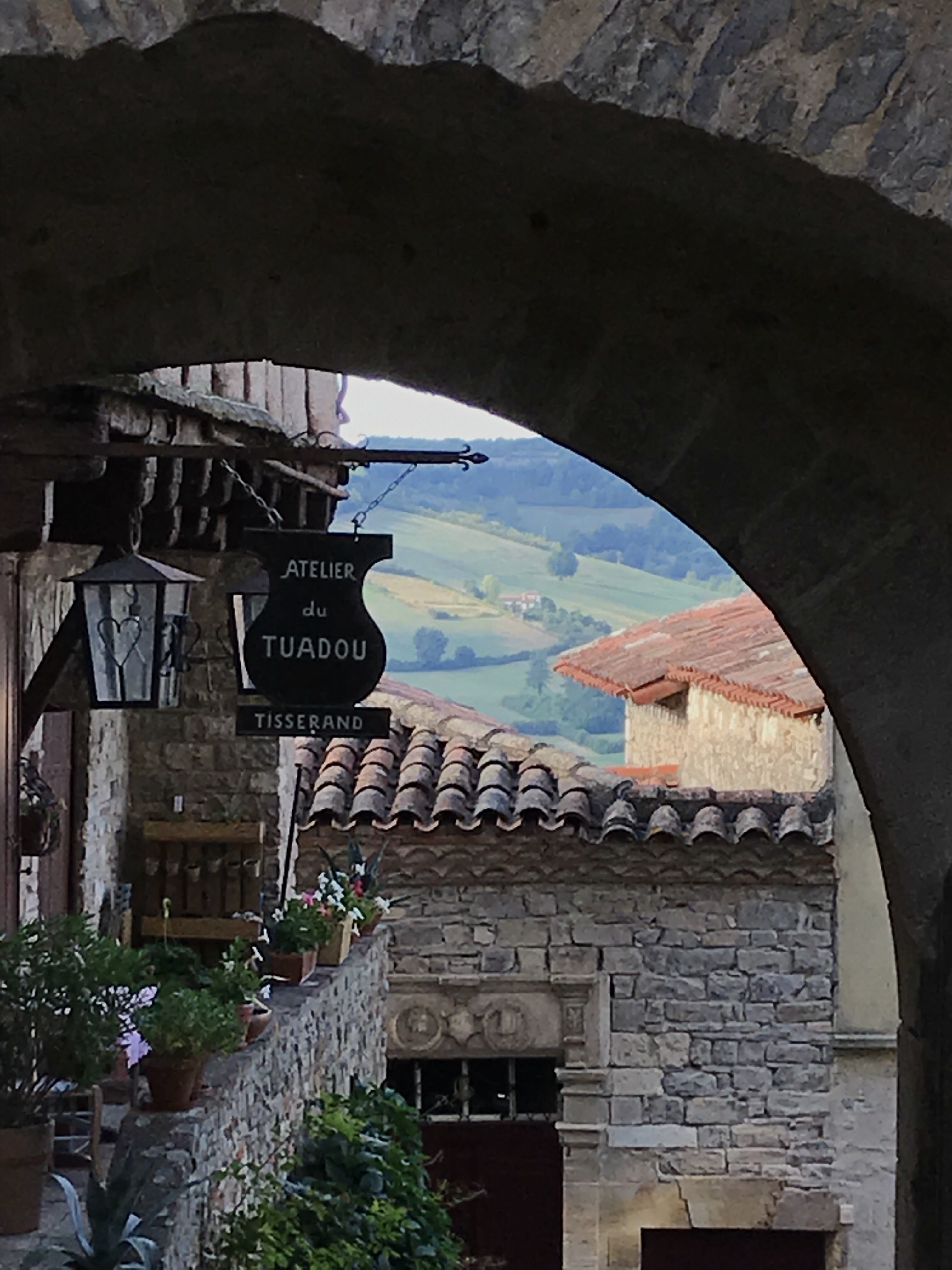
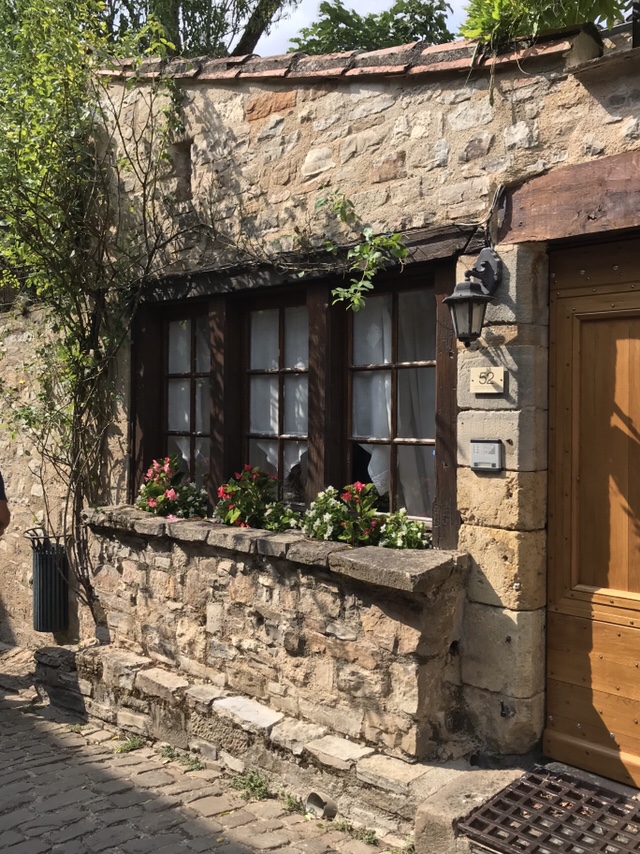
A doorway on our street:

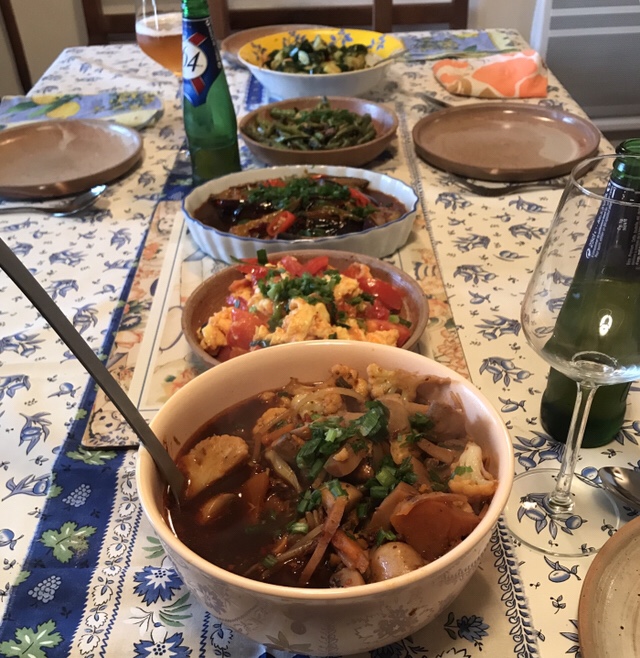
After Rochelle left, Garrett, Chris, and Ed visited. Garrett cooked us a spectacular Sichuan Chinese meal.

A walk in the upper village:

And a visit to the Musèe Charles Portal, the history and archeology museum, which rises high above the western gate to the city, the Charles Portal.

Lace-making machinery from the early 20th century:

And more morning pictures:

Including some hot air balloons which floated gently over the village at daybreak.

Really, what more could anyone ask?

Arrived: Cordes-sur-Ciel

Who would have guessed that the line to rent a car at the Bordeaux airport would take 2 1/2 hours? Or that not one of the three agents would adjust their customary style to – at the very least – shorten the conversations they usually enjoy with each customer? Imagine how exciting the story of our journey from California would have been. Arnaud at Avis was particularly skilled at drawing out his clients’ stories, but I kept looking over my shoulder at the dozens of families with small children behind us: a sea of impatient grimaces, hungry whines, and tapping feet. I’m not sure it made any difference.

It took us close to three hours to get onto the road.

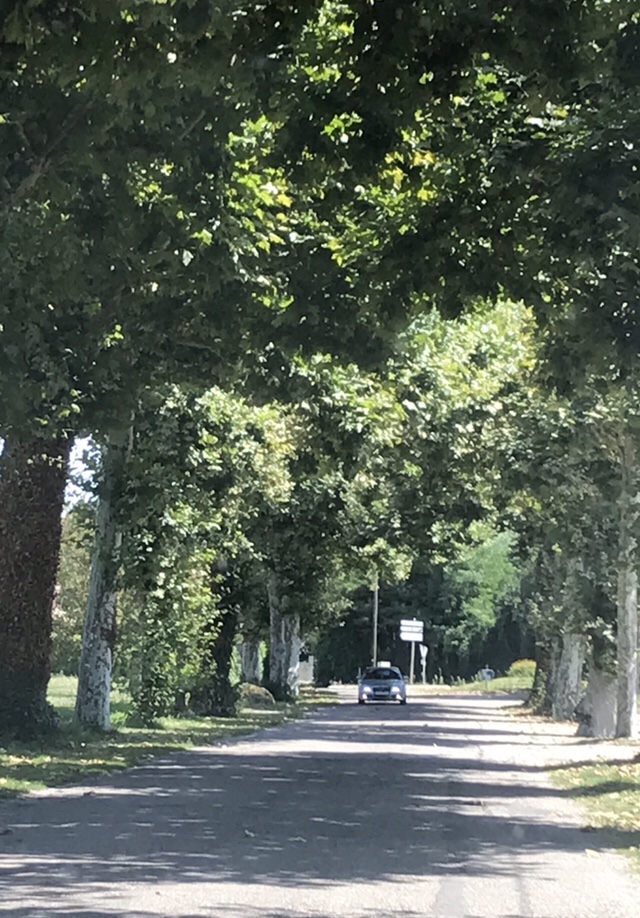
Outside, it was 38C, record-breaking heat, but the thoughtful GPS took us along the back roads, so we enjoyed the ride –

– even the muddy track through the cornfields that saved us a good two minutes over the more conventional route.

Eventually we arrived at the office of M. duMartin, the notaire (real estate lawyer), in Saint-Antonin-Noble-Val, where the couple from whom we bought the house and our real estate agent were waiting.

I will be eternally grateful that Tom is fluent in French! M. duMartin, jowls and chins indistinguishable, thick steel-colored hair brushed back and plastered to his head, melted into his ornate chair behind the expanse of his ancient desk, and read aloud document after document after document. Do we understand that there can be no changes to the outside of the house, not even to the paint on the blue voleurs (shutters)? And here, this is very important, you see where the back of the house goes under the one on the street above? The well is in your house, but a shaft goes up into the house above…

Periodically a young assistant in short shorts, long legs, and assorted tattoos brought more documents, or copies for us all the sign. M. DuMartin’s wife, gray hair in braids circling her head, appeared behind him from time to time, ghostlike.

It was stiflingly hot in the room. I struggled to follow, using all the skills I’ve acquired from years of hearing loss: catching enough words to get the gist, applying what I know from similar situations, and watching everyone else’s responses very carefully. Still. French legalese!

We signed the papers at last and went to the house with the agent and the sellers for a few lessons in house’s quirks.

And now we are here!

We woke to a gentle breeze coming through the wide open window.

Such a view! Come see us!

Farewell Tour – Massachusetts, Connecticut, and New York


After lovely lunch in Albany with old friends, Heather and Norm Mendel, we stopped for coffee in Stockbridge, MA. The former Alice’s Restaurant was closed, but we had the best coffee of our trip at Stockbridge Coffee and Tea.

You can get anything you want…

We spent the night at Kathleen Becker’s beautiful studio in Northampton. What a meal we had at Coco in Easthampton!

Dinner and the next night were spent with Tom’s Neuhaus cousins in New Canaan, CT.

After dropping our trusty rental car in Stamford we took the train into New York City, where we stayed three nights with Elise in Park Slope.

On James’s birthday we took the ferry to Rockaway, and then back to the UN where he gave us an after hours tour.

On Wednesday we met Lenya for breakfast and then went out to Queens to see Mary Kuzma and Tomas Tisch at her studio.
And today it’s packing and organizing for our midnight flight to Bordeaux.

We’re off!