Vivre une vie symbolique : la signification de la croix solaire (3e partie)
Over the days and weeks leading up to the solar eclipse on August 12, 2026, I unexpectedly found myself surrounded by most of my closest women friends. They flew across the ocean to see me, they sent hand-written letters through the increasingly dysfunctional postal system, we connected in texts, video chats, phone calls, and dog walks. The depth of the gratitude I feel for each one of you and for you all for being with me is almost overwhelming. That fullness, that warmth, that love, has become a touchstone for me whenever I seek heart coherence.
Au cours des jours et des semaines qui ont précédé l’éclipse solaire du 12 août 2026, je me suis retrouvée, de manière inattendue, entourée de la plupart de mes amies les plus proches. Elles ont traversé l’océan en avion pour venir me voir, elles m’ont envoyé des lettres manuscrites via un service postal de plus en plus défaillant, et nous avons gardé le contact par SMS, appels vidéo, coups de fil et promenades avec nos chiens. La profondeur de la gratitude que je ressens envers chacune d’entre vous et envers vous toutes pour avoir été à mes côtés est presque bouleversante. Cette plénitude, cette chaleur, cet amour, sont devenus pour moi une référence chaque fois que je cherche la cohérence du cœur.
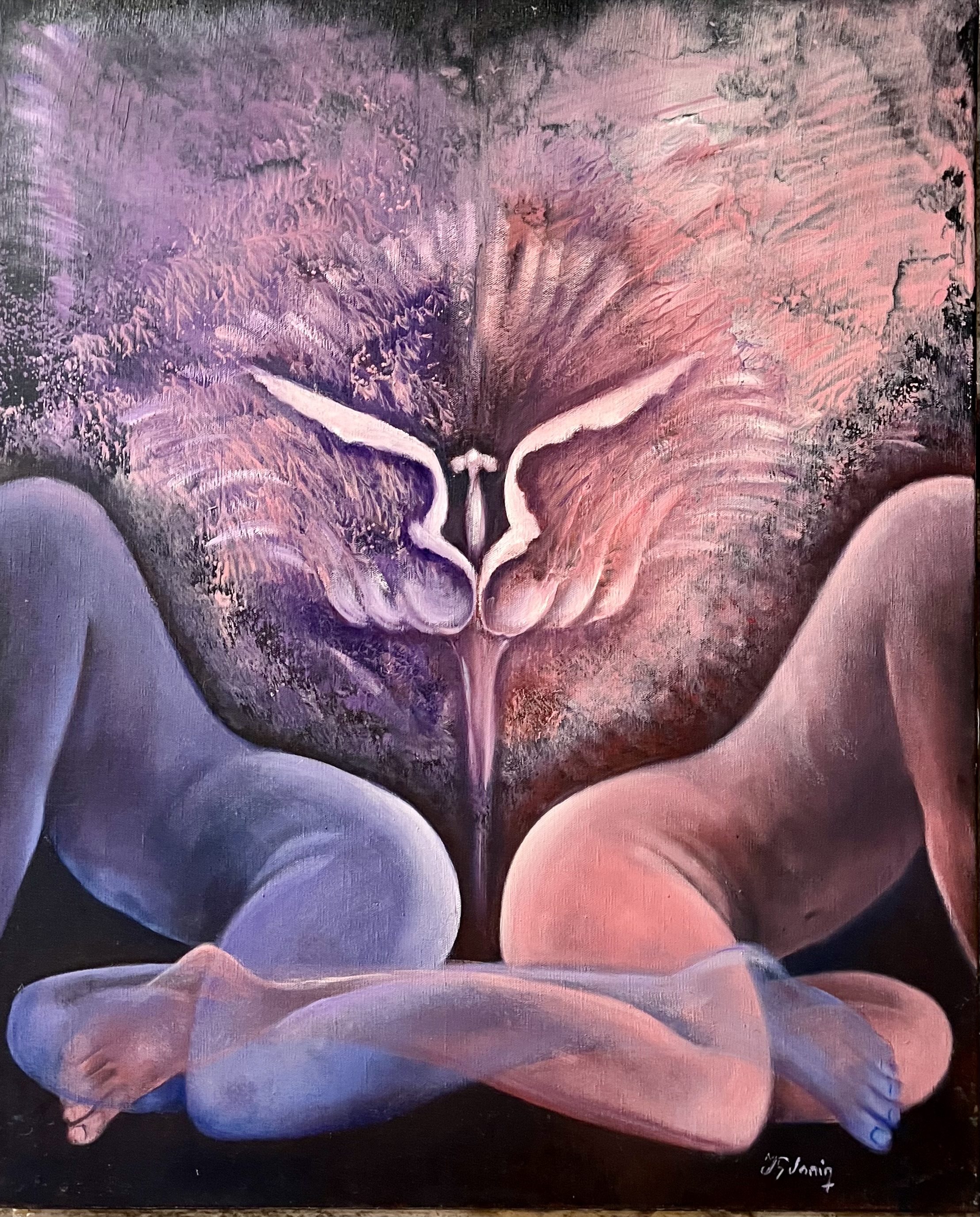
On August 8, several of us attended the opening of an exhibition of the surrealist painter Jean-Gabriel Jonin’s paintings here in my village in France, Cordes-sur-Ciel.
Le 8 août, nous étions plusieurs à assister au vernissage d’une exposition consacrée aux tableaux du peintre surréaliste Jean-Gabriel Jonin, ici même, dans mon village en France, à Cordes-sur-Ciel.
This particular series of Jonin’s works, the last he did before his death in 2014, portrays the coming together of the Sacred Feminine and Masculine. The symbolism is apparent to anyone versed in Jungian and neo-Jungian symbolism as well as tantrism in its many forms. The Masculine enters in the Feminine over and over. It’s an impressive body of work.
Cette série particulière d’œuvres de Jonin, la dernière qu’il a réalisée avant sa mort en 2014, illustre la union du Féminin et Masculin sacré. Le symbolisme est évident pour quiconque connaît bien la symbolique jungienne et néo-jungienne, ainsi que le tantrisme sous ses multiples formes. Le Masculin pénètre sans cesse dans le Féminin. C’est une œuvre impressionnante.

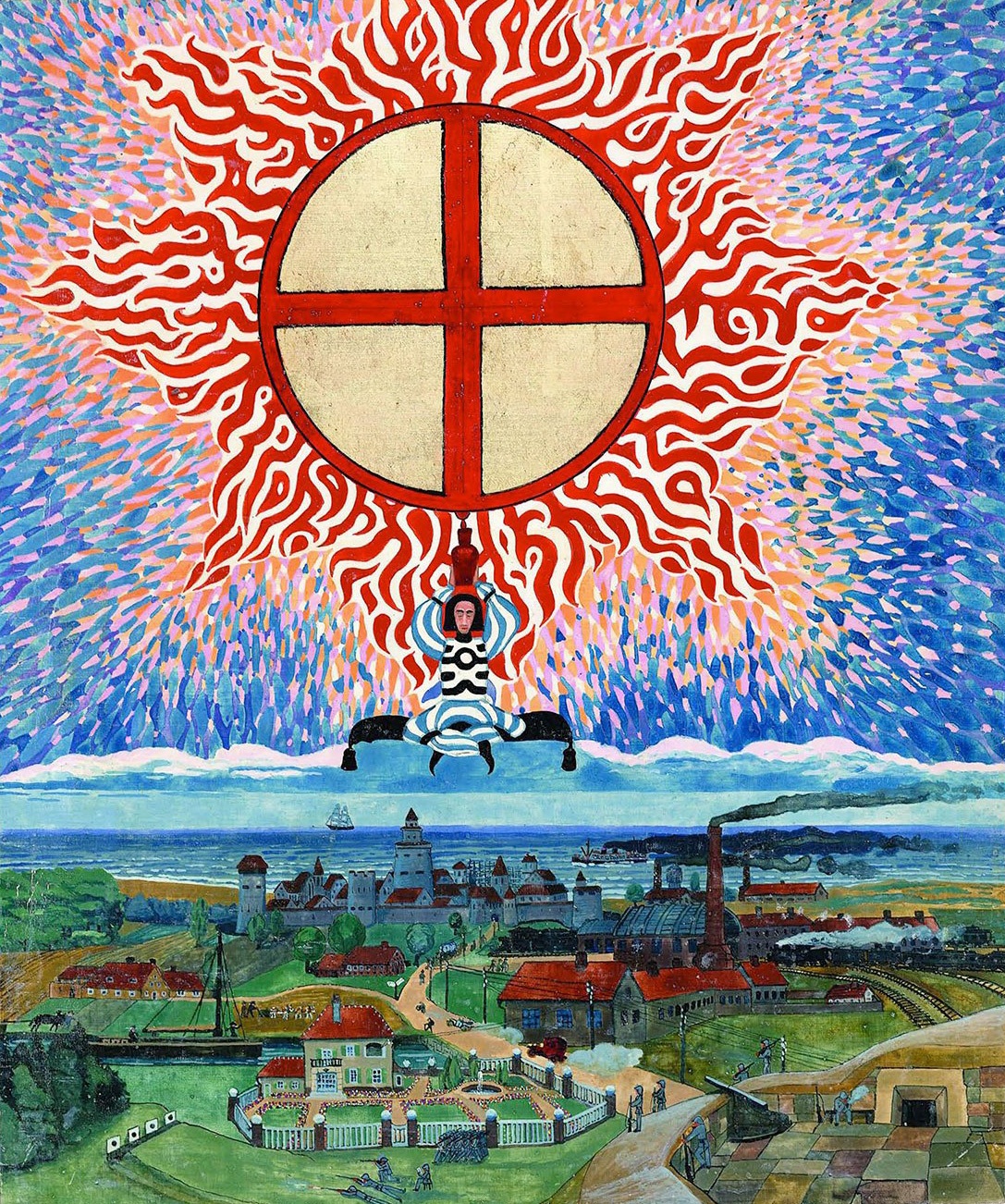
At 4 in the morning following the opening, I woke suddenly, knowing it was exactly 4, with the image of the form I explored in my previous blogs in this series, an equilateral cross in a circle, shining brilliantly on my inner eye.
À 4 heures du matin, au lendemain du vernissage, je me suis réveillé en sursaut, sachant qu’il était exactement 4 heures, tandis que l’image de la forme que j’avais explorée dans mes précédents articles de cette série – une croix équilatérale inscrite dans un cercle – brillait de mille feux dans mon œil intérieur.
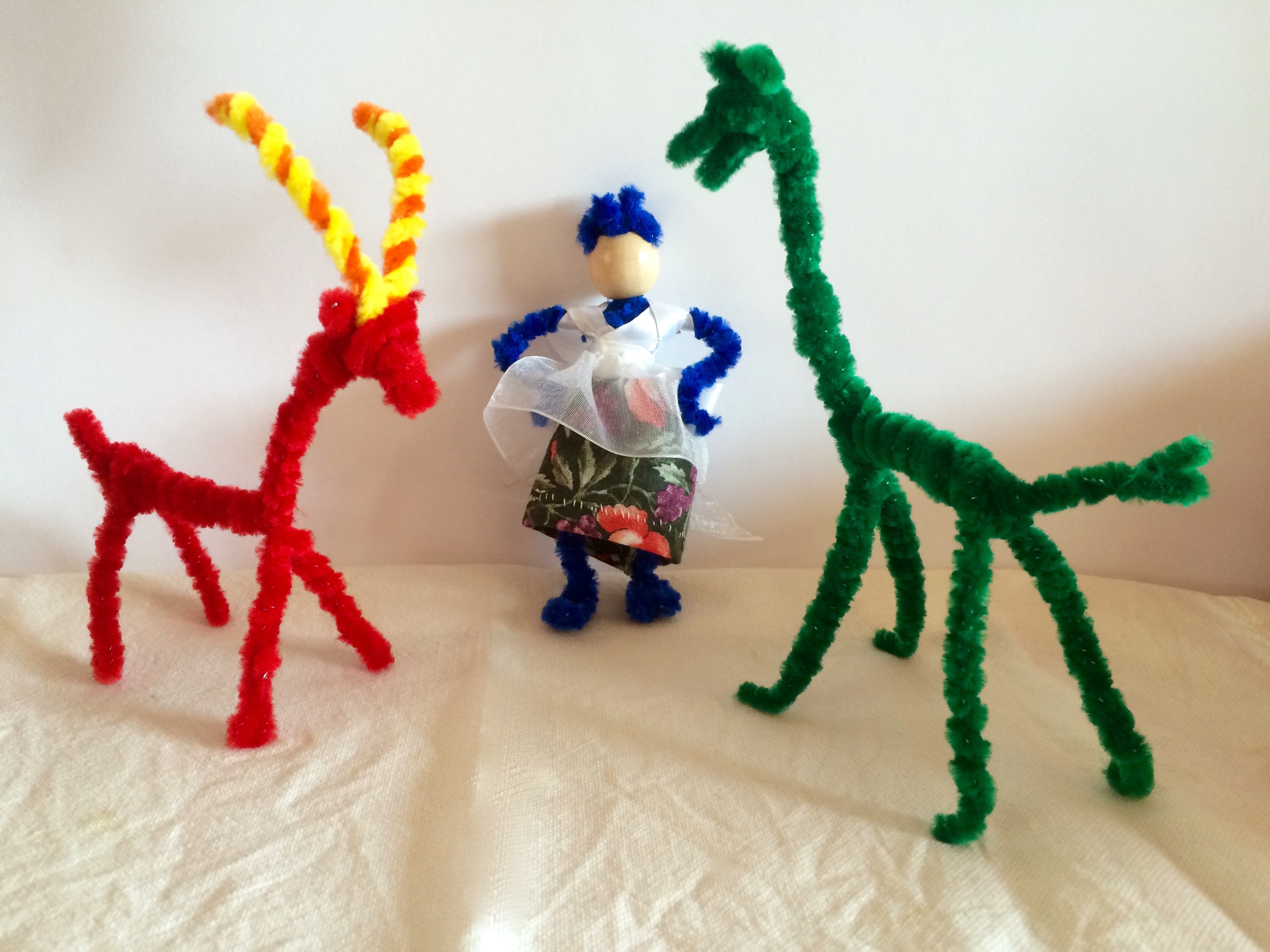
The version of the image below represents four figures in a circle, feet touching, arms open to the outside. It’s my souvenir of February 20, when three woman friends and I were in a Japanese hot tub at the exact moment the Saturn-Neptune conjunction perfected at 1° Aries.
La version de l’image ci-dessous représente quatre personnages formant un cercle, les pieds joints, les bras ouverts vers l’extérieur. C’est mon souvenir du 20 février, jour où trois amies et moi-même étions dans un bain japonais au moment précis où la conjonction Saturne-Neptune s’est réalisée à 1° du Bélier.
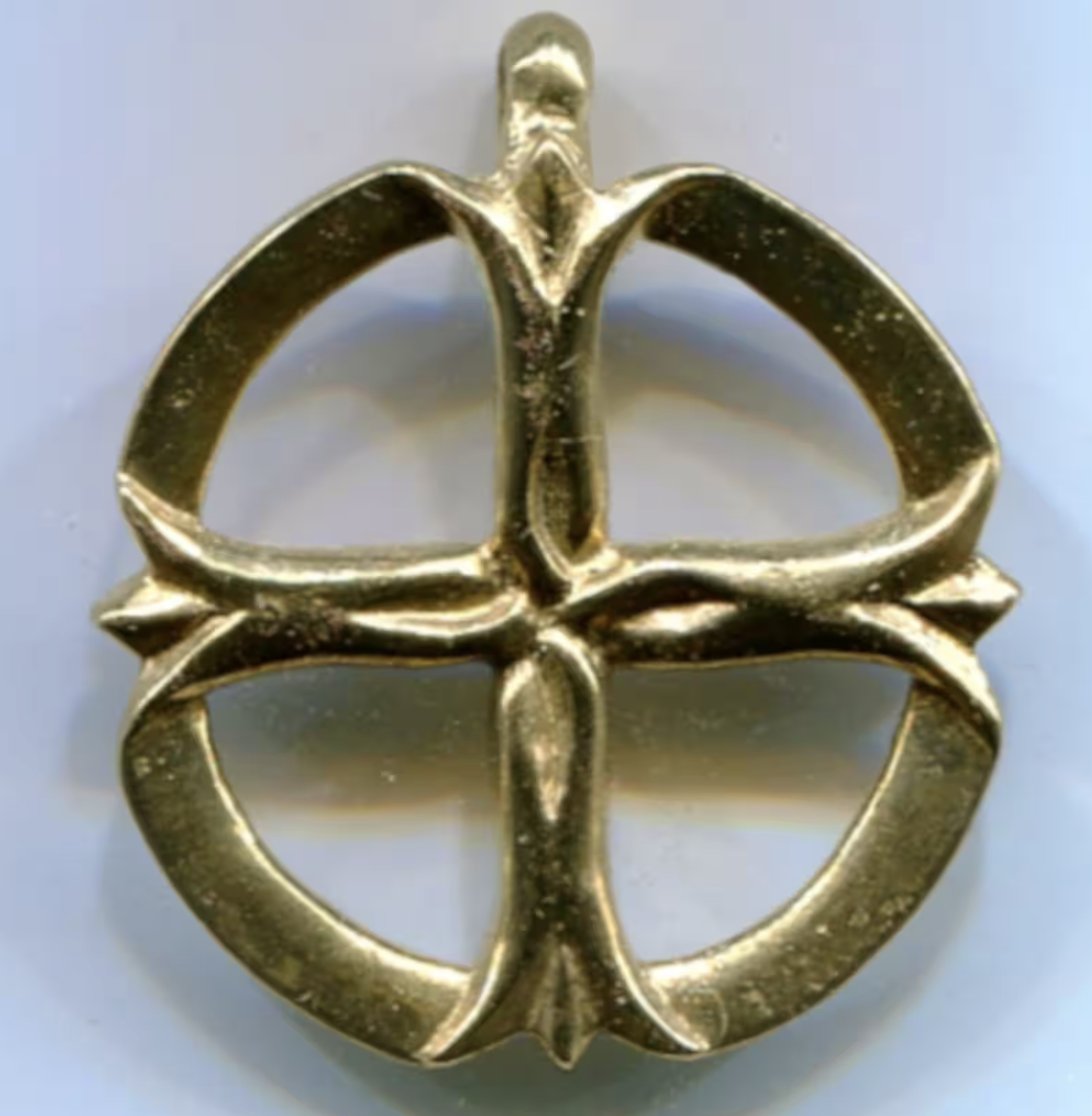
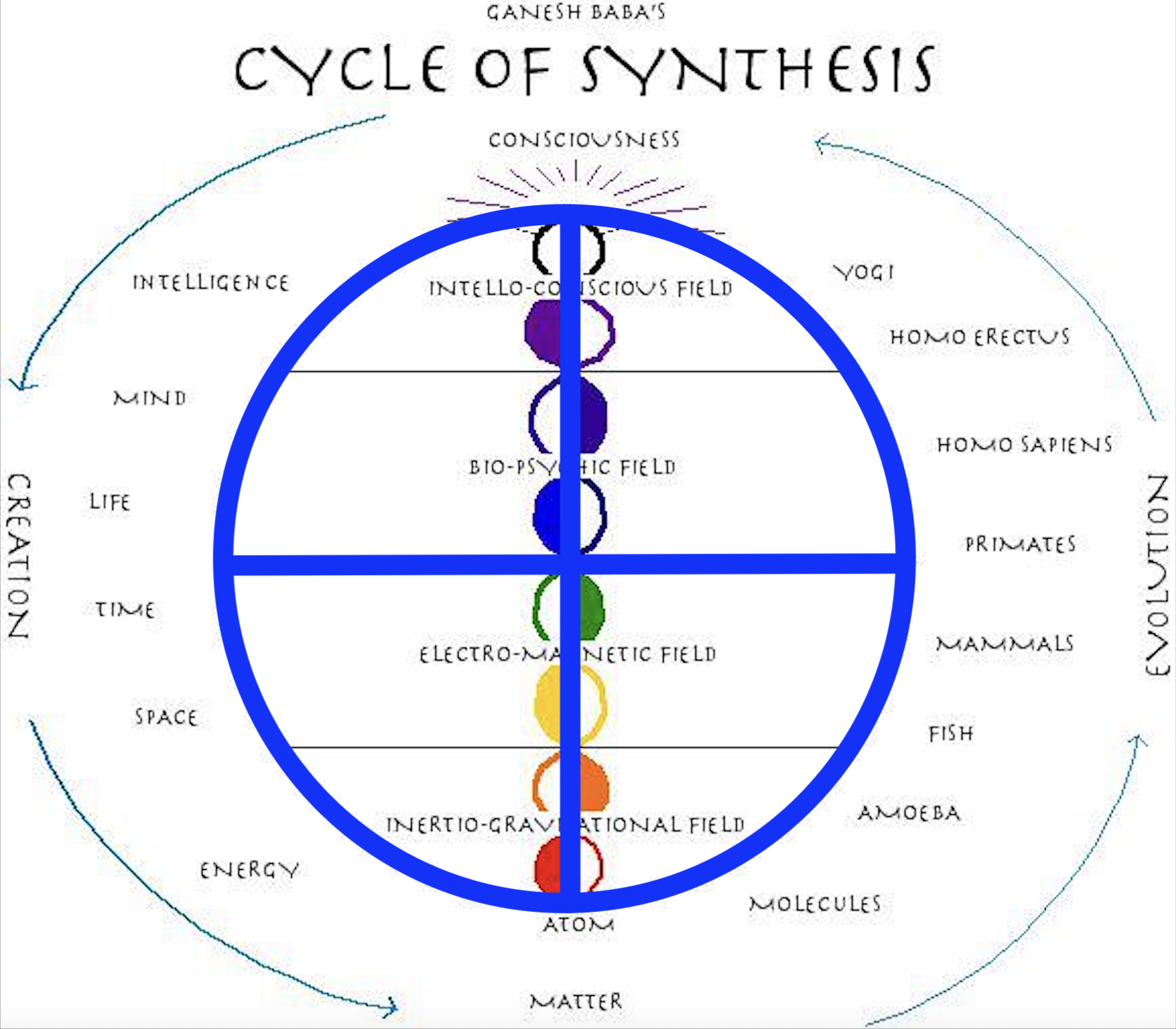
In my previous post in this series, I explore some traditional meanings associated with the cross within a circle. The straight line can represent the masculine, the circle the feminine, or the vertical line could the Masculine, the horizontal the Feminine. The center, the point of connection, is the heart. You can see the horizontal line as time, the vertical as space. The six directions, north, south, east, west, above and below are encompassed within it. It is central to my teacher Ganesh Baba’s theory of everything, Cycle of Synthesis.
Dans mon précédent article de cette série, j’ai exploré certaines significations traditionnelles associées à la croix inscrite dans un cercle. La ligne droite peut représenter le masculin, le cercle le féminin, ou bien la ligne verticale pourrait symboliser le masculin et la ligne horizontale le féminin. Le centre, le point de connexion, est le cœur. On peut considérer la ligne horizontale comme le temps, et la verticale comme l’espace. Les six directions – nord, sud, est, ouest, haut et bas – y sont englobées. Ce concept est au cœur de la théorie du tout de mon maître Ganesh Baba, le « Cycle de la synthèse ».
But I’d thought about all these things before. What came to me at 4 in the morning was the difference between the symbol of the cross in the circle and the symbolism in Jean-Gabriel Jonin’s work.
Mais j’avais déjà réfléchi à tout cela auparavant. Ce qui m’est venu à l’esprit à 4 heures du matin, c’était la différence entre le symbole de la croix dans le cercle et la symbolique présente dans l’œuvre de Jean-Gabriel Jonin.
Both represent the coming together of the Sacred Feminine and Sacred Masculine. In most traditional esoteric understandings, and in Jonin’s work, the Feminine is seen as the physical, the earth, the body, matter, and the masculine is the spirit, the unseeable, the unknowable. A single, tiny, nearly invisible sperm enters the egg. The active man shoots his life-force into the receptive woman, who holds and carries and nurtures their creation into adulthood. In Jonin’s work the Feminine Principle is depicted as the female body. The Masculine is a ray of light. His work is luminous, delightfully geometric, and rich with symbolism. The curves of the Feminine play with the lines of the Masculine.
Ces deux éléments représentent l’union du Féminin sacré et du Masculin sacré. Dans la plupart des conceptions ésotériques traditionnelles, ainsi que dans l’œuvre de Jonin, le Féminin est considéré comme le physique, la terre, le corps, la matière, tandis que le Masculin incarne l’esprit, l’invisible, l’inconnaissable. Un seul spermatozoïde, minuscule et presque invisible, pénètre dans l’ovule. L’homme actif projette sa force vitale dans la femme réceptive, qui accueille, porte et nourrit leur création jusqu’à l’âge adulte. Dans l’œuvre de Jonin, le principe féminin est représenté par le corps féminin. Le principe masculin est un rayon de lumière. Son œuvre est lumineuse, délicieusement géométrique et riche en symbolisme. Les courbes du féminin jouent avec les lignes du masculin.
The unencumbered cross in a circle offers a different interpretation of the same idea.
La croix libre, inscrite dans un cercle, propose une interprétation différente de cette même idée.
The lines are the Masculine, and the circle the Feminine. In this powerful image that has gripped my imagination for months, the Feminine is holding the Masculine.
Les lignes représentent le Masculin, et le cercle, le Féminin. Dans cette image puissante qui occupe mon imagination depuis des mois, le Féminin tient le Masculin dans ses bras.
And, at the heart of the image is the heart, the point of connection, and the doorway to other dimensions. It’s where fertilization and creation take place, where the new is born and where the old dies. It’s the ultimate möbius twist, the coming together of the opposites, the looking glass, the black hole and the newborn star.
Et, au cœur de l’image, se trouve le cœur, le point de connexion et la porte vers d’autres dimensions. C’est là que s’opèrent la fécondation et la création, là où le nouveau naît et où l’ancien meurt. C’est la torsion de Möbius par excellence, la réunion des contraires, le miroir, le trou noir et l’étoile naissante.
No wonder it’s called the Sun Cross.
Pas étonnant qu’on l’appelle la « Croix du Soleil ».
The astrological symbol for the sun is a circle with a dot at the center.
Le symbole astrologique du Soleil est un cercle avec un point au centre.

I began this piece three days before the solar eclipse, when the shadow of the moon crosses the sun.
J’ai commencé cet article trois jours avant l’éclipse solaire, lorsque l’ombre de la Lune passe devant le Soleil.

May the Feminine and Masculine Principles, manifest as the women and men on earth now, connect, hold each other, and work together to create a better balanced, more just, and more loving new world.
Puissent les principes féminin et masculin, qui se manifestent aujourd’hui sur Terre sous la forme des femmes et des hommes, se rapprocher, se soutenir mutuellement et œuvrer ensemble pour créer un monde nouveau, plus équilibré, plus juste et plus aimant.