Another relevant excerpt: Hitler’s speech

This one is from the second volume of Two Suitcases, which is called Underground. If you haven’t read the first volume Red Vienna yet, order it at your local bookstore or through Amazon.

February 2, 1937

a cafe not far from Max’s workshop

Gisi turns the pages of the new issue of the Kronen Zeitung she spread on the cafe table. She’d seen several copies on her way to the cafe. The paper’s populist touch allowed it to survive the Fascist takeover of Austria and keeps it on the newsstands in working class neighborhoods.

On the second to the last page, she finds what she’s looking for: From Innsbruck to ItalyThree Winter Hikes, by Wilhelm der Wandersmann. It’s Max’s and her first effort at hiding coded information about safe escape routes in the paper. She’s pleased to see it, of course, and she feels confident that no one who doesn’t know the code could possibly suspect anything, but it bothers her to think about the lies she had to tell to get it published .

The son of the publisher, a sweet but naive young man, now waits for her after lecture every week, or worse, he arrives early and saves her a good seat. Gisi puts on her spectacles to discourage him, but it hasn’t worked. She can’t tell him about Max so she told him that she’s helping a cousin in Tyrol to get a start in journalism instead.

“My cousin is more of an outdoorsman than a writer,” she’d said to him, “but he wants to write a series of articles like this about hikes all over the country. He’d like to make his love of hiking pay for itself. That’s why he’s using a catchy byline instead of his own name.”

What she feels worst about is that the day she gave the publisher’s son the article, she let him take her out for coffee and a pastry. Encouraging him even that much is so wrong. 

Max rushes into the smoky cafe. “Sorry I’m late,” he says breathlessly.  “I sold another radio and had to pack it up. I only have two left now.” They kiss lightly. “So, let’s have a look at our man Wilhelm der Wandersmann’s article!”

The code isn’t complicated. It involves starting certain sentences with letters that indicate the political bent of the proprietors of inns and restaurants along the way. Each time Gisi and Max succeed in publishing another article, a new code will be shared, again in code, in the Arbeiter Zeitung.

It’s fantastic!” he says, smiling broadly. “I can’t wait to take the next hike with you.” The next hike will be considerably longer with at least two overnight stays, quite possibly three. 

Their conversation turns to how much fun they had hiking the trails for the article over the last six months, two of them more than once. In the end, they decided that only one of the three routes would be safe, and they’d written the article together, he injecting the humor into her fastidious accounts. 

“We should go on the next hike as soon as the snow melts,” he tells her.  “When’s your spring break?” 

“It’s at Easter, but Easter is early this year, at the end of March. It could still be very cold.”

“Then we’ll have to keep each other warm,” he smiles. And the date is set. 

“So,” he says, “that settled, let’s have a look at what else the paper has to tell us today.” He turns back to the front page and glances at the headlines. “Well, we knew the trade negotiations with Germany would fail, so that’s not news.” He fails to notice a piece of paper sliding from between the pages and falling to the floor.

Gisi picks it up. “Look at this, Max,” she says. “It’s a speech by Hitler. Someone seems to have printed out the whole thing and tucked it between the pages of the paper.”

“Hm. Somebody is getting ideas from us.”

“Shh. This speech was given a couple days ago, on the fourth anniversary of Hitler’s coming to power. Listen what he says here.” 

Max leans in and she reads aloud.

“And I can prophesy here that, just as the knowledge that the earth moves around the sun led to a revolutionary alternation in the general world-picture, so the blood-and-race doctrine of the National Socialist Movement will bring about a revolutionary change in our knowledge and therewith a radical reconstruction of the picture which human history gives us of the past and will also change the course of that history in the future.”

The blood-and-race doctrine of the National Socialist Movement,” repeats Max. “Horrifying words. On top of the blood-and-race problem, he uses the full name of his wretched party, which dares to co-opt our name, Socialist.”

Gisi wrinkles her nose. “Well, I don’t feel so proprietary about that, to be honest. If they want to call themselves Socialists, let them be socialistic. Populists like to make promises like income equality, so let the state take care of all its people, not just those with the right blood. It’s not the Socialist part of the National Socialist Movement that bothers me. It’s the Nationalist part. Now, listen to what he says next:

And this will not lead to an estrangement between nations; but on the contrary, it will bring about for the first time a real understanding of one another. At the same time, however, it will prevent the Jewish people from intruding themselves among all the other nations as elements of internal disruption, under the mask of honest world-citizens, and thus gaining power over these nations.’”

“Well, there it is” says Max. “He doesn’t mince words, our countryman.”

Gisi is still reading. “His defense of the Nazi takeover as a bloodless revolution is pure propaganda, too,” she points out. “He says there wasn’t even one window broken, but his compatriots here in Austria don’t seem to feel such reticence.”

Max says, “What bothers me is how he returns again and again to the way conditions have improved in Germany over the last four years. Here he says:

Within a few weeks the political debris and the social prejudices which had been accumulating through a thousand years of German history were removed and cleared away. 

May we not speak of a revolution when the chaotic conditions brought about by parliamentary-democracy disappear in less than three months and a regime of order and discipline takes their place, and a new energy springs forth from a firmly welded unity and a comprehensive authoritative power such as Germany never before had?’”

Gisi agrees. “Yes, those are the parts of the speech that will resonate with readers of the Kronen Zeitung in particular. Most of this speech is too high-flown for the ‘folk community’ he refers to but the message is clear.”

“Yes. Get rid of the vermin Jews, destroy democracy, and everyone will live happily ever after.”

“I’m so glad we got Wilhelm der Wandersmann’s article printed. Herr Wandersmann has plenty of work to do.”

‘And we should have our suitcases packed,” Max says.

Red Vienna in the news

Well, that title is a little deceptive on my part. Red Vienna is indeed in the news, but it’s the historical period, not my book.

Still, take a look at how much interest there is in that brief utopian experiment right now, especially in the social housing model that plays such a big role in my book.

And then read my book.

A couple days: a lecture

https://www.ucl.ac.uk/institute-of-advanced-studies/events/2024/mar/cancelled-red-vienna-and-aesthetics-defeat

A week ago:

The February Uprising

https://www.msn.com/en-gb/news/world/the-february-uprising/ar-BB1iaDSR

Social Housing in Red Vienna

https://www.theguardian.com/lifeandstyle/2024/jan/10/the-social-housing-secret-how-vienna-became-the-worlds-most-livable-city

In the last few month or so:

https://jacobin.com/2023/11/otto-bauer-austro-marxism-nationalism-theory-history

https://businessdesk.co.nz/article/the-life/viennas-public-housing-is-a-paragon-for-the-world

https://www.socialeurope.eu/vienna-social-housing-model-celebrated-but-misused

https://delano.lu/article/red-vienna-a-model-for-lenert-

So much to read!

Red Vienna – a surprising launch into an unpredictable world

It’s the reddest day of the year—Valentine’s Day. Last night, Tom and I, together 35 years now, went out to eat at the very beautiful Au Jardin des Saveurs. It was a delightful evening in every way. When we got home, I checked my email and discovered that, though I was still patiently waiting to hear from the publisher, Red Vienna is already available through Amazon, in the US in hard or soft cover, overseas as an ebook.

An anticlimactic launch, to be sure! Nonetheless, I’m thrilled that you can buy it, in hard or soft cover in the US, or as an ebook there or overseas. And do have a look at its website.

I’ve been completely immersed in the second volume, Underground, which is more than halfway done now. It’s the end of 1936. I work on it as long as my neck and shoulders will let me type, go to sleep thinking about it and wake up the next morning thinking about it again. The characters are now back in Vienna, secretly working for the Social Democratic party in the face of continuing persecution and an unchecked rise in anti-semitism. I’m in a research phase, reviewing the history of Vienna in 1937 by rereading my parents’ copy of George Gedye’s book, Betrayal in Central Europe, and combing through the New York Times archives of that year. Next on my list is Bruno Kreisky’s The struggle for a democratic Austria. Lots of notes to take.

Now, I think I’ll have to take a break to get the word out that Red Vienna is available. Hurray!!

Two Suitcases: an excerpt


Powidltascherl

Alsergrund
December 31, 1934

Gisi’s grandfather died on the last day of 1934. A fever took him, or perhaps it was pneumonia. He wouldn’t let Helene or Gisi go for the doctor. “My time has come,” he told them that morning when, for a short time, he had the strength and clarity to speak. “Don’t spend good money dragging things out. Just sit with me.”

Gisi brought another cool washcloth from where it was hanging on the sill of the slightly open window, and put it on his burning forehead. He hadn’t eaten for three days, and stopped taking liquids the night before.

Helene sat at the table writing notes to their relatives inviting them to come to say good-by. He might have another few days, she wrote. He’s a strong man.

In the early afternoon, two of Herr Berger’s friends from the coffee house stopped in. Gisi went over earlier to tell them why her grandfather hadn’t been around for the last few days. A short time later a cousin from the next district brought a pot of soup.

“He’s not eating, Grete,” Helene told her.

“It’s for you and Gisi, Helene. You’ll go on living, no?”

“It’s very kind of you to think of us, Tante Grete,” said Gisi.

Grete grunted and pulled her sweater around herself more tightly. “Why on earth is that window open? Are you both crazy? You’re letting him die!”

“Papa wants it open,” Helene said.

“And you think he’s in the right frame of mind to give advice?” Grete walked over to the window and closed it firmly.

“Grete!” came a voice from under the blankets on the settee. “Leave that window alone!

“Ach, Josef!’ cried Grete. “You’re still with us? Good! I have some messages for you to give to our family on the other side.” She opened the window just a little.

“There is no other side, Grete, but tell me anyway.” Herr Berger sounded infinitely weary. He closed his eyes and didn’t open them again until Grete was gone.

The sun was low in the sky when he woke once more.

“Close the window, Helene,” he said.

Alsergrund
January 12, 1935

“And five hundred grams of flour,” Gisi said to the grocer’s wife. She looked at the small glass bottle of milk, the six eggs, the hundred grams of walnuts, and the hundred grams of butter already on the counter, and added up how much it would cost. “No,” she said. “Make that four hundred grams of flour. We have a little at home.”

“What are you making?” asked the grocer’s wife.

“Powidltascherl. The family is coming. You heard that my grandfather died? It was his favorite.”

“Oh, yes! So suddenly!”

“It was fast. He was fine, he caught a cold, and then he was gone. He was seventy-three, you know.”

“A good age. He had a long life. How many people are coming to you?”

“Well, the family from Tyrol, and maybe his cousins from Bavaria. And everyone from here. Maybe twelve or fifteen in all?”

“Then you’ll need more ingredients than this for the powidltascherl! Do you have the powidl?”

“I have two jars. It should be enough.”

“But you won’t have enough dough for that much powidl.” She was already weighing out more flour. “Here, I’m giving you more eggs, too. You have enough sugar? Let me give you some anyway.” The counter was filling with goods.

“No, no, Frau Steinmann! I can’t afford this much and I can’t add to our bill! It’s already late!”

“Gisi! You aren’t paying for any of this! I’m giving it to you so you can remember Josef properly.”

“Oh, Frau Steinmann, you mustn’t. What will I tell my mother when I bring home so much food?”

“You tell her it’s my gift! We went to school together, your mother and I. Your family has come here for too many years to count. Take it! Open your bag and let me put these things in.”

Gisi opened her bag. Frau Steinmann was right. One recipe would never feed so many people. “You’re very kind. Some day I’ll figure out a way to return the favor,” she said as she went back out into the cold.

Two hours later, the apartment was so packed with family and friends that people could barely move.

“Excuse me, Tante Basia,” Trude said as she pushed her way to the table with another plate of powidltascherl. She’d been able to make four recipes with the two jars of powidl and the ingredients Frau Steinmann gave her. Before returning to the kitchen, she popped another of the crispy plum turnovers into her mouth. It was her third. She stood still for a minute to savor the sweet and remember her grandfather. The taste of the powidl brought tears to her eyes. She ate the tascherl very slowly.

Behind her, she heard one of the cousins from Bavaria talking to Grete.

“All the Jews in our village are gone,” he was saying. “Every one.” Trude stayed where she was, perfectly still, listening. The cousin continued, “Could be they’re in hiding somewhere.”

“What are they hiding from?” asked Basia. “The police? Their neighbors?”

“Both. It’s very bad for the Jews all over Germany now. They can’t work, the children can’t go to school, what should they do? I imagine they went to the larger cities where maybe they can get work doing the things nobody else wants to do.” He reached over to the table and took two more powidltascherl. “If you ask me, that’s what they should be doing. That’s what they should have been doing all along. Making themselves useful without taking our jobs.”

Oh god, thought Trude. She hoped Litzi and Theresa wouldn’t be coming. What would she say to them?

“We’re much better off without the Jews,” the cousin continued. “The bank is in local hands now, and although there is only one left, we have a doctor we can trust.”

“The Jewish doctor wasn’t trustworthy?” asked Basia.

“Doctors! There were two. To be honest, I never had a problem with them, Herr Frankel and Herr Goldmann, but you hear stories.”

Deciding she’d heard enough, Gisi looked up, and there was Max, right across the room from her, standing hesitantly near the door. He looked thin and haggard. Gisi watched him make his way to where her mother was accepting condolences and wait his turn to speak to her. He didn’t look around the room.

She glanced at the plate of powidltascherl. More than half were still there.

“Excuse me, Tante Basia,” she said again, this time making her way to where Max stood.

“Gisi!” a voice called out. It was Theresa, the cousin she grew up with, the cousin she hadn’t seen in more than two years, the cousin whose wedding she missed because of the civil war, the one who never wrote back after Gisi told her that Max and she were planning to travel together, and to marry someday.

“Theresa!” Trude exclaimed as they hugged. “How wonderful to see you!” and it was. All their differences fell away in that hug. The two young women forgot what was going on around them, so deep in conversation were they, catching up, apologizing, falling into their old familiar way of being together.

It was ten minutes before Gisi remembered that she was in charge of the powidltascherl, and the two of them went into the kitchen to prepare another batch. It was half an hour before she remembered Max. He was gone by then.

March 1933 – an excerpt from Two Suitcases

Talk about history repeating itself. This is where I am in Two Suitcases now:

Café Rüdigerhof, Brigitennau, Vienna
March 7, 1933

Max closes the shop early to meet with the others at the coffee house. The news that Chancellor Dollfuss eliminated the parliament hit the press earlier that week, and today it was announced that the Wartime Economy Authority Law, an emergency law passed in 1917, would be used as a basis to rule.


Every day that week brought what seemed like earth-shattering news. First the National Council couldn’t agree on how to settle the railway workers’ strike. When an agreement was finally reached, irregularities were found in the vote, and Karl Renner, leader of the SDAP, resigned as Chairman of the Council.


Rudolf Ramek, a Christian Socialist, then became Chairman. He declared the previous vote invalid and asked for a new vote. Another uproar followed. Ramek then resigned, and Sepp Straffner of the Pan-Germans became Chairman, but he also stepped down immediately. The resignations of Renner, Ramek, and Straffner left the house without a speaker, so the session couldn’t be closed and the National Council was incapable of acting. The members left the chamber as a consequence.


Chancellor Dollfuss declared a constitutional crisis. The parliament had “eliminated itself,” a crisis not provided for in the constitution. He then set up an authoritarian government without a parliament. The establishment of wartime rule gave him complete authority.


“It’s what he always wanted! He wanted to be head of a fascist state from the beginning!” Gert is saying as Max comes into the coffee house.


“That’s not true. He wanted to make peace between the parties at first,” Toni answers.


“What does it matter what his intentions were?” Leo asks. “We have a completely authoritarian government now. Democracy is dead.”


“It’s as bad as Italy,” says Hugo. “Dollfuss always admired Mussolini.”


“That’s why I said he always wanted to be a dictator,” Gert points out.


Max adds, “It’s a coup d’état, really. Renner, Ramek, and Straffner fell right into his hands.”


“At least he won’t let Austria merge with Germany,” says Felix.


“Small comfort when one man now controls the power over all economic activities and over war and peace indefinitely,” Max says.


Toni wonders, “Do we continue our new education program? Having Dollfuss as dictator doesn’t diminish the rising power of the Nazis and the dangers of demagoguery.”


“Dollfuss isn’t a Nazi. Or a demagogue. It’s possible the rule of a strong hand will calm things down a little,” Felix says.


“One can hope,” says Gert, “but I think the Nazis are far too pleased with how fast their ideas are spreading to stop now.”


“I think they’ll be more dangerous than ever. And Dollfuss’s party, the Christian Socials, are barely less anti-Jewish than the Nazis anyway,” Leo says.


Felix adds, “I wonder if it will soon become too dangerous for us to even hold meetings or give talks.”


“Especially in the beer halls. I already find them frightening,” Toni says.


“We shouldn’t be driven by fear of what might be!” Max answers. “I say we go ahead with the talks as scheduled. I think it would be a big mistake to let ourselves be intimidated.”


“I agree!” “Yes.” “You’re right,” the others say.


“Alright. We’ll go ahead, but I think we all need to keep our eyes and ears open to gauge the response of the groups we address. Dictators use spies to keep the peace. It’s more important than ever that we aren’t seen as rabble-rousers,” says Hugo. “We’ll meet on Tuesday then, and listen to Leo practice his speech for the beer hall.”


Two Suitcases – in process

PD62488014_4-Membe_2493417b

This is the first image that arrived on my desktop when I began the research for Two Suitcases. I googled “Socialist Youth Movement Vienna 1929” and this magical doorway into the world in which my parents met opened.

When I read about Edith Tudor-Hart, who took the photo (a show of her work is making the rounds called The Soviet Spy with a Conscience), she immediately joined my list of possible characters in my book. It’s a long list. There were so many extraordinary people around in Red Vienna that many of the people on that list haven’t shown up in the book yet. Edith jumped right in.

[I think I will change the names of the characters soon.]

Almost all the settings in the book come from pictures: family pictures and stories, or gifts Mother Internet sends me. I wrote the section on the Youth Congress from a newsreel. The torchlight march was inspired by hearing the songs the kids were singing.

I paste the material into the text above what I’m writing and take them out later. At first I didn’t save the pictures, so I hadn’t seen this one in months until I started collecting the pictures on Pinterest.

Here’s an excerpt in which the current version of Edith appears. My favorite line belongs to her:

“So, why do you think we have wars?”

“Because we are ruled by an elite group of sociopaths who own the banks that fund both sides of war for profit!”  says Edith, slamming her hand on the table.

Here’s the whole section:

July 13, 1929

It is Ernst Papenek’s talk on the benefits of International Socialism on the second morning of the Youth Congress that finally wins Emil over to the cause. At Max’s invitation, he sits with some of the young men from the Brigittenau group: Hugo, Leo, Felix, and a fellow called Franz, and listens to Papanek for most of the morning. Not only does the speaker make Democratic Socialism seem reasonable, caring, expedient and attainable – all important values to Emil – but it turns out that Papanek, unlike Luitpold, is not a pacifist. It isn’t that he promotes or even approves of militarism, but he does believe in facing up to the dark forces that oppose the dream of a unified socialist world. 

Afterwards, Gisi, Toni, and Gert join them at a cafe to share their experiences. Edith arrives from the tent camps where she has been taking photographs. “18,000 kids in 3000 tents! You must find the time to go over to see them,” she announces as she pushes her bulky camera bag under the chair and sits down. “Vienna is housing 22,000 young guests for these three days – and they’re all having a great time from what I see.” 

An enthusiastic discussion follows, but Emil is itching to bring up Papanek’s stand on fighting. At last he finds an entry point.

“The ideas I’m hearing are all tremendous, but I wonder if you aren’t being naive. Even Papanek believes that the children may not be safe in today’s world. We shouldn’t imagine that by not thinking about it, we can make the National Socialists and their hatred disappear. We may need to fight to protect the children.”

“Papanek wouldn’t say that! You misunderstand him!” Edith responds. She gets shrill about such issues easily. “He abhors war!”

“I think it’s you who misunderstand,” Emil answers. “He was quite clear. He doesn’t rule out the necessity of war under extreme conditions. Were you there this morning?”

“But the conditions leading up to war can be mitigated before it becomes necessary,” says Hugo.

“That hasn’t happened yet,” Emil says. “I doubt if it ever will.” He pauses and then asks the group, “So, why do you think we have wars?”

“Because we are ruled by an elite group of sociopaths who own the banks that fund both sides of war for profit!” says Edith, slamming her hand on the table.

“The current coalition government isn’t in control? I thought we were celebrating the success of Democratic Socialism here,” Emil says, one eyebrow raised.

“We are.” Edith lets out a breath so derisive it is almost a snort. “But socialism hasn’t overcome the forces of capitalistic militarism yet. War is far too profitable for the banks to easily give up financing it. They’re just waiting for the right moment to launch a new war.”

Anna says, “That’s why the work we’re doing here is so important. Young people have been raised to think war is inevitable and will always be part of our lives. The generation being raised in the socialist paradigm will know better.” 

“And will refuse to be sacrificed like pawns in a game of chess,” adds Gert.

“I don’t think it’s that easy,” says Emil. “Boys like to fight. You can’t overcome instinct. Ask Dr. Freud.”

“That’s exactly why this afternoon is dedicated to games and sport!” Toni says, ending the discussion.  “Are any of you playing in the games?”

“We’re both on the all-Vienna football team,” Leo replies for himself and his brother. “We’re playing against the Czech team at 4:00. Are you girls coming to watch?”

“Of course!” come responses from all around.

Enjoying reading this? Click on the links above to learn more about the characters and see the material I’m using as resources.

Two Suitcases – an update and an excerpt

I haven’t had much time to write lately. What with watching Éva, charming but nonetheless 19 months old, up to five days a week; sorting and emptying this enormous house and getting it ready for the market; hosting a slew of wonderful guests, some paid, some not; and best of all, having our whole, hilarious family here for over a week, entailing regular meals for between 15 and 23 guests (impossible without the help of my sister-in-law,  Joanne Currie), quiet moments are scarce.

AND YET, the ancestors haven’t let up on me. Material floods in. My parents’ papers from Vienna, Paris, and Verfeil. Above, their identification papers from Tarn-et-Garonne, in France. Below, a history of the Social Democratic Party in Brigittenau, the neighborhood in Vienna where much of what I’m currently writing takes place:

red Briggittenau book

I’m overwhelmed with gratitude.

Here’s a draft of the section I managed to write during all the uproar of the last couple weeks.

July 12, 1929

Vienna

Gisi looks into the old mirror on the inside door of the armoire and straightens her red tie for the fifth time. Her new blue shirt looks good but the tie isn’t hanging quite right. She wants everything to be perfect. Finally the tie is right. She takes Mitzi, the pipe cleaner antelope her grandmother made, from her shelf in the armoire and slips her into her pocket. Mitzi always comes along to important events. Moments later, Gisi is hurrying down the stairs to catch the streetcar to the Heldenplatz for the opening ceremony of the Second International Socialist Youth Congress. 

The sight that meets her as she steps out of the car is stunning. As always she is early – but the huge plaza in front of the Hofburg Palace is already filling with many thousands of young people. Troops of children, from seven years up, their leaders, and throngs of young adults are pouring from every direction, following and clustering around red flags in a variety of shapes and sizes. 

All the same beautiful deep red, the flags symbolize International Socialism. At the entrances to the courtyard and on the steps of the palace, tall, narrow flags flutter from very high poles. Similar narrow flags are scattered across the plaza, but most of the thousands and thousands of flags – everyone is carrying one – are simple rectangles of red. Each group carries at least one to which they’ve added a symbol to identify themselves, but the great majority are just red. It is so inspiring! As Trude winds her way through the sea of color and eager young faces, she’s filled with the excited energy of the crowd. 

“Hi!” she calls out, waving her arm at Leo and Felix when she spots them on the steps to the Federal Chancellery, where their group is gathering. The brothers got up at four in the morning in order to stake a claim on this fine spot. “How great! We have a perfect view!” Gisi says. She climbs up a few more steps to survey the plaza. 

Never before has such a group gathered.

“You won’t be able to stay up there,” Leo tells her. “Those steps are reserved for functionaries more important than our little group of event coordinators.”

“It’s remarkable!” says Felix, his eyes never leaving the gathering attendees. “It’s like an enormous symphony orchestra!”

Max and Anna arrive next. 

“We were just at the station,” says Max. “What a welcome we gave! A good-sized brass band was there and they were playing loud, but we young people were even louder. As the train pulled in, we formed a long, broad wall along the tracks, and waved and chanted ‘Friendship, Friendship!’ You should have seen the eyes of our comrades on the train!”  

Next come Hugo and Gert, she, in the new spring coat she made for herself out of offcuts from the dressmaker’s shop where she works. 

“It’s beautiful!” says Gisi, seeing the coat for the first time. “You’re so creative with so little!” 

“That is truly a compliment,” Gert replies. “Your mother is the queen of creative reuse! And you’re no slouch yourself.” Gisi smiles and turns a little to model her grey skirt, recently an old coat, swinging it outward gently to let the red trim show.

“Thanks! I’ll never be as good a seamstress as my mother, though,” she says. “I can’t compete. That’s why I worked so hard to get into Gymnasium.”

“That’s not true. You’re so smart! You’d be bored being an apprentice like me.”

“I don’t think I’d mind if I could work for someone else in a big shop like you do. But I would have to work at home for my mother! I wouldn’t be able to stand it!”

“I understand perfectly!” Gert laughs. 

The group is talking animatedly as the musicians seat themselves on the large balcony above the palace entrance. Then Anna looks up in surprise. 

“Emil!” she cries out. “You came!” 

“Would it be alright if I join you?” asks Emil.

“You aren’t part of our group,” says Hugo. “You really shouldn’t…”

“Why not?” Anna’s voice cuts sharply over Hugo’s. “Everyone, let me introduce my friend from the University, Emil Bloch. Emil, these are my friends in the events coordination group I told you about. Hugo Preis, the rude one there,” she glares at Hugo, then goes on, “and Gert Braun, his girlfriend, Leo and Felix Goldfarb, my brother Max of course you know, and this is Max’s girlfriend, Gisi.”

Emil subdues his inclination to flinch at her boldness, and nods and smiles at each one of Anna’s friends. “Glad to meet you,” he says. Only Gisi notices his discomfort with the way Anna spoke over Hugo; she feels the same way herself.

The orchestra begins with Richard Strauss’s “Festival Procession.” By the time they finish and the chorus joins in for the “Wake Up” from Wagner’s Meistersinger, every heart in the massive plaza is joined to every other. 

The hope of a new world is gathered.

Otto Felix Kanitz, founder of the Red Falcon scouts and head of the progressive Kinderfreunde school at the castle, Schönbrunn, greets the Future of Socialism, standing in the plaza before him. Karl Seitz, the mayor, welcomes them all to Red Vienna, living proof that a City of the People, For the People, is possible. The Dutchman Koos Vorrink, speaking for the International Youth Movement, announces that internationalism, the Internationale, the greatest conception of what humanity can be, is alive and flourishing. The orchestra is drowned out by the enormous cheer that rises from the crowd as the red flag of International Socialism is carried up onto the dais.

In the afternoon, guided tours of Vienna are offered, and most of the young people spread out over the city in small groups, visiting the social housing complexes as well as St. Stephen’s Cathedral, the Opera House, and other sights. The event coordination group splits up to prepare for the twenty-five concerts, celebrations, and performances that will be offered all over the city that evening.

Anna is the leader of the group preparing for Josef Luitpold’s poetry reading in the large meeting room at Karl-Marx-Hof  that evening. She intends to get there at 6, but how can she refuse when a group of her friends says they were going to a café for a drink and a bite to eat? 

“Hey, redhead, you come too,” one of them calls to Emil as he links arms with Anna and pulls her along. 

Emil is very entertaining on a couple of beers –Anna already knows that. An hour passes in laughter as comical imitations of the morning’s speakers mix with deep appreciation of the Youth Congress so far. The sheer numbers! The power of the language: “a City of the People, for the People.” And how tightly organized the congress is!

Oh my! Anna realizes that she should have left for Karl-Marx-Hof ten minutes ago. 

“I’ll find something for you to do, Emil,” she says over her shoulder as she hurries down the street. “But you really should have decided to come when I first invited you. We would have found a good job for you.”  He catches up with her. For a few moments, their long strides match.

“I’m usually good at making myself useful wherever I am. What still needs to be done before the bard declaims?” he asks.

“Just tag along and I’ll see when we get there.”

They board the tram together.

Gisi arrives at Karl-Marx-Hof and heads straight to the large meeting room. The room is unlocked, and but no one is there. She looks at her watch: half an hour early. All the way over, she worried she would be late. Well, she is not.

The high-ceilinged room is lovely in the late summer afternoon. The windows are open wide, letting in a pleasant, fresh breeze. Summer sun fills the space and bounces off the glistening wood floor. At the front, the podium is already on the dais. Banners hang on all the walls. Hundreds of folding chairs are neatly stacked on wheeled carts lined up along the back wall. 

The center of the room is gloriously open.

As quietly as possible, almost on tiptoe, Gisi crosses the huge room. She hangs her bag on the back of a folding chair, squints to look at the whole room, and then checks her watch again.

Humming the Skaters Waltz to herself very softly, Gisi begins to glide around the perimeter of the room, sliding on the highly polished floor as if she were skating. After just a few bars, she realizes how much more smoothly she could glide if she weren’t wearing shoes, so she pauses, unbuckles her sandals, and slips them off. Looking at her watch one last time, she leaves her shoes under the windows, and begins the waltz again. Her thin stockings slide beautifully. 

This time she sings out the melody, dah, dah, dah, dah!  Soon she leaves the edge of the room and glides across the middle. Then she skates around happily, making figure eights and graceful curves, singing all the time, until she notices with a shock that someone is standing in the door watching her.

It is Emil, who arrived at Karl-Marx-Hof with Anna a few minutes ago. 

“Go ahead of me, Emil, and go and see if we need to turn on the lights in the large meeting room,” said Anna, who needed to stop in at the office first.

When Emil gets to the large meeting room, it is filled with light, and a fairy, some lithe little thing in a blue blouse, a pretty skirt, and stocking feet, is dancing around the room alone, accompanying herself with a slightly off-key version of Skater’s Waltz. 

He is instantly enchanted. Should he announce his presence? Surely she will see him on one of her turns. In the meantime, he takes in the sweetness of this young girl dancing by herself so beautifully. 

When she sees him, Gisi is mortified. Her heart pounds and blood rushes to her face. A man saw her being so silly! 

Without retrieving her shoes, she heads toward the door to see who it is. When she realizes it’s Anna’s friend Emil, she’s even more upset. He must be at least Anna’s age – what, 20? – and he stood there watching her make a fool of herself. When did he come? How long was he watching her?  Suddenly she’s angry. How extraordinarily impolite of him! 

Breathing heavily, she stomps over to where Emil is leaning in the doorway. How dare he look so relaxed, so nonchalant? His long limbs remind her of a grasshopper. 

“Why are you here?” she asks bluntly. She is standing firmly in front of him, hands on her hips, looking up. He’s a head and a half taller than she. “Didn’t Anna tell you the poetry reading doesn’t start for another hour and a half?”

“Anna sent me up here to turn the lights on for that very event,” says Emil. “It seems it isn’t necessary.” He smiles at the fire in her eyes. 

Footsteps echo from down the hall. 

“Ah, here is the great leader herself,” he finishes, looking down the hall and calling out, “Anna, Gisi is already here!”

“Gisi! Well, there are three of us. Let’s set up the chairs,” says Anna, entering, brisk and businesslike, apparently not noticing Gisi’s stocking feet. 

Gisi gets to work, grabbing her sandals as discreetly as possible as she passes the windows, and scrambling to put them on while Emil and Anna are talking. 

Soon the rest of the group arrives, all of the three hundred chairs are set up and coffee is brewing in a samovar. 

The poetry is mythic, thrilling, larger than life. It speaks equally to the glory and the utter humility of humanity.  It extols peace and condemns militarism. The crowd cheers and swoons.

Emil wonders if he is the only one in the room who considers it bombastic and grandiose. But he is no fan of Wagner, either.

Two Suitcases: a wink from Emil

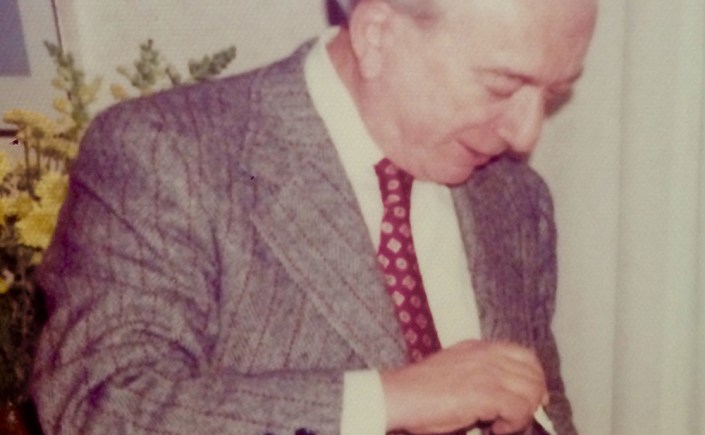
My desk is filled with photos my parents and their friends in the 1920’s through the 1940’s. None of the main characters in my historical fiction novel-in-progress, Two Suitcases, is alive.

I should have asked more questions.

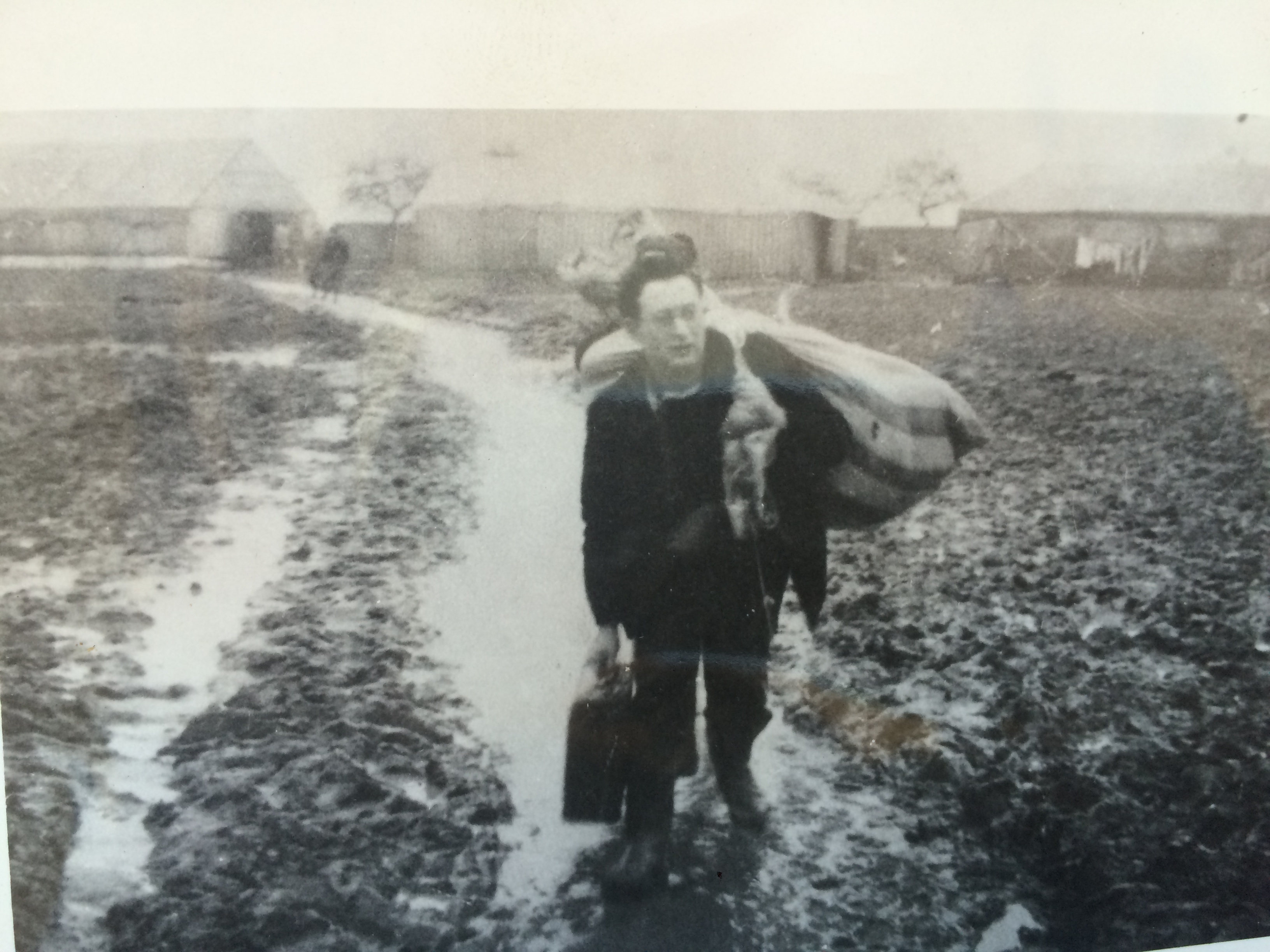
IMG_7014I write from pictures, from old newspaper articles and newsreels, from family stories told many times or just once, from snatches of memory, from dreams. I read about the period and places where the story is set incessantly. Then I make up stories that could have happened.
IMG_7015

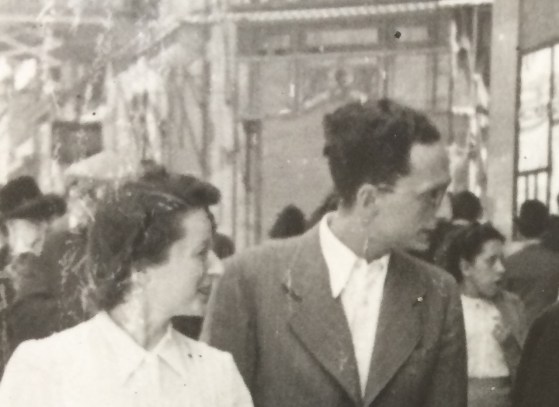
There are four main characters in Ida 1940'sthe story: my mother and father, called Gisi and Max, my father’s sister, Ida, who’s Anna in the book, and a friend of the family, whom I call Emil. Six more characters play secondary roles. None of these are entirely fictional, but what they do in the novel is certainly not what they did in life. It’s fiction.

Sometimes I wonder if they approve.

I had the great fortune to be with both my parents when they died, and I was close to my aunt till the end, but until yesterday, I thought Emil died about eight years ago and no one knew to contact me.

In yesterday’s mail I found a beautiful handwritten note.

It says,

“Emil passed away October 3, a few weeks before his 102nd birthday. He was in good health and excellent spirits. He died peacefully at home. His heart stopped while he was reading the Wall Street Journal.”

The perfect ending.

I said good-bye to Emil in 2008 on my way home from India. I already lived in California then and came east very rarely. Emil was his usual gracious and elegant self. It was five years after my mother died, and he told me for the first time how he’d loved her. At 95, he was still walking long distances every day, but we talked about the likelihood that this would be our last meeting. He filled my rental car with treasures from his beautiful house and we stood in the driveway a long time saying good-bye.

Caught up in the hurly burly of home, I didn’t write a thank you note for some months. When I did, it came back stamped “unknown.” I mourned.

I should have asked more questions.

I missed seven good years of Emil’s life.

Still, over these last couple months, the character, Emil, has been pressuring me to give him a more and more important role in the story. He’s been developing more personality, more, in fact, than any of the others, save Ida, and that perhaps because she acts as a foil to him. His voice is clearest.

If that note isn’t a wink, I don’t know what is.

Thanks, Emil. It feels like you approve.

Two Suitcases: A Window into my Work

Here’s a look into the process of writing Two Suitcases:

timeline

This is one of several timelines I’m using to structure the book. This one was meant to have historical events at the bottom, events and pictures from my parents’ and their friends’ lives in the middle, and trends at the top, but it’s pretty mixed already. It was a good plan anyhow.

herd of pipe cleaner animals

A small herd of pipe cleaner animals has invaded my chapter chart.

Fritz, Trudy and three pipe cleaner friends

My favorite pictures of my parents and the first of the pipe cleaner friends.

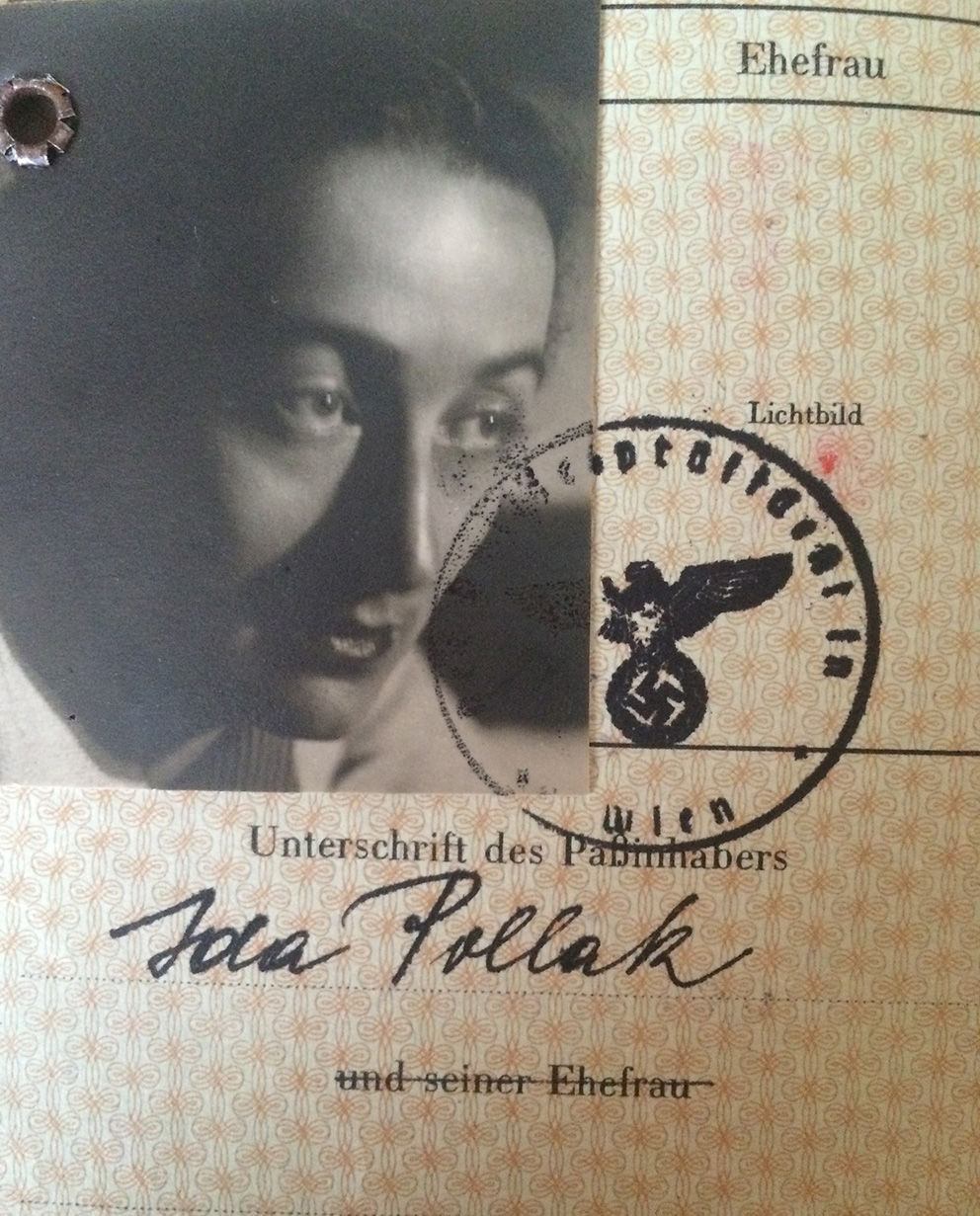
Ida's passport picture      Ida's passort front page

These are pages from my aunt’s passport, issued in German-occupied Vienna in 1938.

And here are a couple of less distressing shots:

blue lady sunbathing

A blue lady sunbathing.

blue lady dancing

And one dancing.

And, as promised, a snippet of what I’m working on now. This is yesterday’s work, in more or less first draft.

April 22, 1929

The University of Vienna, Ringstrasse

Anna hurries out of her first afternoon class, Dr. Charlotte Buhler on Child Development. After experimenting with sitting on three different benches, she settles on the second, and, with her book bag on her lap, she looks first to the right, and then to the left, and then to the right again. It’s her intention to keep an eye on the door she expects Emil to emerge from momentarily, while simultaneously watching the route he is likely to take to the Konditorei where they’d first met, in case she misses him coming out. 

She doesn’t have to wait long. Emil’s mop of wild hair is obvious above the group pouring out of the Mathematics building.  He’s walking with someone and gesturing animatedly. What next? Should she stand up and go to him? Or hope that he notices her there on the bench? The courtyard is crowded and noisy now. 

Anna decides she shouldn’t chance sitting, so she stands up and makes her way toward Emil across the current of chatting students, glad of her own height. Should she call out? She’ll miss him if she doesn’t. She raises her arm and is about to wave, about to call out his name, when he turns, spots her, and grins. He says something to his companion and makes his way, cross-current, to where she is. 

“Hello!” he says, genuinely glad to see her. “I was hoping we’d run into each other again!”

“And I you!” she says. He’s very handsome despite the pockmarks all over his face. She hadn’t noticed them before, but it’s not such an uncommon sight. Lots of children get smallpox and most of them die. He is lucky to have survived, she thinks. Money and good doctors, that’s always a help.

“Join me for Jause, will you? I’m going to Sluka.” 

“I’d love to,” says Anna, and she lets herself be drawn into the outward flow of the crowd with Emil at her side. Sluka! Not the little bakery where they met! What have I done? What kind of fool must I be to have accepted?

Konditorei Sluka is one of the best bakeries in the city. It is elegant, luxurious, and outrageously expensive, a place inhabited by tourists and the wealthy, even the very wealthy. The Empress Elisabeth was a regular customer! Ida knows where it is, of course, but she has never been inside – though she has looked into the window longingly many times. Frantically, she searches her mind for a reason to back out now, to decline Erich’s offer, walk away and never see him again. They are too different; they’ll never get past their class differences. She is poor. He is rich.

Before she can decide on an excuse, he turns to her and asks how she likes her coffee. With whipped cream? One teaspoon of sugar or two?

By the time they reach the Konditorei, Emil and Anna have discussed their mutual enjoyment of good coffee, pastry, and the cinema, as well as establishing the comforting fact that they are both Jews. 

Once in the bakery, however, her problems begin. Ida has no money. She could allow Emil pay for a small cup of coffee, but it’s much too soon in their acquaintance to let him buy her pastry. 

Anna turns and looks around the Konditorei. High windows draped in sheer curtains fill the dining area with light. Glistening chandeliers in several sizes hang from the lofty ceiling. The walls are deep yellow with gold trim and pale green panels framed in rich brown. Elegantly dressed ladies and gentlemen sit at highly polished round tables cutting their pastries with forks and knives. The chairs have graceful bent wood backs and legs so delicate Ida wonders how people dare to sit on them.

She takes a deep breath.

The pastry case in front of them radiates golden light. Ornately decorated pastries and cakes satisfy every visceral sense: moist cream fillings, bright fruit slices shimmering in fruity glazes atop voluminous cakes, crispy puff pastry layers surrounding vanilla scented creams, soft nut tortes offering only a fleetingly crunchy resistance to the bite while rewarding one’s every nutty desire, unctuously melt-in-the mouth coffee butter creams topped with crunch.    

“So,” asks Emil, “What is your favorite?”