Sharing

Pull up a chair. Take a taste. Come join us. Life is so endlessly delicious.  – Ruth Reichl

Not long ago, the words “Live to share” came to me on the tag of a teabag.  I saved it on the window sill with a fortune cookie message from the week before. I generally appreciate random bits of wisdom – these two spoke to me so strongly that I wanted to save them.

fortune cookie kindness

From now on your kindness will lead to your success.

If the fortune is true, I’m deeply grateful. What grace to be at a point in life where it’s enough to be kind, to live from the heart without fear, and to leave the world of comparison, competition and mastery behind until its tools are really useful.

I’ve been trying to live by kindness for a long time – who doesn’t love the Dalai Lama? – but the workaday world doesn’t always reward it, and when I was younger and more fiery, it wasn’t always so easy. But now, having received such a propitious cookie fortune, perhaps I can do it.

IMG_4369

The tea tag appeals to me because it so precisely describes what I am doing with my life these days. 

After my mother died and our children grew up, Tom and I were left with a ridiculously oversized empty nest. I’ve always felt that if we have such a big, beautiful space, we should share it, so we’ve filled it with friends and family, exchange students, SERVAS and warmshowers guests, and an array of tenants. I host women’s circles and meditation groups, we have advocacy groups and the French club here sometimes, and once a month we open our home for a community dinner.

IMG_3676

We began having Monday night dinners about 25 years ago. When the kids were younger we did it every Monday: open community dinners. We’ve used the same rules the whole time:  come promptly at 6, leave at 8, bring real food, and help set up and clean up.

The food is consistently excellent though we never plan it. In all those years, not planning only failed twice. Once we had one salad and many desserts. That wasn’t too bad – it was fun to have dessert for dinner. But the time we had all bread was not so much fun. The next dinner is the first Monday in April. Tell me if you’ll be coming so the right number of tables and chairs get set up.

For the past two years, I’ve been fortunate enough to earn a living by sharing the house with new friends from around the world through Airbnb. Some of our guests have already become old friends. What an exquisite joy it is to sit around on the deck after dinner enjoying a glass of wine or a cup of tea with old and new friends, discovering commonalities and sharing stories.

IMG_2211

The exercise I get changing beds and cleaning, especially paired with a couple of dog walks a day, is perfect for me. The pleasure I find in hanging the sheets on the line and then making the beds, especially with my mother’s linens, is enormous. I love keeping the house fresh, clean and beautiful, and the extra cash flow is paying for many long-put-off maintenance projects. When I want the rooms for family or friends, I block the Airbnb calendar and everything is ready.

What more could I ask?

Wisdom

What you would grasp
let go
only those seeds that fall
grow.

a.o.howell

Noticing

Another entry for you, Alice, as your teachings continue to unfold.

Noticing comes naturally as I practice slowing down. You once said to me,

“You don’t have to do anything.  Just let the layers unfold until your radiant soul shines through.”

Slowing down allows the light of consciousness to flow more freely; my attention, in a more relaxed and diffuse state, picks up sounds, scents, images that I wouldn’t ordinarily notice.

So, I return your poem to you with my pictures.

Pastor’s Pastorale

rYour poem, my pictures

our mother in springOr were there time enough

x

to sleep and dream

y

and mull the mind

z

on things as they might seem —

a

IMG_4285

but, no

b

we plod

r

(and stumble on our guilts)

d

to God.

How simple then to walk the night

s

IMG_4309and touch the stars or taste the dew
f

smile at such gifts

w

and count ourselves among the few

t

IMG_3904who yes

IMG_4328

who pray

IMG_4322

yet kiss

IMG_4122and sing to others what they miss:

It’s this! It’s this!

 From the Archives of the Heart

Everything was opening its secrets to me in silence, without a word. Everything shone in my heart now instead of my head. The more I appreciated, the more I could see. It was a whole new way of learning, by listening to silence.         ao, The Beejum Book

Thank you.

Neighborhood magic: Elisabeth Abrahams (Part 1)

This is a warning: if you’re a neighbor of mine and you stop by in the afternoon for a cup of tea, you may well end up interviewed here. That’s what happened to Elisabeth Abrahams, dancer and dance therapist, playwright and yoga teacher, who lives just up the hill. Born and raised in England, Elisabeth is in her 80’s now. I’ve chosen to break my conversation with her into two parts; this is the first.

We sip black tea with milk on the deck and I ask her the same questions I asked Tom.

“On a routine day in your life, what makes you happiest?”

“What makes me happiest?” Elisabeth reflects for a moment. “Oh, when it gets to be around 3:30 or 4:00 in the afternoon, I like to sit down with a cup of tea – my latest tea taste is China Oolong tea – I don’t have milk in that – and some kind of a biscuit, a cookie.”  It is exactly 4:00 and I wish I had some cookies, biscuits, in the house, but no.

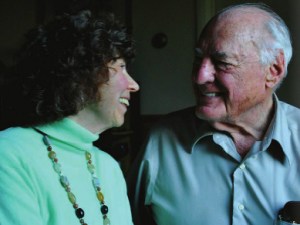
Elisabeth and Joe

photo credit: Susan Pyburn

She laughs to herself asking, “Should I say this?” before going on. “The other thing I really like to do – this is earlier in the day – the tea thing takes place at about, you know, tea time – the other thing is to draw a warm bath in the morning,”  she sighs contentedly, “and sink into it and plan the day.” She smiles. “But usually what’s happened is the telephone goes, and my husband walks in with the telephone in his hand, and I have to get out of the bath,” she laughs, “and answer the telephone.”

(Take note: avoid Elisabeth too early in the day.)

Joe is 97 and going strong. They met on a blind date in San Diego is 1978 and they’re still dancing. When I met them a few years ago they were both retired from Atascadero State Hospital where he’d been a psychiatrist and she a dance therapist.

1380427_10151685971023857_1230435072_n

Elisabeth and Joe cutting the cake for his 97th birthday

I ask her, “In general, what activities give you the greatest joy?”

“Dancing,” she says right away. “Dancing of several kinds. I love to go to a ballet class, do the barre and do the moves to the music. I like to go the Madonna Inn and listen to music of the 30’s and 40’s and 50’s – and the 20’s! – and dance with Joe. I like to do a modern dance class if I can find one. That hasn’t happened for a while. And we love to dance around the house!

“I also like to read plays,” she smiles broadly, “and I should say, the best thing I’ve done in my life was to take the play I wrote to Edinburgh. I felt like a star.” Elisabeth is glowing. She takes a long sip of her tea and sets down the cup firmly. “I really enjoyed that.”

Elisabeth's play“Against the Tide  –  a portrait of a marriage” is a one-act play about Melanie Hahnemann, the Marquise Marie Melanie d’Hervilly Gohier Hahnemann, and her husband, Dr. Samuel Hahnemann, the founder of homeopathy.  It ran from August 26 to August 30, 2009, in the  Vault Theatre, a venue of the Edinburgh Festival.

“And I do like politics!” she says.  “If the truth be known, I like arguing.

“There’s a story from when I was working at ASH that illustrates it. They were looking for someone to be on a committee. They wanted somebody from each of the services and I’d recommended a young woman, a friend who’d come to work there recently. When she was turned down, I said I’d do it. I waited and waited to hear whether I was to go to this committee meeting but I was never called, so at last I went to my boss and asked what was happening. He shuffled his feet around and he said, ‘Um, you’d better go and ask Brenda.’

” So I go on to Brenda and she hems and haws and finally she comes out with it: ‘Well, you’re considered to be a little too argumentative.’

“And I grinned from ear to ear! She’d been sitting there, of course, so uncomfortable.

‘I am!’ I said, ‘I was brought up to be! That’s why they sent me off to study law!’ Brenda smiled and heaved a sigh of relief and said the other woman had been there long enough now and would I be satisfied if she sat on the committee. Of course I would, and that was the end of it.”

IMG_4186I ask Elisabeth, “What experiences in your life changed the way you see the world the most dramatically?”

“Well, that’s an easy one. In midlife, I went to UCLA to study Dance Therapy. I’d had a broken marriage, I was in my forties, and I was fortunate enough to meet Allegra Fuller Snyder, who is Buckminster Fuller’s daughter. I was a solid Churchillian Conservative in England, you know, didn’t believe in the National Health Scheme when it came in – I was most vocally against it. But I was ready to hear Allegra.”

The stories about that will have to wait, though. It’s time to walk the dog.

Neighborhood magic: spring in California

In the depth of winter, I finally learned that within me there lay an invincible summer. – Albert Camus

The first fall Tom and I came to California’s central coast from upstate New York, my neighbor Dana – raised in Connecticut – taught me about the seasons in California.

IMG_4176I was sitting on the ground in the front yard just after the first rain of the season, wrenching weeds from the unforgiving clay soil, missing the rich dark Eastern loam, already sated with eternal sunshine and cloudless skies. In those days, California had two obvious seasons, wet and dry—we’re hoping that’s still true.

What Dana said was much more subtle – and exciting to me – than wet and dry. She said the best way to recognize the seasons here is by noticing what’s blooming. Oh my goodness, who can resist that?

Gratitude is not only the greatest of virtues, but the parent of all others.  – Cicero

Now, regardless of the drought—which is feeling like it really will be over tomorrow—it’s spring! My favorite season. So, I ‘ve been taking pictures of the flowers. The first two are hibiscus, a mallow native to tropical and sub-tropical regions far south of here. The flowers are maybe six inches across. Exotic, bordering on garish.

IMG_4211

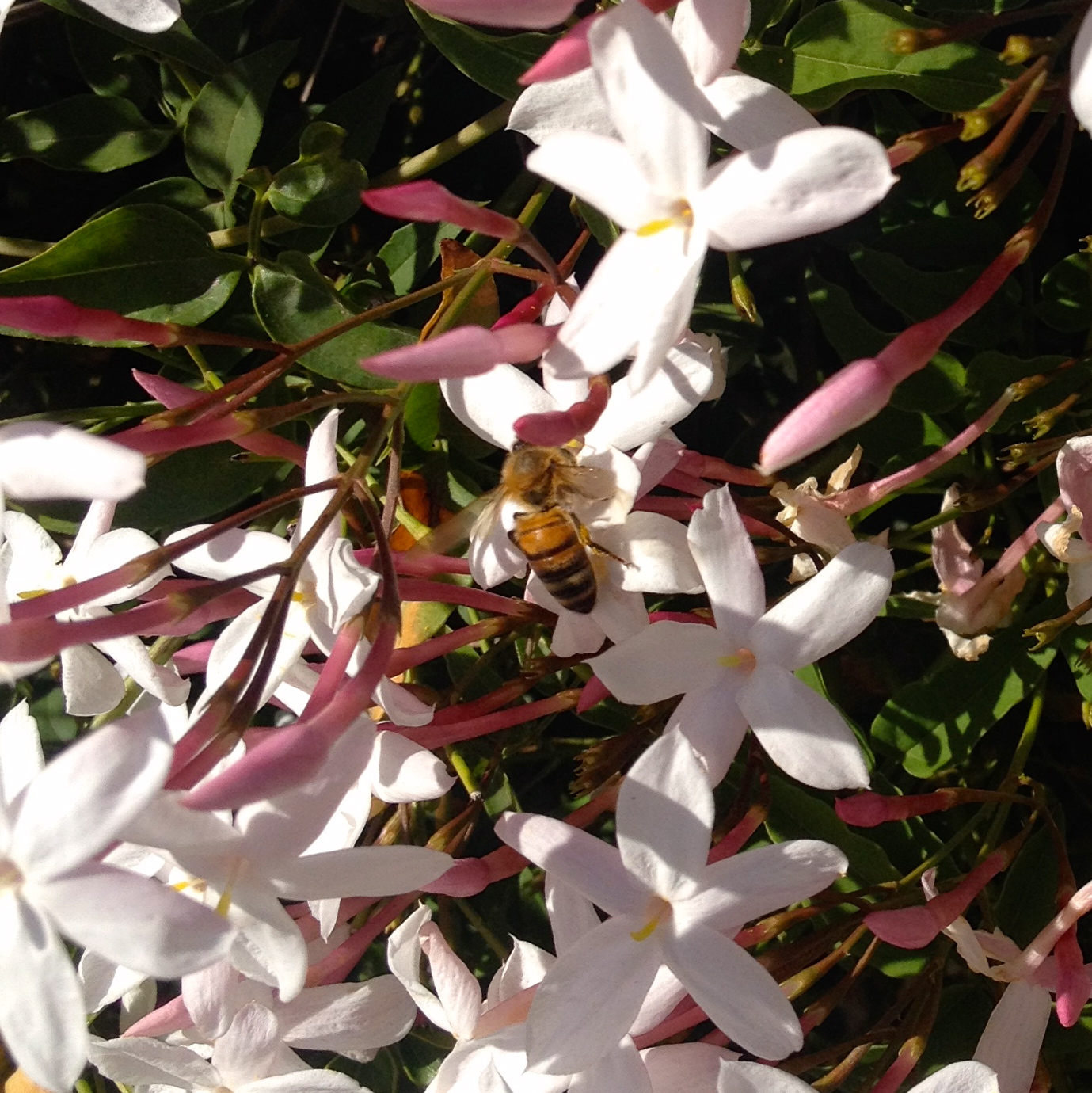
Right now, it’s flowers are covered in bees (thank you, forces of good, thank you).

This bee is in jasmine, which burst into exuberant bloom this week, releasing penetrating waves of sweet musky fragrance. Pink buds open into luminous white flowers, half an inch across, scattered everywhere on a too-easy-to-grow vine—drought-tolerant once it’s established—that gets its curly little tendrils into everything near it, capturing whole trees if it isn’t tamed. It pulled our rain spout right off the wall (with some help from the cats, who liked to use that downspout to climb up to our balcony.) Like mock orange that graced us with its fragrance last week, the scent is worth the trouble.

 Read a wonderful LA Times article on jasmine.


There are people who live their whole lives on the default setting, never realizing you can customize – Robert Brault

IMG_4172

The delicate and graceful flowers of the Butterfly or African iris are about three inches across and grow on long elegant stems rising out of clumps of grassy leaves. They bloom almost year-around, though at times, the flowers are more abundant. One spike will produce flower after flower for weeks on end. Native to South Africa, the plant is very well-suited to our Mediterranean climate: it’s happy with lots of water or hardly any at all and grows well in sun or shade. In fact, it’s so adaptable and spreads so many of its seeds around that it’s another charming and worthwhile nuisance to add to the list.

Awe is what moves us forward. – Joseph Campbell

IMG_4180Morning glory, ipomoea purpurea, falls into the same category. The graceful flowers unfurl in the morning and follow the sun through the day, collapsing in on themselves in the afternoon. I had a gorgeous crazy-wild crop of them spilling over the fence some years ago. Purple ones and pink, too. When the fence fell and my neighbor replaced it, he pulled out the morning glory as a favor. I haven’t replanted it because there’s a reason it’s also called bindweed. It strangles its neighbors relentlessly even as the breathtakingly stunning flowers bring hummingbirds, bees, and countless smiles.

Life’s picture is constantly undergoing change. The spirit beholds a new world every moment. – Rumi

IMG_4170Pincushion Protea is another South African native that does well here provided it’s planted in a place where the soil under it can drain well. It has a strangely stiff flower and tough leaves, very exotic indeed. Each plant needs a good bit of space around it, so unlike most of the plants I’ve chosen to share here, it only shows up in well-manicured, carefully tended gardens. The weirdest thing about it is that each one of those petal-like parts is actually the pistil of a tiny separate flower.

See amazing close-up views of Pincushion protea.

Amazingly, this is just a small sample of all the flowers in bloom on the sunny central coast of California this spring.  It’s less than a third of the varieties I’ve photographed over the last week. Not one of these beauties is native to the area. As the climate continues to change, some of them will be impractical or impossible to grow here. But what joy they bring now!

From joy springs all creation, by joy it is sustained, towards joy it proceeds, and unto joy it returns. – the Upanishads

Neighborhood magic: an interview with Tom Neuhaus

Every now and then I’m planning to introduce you to some of the people who live in our neighborhood. My husband Tom kindly agreed to be my guinea pig for the project, so here he is!

I asked him a series of questions beginning with “On a routine day in your life, what give you the most pleasure?”

IMG_3841

He takes a sip of his wine and spreads some camembert from Fromagerie Sophie on his cracker.

“The most pleasure? Eating cheese and drinking red wine,” he says.

“And feeling the wind whistle past my ears when I ride my bike. I’m very fond of that. Just feeling the air. And I like the soft light of the evening.”

He eats some more cheese and considers.

“Just simple creature comforts give me the most pleasure.”

After enjoying some of the wine and cheese myself, I ask, “What activities in general give you the greatest joy?”

IMG_4060

“Diverting water,” he says without hesitation. (This is a guy who spent most of the last few weekends repairing a gray water system he built in our backyard. Lots of water to divert).

He continues, “Walking on the beach, eating great food, sex, GREAT music, oh, listening to great music like Rachmaninov’s 2nd and 3rd piano concertos, oh, I love that!

“All the sensory stuff. I’m not real big into thinking grand thoughts. I’m more emotionally driven than cognitively driven, more into senses than internal cognitive states.”

We finish off the cheese and wine. I ask, “What experiences in your life changed the way you see the world most dramatically?

He barely pauses. “Camping, being outdoors and realizing it doesn’t have to be thought of as God’s creation, but whatever it is, it’s damn beautiful. Canoeing across a lake in upper Minnesota or hiking up in the mountains in Colorado. You just can’t beat that.

IMG_3114

“That year in France, speaking foreign languages, meeting other people, eating their food, laughing at their jokes. Humans, I like humans a lot. That’s why I like teaching.

“Going to Africa, being in the villages.

“Reading great books. They open your mind, change how you look at things. It’s very important to read books from many different perspectives. That really opens your mind the most. I’ll read one book about how Europe underdeveloped Africa and then the next book is about the human body. I like that, I really like that.” He pours himself another glass of wine.

“What do you like about the way you make a living?” I ask.

“I love the variety. Running the chocolate business, Mama Ganache, you’re constantly running into all kinds of problems and challenges. Teaching, you’re always trying to be on the edge, trying to do a good job.

IMG_3987

“I remember buying some antiques from an old farmhouse in Texas and there was a sign that said Ich will streben nach dem Leben: I will strive to live. I like that Germanic idea of striving. I like trying to do as well as I possibly can. Without being a type A personality, just for the heck of it, just for the variety and the challenge. I like that, I like that.”

I continue, “What was your favorite job?”

“Huh. My favorite job? I liked them all. I liked playing the pipe organ because I like the challenge of making good sounds and the preachiness of organ music; collecting rat urine, well, I wouldn’t say that was my favorite job, but it was fun hanging around scientists. I liked baking, I liked working the line in a French kitchen, getting into arguments with the chef, running a restaurant, having a fun time with Puerto Ricans – the restaurant industry is full of Puerto Ricans in New York, great people, fun to josh around with, I learned a lot of Spanish. Ah, every job has so many good things about it – as long as you stay open-minded – stay curious about the world.”

We drink the last of the wine, a very nice cab from Vina Robles, as the sun goes down behind Bishop’s Peak. Am I fortunate or what?

Neighborhood magic: walking the dog

This is Lily Bear. Normally she’s a fluffy chow-type with a good four more inches of fur. In this picture she’s sporting a three-day-old, very short haircut. She’s eight or nine years old, a chow mix (golden retriever?) who came to us from the pound five years ago.

One of the many wonderful things about having L. Bear around is the joy of walking her in the neighborhood. In the morning, Tom, Lily Bear and I go together, and then later in the afternoon she and I go on our own. Watching the landscape change, talking to the neighbors, developing real relationships with them, building community – trying to be in the place in which I find myself as fully as I can – it all feels so good.

IMG_4147

Because she’s getting older, the Bear is happy enough to stop wherever I want her to so I can take pictures. She’s done with tearing over the hill into the chaparral after anything moving. The horses in the Cal Poly pasture no longer drive her nuts. Now she sniffs around a bit and then she lies down to wait till I’m ready to move on.

Every so often I’ll share some pictures and reflections on our walks here.

Our neighborhood, Monterey Heights, occupies the northeast corner of San Luis Obispo, a college town, population 44,000, equally distant to San Francisco and Los Angeles. Our house is five blocks from the entrance to Cal Poly, a state university best known for its architecture, engineering and agricultural programs. We live in what’s called a “mixed” neighborhood here: students and permanent residents.

IMG_4149Right now, the moment you step outdoors you  take a deep breath. The enchanting scent of mock orange is everywhere, a delicate, complex citrus so delicious it stops you in your tracks. Breathe! it says. Breathe again! The scent’s source is Pittosporum Undulatum, a messy, invasive Australian tree guilty of dropping sticky red berries which get tracked into our house year-round unless they’re swept up. (Thanks, Tom).

The week or two of bloom is worth all the trouble.

IMG_2655From the top of our hill, you can see the freeway winding its way up Cuesta Grade on its way north. Between here and San Francisco is the extended metropolitan area of San Luis Obispo, including Paso Robles, and about 300 miles of lightly used land, painfully dry ranch land interspersed with military properties: Camp Roberts and Fort Hunter Liggett, and the mountainous Los Padres National Forest. The highway crosses the mountains in the graceful way it does because of one brave, good-hearted man, a true conservationist, Harold Miossi. I’ll tell his story another time.

Though the name Monterey Heights covers more area today, our house is not in the original 1925 Monterey Heights subdivision. It’s half a block into the Slack tract, a softly sloping grid of oddly wide streets and mostly small 1950’s houses lying between Cal Poly and the older neighborhood. Of the original Monterey Heights, the city’s Cultural Heritage Committee writes:

In designing the new neighborhood, MacRorie-McLaren Company used an innovative design approach, much different from conventional neighborhood designs elsewhere in the City. Their approach reflected a more “naturalistic” approach to creating neighborhoods, a movement pioneered by Landscape Architect Frederick Law Olmstead and popular in the 1920s and 1930s. The Monterey Heights neighborhood features pocket parks and curvilinear streets, a layout which deviated markedly from the traditional street grid patterns common at the time.

Many of homes in Monterey Heights are as beautiful and unconventional as its design:

IMG_4089

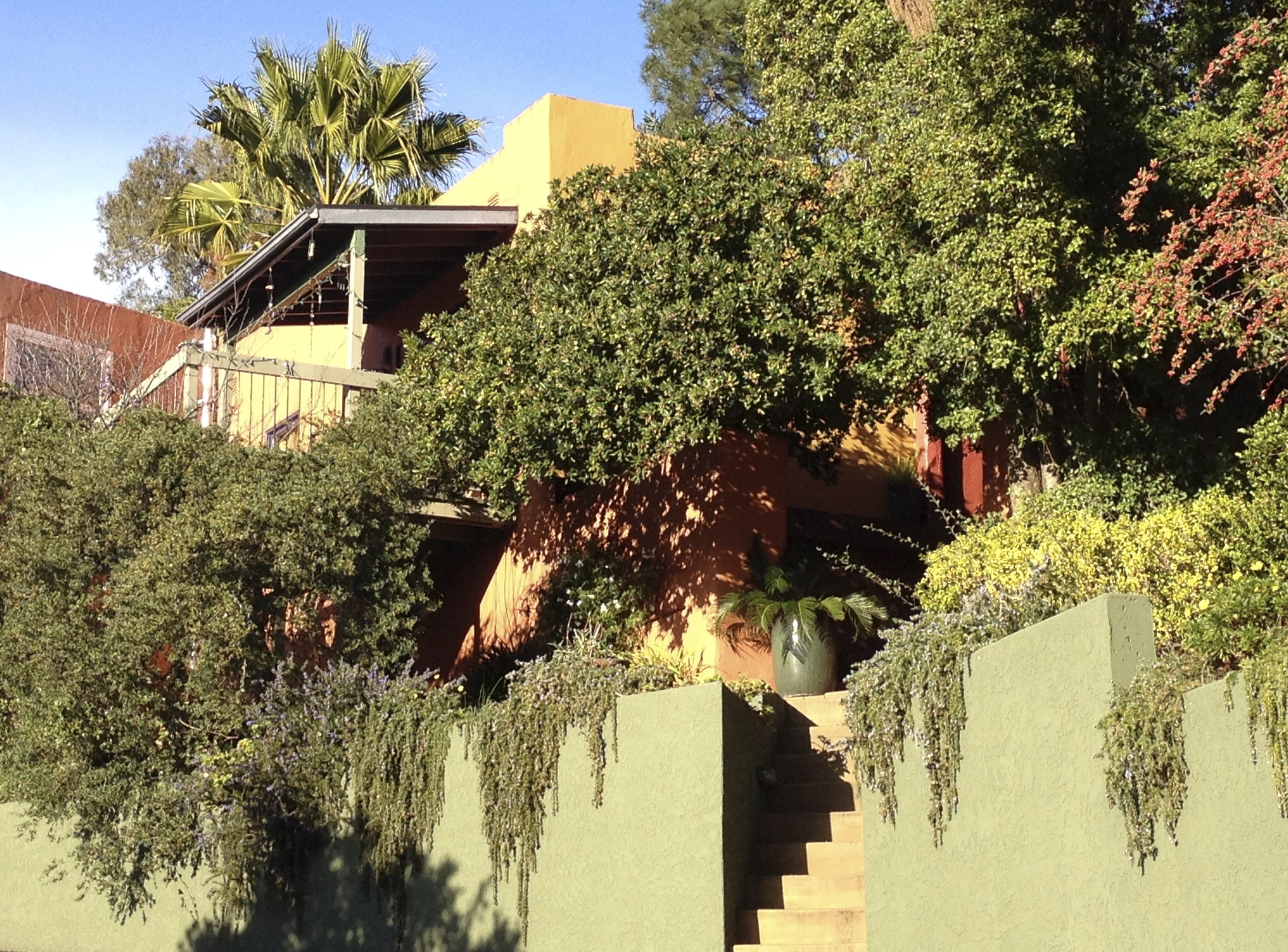
The woman who lives in this beautifully painted house paints houses for a living.

IMG_4131

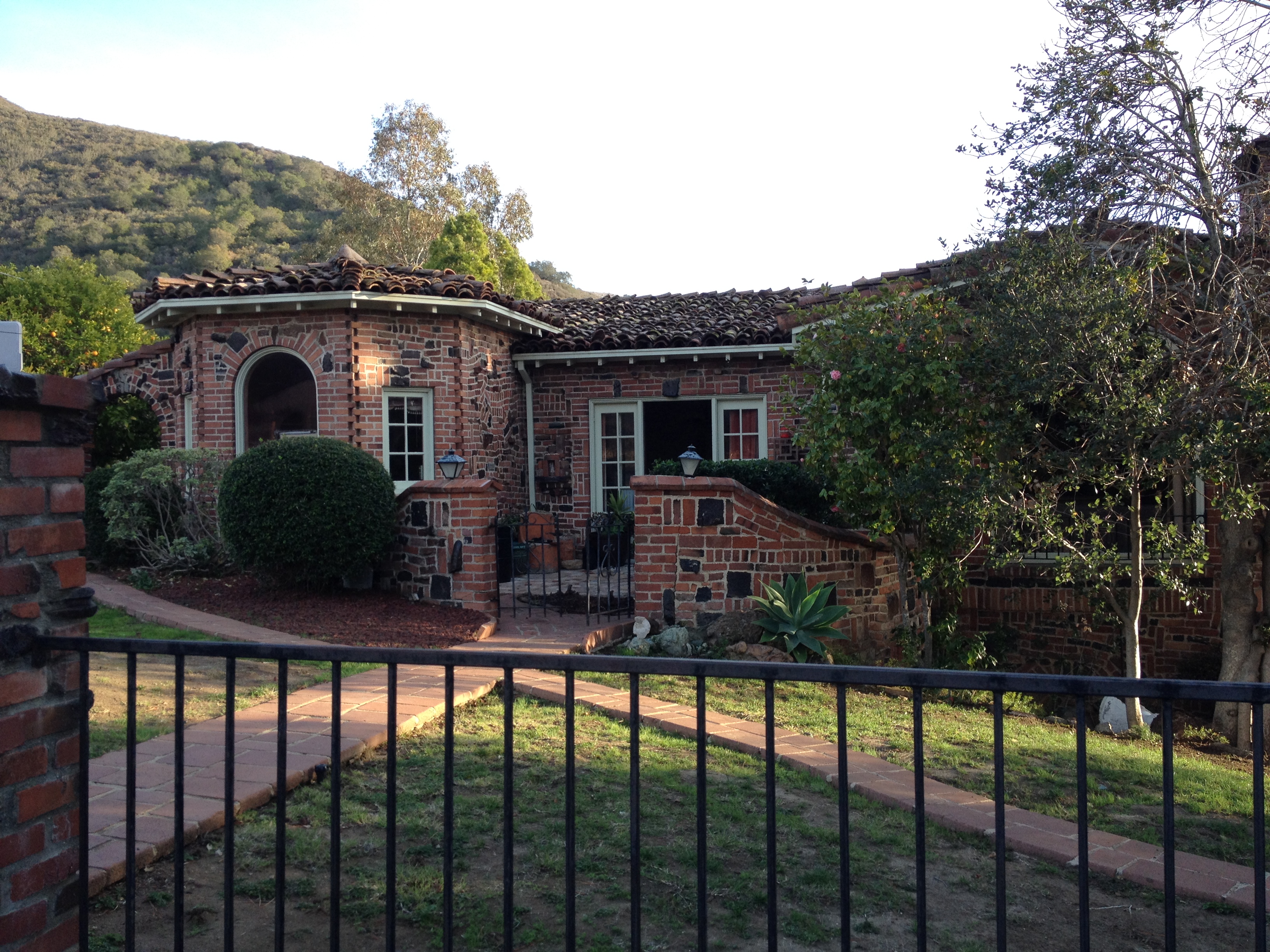
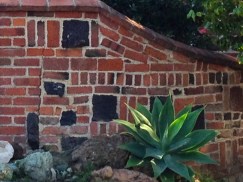
 Swanson house detailThe man who built this fairytale of a house built whimsical walls of misshapen bricks all over town in the 1920’s. I think there are about six.

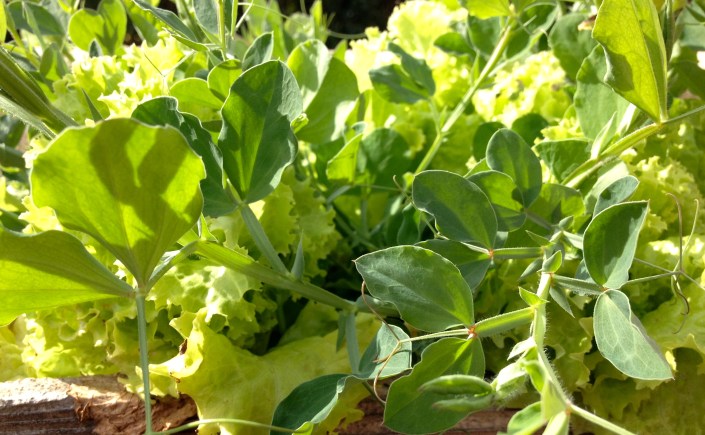
Needless to say, Lily Bear is is more interested in homes belonging to animals than those of humans. This got a good long stretch of her attention.

IMG_4102

It’s a gopher hole, one of many thousands in the area. Last week’s rain washed this one out.

IMG_4124

Grace, grace, grace.

Slowing down in SLO

Not long ago I changed the name of my Airbnb listings to Slow Down in SLO. It took a while for me to decide if SLO, San Luis Obispo, really is slow, but I concluded that it’s actually true. Located halfway between Los Angeles and San Francisco, SLO is a too far away to commute. Imagine: 44,000 people, virtually no traffic, everything you need a few minutes away, year-round access to an extraordinary outdoor environment, and a culture of kindness rooted in a Franciscan heritage and enhanced by a mild climate. I feel immensely grateful to find myself here – it is grace – but slowing down doesn’t happen from the outside. It’s internal.

Nature does not hurry.

Yet everything is accomplished.

– Lao Tzu

It was Lao Tzu’s poem that brought the deeper truth home to me a few years ago. Since then I’ve been reflecting on the virtues of slowing down, so it seemed like an obvious topic to write about  – except that the entire week I gave myself to put this together disappeared into a whirl of activity.

photo 8

Necessary activity. Did I consider slowing down in the midst of the hurly burly? I did – but only for the time it took to laugh at myself and at the lila, divine play, of life – and to refocus on slowing down.

Internal slowing down doesn’t mean doing less. It means doing whatever you’re doing more mindfully, more passionately, more fully, giving it the full focus of your attention. In the long run it’s more efficient – I’m sure your mother already told you this. Indeed, the benefits of being present to a task, whether it’s cleaning the wet leaves off the deck—which I’ve been doing in between paragraphs because a photographer is coming to take pictures of the exterior of our house, a sad mess because of the drought until this week when the rains came and now a much happier mess—or brushing your teeth or talking to your mother, are countless.

Hafiz says,

Time is a factory where everyone slaves away earning enough love to break their own chains.

The key that will let you out of slavery is to love what you are doing, whatever it is: catching your mind when it wanders into the future or the past, or to some place other than where you are, and bringing it home to the moment: celebrating the stillness of the center.

Tom and Lily Bear at the dog beach

Ganesh Baba talks about the four phases of our existence: the physical, the biological, the psychological and the spiritual. Slowing down involves all four: consciously releasing stress and tension in the body, slowing the breath and consequently the heartbeat, lowering the emotional pitch (“Don’t screw up the pitch!” he would scold), and using spiritual practices to find the still center within.

It’s the mind that’s moving too fast, rarely using the power of attention at its true worth, skimming the surface of experience instead to allowing it to be absorbed and processed at all four of the levels of our being. Unless we slow down we sacrifice the richness and beauty of life, of any life.

What we achieve inwardly will change outer reality. – Plutarch

For those of us who believe in physics, this separation between past, present and future is just an illusion. – Einstein

All life is fleeting. Cling to that understanding, and seek, then, within yourself that which alone endures. – Yogananda