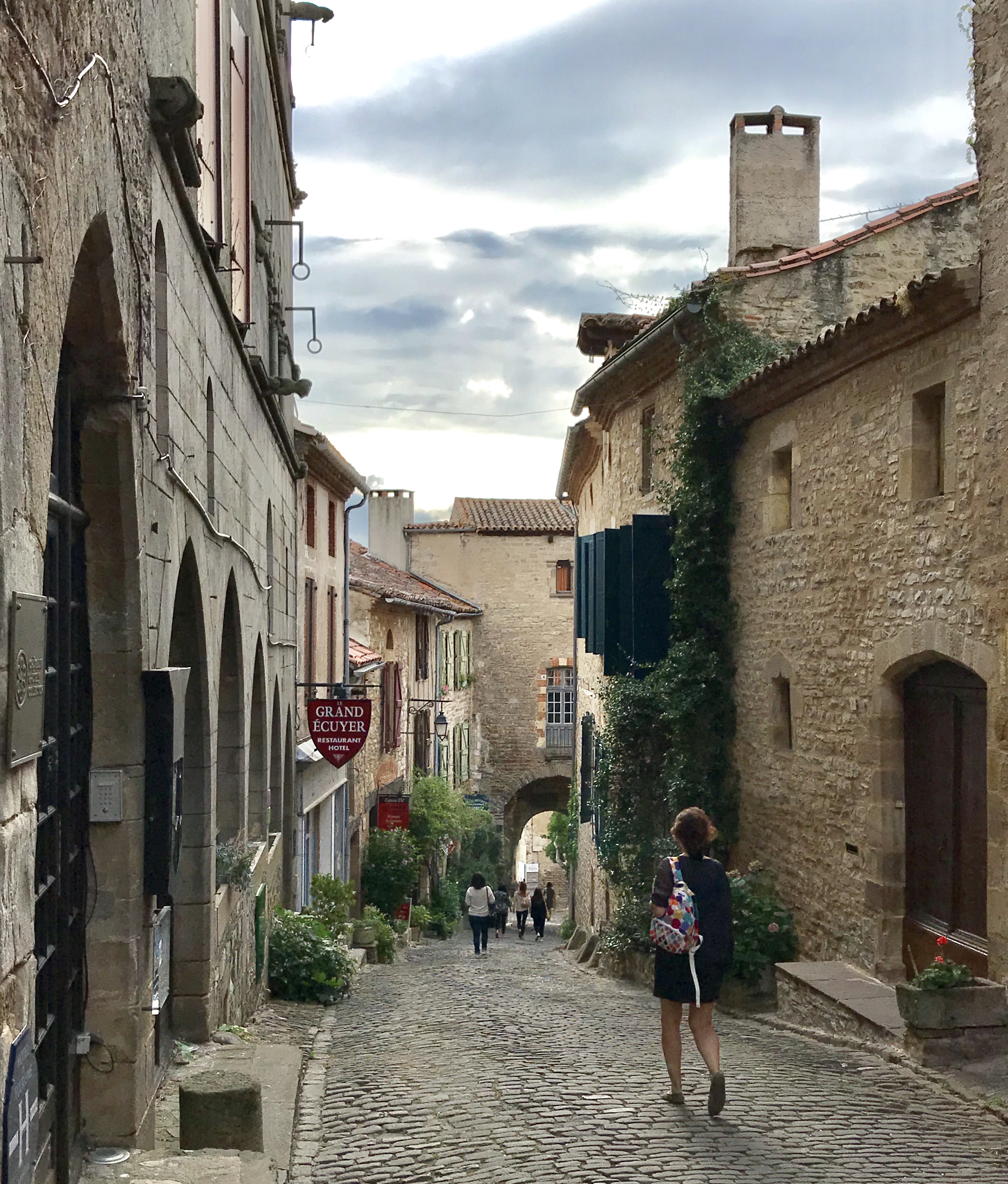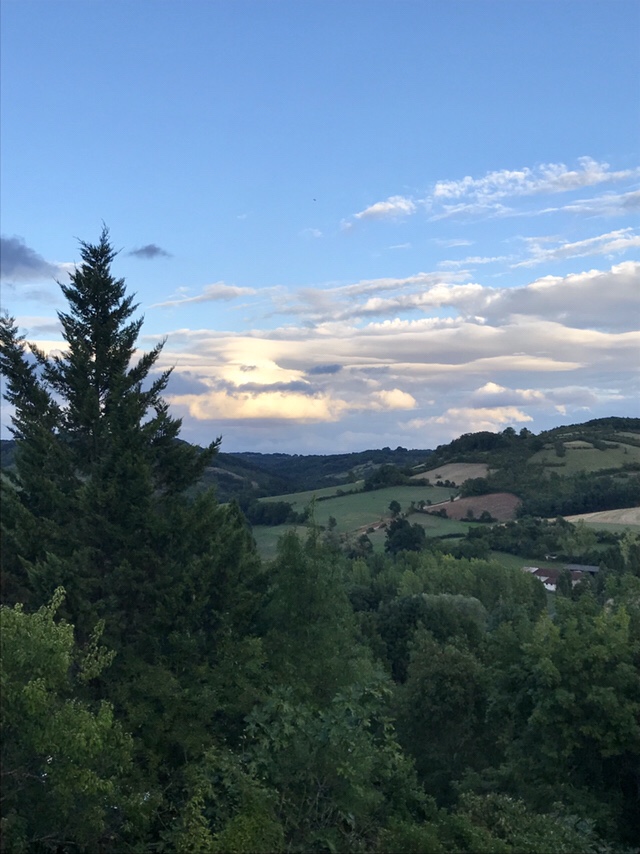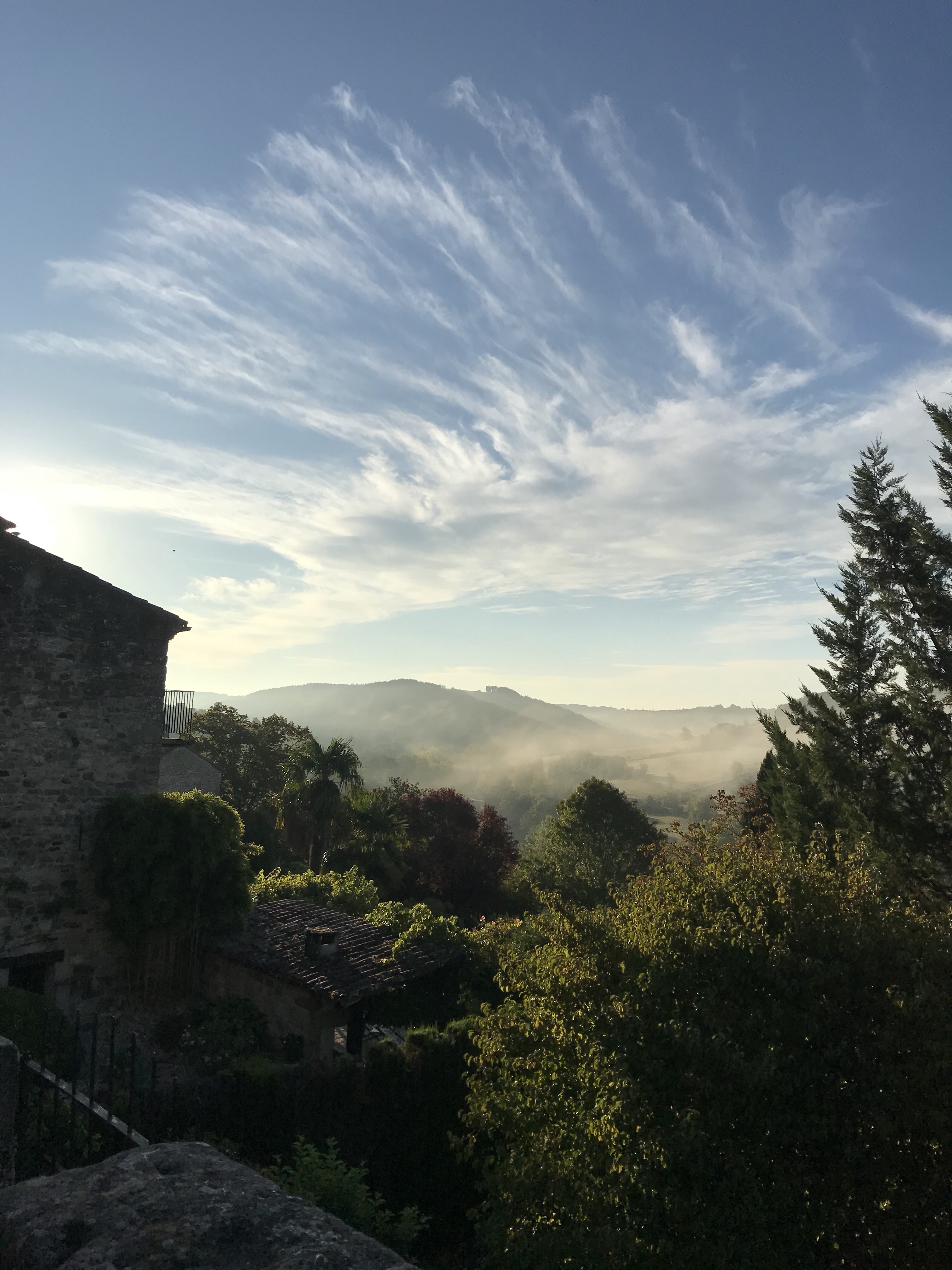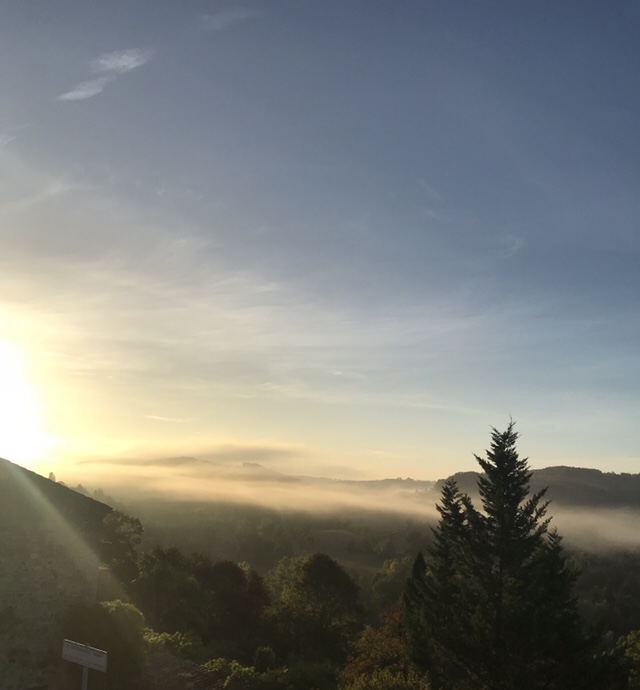
When the fog freezes: Cordes in the winter

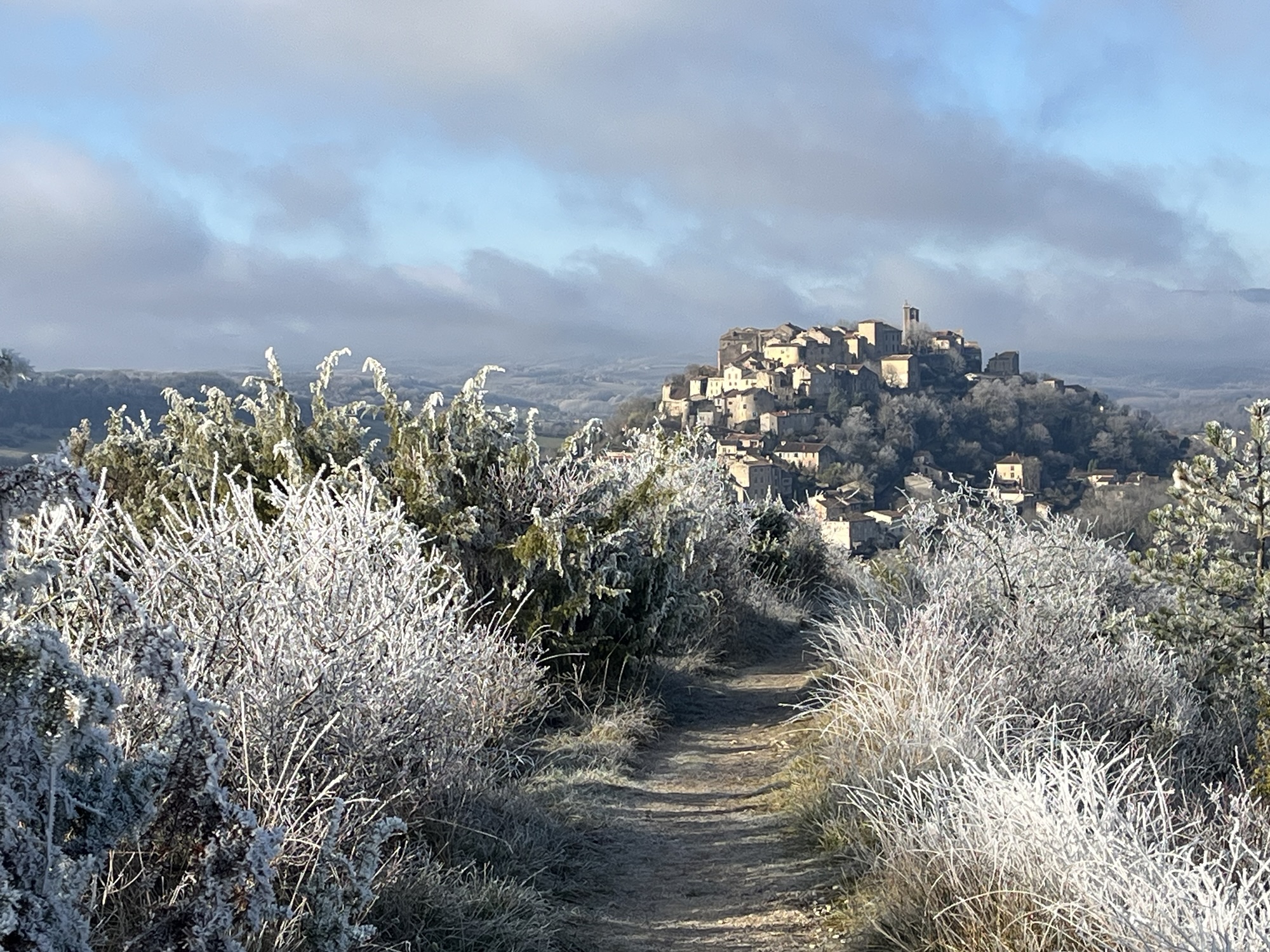
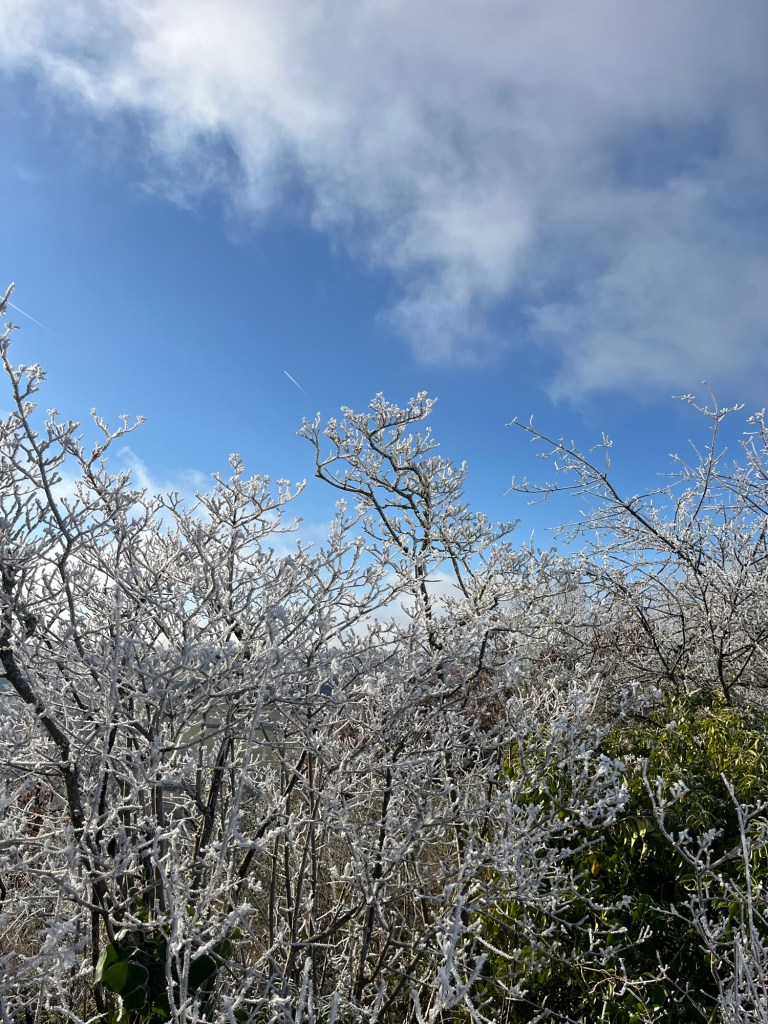
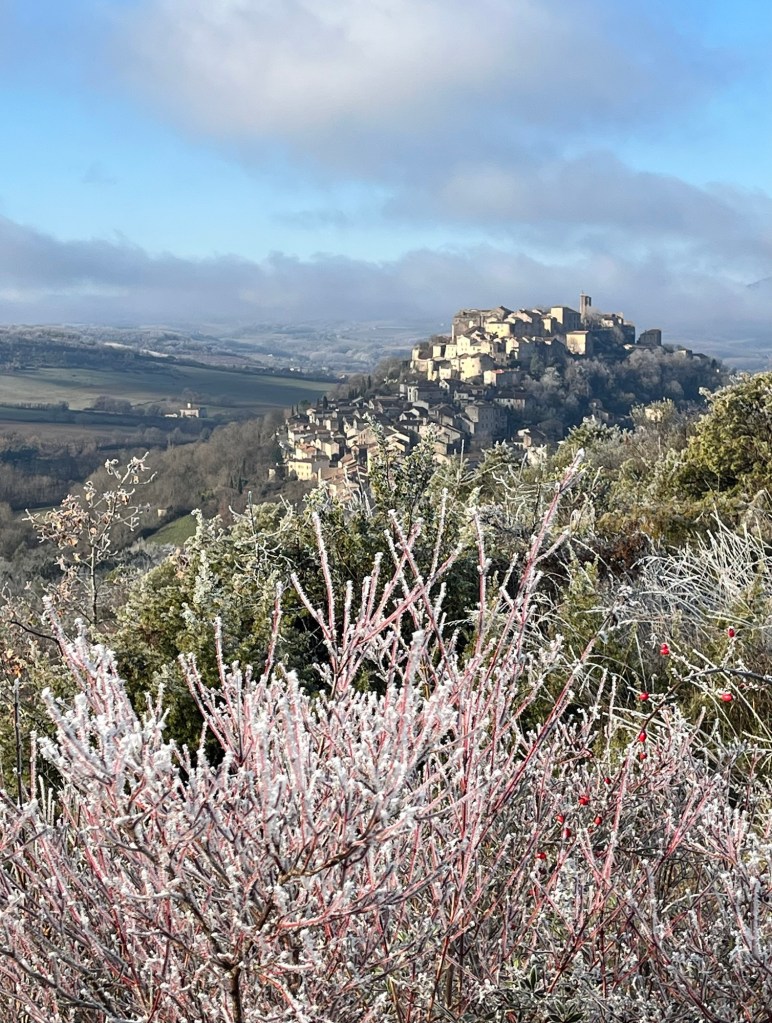
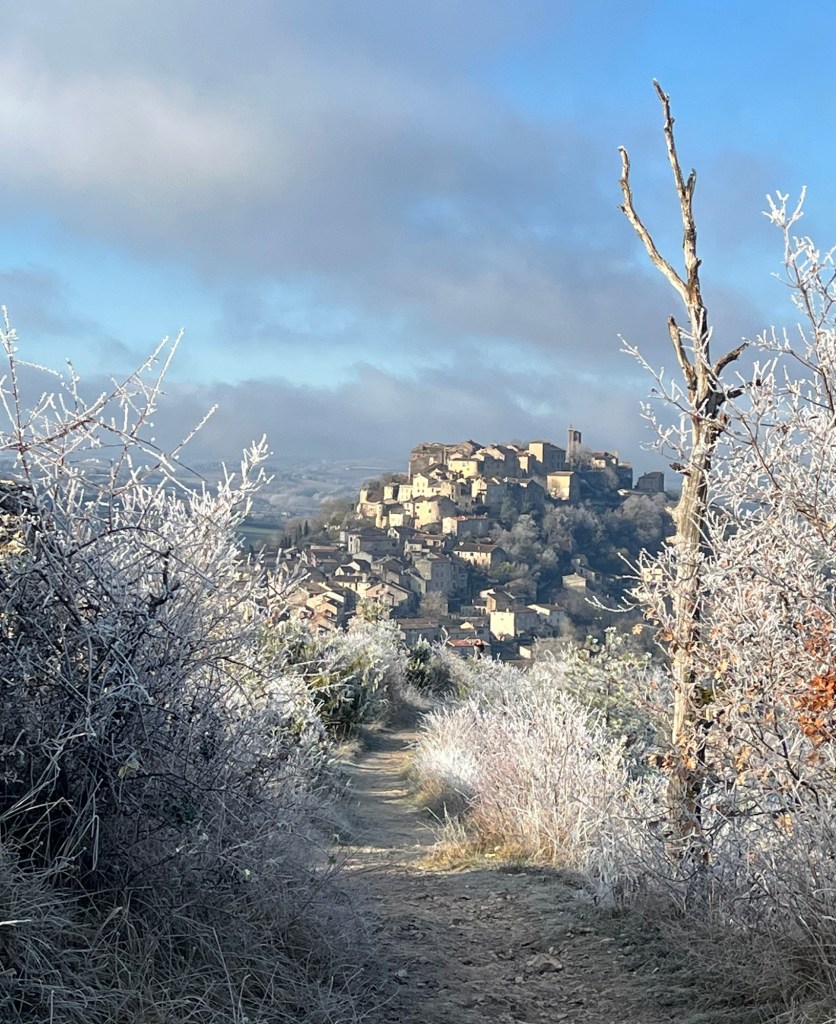
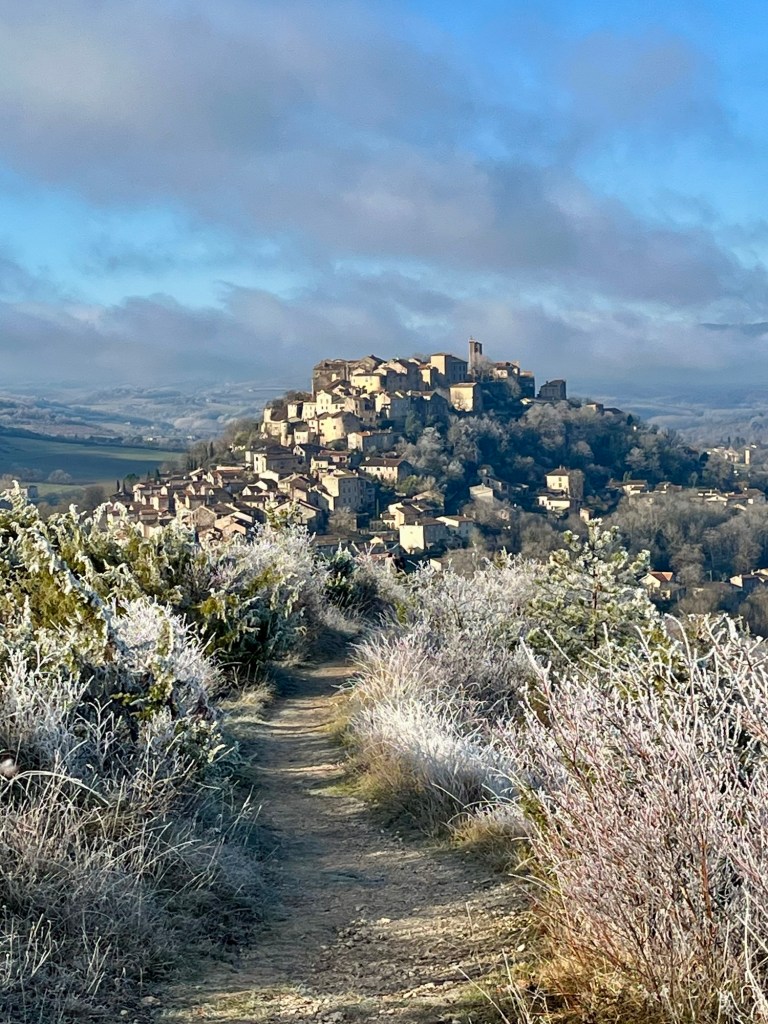
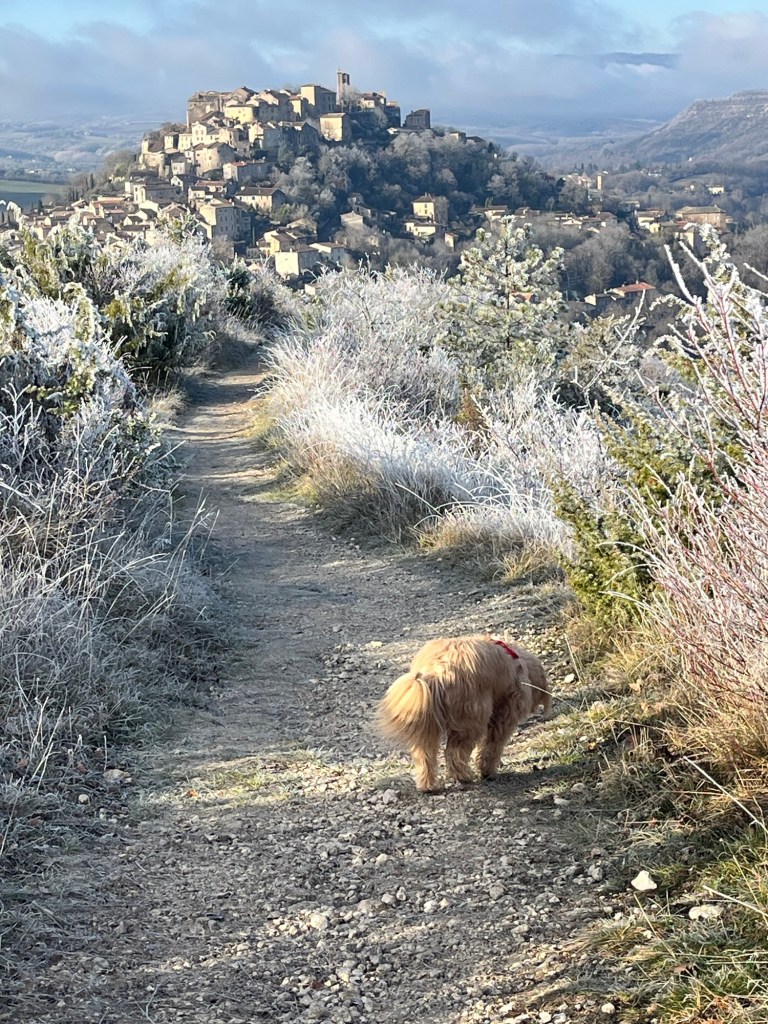
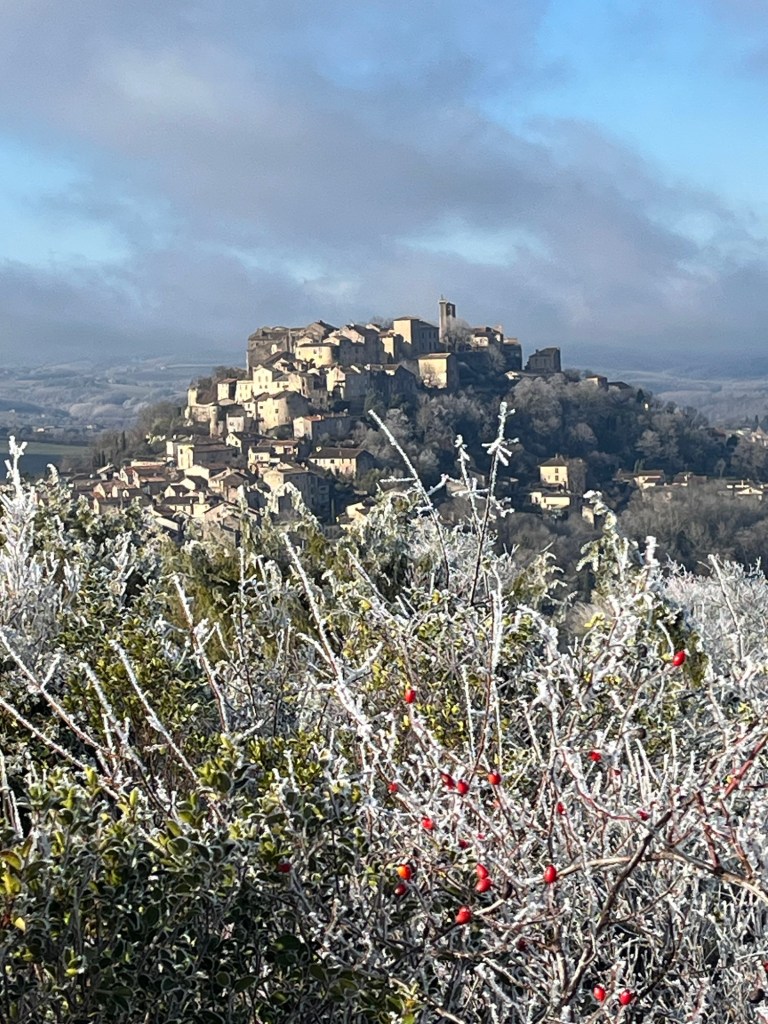
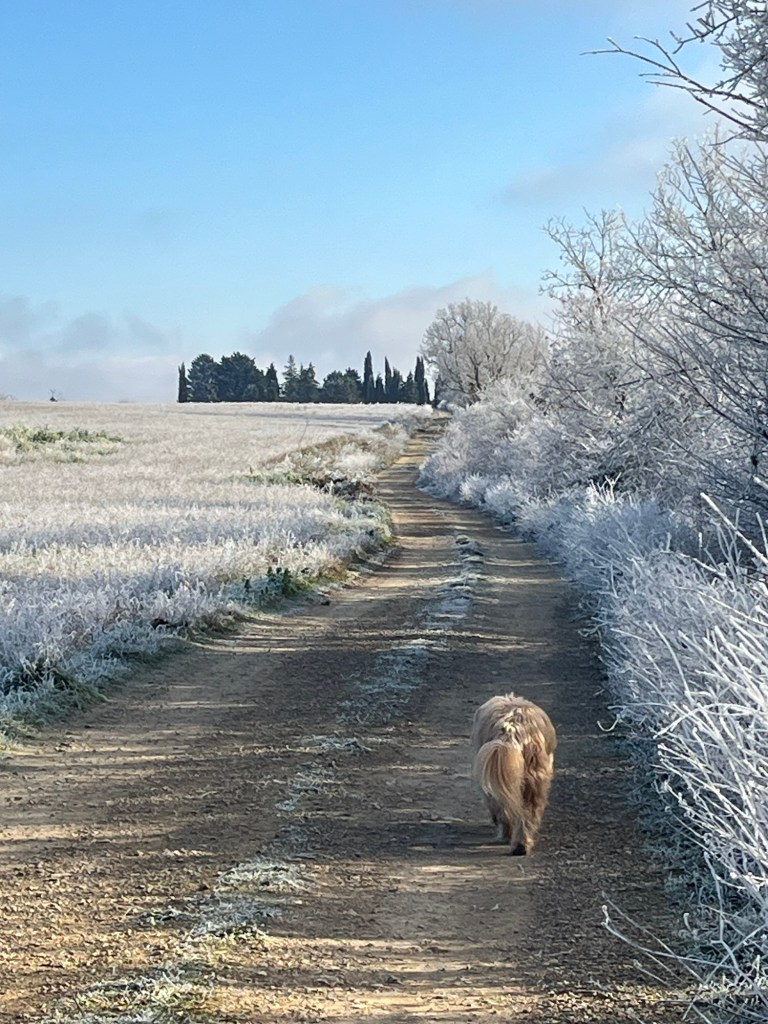
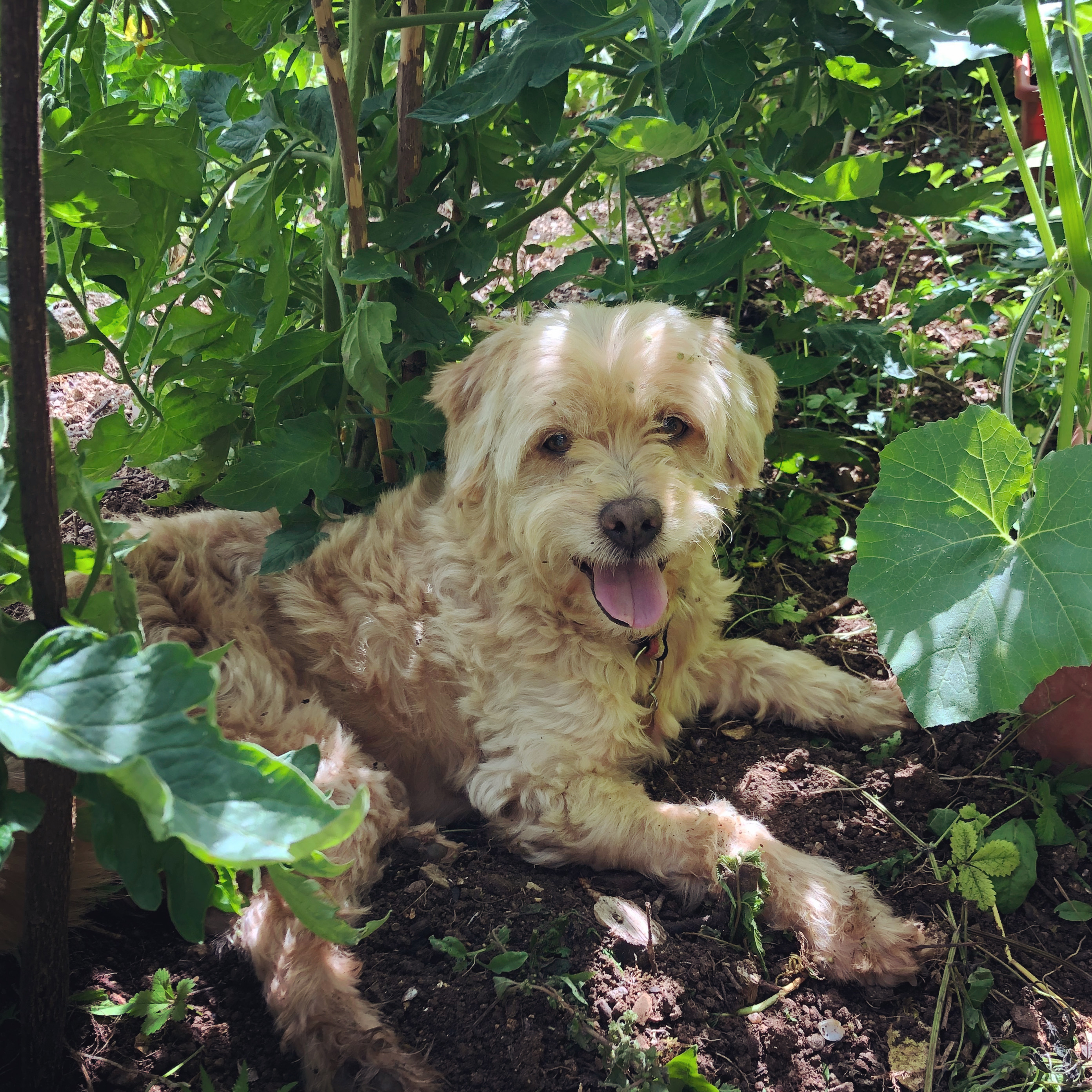
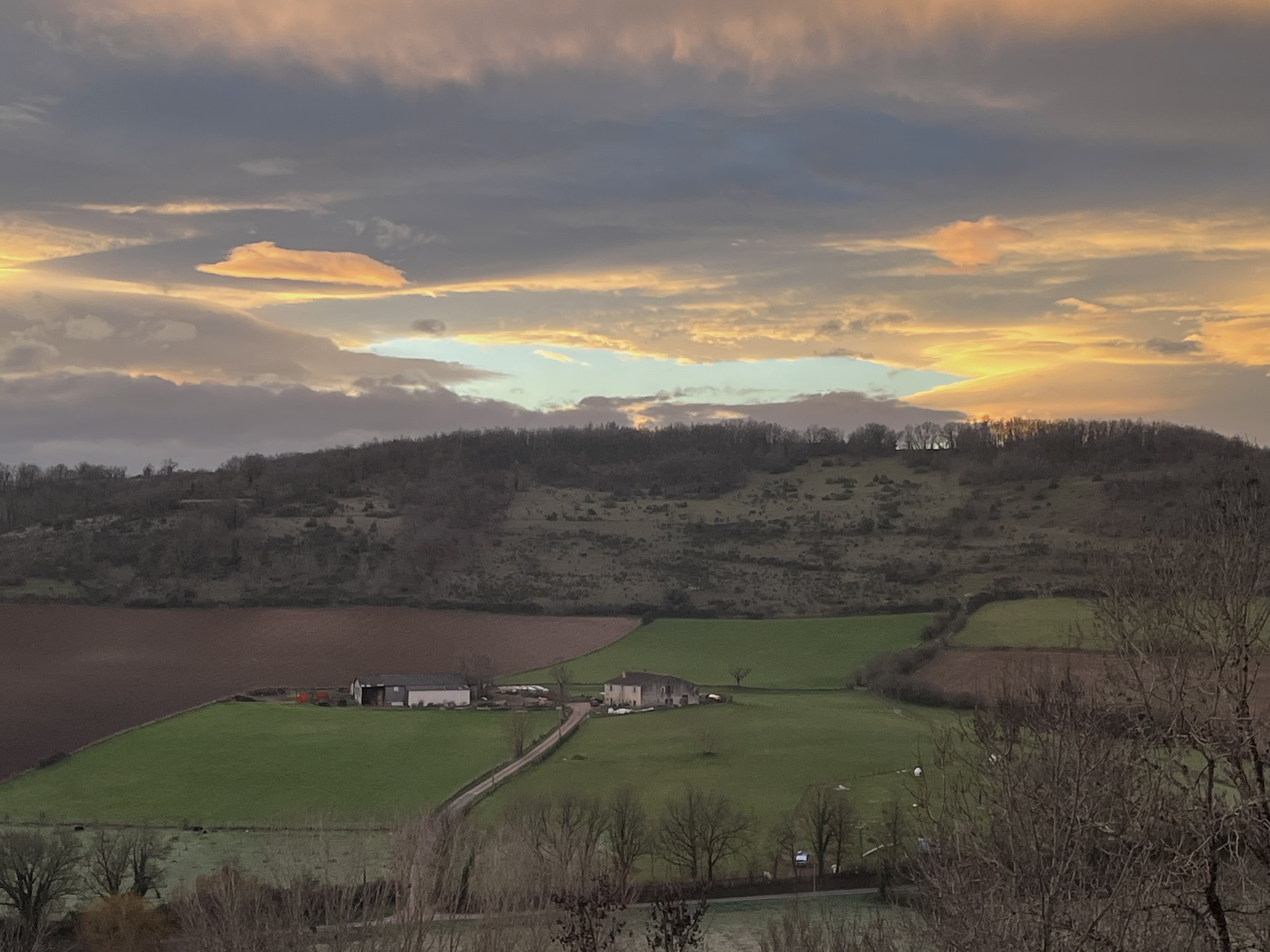
Once in a while, the fog that rises from the valleys surrounding Cordes-sur-Ciel freezes.

Overnight the dense cloud that made driving so difficult the night before becomes a delicate crystalline web, clinging to the edges of every leaf, every branch.

It’s magic.

This morning we walked to the le Grain de Sel, the chalky outcropping you can see from our street.

It’s a short but steep climb to walk there from our house, but you can drive up past it and take a flat path too.

Wishing you all a year filled with glimmers of hope, fresh insights, many moments of pure joy and raucous laughter, and at least a few of breathtaking awe.

Peace, love and magic: some reflections on transitioning to fourth and fifth dimensional awareness

The dawning of the Age of Aquarius

A couple weeks ago, in response to a friend’s distress over the heart-wrenching news, I responded, “Maybe we’re moving from the three dimensional world into the fourth and fifth dimensions.”  

I said it lightly—and, sadly, I doubt that my friend was any less upset after I said it—but I do take refuge in the thought. It gives me comfort to imagine that, as the world as we know it becomes less and less sustainable, there’s more out there than meets the eye. 

After sending the idea into cyberspace, I spent the week reflecting on how such a shift might unfold. I stopped listening to the news, I focused on internal work, and I reflected on how the 3-D world might intersect with the 4 and 5 dimensional worlds.

It’s an area that’s interested me for as long as I can remember. Even as a child I had extraordinary dreams. I’m prone to synchronicity. I was more at ease in the world of make-believe than in the real world for many years. I love fiction, especially fiction with magical elements. Speculative and science fiction appeals, too, as do the edges of science and philosophy. It’s where I usually go, along with increasing my time in meditation and contemplation, when the world is too much.

So, for a week or so in mid-July, I paid more attention to my posture and my breath, I meditated more, and I tuned into the cosmic hum more often. Instead of the news, I listened to archetypal astrology—Richard Tarnas, Heather Ensworth, and Rick Levine—and I took lots of time for reverie.

In 1969, when the Fifth Dimension told the world about the dawning of the Age of Aquarius, astrologers believed it had already been happening in fits and starts for a long time. And the sun did shine in the late 60’s and early 70’s—for a little while anyway.

A whole generation of kids and young adults valued peace and love over money. I was in my late teens then, and I was completely swept away by hippie values. I still am. It’s heartbreaking that the promise often attributed to Jimi Hendrix, “When the power of love overcomes the love of power, the world will know peace,” hasn’t yet happened.

What astrologers are saying these days is that the transition to the age of Aquarius, which is indeed upon us, involves a major shift in consciousness, a change in essential values, and ultimately, a move from focusing on gathering goods to generating good.

Whether any of us alive on earth today will live long enough to enjoy such a world seems doubtful to me, but I see great value in releasing the expectation that life will return to the state it was in when we grew up. Opening one’s heart and mind to some of the infinite possibilities the future could bring seems like a much better option than hanging onto a vision of reality that’s crumbling into the past.

I love the idea that our perception of the measurable world will soon be enhanced by a greater understanding its more subtle aspects, as well as its place in the greater, less dense whole. 

The pull of the three-dimensional world 

Imagine my surprise then, when, in the midst of my dedication to exploring higher dimensions, the 3-D world intervened with an invitation to appreciate, if not acquire, a genuine treasure. 

Tom had recently come into a small inheritance. At the time, that money wasn’t three dimensional at all—it was some numbers on a screen. It occurred to me that rather than putting it in the bank, we might make it more productive by buying a building here in Cordes-sur-Ciel. Tom could move his little chocolate shop there, and an apartment or two would provide us with some income. I took time out from my reverie to look at what was on the market.

Who knew a magnificent piece of untouched old Cordes just 200 steps from our front door would immediately turn up? Such an opportunity! Unoccupied for 50 years but clean and sound, the owner had maintained it more or less as a memorial to her parents. Embossed wallpaper, plump feather beds, wool mattresses, lace curtains. And an old bakery.

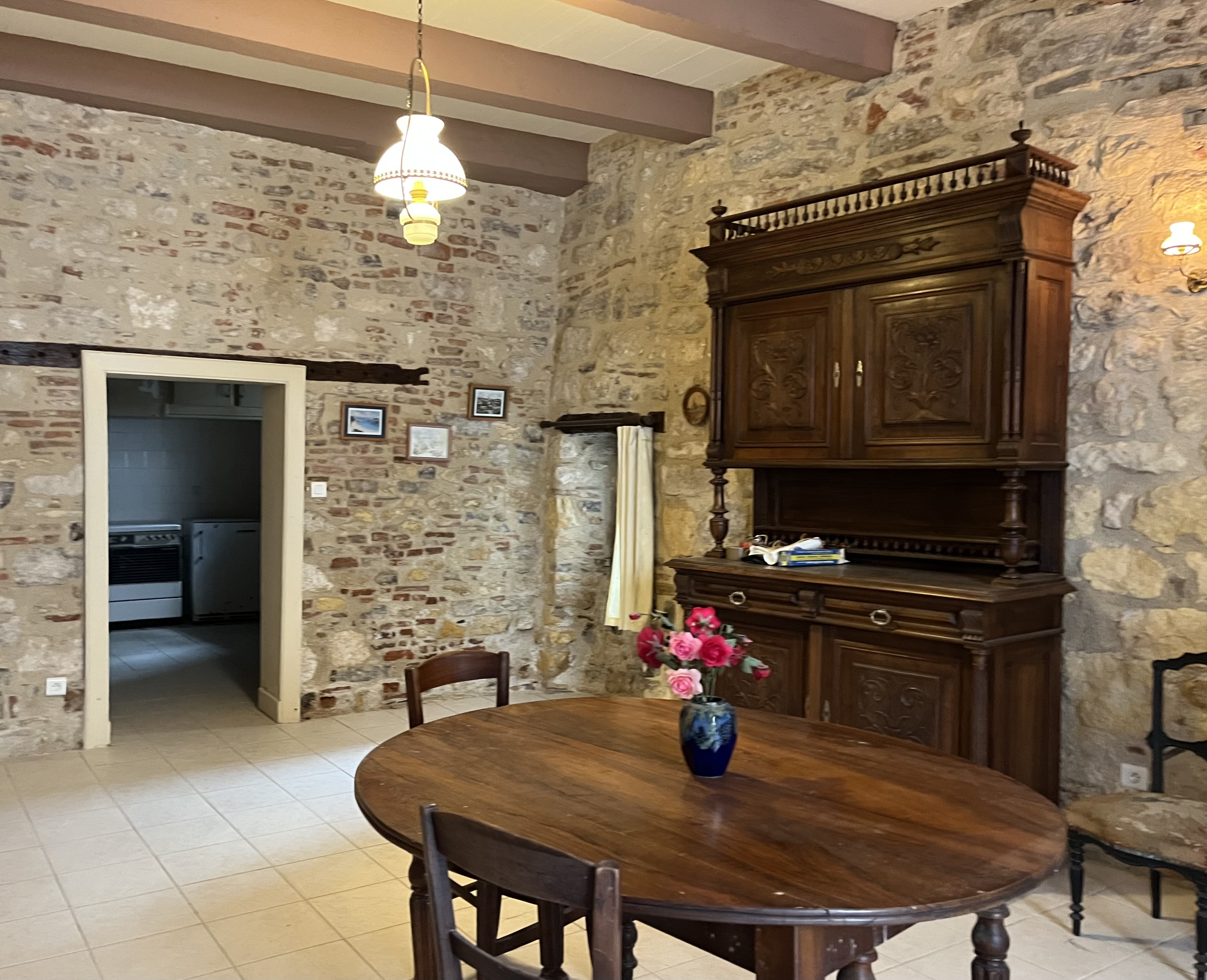
Tom’s shop would go in this room. That’s a kitchen behind it. Perfect.

It is very, very charming, a magical place.

Filled with stuff like this.

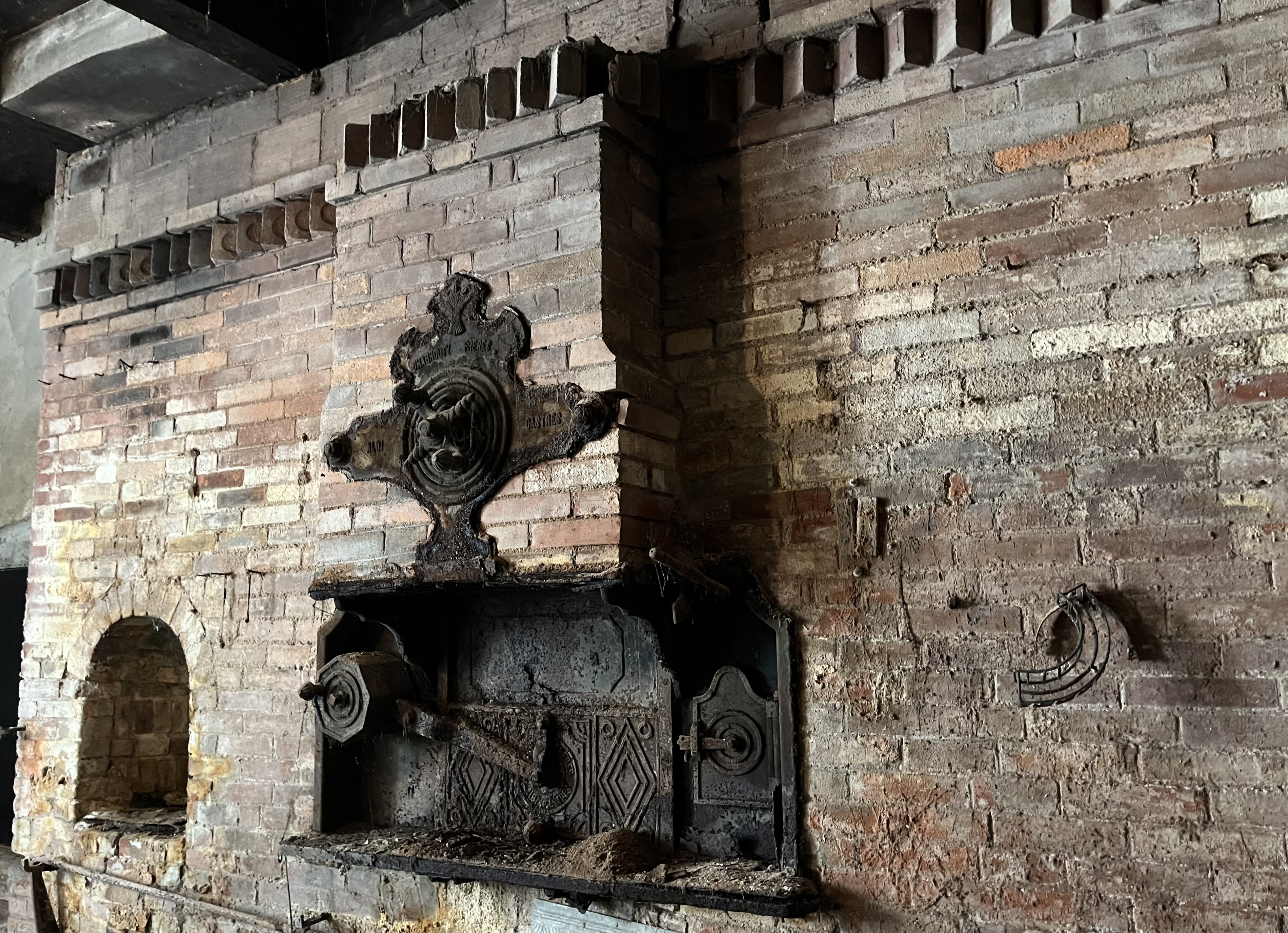
And that that ancient bakery!

Of course there are more a few black holes that would need to be dealt with, like the low wooden shelf or seat in the downstairs bathroom that I thought might be a well. When we lifted the top off, layers and layers of newspaper, paint, and rust showered down. No point in looking in.

But it would be possible for someone to live in that house almost as is. Some plumbing would probably have to be done, but the first floor has 25-year old decent wiring and lighting. The bedrooms are delightful as they are, and so is the upstairs bathroom. A temporary kitchen of some sort could be set up, though the old wood and gas cookers, gems themselves, are there.

With tax and fees, the house and bakery would cost roughly 100 000€. Tax is 950€/year. So appealing! I almost couldn’t resist.

The morning after we saw it, however, the weight of the project hit me. We live so lightly now: small house, very small electric car, and everything we need in walking distance. 

Why would I even consider taking on a huge stone building, no matter how beautiful it is?? Then I realized how much of my mental and physical energy had already gone into that place over the last three days! 

I went back to listening to astrology and contemplating existence outside the confines of time and space.

Beyond the confines of the 3-D World

Einstein identified the fourth dimension as time, already a stretch to envision as a dimension, but the fifth is even harder to understand. Our civilization is so thoroughly engrossed in the gross world of matter that we can barely imagine it. Subtler worlds, if our physical science-based understanding gives them any credence at all, are only very slowly being discovered. Ganesh Baba often pointed to the discovery of electricity when talking about increasing understanding of subtle energies.

On the second day I spent with Ganesh Baba, he drew a diagram on a paper napkin that he told me encapsulated his entire cosmology. In brief, in an endless cycle, consciousness creates matter, and matter evolves into consciousness. 

(To align with the yogic teaching that good posture is essential to conscious evolution, he placed “Homo Erectus,” meaning having a straight back, above “Homo Sapiens.” The spine running up the center is replicated in the human body as the chakra system.)

Ganesh Baba described eight fields functioning in eight dimensions: matter, energy, space, time, life, mind, intelligence, and consciousness, each more subtle than the last. He identifies the fifth dimension as life. Indeed, neither time nor life is understood very well at this point of human evolution, and mind is an even greater mystery.

The Cycle of Synthesis is an attempt at a 2-D representation of an 8-D cosmos, a fractal universe, microcosm in macrocosm and vise versa. It is not static—rather, it is constantly in flow, twisting and turning, expanding and contracting, in an infinite number of directions, smaller and smaller, greater and greater, replicating itself in an infinite number of manifestations, each one connected to all the others.

As in a Moebius strip, the twists in the helix at the center of the drawing indicate shifts from one dimension to the next.

Passing through them is like water going down a drain. The water turns more and more quickly until suddenly it’s somewhere else. I think the transition human consciousness is going through is like that.

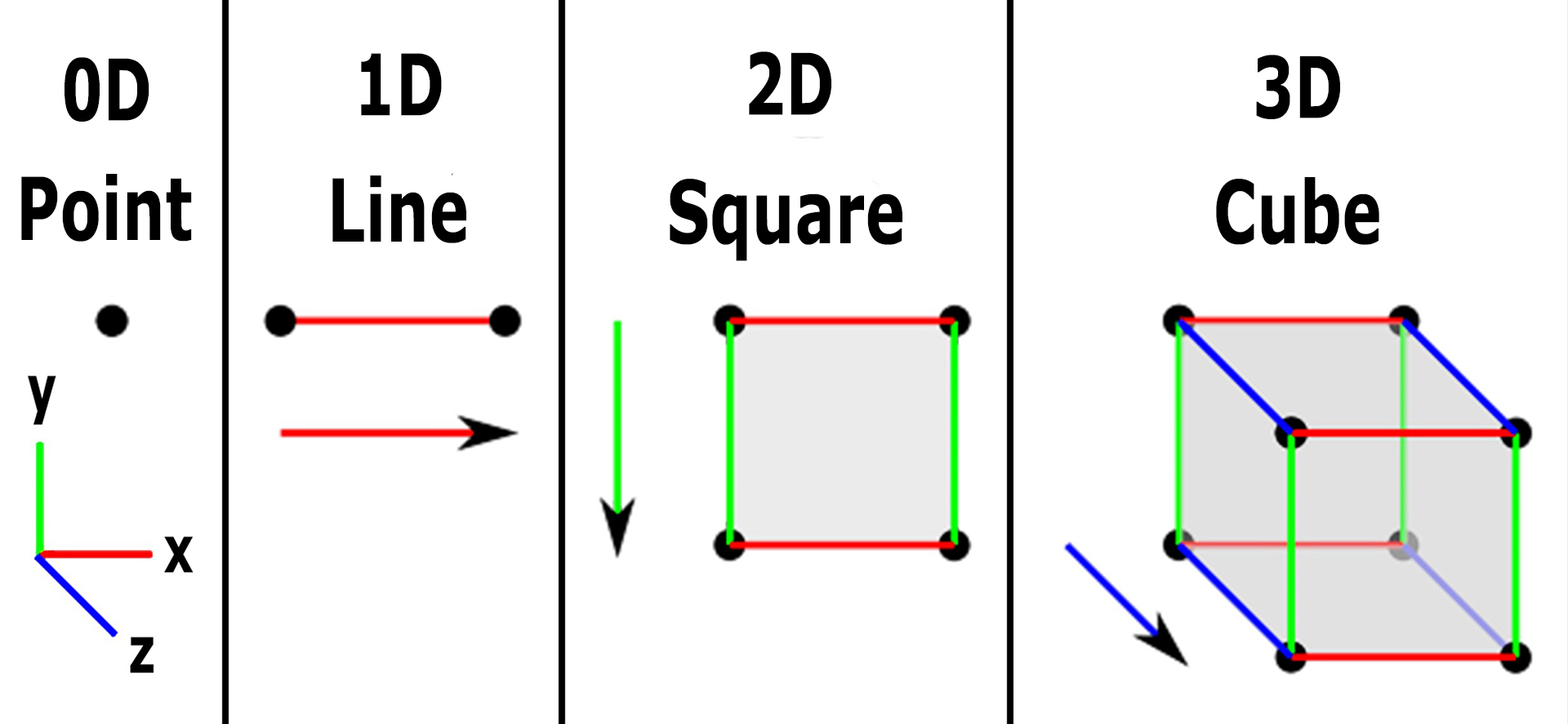
It’s interesting to consider that the perspective of the lower dimension is always subsumed into the perspective of the higher one, as when a point becomes a line, a line becomes a square, and a square becomes a cube.

If the point moves, a line exists. The line moves into a square, and the square moves to become a cube. Move the cube, and time exists. But beyond that?

What comes first? Consciousness or matter?

In most non-Western perspectives on existence, consciousness precedes matter. Even in the bible, God creates the earth. Assuming that only what can be measured is real is a recent twist in human understanding. It’s a limiting conception, though certainly a useful one in the practical world. If the great god of civilization, Science, wants to survive the coming twist, it will have to let go of the shores of time and space and greet the coming age of immeasurability with curiosity and eager anticipation.

I have less hope for the other worldwide religion of our era, the Economy, and its god, Money. I can easily see Mr. Moneybags falling off the edge of the earth to become a monster. An idea that particularly struck me during my studies at Pacifica Graduate Institute is that as dominant mythologies shift, for example from the “pagan” religions to Christianity, the old gods are forced underground, or off the edge of the earth, where they’re perceived as devils. It happens every time.

In Ganesh Baba’s model, following the downward arrow on the left, consciousness condenses into matter. Then, as it evolves back toward its source, more and more of the whole becomes comprehensible. As well as being reflected in the human body as the chakras, the Cycle of Synthesis mirrors Indian theory of the Yugas, a cycle of epochs in which the understanding of subtle things recedes as the earth moves away from the center of the universe, and increases again after it reaches its nadir and moves toward the center again.

So, if, as many astrologers are now saying, we are moving out of the Kali Yuga, the period of least understanding, into an era in which subtle energies will become more apparent, we will have to learn to navigate in the bio-psychic and intello-conscious fields in Baba’s diagram, the dimensions beyond space and time.

One way to do that is to begin by paying more attention to the interface, the twist, the liminal place, where fourth and fifth dimensional events show up in the 3-D world.

That’s why the dramatic incursion, in the form of that very attractive, very large three-dimensional stone house, into my fourth- and fifth-dimensional musings struck me. It was magic. That opportunity came into my physical world via a current of synchronicity. Its appearance overrode the laws of time and space, and I was very nearly beguiled.

What’s next?

Now, I’m on the lookout for magic. I’m asking a question before going to sleep, hoping for a response in my dreams. I’m actively looking for coincidence, actively seeking synchronicity.

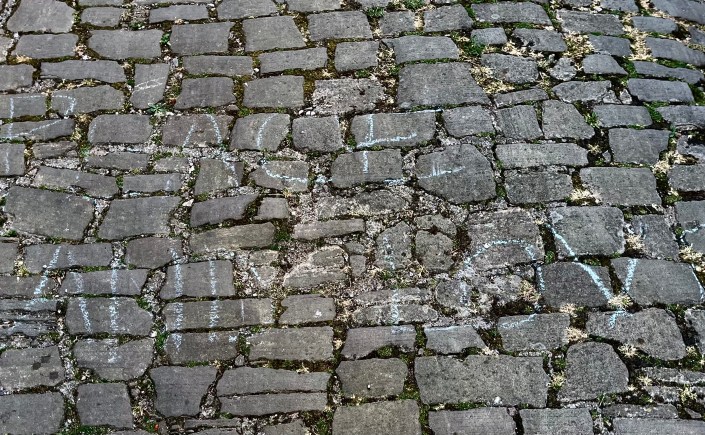
So it was that I noticed some writing in blue chalk on the cobblestones of Rue Saint Louis as I walked Mocha one morning this week, when I had just begun this essay. The message is a little hard to read, but the words are in English, even though I found it in our beautiful French village.

Rue Saint Louis

PEACE AND LOVE

It’s still the answer.

The Day Before Everything Changes: Reflections on Friendship and Exile

I’m sure there are many reasons not to post the penultimate chapter of a work in progress before publication, but sometimes it feels to me as if the piece itself is begging me to get it out there now, on its own.

The chapter, “In the Company of Friends,” takes place on the day Austria gives up its independence and becomes part of Germany in March 1938, the day before Hitler marches triumphantly into Vienna, warmly welcomed by most Austrians.

I am posting it the day before Trump’s second inauguration.

The process and timing of writing Two Suitcases has always been more or less outside of my own volition. The parallels to events in the US aren’t something I look for and work at adding to my story. It’s the other way around. The story refuses to tell itself through me until the unfolding events push it to be told.

Those of you who’ve read Red Vienna or followed my blogs will be familiar with the characters and setting—I hope the chapter is meaningful even if you haven’t. Take the trouble to read it to the end, even if meeting the eight characters all at once is confusing. Don’t let the names of the Viennese foods trip you up either. They’re all described earlier in the story.

In brief, the young people in the group who come together in the chapter are all Social Democratic activists. For the four years covered in the second volume of Two Suitcases, they’ve been working underground to keep their vision of a kinder, more thoughtful, more equitable world alive. As Austria capitulates, most of them plan to go into exile.

Chapter 52

In the company of friends

Friday, March 11, 1938
early evening

Vienna

Gisi can hear the sound of Austrian State Radio everywhere as she hurries over to Max’s workshop, a covered bowl in a basket on her arm. There’d just been a radio announcement that the Plebiscite on Austrian independence had been canceled. Chancellor Schuschnigg would be making a major address to the country any minute, and Gisi wants to be with Max to hear it.

She’s not alone. Within the hour, nudged by a phone call or a knock on the door, everyone else in the group decides that they too would like to listen to the Chancellor’s speech in the company of friends. 

At his shop, Max and Leo move a big table close to the best radio, and the others bring eight odd chairs and stools to put around it. Near the table’s center is Gisi’s bowl of Kaiserschmarrn, its sweet fragrance surrounding it, a jar of applesauce beside it. 

Toni is warming some rind souppe on the coal stove. Its beefy aroma soon fills the little workshop and drifts into the store. On the workbench is a collection of bowls, cups, and spoons that Max brought down from his apartment, along with his last three cans of pickled herring.

Gert slices the loaf of black bread she brought and is putting it on the table when Hugo enters the shop with a smile and a swagger. 

“Look!” he cries when all eyes are on him. He pulls a bottle from his bag. “Slivovitz! A full bottle of everybody’s favorite plum brandy! What is there to save it for?” Eight glasses and cups are quickly found and filled.

Leo contributes a block of Bergkäse cheese. Felix, looking apologetic, sets out a bit of butter, an almost empty jar of honey, and half a jar of Powidl.

“What do you expect?” he asks. “I’ve been imagining leaving my home every day for weeks. Why would I have any food there?”

The crowning glory of the table is an Obstkuchen, a buttery cake that Anna baked and decorated with dried apricots and cherries as the rays of a canned peach sun. 

Felix is the last of them putting soup in his bowl when Max calls out, “Listen! Schuschnigg is about to speak!” as he turns up the volume of the radio. The music, a symphony by Beethoven, stops abruptly and the dignified voice of the Chancellor comes through.

“Women and men of Austria,

This day has placed us in a tragic and decisive situation. I have to give my Austrian fellow countrymen the details of the events of today.

The German Government today handed to President Miklas an ultimatum, with a time limit, ordering him to nominate as chancellor a person designated by the German Government, and to appoint members of a cabinet on the orders of the German Government. Otherwise German troops would invade Austria.

I declare before the world that the reports launched in Germany concerning disorders by the workers, the shedding of streams of blood, and the creation of a situation beyond the control of the Austrian Government are lies from A to Z. President Miklas has asked me to tell the people of Austria that we have yielded to force since we are not prepared, even in this terrible situation, to shed blood. We have decided to order the troops to offer no resistance.

I say goodbye with the heartfelt wish that God will protect Austria. God save Austria!”

The symphony resumes. No one says anything—they’re all in shock, though surely the announcement was inevitable. 

Max rocks back and forth on his chair. 

Gisi feels her tears rising. 

Anna’s anger shows in her eyebrows and trembling lips.

Hugo begins to speak a couple of times but stops. 

Beethoven’s music fills the shop.

Finally, Hugo raises his glass. “May God, or fortune, or whatever you believe in, protect us!” They each take a sip of the brandy.

Max looks at the table. “Let’s not waste this beautiful meal. Eat!”

“Wait,” cries Gert, “I have another toast.” She raises her glass again. “To friendship!”

Anna adds “And peace!” and they drink again.

Max glances at his empty glass. “Hugo, another round?” and Hugo pours out the last of the brandy.

Leo starts the toasts again. “To solidarity!”

“And to a kinder, more thoughtful, more equitable world!” adds Toni, and the last of the brandy is gone.

With bittersweet slowness, one by one, they pick up their spoons and begin to eat the rich, warm soup. 

After savoring her second spoonful, Gisi speaks. “This is so good, Toni. But why did you make it today? Rinde soupe, especially with so much meat in it,is Sunday fare at our house.”

Toni smiles ruefully. “I made it for Leo. Before the Chancellor announced his resignation, I was planning to take it over to his place. I thought, I thought…” she stops and looks at Leo, who has already finished his soup and is wondering if there is more. Now he looks at her, his companion for so many years, and his eyes fill with sadness. She continues, “I thought it might be our last meal together—for a while, I mean—or our last meal in Vienna. Oh, I don’t know what I mean.”

Anna looks around the table. “It’s true, isn’t it? This will probably be our last meal together for most of us.”

“You aren’t the only one to feel that way,” Hugo says. “It’s why we all came.” He picks up a plate and fills it with cheese, bread, and several pieces of pickled herring. The others follow, until nothing is left at the center of the table but the sweets.

Suddenly, flickering light pours through the small window at the front of the shop and the boom of chanting voices shakes the room. Max runs to look out. 

“It’s our neighbors,” he says, returning to the table. “Marching with torches and chanting Heil Hitler.”

Oh, God,” Anna replies. “Why is it always so hard to believe the worst until it’s staring you in the face?”

“Listen,” says Gisi. “I have an idea. After we’re done eating…”

“If anyone can still eat,” Anna responds.

Gisi looks at her. “Try,” she says. “When our stomachs are full of this delicious food, I want us to do an exercise I did in one of my psych classes. Max, do you have some paper and pencils here?”

Max, his mouth full of bread spread with butter and Powidl, nods yes and points to the workshop.

“Anna, since you’re not going to eat, why don’t you help me out by finding the paper and cutting or tearing it into pieces about as big as…” she pauses to think, “as big as an Ausweis.” 

“I’m eating,” Anna says, picking up a hefty piece of herring, putting it in her mouth, and chewing it slowly. “But I’ll do it later.”

The light and sound of the marchers fades into the distance.

“I suppose Miklas is in charge now that Schuschnigg has resigned,” Hugo muses. “Though Hitler probably has a successor in mind for the Chancellor’s position. Or maybe he’ll be Chancellor himself.”

Gert puts down her fork with a clatter. “Let’s not talk about it, Hugo. Let’s not talk politics for once.”

Hugo looks surprised and a little hurt. “Okay, what should we talk about then?”

Gisi is ready. “Let’s talk about the exercise I want to do.” She smiles as brightly as she can manage. “My professor gave us the assignment to make a list, in order of importance to each of us personally, of the five things we think matter the most.”

“In what sense?” asks Gert. “Do you mean things like money and housing? Or actions like pleasing your parents or doing work that makes you happy?”

“Yes, all of that, as well as qualities like patience and perseverance and generosity.”

“Okay, I’m ready to get the pieces of paper,” Anna gets up. “How many will we need?”

Gisi wrinkles her nose. “I think four per person will do. Max, can you find us all pencils or pens? Shall we do my exercise before cutting into Anna’s beautiful cake or after we eat it?” 

“After,” says Felix, starting to clear the table. No one objects.

“Max, is there water down here? I’ll wash these plates and we can use them for the cake,” Leo offers. 

A few minutes later the group settles down to make their lists, some at the big table, others scattered throughout the store, Max at his table in the workshop. Silence settles over them like snow. 

Gert is the first to finish. “What shall we do with our lists when they’re done?”

“Put them on the table where everyone can see them,” Gisi answers. “There’s a second part of the exercise coming.”

When all the lists are finished and everyone has read theirs aloud, she says, “Now, on your second piece of paper, write down an action anyone can take to create a world in which the ideas or things you most value can be realized in their largest sense. For example, to promote the value of ‘Peace on earth,’ you could write ‘try to always be kind’ for the second round.” 

“I get it,” Toni says. “I wrote down ‘my friends’ as a personal value, and I can think of dozens of ways to would promote friendship generally, like ‘appreciate everybody’s uniqueness’ or ‘think of others before yourself.’”

“That’s it. Try to make the action as universally useful as possible.” 

An hour later, and after another round of the exercise, Felix is picking up the plates again. Every crumb of the cake is gone. Hugo is copying out the same list eight times onto eight pieces of paper. Each of the friends signs their name eight times. 

Before they hug and say long goodbyes, they each have a copy of the actions tucked away in a safe place.

Take care of the old and the young, and those who have less than you  –  Gisi

Keep your sense of humor  –  Max

Be ready to let go. Remember what really matters  –  Anna

Hold your head high  –  Leo

Believe in magic  –  Gert

Breathe  –  Felix

Choose kindness  –  Toni 

Hold onto your vision of a better world – Hugo

A useful practice in times of change

In the middle of this very very hot, very very dry summer, when we would stay inside our wonderfully cool little house all day every day, Ella, our lively little cat, was eight months old, and Mocha, our sensitive and often reactive dog, was ten years old.

One day the shit hit the fan.

Mocha was on her bed, sleeping lightly. Ella came flying into the room, skittered across the wood floor, attacked the dog’s tail with one flying paw, claws fully extended, turned, and zoomed out of the room. But Mocha was ready. Suddenly the dog had the cat cornered under the coat rack, and her jaws were closing around Ella’s ribs.

I shrieked, shouting at Mocha in my fiercest voice, pushing her away from the cat, and sending her to her bed. There was no need really; Mocha knew where to go, and as usual, she seemed genuinely remorseful.

But the incident was over the top for me. All afternoon, I stormed around, imagining the quiet home in the country I’d find for Mocha, designing in my mind the sign I’d hang at the vet’s and the Facebook post I’d write. I was done with her, this difficult, traumatized animal who’d shown up in our lives just when we arrived in our idyllic new setting four years ago. Despite some good progress, she still terrorized tourists, lurched and bared her teeth at moving wheels of all sorts, and snarled at children who approached her uninvited.

I’d had enough. Which picture would I choose for the ad?

Meanwhile, Ella was fine, relaxing on her chair next to Mocha’s bed, stretching, washing herself.

As these things go – more and more frequently it seems – when I sat down and opened my computer, there was an offer to watch a short series of videos on working with sensitive animals. Needless to say, I watched them.

For a little over a month now, I’ve been practicing a new form of meditation that I learned from the series, which is about James French’s Trust Technique. After 40 years of practicing more or less the same technique I’d learned from Ganesh Baba, I feel like I’m being offered a promotion. The open-eyed, focused Buddhist-style practice French uses takes the inner skills I’ve honed all these years and redirects them outward, slowly refining my awareness of my own state of mind and Mocha’s. I’m only on the second lesson of the paid series, and my relationship with her has changed.

I haven’t replaced my Ganesh-Baba-style kriya yoga practice with the new practice – I do both; they enhance each other – and I look forward to both my private practice and my twenty minutes of meditation with Mocha with renewed enthusiasm.

Based on Reiki, the trick to meditating and eventually cooperating with animals is to master moving into a deeply peaceful state of presence easily, a stillness without thought, that they find comforting. Now, using my attention increasingly skillfully and progressing at Mocha’s pace, I’m learning to communicate that peace to her. She likes it very much, and so does Ella, who regularly volunteers to join in our experiments.

Today, as I drifted back into ordinary consciousness after a particularly satisfying session with both dog and cat, it occurred to me that the skills I’m gaining may be very useful in these increasingly chaotic times. I’m practicing being undisturbed by passing cars, by Tom passing through the room, being unruffled by feelings of failure or frustration, detached from thoughts of the future and the past. I sit on the floor next with Mocha and Ella, breathing softly, fully present.

And all around me, there is peace.

Ninety days outside the Schengen area – sacred geometry in Morocco

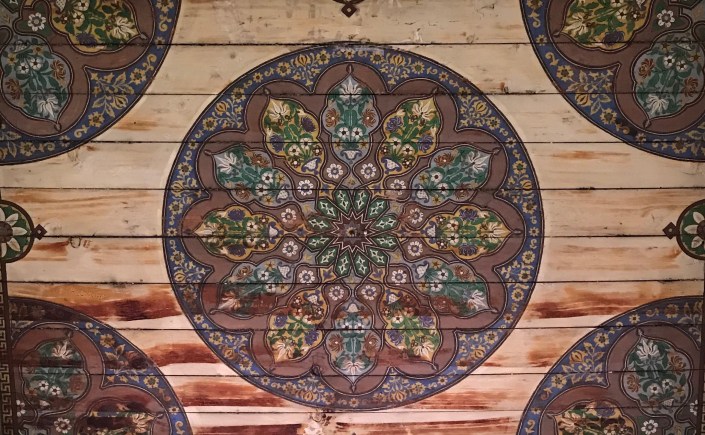
It was in the Nejjarine Museum of Wood Arts in Fès that the thought struck me. The chaos of the crumbling medina, the vibrancy of the souks, the noise, the pollution, the exploding energy of the colors, and the sheer quantity of stuff –

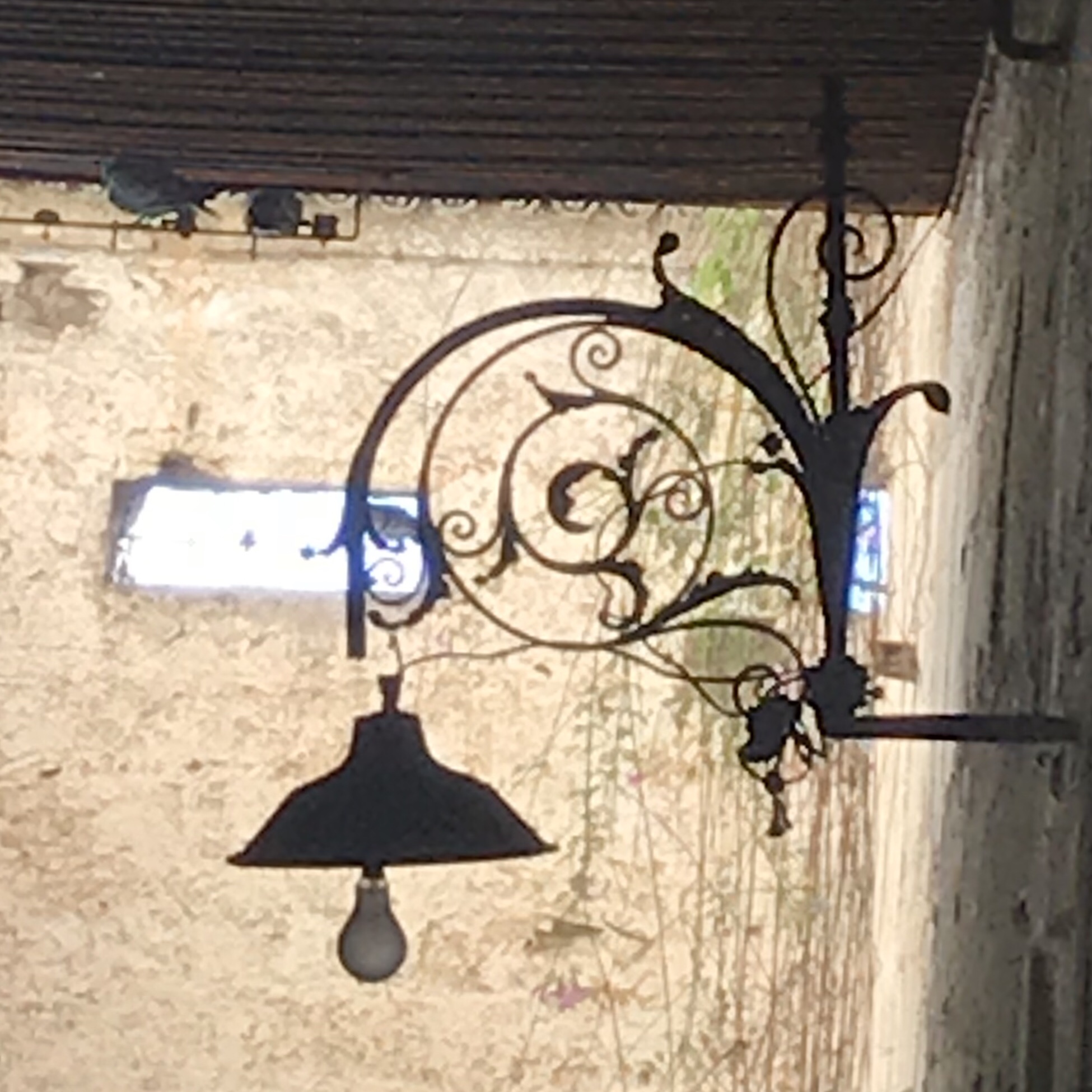
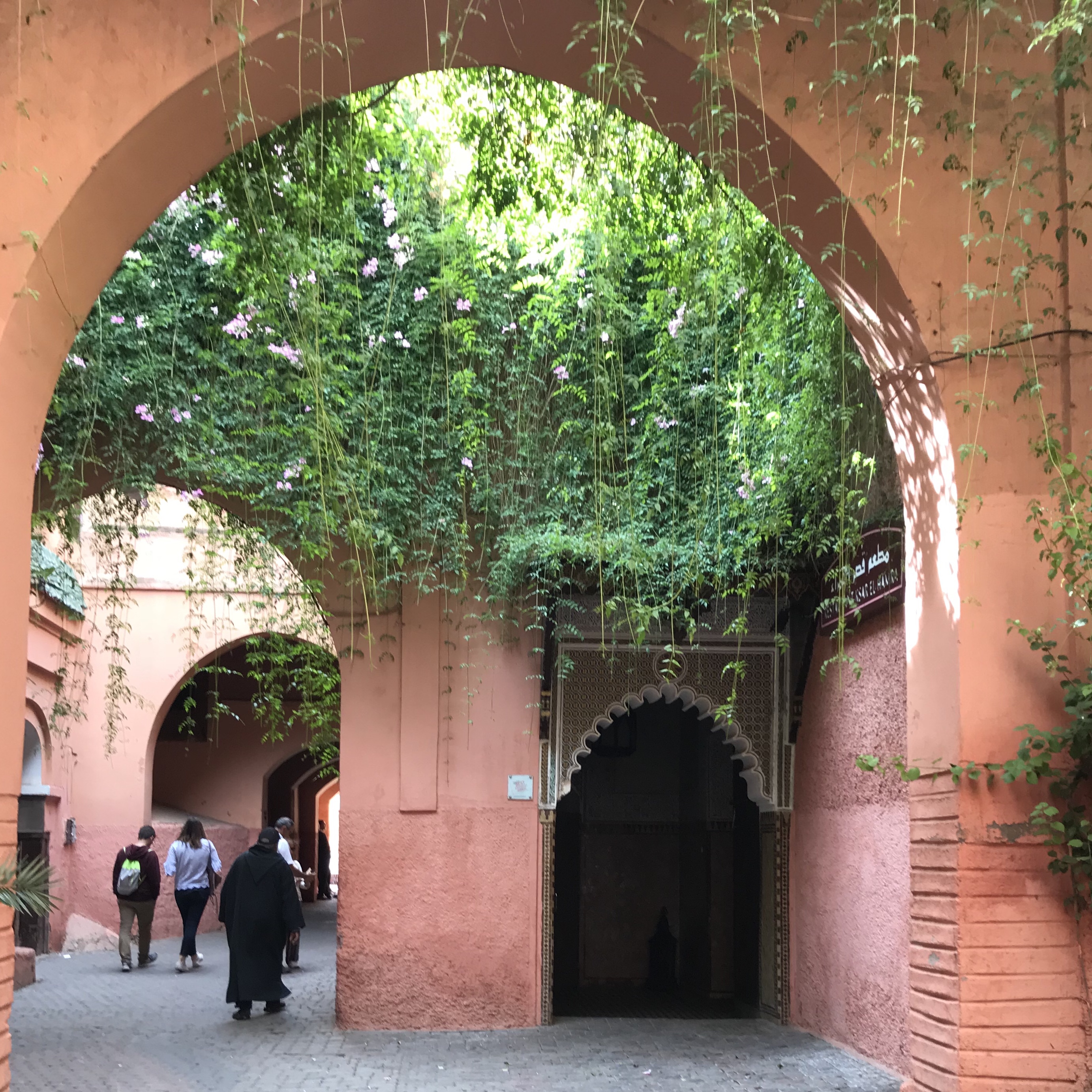
Souk, medina, Marrakech

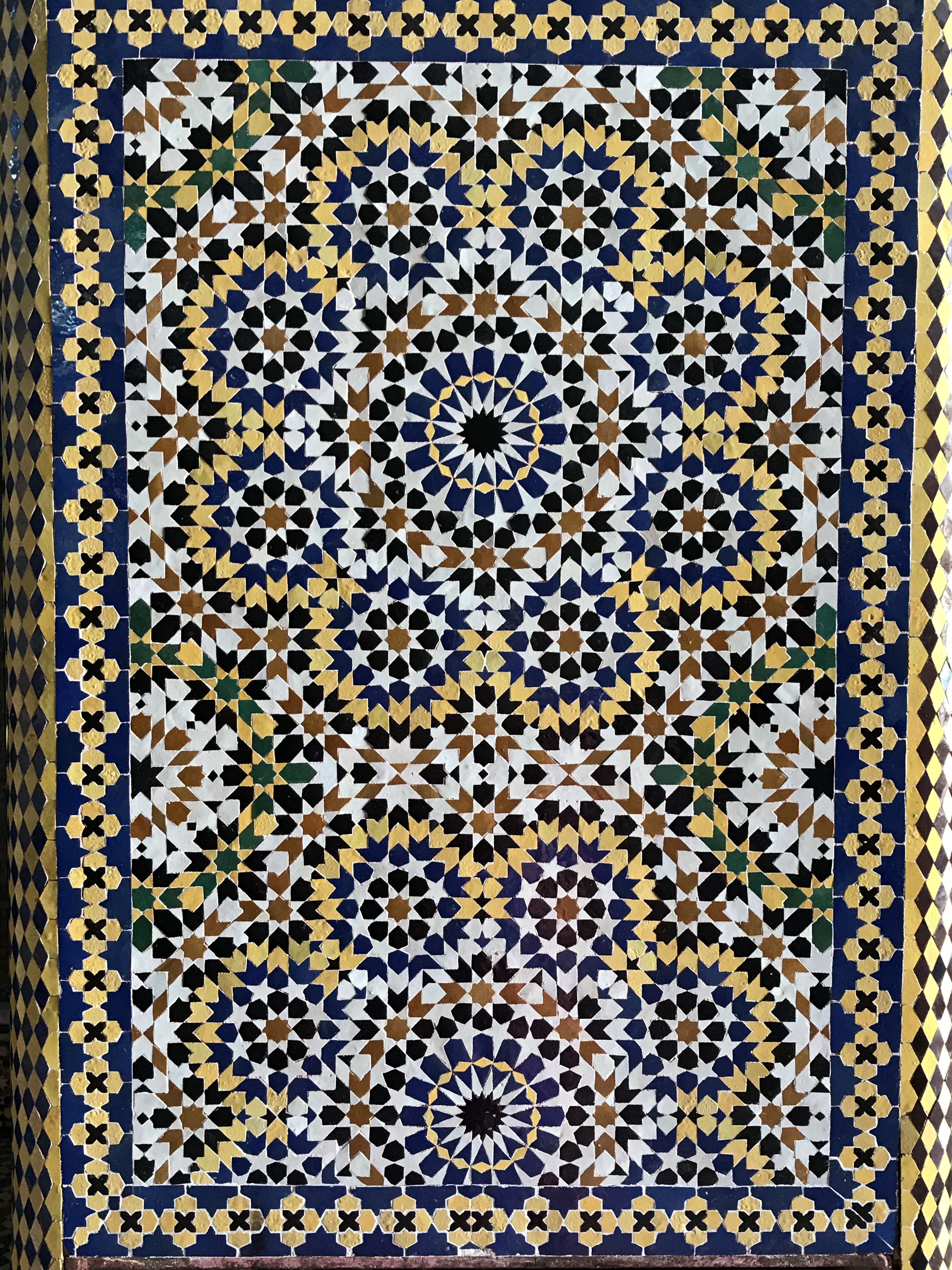
– is beautifully balanced by prevalence of the purposeful geometry, sacred geometry, everywhere.

That’s why Morocco is so enchanting.

Souk, medina, Fès, Morocco

Doorway, Marrakech Musèe

Wall, Palais el Mokri

Islam takes the prohibition of worshipping graven images seriously, and discourages figurative art. Like all of life, art should be dedicated to God, and God is only describable as essence. Geometry is essence.

Fountain, Palais Glaoui, Fès

Who can resist being centered by such design?

All my years of studying sacred geometry, beginning even before my Ganesh Baba days, and then Dan Winter and most deeply with Alice O. Howell, peaked at that moment in the museum. I stood at the center of a ideally proportioned room surrounded by mandalas, exquisite symmetry, perfect curves, rhythmic repetition, and profoundly satisfying rectangles and squares.

I wanted to take dozens of pictures, but photography was not allowed, so I was forced to confront the serene beauty of that room face on. It was transformative.

Since then I’ve consciously attuned myself to noticing and letting the geometry take me in.

Palais el Mokri

Medina, Marrakech

Palais el Mokri, Fes

Pastry, souk, medina, Fès

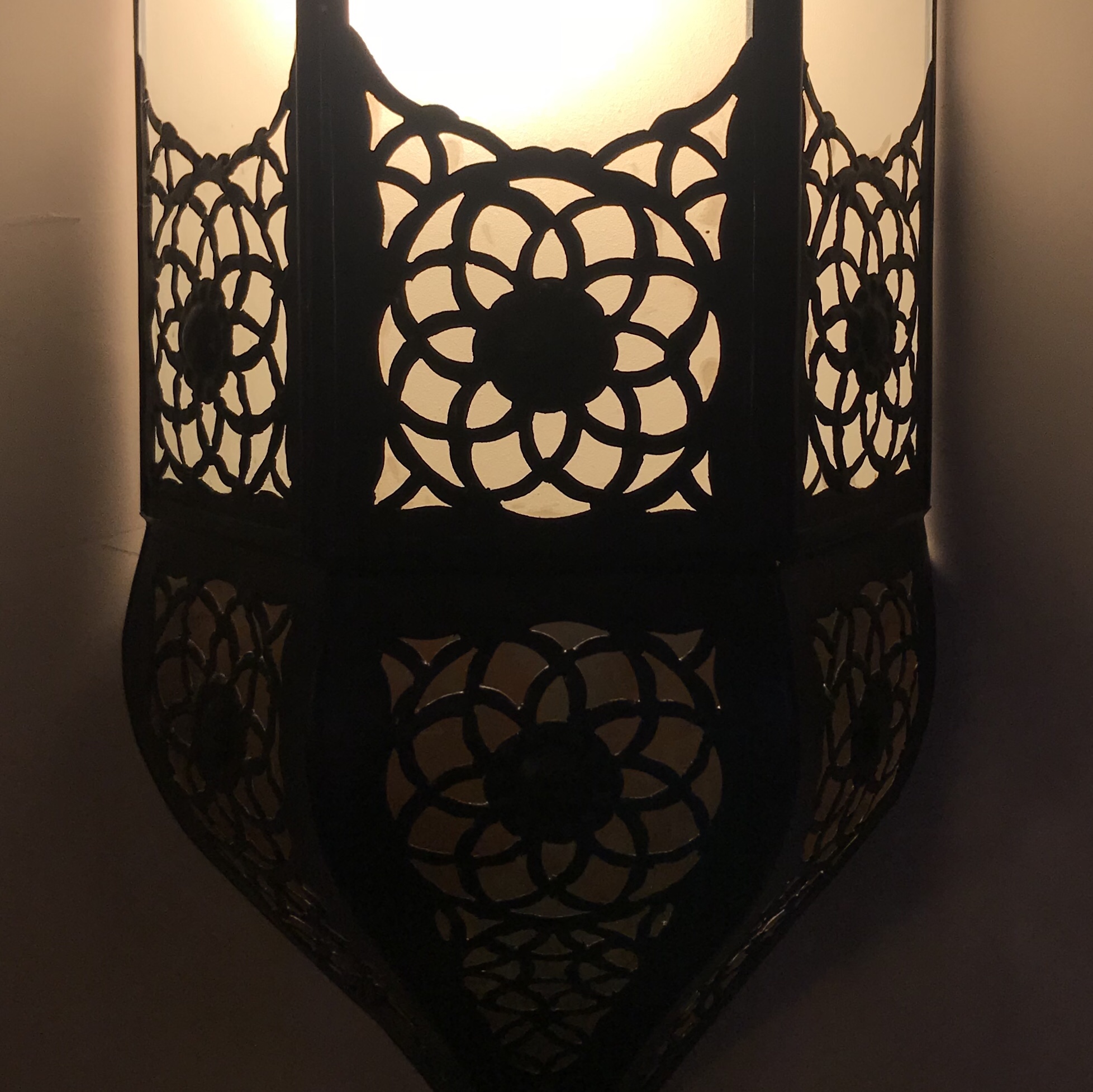
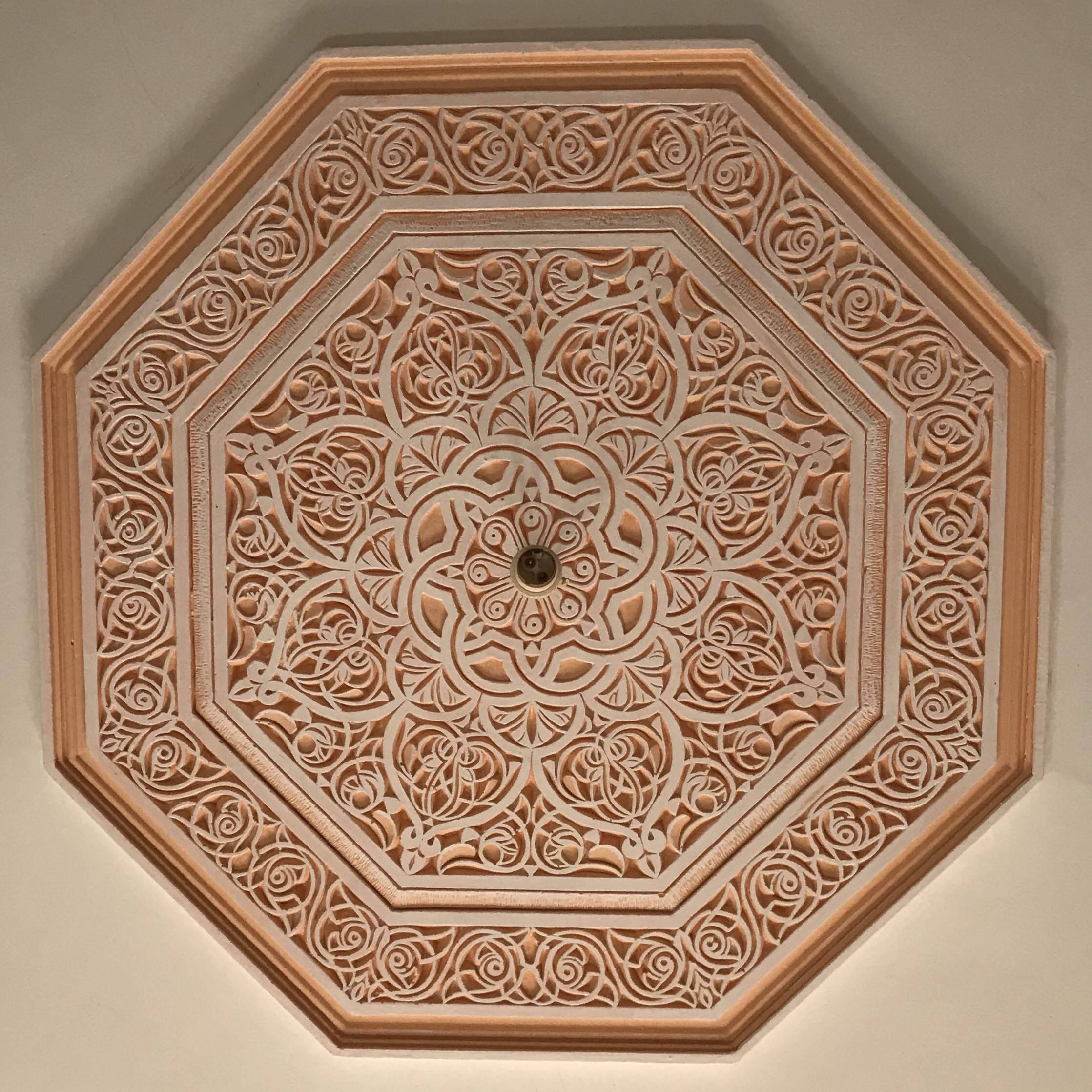
Even contemporary Moroccan design uses the elements of sacred geometry to create beautiful calm spaces, as exemplified by our current Airbnb in the new part of Marrakech.

Magical!

Detail, lamp, Marrakech apartment

Detail, lamp, Marrakech apartment

Dining room table and chairs

Dishes

Bedspread

Gate to new apartment building

Light fixture in our Airbnb apartment in Tnine, Ourika

Tree of Life – reflections on the breakdown of perceptual boundaries

Did you see what the Pittsburgh murderer posted before his rampage?

I can’t sit by and watch my people get slaughtered.

Screw your optics. I’m going in.

Like so many others, this guy believes in a very different reality than most of us reading these words. In his world, the Jews he killed have been helping immigrants to settle in his country, immigrants with the intention to murder his people.

He lives in a different world, a world that is considered fictional by those of us who buy into another consensus reality, the one we call truth, or fact. His reality is consensual too, though a smaller number of people buy into it.

Not long ago, when there were three TV networks presenting news in compliance with the Fairness Doctrine, and just so many print publications available, it was easier to control consensus reality. Propaganda could be labeled propaganda, hate speech hate speech. Those who believed the propaganda and hate speech had to keep to themselves because of the labels applied by the believers in consensus reality. That isn’t happening anymore.

The perception of truth is always problematic. When scripture – writing – is labeled Truth, larger consensual groups form and wars break out. People who hold one Truth supreme clash with those who believe in another.

Now that we have the internet, and apps like Snapchat that disappear after messages are sent, and the dark internet, consensus is rapidly breaking down. Every small group forms its own world, the bubbles we live in. Consensus reality is under siege from all angles.

More than ever, Pittsburgh makes me feel that most forms of resistance are futile. The Tree of Life, primal symbol of all cultures, is under attack by an individual man who feels his kind is threatened. He doesn’t need to be part of an organized group – in fact he’s even more iconic if he’s a loner. To his fellow believers, he’s a hero, a martyr. Can we change what they believe? What resistance can be mounted against a sea change in the nature of reality?

More and more I’m coming to believe that it is only nature, a sea change, that can create a united human consensus: climate change.

Only when we are all pushing against the wall together to keep the sea out will we humans again agree on a reality.

I’m not a great believer in channeled teachings, but I like to think that I have a reasonably good intuitometer (thank you, Joe Abrahams). I do like this teaching:

The Hathors, an interplanetary intelligence channeled by the musician Tom Kenyon, advise that when one’s perceptual boundaries crumble and fail – surely this is what is happening now – not to visualize the future (that vision can only be based in the past), but rather to be still and to await the unknown with eager anticipation – and when action is required, to act in a way that will be of greatest benefit to whatever sphere you find yourself in.

Be still, await the future with eager anticipation, and when it’s time, push against the wall together.

Living in Cordes – Stone walls

Cordes-sur-Ciel was built as a safe haven for people who lost their homes in the nearby city of Saint Marcel, which was razed during the Albigensian Crusade. Said to be the first of the bastides, it has five walls built in concentric circles.

(More about the history of Cordes-sur-Ciel can be found here.)

A neighbor recently told us that the stone wall across from our home is the unfinished fifth wall. Indeed, our house is just below the Porte de l’Horloge, the eastern entrance to the medieval city, which is in the fourth wall, built between the 14th and 16th century. Our neighborhood, quartier du Barri, is a 17th century suburb of the medieval village.

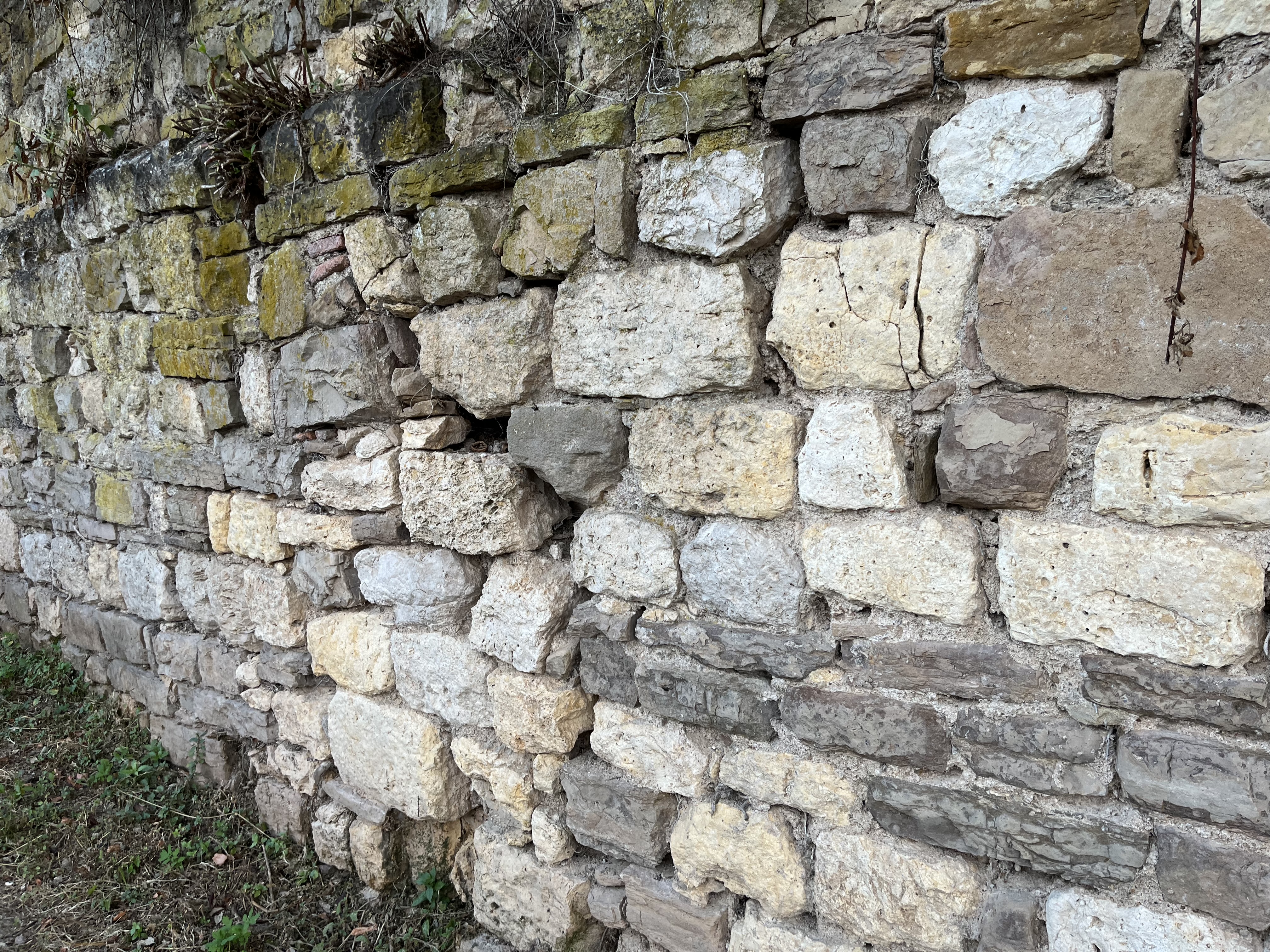
Cordes sits on a rocky outcropping, and is entirely built of local stone: limestone, sandstone, and dolomite. The houses are stone and the streets in the medieval village are cobbled. Walls surround every garden and line every street.

IMG_3621

img_4358.jpg

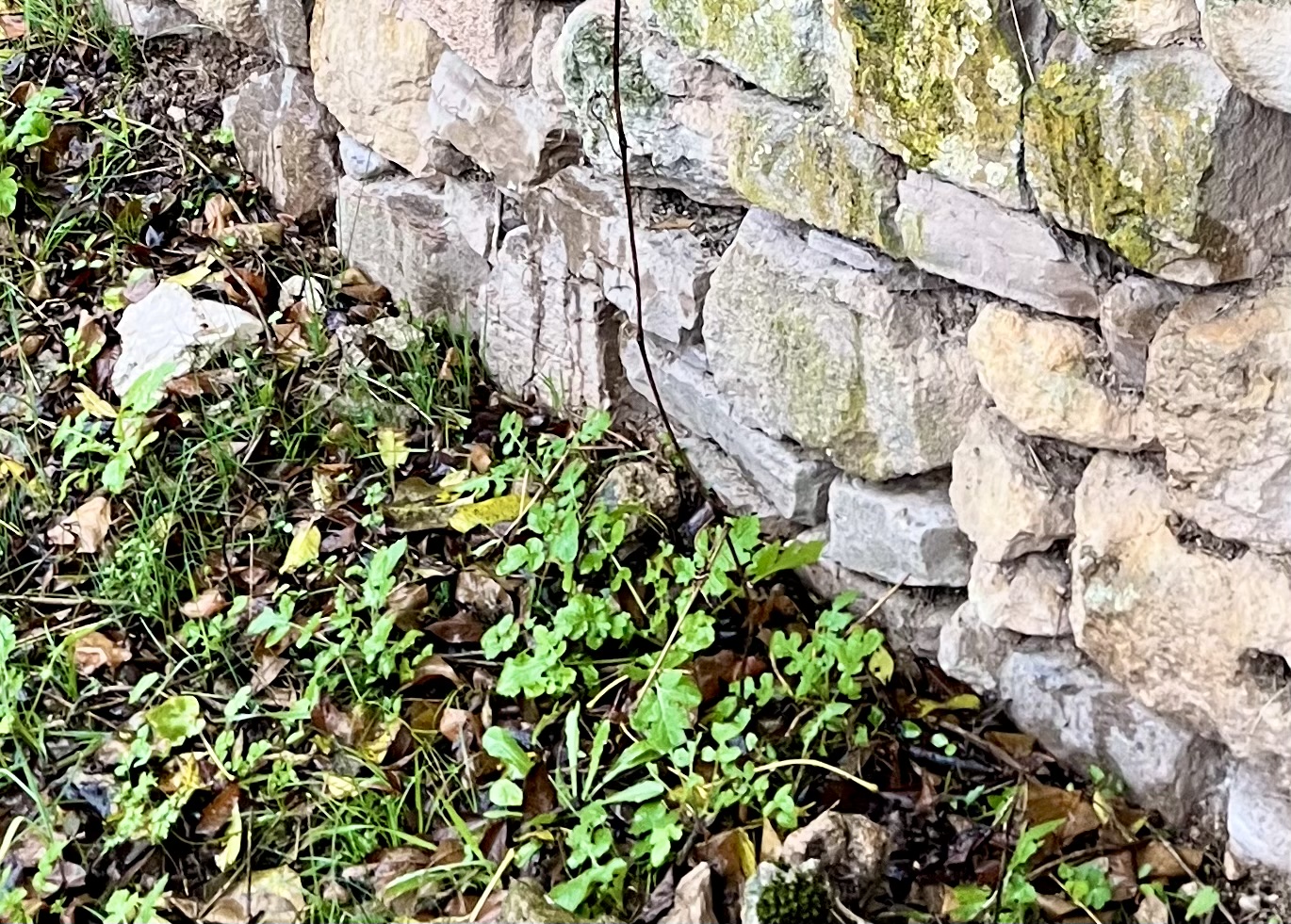
There are walls upon walls upon walls.

IMG_4083 2

Living without a car gives me plenty of time to appreciate stone walls all around. One of the most delightful things about Cordes is its authenticity: it looks like and is a place that has been continually inhabited since the 13th century. The walls reflect its history.

They bring me peace, connectedness, and a sense of stability. They are the keepers of the stories.

I never tire of their variety, their richness, their complexity.

In a village of art, the stone walls are perhaps the greatest art.


Living in Cordes – Mornings

Most mornings I wake up before sunrise, open the shutters, roll out my rug and light a candle, and then do some stretches, breathe, and meditate for a while. When I open my eyes, the sun is up – or on its way up – and the view is so lovely, I try to save it in a photo.

These are some of the morning pictures I’ve taken. They begin in early August. The last one was taken this morning, the first day of fall.

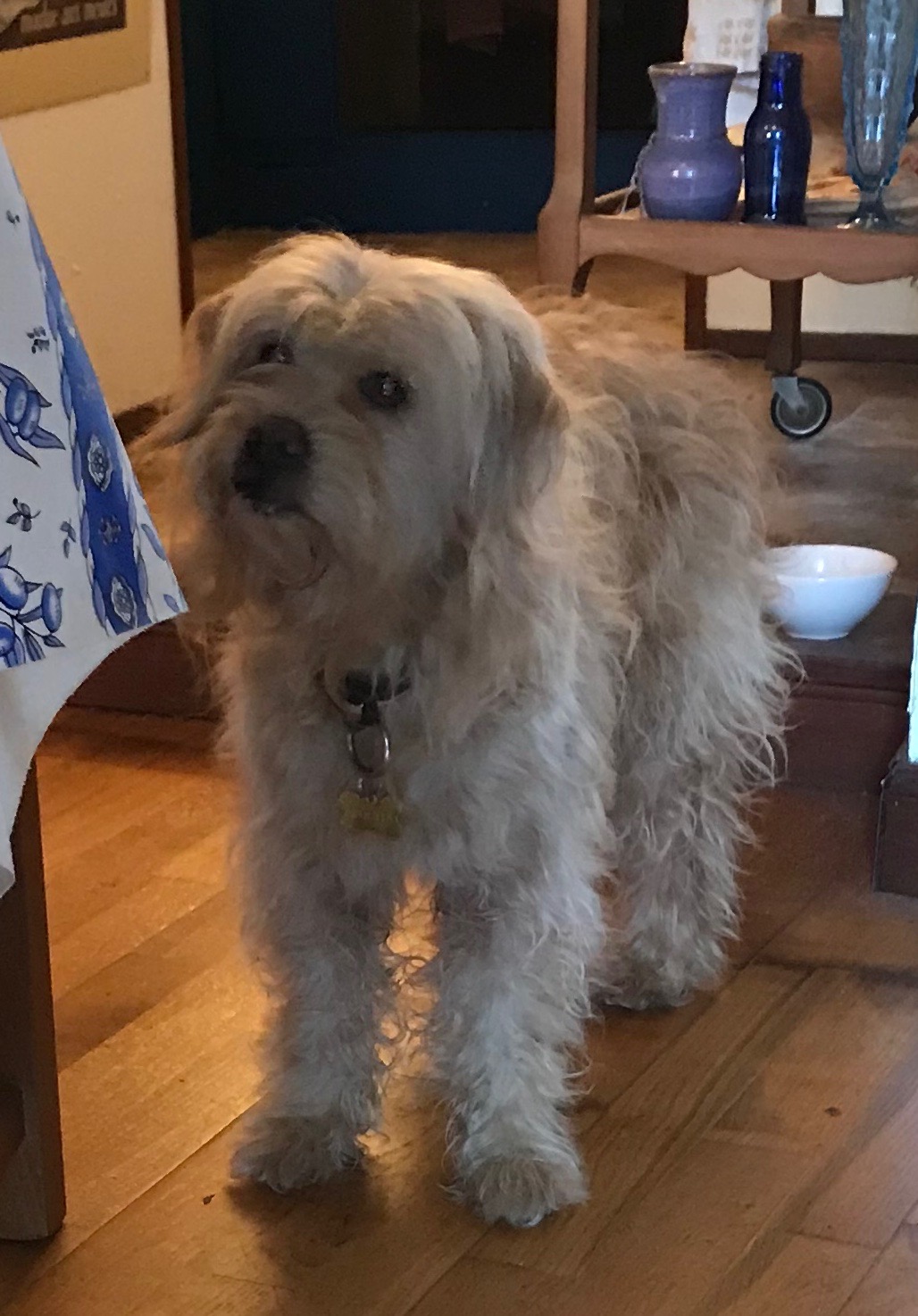
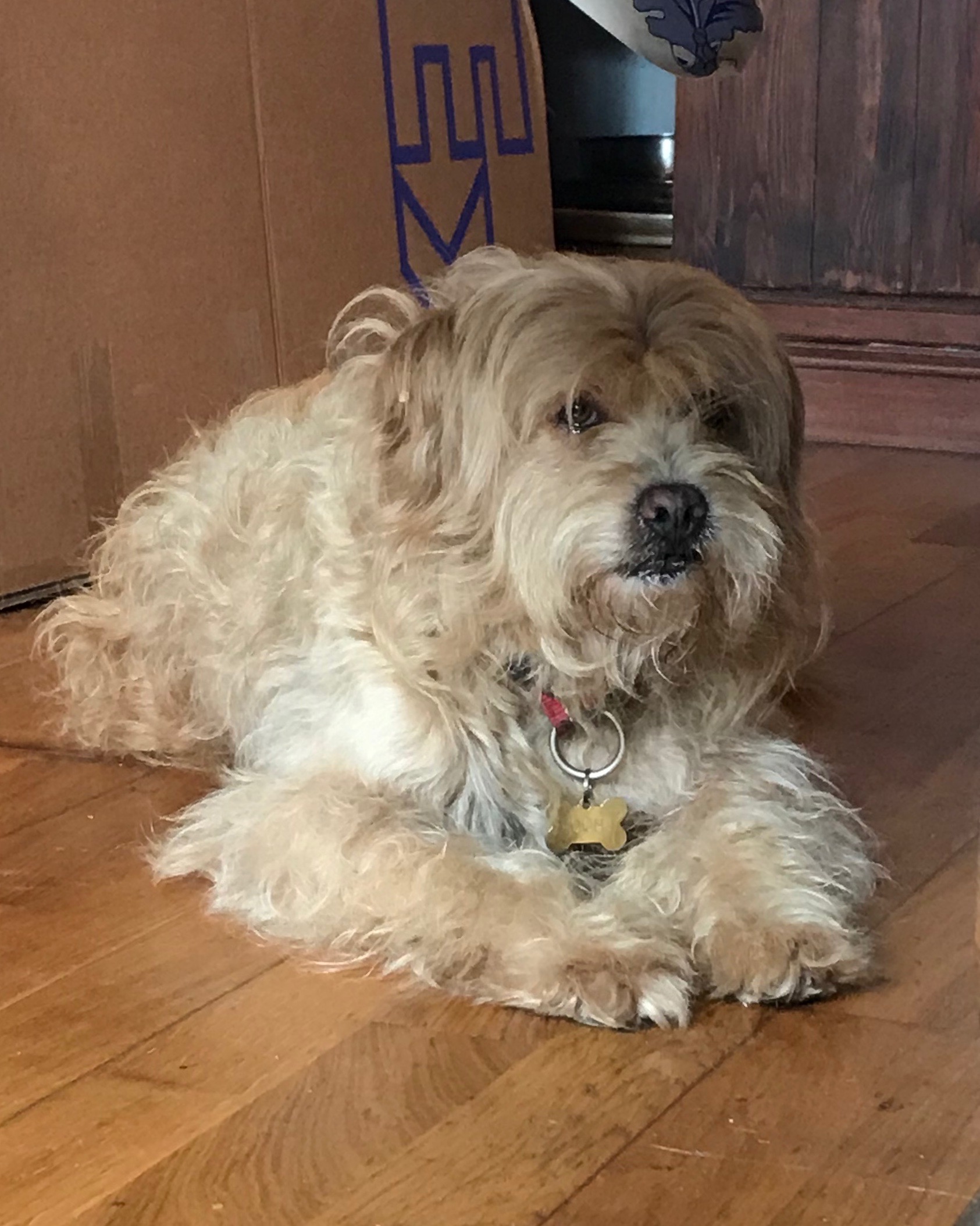
Living in Cordes – Mocha

The evening Tom and I returned from Le Havre with our rented van full of the boxes we’d shipped from Los Angeles, our neighbors Ann and Leif greeted us in front of our house with sad news. Andreas, the other newcomer to our neighborhood, a Swiss artist who’d also moved to Cordes from California, had died suddenly.

His dog Mocha was staying with another neighbor, Dominique, who couldn’t keep her until Andreas’s relatives came, which could be several weeks. Not only did Pompom the cat object, but Mocha’s barking was bothering Dominique’s guests.

When we saw that the address on Mocha’s address was Bancroft Way, Berkeley, CA, the solution was obvious. Mocha would come to stay with us until Andreas’s family decided where she would go.

IMG_3764 2

The next day, after we returned the van to Albi where we’d rented it, we picked Mocha up at Dominique’s house. Mocha was not happy. She didn’t want to stay with us. It was clear that she loved Andreas very much and was grieving deeply.

IMG_3765

So, when Tom opened the door take some empty boxes to the recycling, she was out like a flash.

Naturally, she headed back straight to Andreas’s place. Tom and I managed to corner her briefly, but when a car went by and we had to alter our very strategically chosen positions, she took off again, this time down the street toward the bistro where Andreas, like most Cordais, liked to sit.

We had pictures on my phone, and people knew Mocha, but no one had seen her. She was spotted near Andreas’s place several times. We left a note with Tom’s French phone number on his door; people called, but no one could catch her. Pretty soon half the village was involved.

At 10:30 that night we heard voices in front of our house and looked out the window to see Leif, who told us that Dominique found Mocha sleeping on Andreas’s step, scooped her up, and now had her in her car. She’d be right over.

So Mocha came home. She had chopped sausage and a little duck for dinner. And she went to sleep on our bed.

Day by day she is becoming more accustomed to her new home. She no longer pulls on the leash when we go near Andreas’s house. She enjoys hanging out at the bistro, where she’s very popular.

And she loves being groomed! (Not so much the bath.)

IMG_3772

But a long walk, table food, and sleeping on a good bed suits her very well!

Now we’ve heard from the family that we can keep her!

Thank you, Andreas, for this wonderful new family member.

IMG_3823

Living in Cordes – Beauty all around

Perhaps August is the most beautiful month of the year in this medieval village in southwest France, or maybe it only seems so because it’s the beginning of our new life here and we’re seeing everything with fresh eyes.

Either way, here’s a series of pictures from our first two weeks. A few, like the one above, were taken from our bedroom window first thing in the morning; the view is enchanting.

After dinner we usually climb the hill behind our house. This picture was taken about half way to the top.Our neighbor, Lilliane, who comes from Paris every summer, tells us the best restaurant in the village is at the Hostellerie du Vieux Cordes. Rochelle, Tom, and I sat on the patio there, shaded by a 300 year old wisteria, until a thunderstorm chased us inside. Even inside it was dramatic. As I took the last bite of my oeufs brouillé au truffes (the English menu called them “blurred eggs with truffles”) one of the tall casement windows blew open with a bang, startling everyone in the room.

Later we sheltered under the roof of Les Halles, the covered square at the top of the village, and watched as lightning lit up the sky above the museum of contemporary art, once one of the grand houses of the village.When taking the footpath from our house to the lower village, bring a bucket for all the wild fruit: blackberries, plums, quince, apples and grapes.

I think my favorite meal is soup, salad, and bread, with a Gaillac rosé.

One day we were greeted by traditional Occitan music and dancing when we got off the bus from Albi.

Another view from the window:

A doorway on our street:

After Rochelle left, Garrett, Chris, and Ed visited. Garrett cooked us a spectacular Sichuan Chinese meal.

A walk in the upper village:

And a visit to the Musèe Charles Portal, the history and archeology museum, which rises high above the western gate to the city, the Charles Portal.

Lace-making machinery from the early 20th century:

And more morning pictures:

Including some hot air balloons which floated gently over the village at daybreak.

Really, what more could anyone ask?