Two Suitcases: a wink from Emil

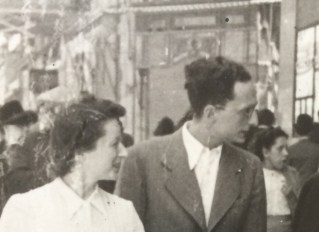
My desk is filled with photos my parents and their friends in the 1920’s through the 1940’s. None of the main characters in my historical fiction novel-in-progress, Two Suitcases, is alive.

I should have asked more questions.

IMG_7014I write from pictures, from old newspaper articles and newsreels, from family stories told many times or just once, from snatches of memory, from dreams. I read about the period and places where the story is set incessantly. Then I make up stories that could have happened.
IMG_7015

There are four main characters in Ida 1940'sthe story: my mother and father, called Gisi and Max, my father’s sister, Ida, who’s Anna in the book, and a friend of the family, whom I call Emil. Six more characters play secondary roles. None of these are entirely fictional, but what they do in the novel is certainly not what they did in life. It’s fiction.

Sometimes I wonder if they approve.

I had the great fortune to be with both my parents when they died, and I was close to my aunt till the end, but until yesterday, I thought Emil died about eight years ago and no one knew to contact me.

In yesterday’s mail I found a beautiful handwritten note.

It says,

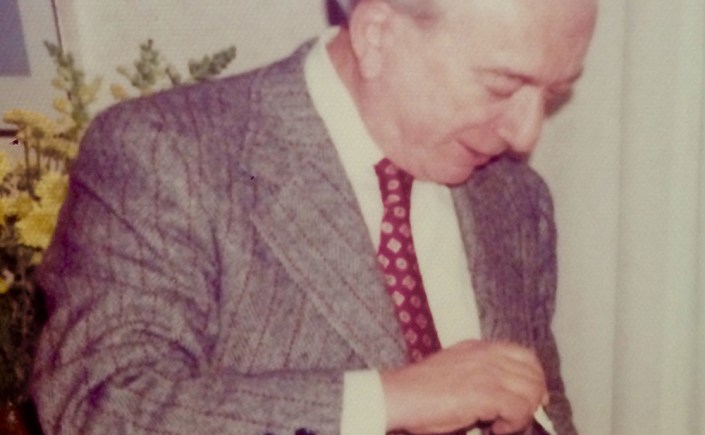
“Emil passed away October 3, a few weeks before his 102nd birthday. He was in good health and excellent spirits. He died peacefully at home. His heart stopped while he was reading the Wall Street Journal.”

The perfect ending.

I said good-bye to Emil in 2008 on my way home from India. I already lived in California then and came east very rarely. Emil was his usual gracious and elegant self. It was five years after my mother died, and he told me for the first time how he’d loved her. At 95, he was still walking long distances every day, but we talked about the likelihood that this would be our last meeting. He filled my rental car with treasures from his beautiful house and we stood in the driveway a long time saying good-bye.

Caught up in the hurly burly of home, I didn’t write a thank you note for some months. When I did, it came back stamped “unknown.” I mourned.

I should have asked more questions.

I missed seven good years of Emil’s life.

Still, over these last couple months, the character, Emil, has been pressuring me to give him a more and more important role in the story. He’s been developing more personality, more, in fact, than any of the others, save Ida, and that perhaps because she acts as a foil to him. His voice is clearest.

If that note isn’t a wink, I don’t know what is.

Thanks, Emil. It feels like you approve.

Hummingbirds (or, The End of the World)

From Tuesday to Friday each week, I watch a little girl called Éva, who is 17 months old. She is a delightful child, full of life, curiosity, and good humor.

This week Éva wasn’t feeling well, so we watched one of Mr. Rogers’ operas, “Windstorm in Bubbleland,”1475 over and over. Éva is born to opera: her father is the director of OperaSLO, and her mother is a great lover of opera.

I enjoyed Windstorm so much that I played it for Tom and later for a friend.

In the opera, Hildegarde Hummingbird, played by Lady Elaine, warns the people of Bubbleland that a great windstorm is coming, but no one will listen to her.

“Why won’t you believe me?” she asks, and the people of Bubbleland sing back,

“Because we don’t want to!”

The summary of Windstorm in Bubbleland on IMDB ends:

The wind attempts to utterly demolish Bubbleland. The fate of the world rests in the wings of an unsung feathered heroine.

IMG_7245This morning, the morning following the Paris attacks, the dawn of the apocalypse, I came across an old, handmade book hidden among some papers I was sorting for our coming move. It is a poem by Walter Gruen, written in December, 1939, while he was interned in Meslay du Maine, France, along with the artist who created the little book, Hugo Price, my father, and many other Austrian and German Socialists, intellectuals and artists.

The Song of Barbed Wire

Black and full of clouds

hardly any stars shine in the sky…

Will the night ever go away and the sky begin to lighten?

Barbed wire

separates us from love.

Longing consumes us.

When will freedom blossom?

Freedom, ah, you are so ardently awaited!

Every suffering

has its end.

The sun rises again…

March storms rage,

Longing becomes fulfilled!

Barbed wire

in all the lands

freedom is denied …

March storms will thunder

Freedom will return.

Moments after I shared the book with Tom, we discovered a hummingbird trapped in each of the three skylights in our bedroom. Three hummingbirds! Three rufous hummingbirds, the California version of Hildegarde, banging their heads against the glass.

We tried to free them, but it was time to go to the farmers’ market. After making sure the cats were elsewhere, we left the three hummingbirds to exhaust themselves until they fell, and hopefully to fly away when they recovered.

As I got into the car with my bags for the market, I moved a piece of paper from my seat. It was a flyer for a friend’s radio show:

my WIN card copy

Four hummingbirds!

A couple hours later, two of the three in the skylights were gone. The last one, like Hildegarde at the end of the opera, lay silent on the floor. As I picked the tiny body up, it woke, shook itself, and flew off. Like Hildegarde.

Traditionally a harbinger of the joy of life and of synchronicity, hummingbirds also symbolize courage, adaptability, determination and flexibility.

Four hummingbirds show up just when I’m feeling the end of the world is surely at hand. There must be a message here, don’t you think?

Two Suitcases: A Window into my Work

Here’s a look into the process of writing Two Suitcases:

timeline

This is one of several timelines I’m using to structure the book. This one was meant to have historical events at the bottom, events and pictures from my parents’ and their friends’ lives in the middle, and trends at the top, but it’s pretty mixed already. It was a good plan anyhow.

herd of pipe cleaner animals

A small herd of pipe cleaner animals has invaded my chapter chart.

Fritz, Trudy and three pipe cleaner friends

My favorite pictures of my parents and the first of the pipe cleaner friends.

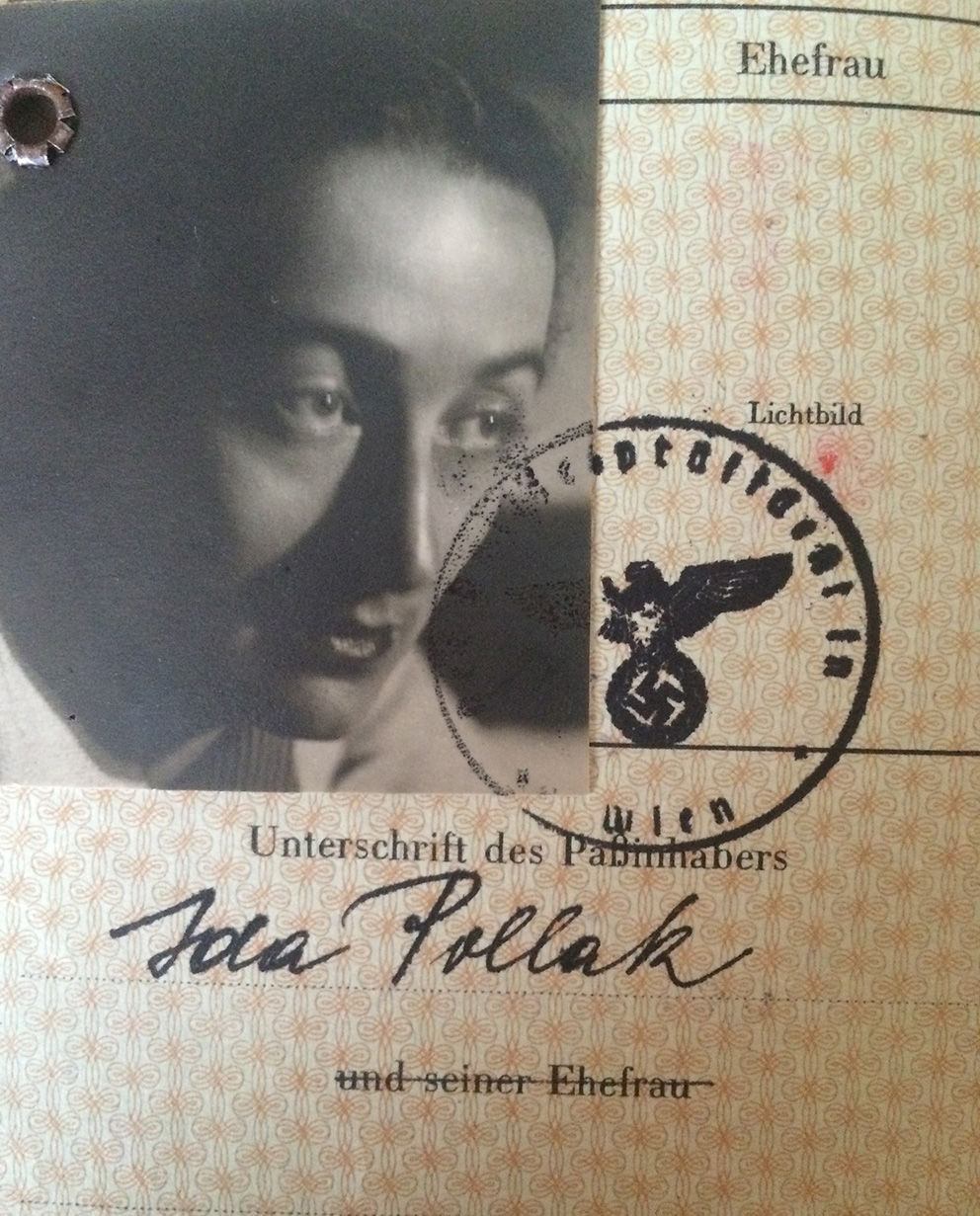
Ida's passport picture      Ida's passort front page

These are pages from my aunt’s passport, issued in German-occupied Vienna in 1938.

And here are a couple of less distressing shots:

blue lady sunbathing

A blue lady sunbathing.

blue lady dancing

And one dancing.

And, as promised, a snippet of what I’m working on now. This is yesterday’s work, in more or less first draft.

April 22, 1929

The University of Vienna, Ringstrasse

Anna hurries out of her first afternoon class, Dr. Charlotte Buhler on Child Development. After experimenting with sitting on three different benches, she settles on the second, and, with her book bag on her lap, she looks first to the right, and then to the left, and then to the right again. It’s her intention to keep an eye on the door she expects Emil to emerge from momentarily, while simultaneously watching the route he is likely to take to the Konditorei where they’d first met, in case she misses him coming out. 

She doesn’t have to wait long. Emil’s mop of wild hair is obvious above the group pouring out of the Mathematics building.  He’s walking with someone and gesturing animatedly. What next? Should she stand up and go to him? Or hope that he notices her there on the bench? The courtyard is crowded and noisy now. 

Anna decides she shouldn’t chance sitting, so she stands up and makes her way toward Emil across the current of chatting students, glad of her own height. Should she call out? She’ll miss him if she doesn’t. She raises her arm and is about to wave, about to call out his name, when he turns, spots her, and grins. He says something to his companion and makes his way, cross-current, to where she is. 

“Hello!” he says, genuinely glad to see her. “I was hoping we’d run into each other again!”

“And I you!” she says. He’s very handsome despite the pockmarks all over his face. She hadn’t noticed them before, but it’s not such an uncommon sight. Lots of children get smallpox and most of them die. He is lucky to have survived, she thinks. Money and good doctors, that’s always a help.

“Join me for Jause, will you? I’m going to Sluka.” 

“I’d love to,” says Anna, and she lets herself be drawn into the outward flow of the crowd with Emil at her side. Sluka! Not the little bakery where they met! What have I done? What kind of fool must I be to have accepted?

Konditorei Sluka is one of the best bakeries in the city. It is elegant, luxurious, and outrageously expensive, a place inhabited by tourists and the wealthy, even the very wealthy. The Empress Elisabeth was a regular customer! Ida knows where it is, of course, but she has never been inside – though she has looked into the window longingly many times. Frantically, she searches her mind for a reason to back out now, to decline Erich’s offer, walk away and never see him again. They are too different; they’ll never get past their class differences. She is poor. He is rich.

Before she can decide on an excuse, he turns to her and asks how she likes her coffee. With whipped cream? One teaspoon of sugar or two?

By the time they reach the Konditorei, Emil and Anna have discussed their mutual enjoyment of good coffee, pastry, and the cinema, as well as establishing the comforting fact that they are both Jews. 

Once in the bakery, however, her problems begin. Ida has no money. She could allow Emil pay for a small cup of coffee, but it’s much too soon in their acquaintance to let him buy her pastry. 

Anna turns and looks around the Konditorei. High windows draped in sheer curtains fill the dining area with light. Glistening chandeliers in several sizes hang from the lofty ceiling. The walls are deep yellow with gold trim and pale green panels framed in rich brown. Elegantly dressed ladies and gentlemen sit at highly polished round tables cutting their pastries with forks and knives. The chairs have graceful bent wood backs and legs so delicate Ida wonders how people dare to sit on them.

She takes a deep breath.

The pastry case in front of them radiates golden light. Ornately decorated pastries and cakes satisfy every visceral sense: moist cream fillings, bright fruit slices shimmering in fruity glazes atop voluminous cakes, crispy puff pastry layers surrounding vanilla scented creams, soft nut tortes offering only a fleetingly crunchy resistance to the bite while rewarding one’s every nutty desire, unctuously melt-in-the mouth coffee butter creams topped with crunch.    

“So,” asks Emil, “What is your favorite?”