It makes me want to cry, because really, what more do any of us want?
Read the review, read the book—get it from bookshop.org or through your local bookseller.
The second volume of Two Suitcases, Underground, is moving closer to publication. I’m currently looking for people who’d like to read the manuscript and write me a blurb for the back cover or the inside front pages. If you’re interested, write to me and I’ll send you the first 20 pages. Then if you decide you want to continue, I’ll send you more.
Now I think I’ll reread that review and feel appreciated. What a feeling. I am so very grateful.
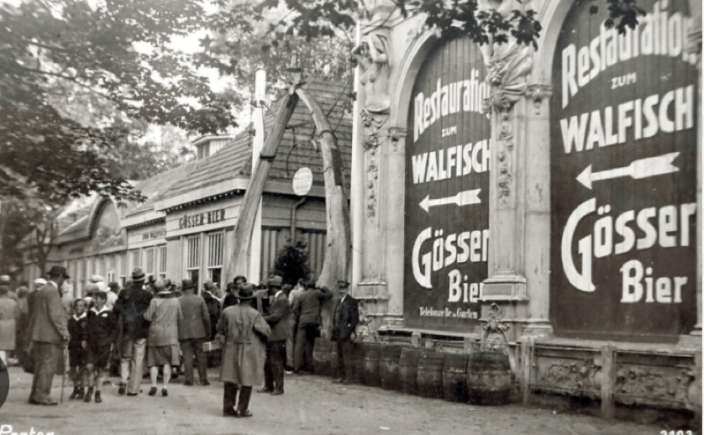
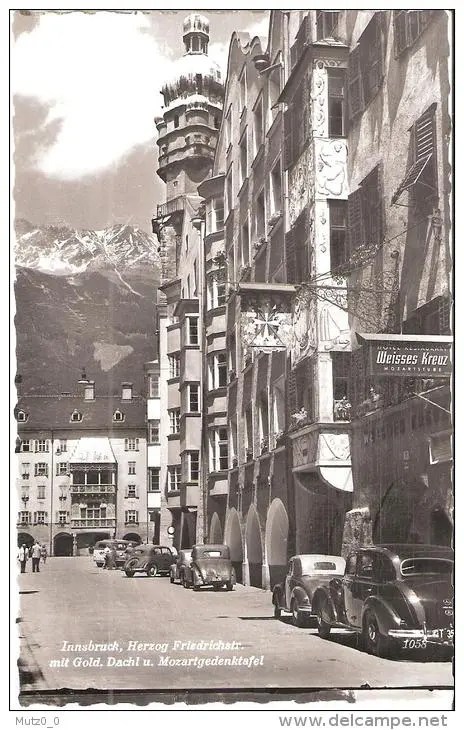
Underground is the second volume of Two Suitcases. This is an early draft of one of its chapters, including the photographs I used to write parts of it.
Chapter 39
Doctor Rudy Pollack
August 28, 1937
Westbahnhof station, Vienna
Dr. Pollack arrives by train. A tall man in his mid-fifties, portly but not overly so, he has a generous moustache and wears small rimless spectacles. In one hand, he carries an old leather suitcase, and in the other, a smaller bag, and his hat. Anna and Max, who’d been waiting at the station, recognize him immediately from the photograph he’d sent. Anna slips it back into her bag the moment they spot him.
“Dr. Pollack!” she calls out, and he turns toward her and smiles.
“Fräulein Baum! Call me Rudy, please.” He puts down his suitcase and offers her his hand. “I’m very glad to meet you at last,” he says slowly in German.
“And I you! Do call me me Anna,” she says, and then she introduces her brother. Max picks up the older man’s suitcase and leads them out of the station to the tram stop, where they stand and wait together.
Dr. Pollack makes a wry face. “My German is very poor. You will have to forgive me.” He has a gentle manner, Anna thinks, and his eyes are kind.
“And my English is very poor,” she answers in careful English. “We will have to forgive each other.”
“But we will manage!” they both say, he in German, she in English, and all three of them laugh.
Anna continues in English, hoping she’ll remember the words she’d copied into her little notebook that morning, and that she’ll pronounce them well enough to be understood. “We will take you first to your hotel, and then, if you are not too tired, we will go for something to eat at the Prater.”
He responds in English. “Well said! I am happy to go to my hotel and then eat at the Prater.”
On the tram, Max and Anna share a seat. “I think it will work out, Anna,” Max says. “You can tell right away that he’s a good man.“
A few hours later, Gisi, Max, Anna and Rudy emerge from another tram. In front of them, the Riesenrad, the tallest ferris wheel in the world, rises high above the trees and buildings, its thirty coaches carrying a dozen passengers each, swinging gently.
“Cor, Blimey,” repeats Anna slowly. “It is en…nor…” but she can’t remember the rest. She sighs.
“You’ll learn, Anna,” Gisi says to her. “Don’t worry. It won’t take long.”
The conversation goes on like that, Rudy exclaiming over the park-like grounds, the rides and games, and the crowds, young and old, rich and poor. Between them, they piece together a basic understanding.
Eventually a grand plaza with a massive domed building at its end opens in front of them. Crowds fill the long, broad, tree-lined square, almost everyone moving in the direction of the ornate exposition complex, the Rotunde, at the end.
“It’s especially busy today because Die Messe Wien, the Vienna Fair, will only be at the Rotunde for one more week,” remarks a short man beside them in perfect English and then in German. He points toward the great gates of the exhibition center with his cane. Wearing a slightly floppy black hat and baggy trousers, he paces himself to seem like he’s part of their party, though no one noticed him before. “It’s the greatest exposition in the world in the most magnificent setting in the world. You are on your way to see it?” He switches between languages remarkably fluidly.
“No,” Max responds. “Not today.”
“But it is very much worth your time! There are hundreds of marvelous exhibits from every corner of Austria, all the latest and best products are on display for you to see or try. Please reconsider. I would be delighted to be your guide.” He tips his hat. “Let me introduce myself—I am Hans Wurstel.”
“We don’t need a guide, Herr Wurstel, thank you,” says Anna firmly, but the little man continues, first in German then in English.
“A translator, then. Forgive me for eavesdropping but I couldn’t help noticing your difficulties in communicating.”
“Okay, Herr Wurstel,” Rudy agrees. “I’m willing to pay you to translate for a short time.” He turns to the other two and says, “This will make it so much easier.”
Herr Wurstel translates his words and thanks Rudy. Turning to the German-speakers again, he tells them, “Your English friend is both wise and kind.” In both tongues, he goes on. “Let me tell you something about the Prater as we walk. Where did you say you were going?”
Anna, Max and Gisi look at each other in surprise. “We hadn’t said,” Max says. He smiles just a little as he continues, “but, in fact, we are on our way to a restaurant to eat some würstel .”
He isn’t sure that he trusts the fellow, especially with name like that, but having a translator is probably a good idea. Marriage is a serious thing.
Gisi doesn’t like the little man at all. She promises herself that she will keep a constant eye on him, and tucks her bag more securely under her arm.
Anna feels relieved. How fortunate, she thinks, that they should meet such a bright and funny man to provide just the service they need at the moment they need it. And more fortunate even, is that there is someone among them who’s willing and able to pay for it.
The little man laughs heartily. “Of course! You came for wurstel, the sausage, and you found Wurstel, the translator and guide. I am indeed the man of the moment. Not only is Wurstel my name—not an easy one to grow up with, you can imagine—but we have just passed through Der Wurstelprater, the world’s most amusing amusement park. The Prater itself is much larger, of course.” He indicates the enormity of the rest of the park with his stick, nearly hitting several passers-by.
The group spreads out to give their guide room.
“The Prater was originally Austria’s Imperial Hunting Ground, and only imperial guests could enjoy it. But in 1766, Emperor Josef II, a great reformer, donated part of his grounds to the city to be used as a park. He’s believed to have said, ‘If I only wanted to associate with people of my own kind, I could stay in the Imperial Crypt.’”
“He was ahead of his time,” comments Anna.
“It didn’t take long for inns, cafes, and Lebzelter, gingerbread, bakers to line its boundary. Many of the restaurants served the same delicious wurstel that you’ll be having this evening. When puppet theaters, seesaws, merry-go-rounds, and bowling alleys appeared behind the restaurants, the area became known as the Wurstelprater.”
“When was the Riesenrad built?” asks Rudy.
“In 1897. It was a great success at first, but during the Great War it was almost dismantled. By then it was badly run-down, and close to being sold for the value of the iron, which was much needed for the war. It would have happened, the great wheel might have met its demise, but oddly, not enough workers could be found to take it apart. Instead a rich business man came forward, bought it, and restored it. It’s still privately owned.”
“I could have told that story,” Max mutters to Gisi. “We didn’t have to pay for it.”
“You could have told it in English?” she asks softly.
Wurstel continues. “But the Rotunde, which you see before you now,was built in 1873 for the World’s Fair. Its dome is the largest in the world, larger, I’m proud to say, than even the Pantheon in Rome.” They pause to admire the massive structure. “It weighs 4000 metric tons. Can you imagine?”
Ten minutes later, they’re approaching Zum Walfisch.
“Can’t miss it!” cries Herr Wurstel, standing below the large signs pointing to the popular restaurant.
“Wait, let me take a picture of you there,” says Rudy, pulling a camera from his bag.
“Certainly,” agrees the little man. “If you will give me one moment.” He takes off his hat, blows on it to get rid of the dust, and, in a few deft movements, gives it more of a point at the top. Once the black hat is back on his head in a satisfactory position, he pulls a cigar from his pocket, lights it, and takes a couple of puffs. Thrusting one leg forward and holding the cigar up as if he’s about to take another puff, he says,
“There. I’ll hold this pose. Go ahead and take your picture. And then we’ll have the rest of you here with me for another shot. Good?”
Rudy is ready, and the shutter of his camera clicks.
Herr Wurstel releases his pose. “Now, another one with just Fraulein Baum and me.”
“Wait!” cries Gisi. “How much will these photos cost? Do you charge people to be in their pictures?” Herr Wurstel translates for Rudy.
Rudy replies to him in English and Wurstel says to the others, “He says the cost doesn’t matter—he just wants to remember this lovely day.”
“I want to talk to you privately,” Max says to Anna and Gisi as he leads them out of hearing distance. “It’s not the cost—though it takes some chutzpah to charge people to take your picture—it’s that we don’t know where the photos could end up. They could be lost or stolen and fall into the wrong hands. Then there would be proof of this encounter.”
Anna looks at him as if he’s crazy. “I’m marrying Rudy at the Rathaus tomorrow. What more proof could be needed?”
“I don’t know. You never know. These times are so uncertain.”
Gisi says, “Dr. Pollack’s reputation could be harmed, I imagine, if the photos got into the wrong hands.”
“I say it’s his decision.” Anna is clear. “If Rudy wants the photos, and he doesn’t care if Wurstel charges for his presence in them, he can do what he wants. I’ll smile. I owe it to him.”
Currently, my characters Gisi and Max are traveling by train from Innsbruck to Venice over the Brenner Pass. In Venice, they’ll spend a couple nights in a youth hostel. It’s a much-needed short vacation for them, and a chance to try out Leo and Hugo’s recently forged Ausweis, or exit permit.
This is how may current writing process works. Once I’ve decided on a general framework for the next section I’m going to write, I do the research. I look at the history of the time and place in as close detail as I can—the Internet, for all its failings, is the most unbelievable library—as well as in the big picture. I fill pages and pages with cut and pasted images and text.
The archives of the New York Times are very useful, and I follow parallel stories in fiction and memoirs, and movies. I listen to music from the era. Currently, I reading Irene Wittig’s All that Lingers, which is set in the same time and place as Underground. The research for the particular section I’m writing now is taking me longer than usual because the characters are traveling to some places I’ve never been to.
When I’m feeling like I’ve done enough research, I start to imagine what my characters might do in the setting. Gisi and Max pass through Innsbruck on their way to Venice, so Gisi could see her cousin who lives there. The cousin’s husband is a Nazi; that could make for an interesting conversation. Maybe I’ll have Gisi and Max change trains in Innsbruck and give them a three hour wait, enough time to have meal with the cousins. Would Max be willing to do that?
Here’s how the piece I’ve written about that begins:
Chapter 21
Innsbruck
Vienna
September 2, 1936
When Gisi sees that other than by taking the night train, which would mean missing the views, the least expensive tickets she and Max can get to go to Venice includes a three-hour layover in Innsbruck. She suggests to Max that she write to her cousin Litzi to arrange to have lunch with her and her husband, Horst, who live there.
“I know he’s a Nazi,” she tells Max, “but I grew up with Litzi and I don’t want to lose her entirely. Surely we can steer the conversation away from hot topics.”
“You think so? Gisi, he hates me. He doesn’t even know me but he hates me. Why should I share a table with him?”
“Because you claim to be a pacifist? Because it takes two to tango?”
“I’m not sure I want to subject myself to that. I’m not sure I’m capable of it. I’m not Jesus Christ, Gisi.”
“He was perfectly well-mannered when I met him at Christmas a few years ago.”
“When he was pretending not to be a Nazi. Things have changed. He has no reason not to show his true colors now.”
“Then do it for me. If it gets ugly, we’ll stand up and leave.”
“Why don’t you and Litzi meet and I’ll spend the three hours in a bookstore or a cafe?”
“Maybe. But let me write and see what Litzi thinks. Then you can decide.”
Innsbruck
September 4, 1936
Litzi stands by the open window reading Gisi’s letter.
“Horst?” she calls into the hall. Her husband, returning from work with the daily paper tucked under his arm, hangs up his hat and comes into the sun-filled living room.
“My dear? You had a good day?”
“Yes, naturally. The boys haven’t come home yet, though, and I wanted to discuss this letter I received from Gisi today with you.”
Horst pats his thick blond hair into place and makes himself comfortable on the divan. “Alright,” he says. “What is it?”
“First, Gisi asks me not to discuss this with you, but how can I not? You’re my husband. I have to. But if what she is suggesting does come about, I would ask you not to let her know that we talked about her proposal so soon. You’re willing to do that?”
“Of course. What is she proposing?”
“Well, she and her friend Max will be in Innsbruck for a few hours on a stop between trains. They’re going to Venice for some reason. Since they’ll be here from eleven to two thirty, she suggests we have lunch together at a restaurant near the train station.”
“With Max? That sleazy Jew?”
“With Max. Though she says he isn’t eager to do it. He says he would rather wait at the station while she and I meet alone.”
“That sounds reasonable to me. Why not do that? I have no desire to share a table with a Jew, and a Socialist Jew at that.”
“I know he’s a Socialist Jew,” she tells Horst, “but I grew up with Gisi and I don’t want to lose her entirely. Surely we can steer the conversation away from hot topics.”
“You think so? Litzi, he hates me. He doesn’t even know me but he hates me. Why should I spend time with him?”
“Because you claim to be a Christian? Love your enemies? Blessed be the Peacemakers?”
“I’m not sure I’m capable of it. I’m not Jesus Christ, Litzi.”
“Then do it for me. If it gets ugly, we’ll stand up and leave.”



 Eve Neuhaus