The Day Before Everything Changes: Reflections on Friendship and Exile

I’m sure there are many reasons not to post the penultimate chapter of a work in progress before publication, but sometimes it feels to me as if the piece itself is begging me to get it out there now, on its own.

The chapter, “In the Company of Friends,” takes place on the day Austria gives up its independence and becomes part of Germany in March 1938, the day before Hitler marches triumphantly into Vienna, warmly welcomed by most Austrians.

I am posting it the day before Trump’s second inauguration.

The process and timing of writing Two Suitcases has always been more or less outside of my own volition. The parallels to events in the US aren’t something I look for and work at adding to my story. It’s the other way around. The story refuses to tell itself through me until the unfolding events push it to be told.

Those of you who’ve read Red Vienna or followed my blogs will be familiar with the characters and setting—I hope the chapter is meaningful even if you haven’t. Take the trouble to read it to the end, even if meeting the eight characters all at once is confusing. Don’t let the names of the Viennese foods trip you up either. They’re all described earlier in the story.

In brief, the young people in the group who come together in the chapter are all Social Democratic activists. For the four years covered in the second volume of Two Suitcases, they’ve been working underground to keep their vision of a kinder, more thoughtful, more equitable world alive. As Austria capitulates, most of them plan to go into exile.

Chapter 52

In the company of friends

Friday, March 11, 1938

early evening

Vienna

Gisi can hear the sound of Austrian State Radio everywhere as she hurries over to Max’s workshop, a covered bowl in a basket on her arm. There’d just been a radio announcement that the Plebiscite on Austrian independence had been canceled. Chancellor Schuschnigg would be making a major address to the country any minute, and Gisi wants to be with Max to hear it.

She’s not alone. Within the hour, nudged by a phone call or a knock on the door, everyone else in the group decides that they too would like to listen to the Chancellor’s speech in the company of friends. 

At his shop, Max and Leo move a big table close to the best radio, and the others bring eight odd chairs and stools to put around it. Near the table’s center is Gisi’s bowl of Kaiserschmarrn, its sweet fragrance surrounding it, a jar of applesauce beside it. 

Toni is warming some rind souppe on the coal stove. Its beefy aroma soon fills the little workshop and drifts into the store. On the workbench is a collection of bowls, cups, and spoons that Max brought down from his apartment, along with his last three cans of pickled herring.

Gert slices the loaf of black bread she brought and is putting it on the table when Hugo enters the shop with a smile and a swagger. 

“Look!” he cries when all eyes are on him. He pulls a bottle from his bag. “Slivovitz! A full bottle of everybody’s favorite plum brandy! What is there to save it for?” Eight glasses and cups are quickly found and filled.

Leo contributes a block of Bergkäse cheese. Felix, looking apologetic, sets out a bit of butter, an almost empty jar of honey, and half a jar of Powidl.

“What do you expect?” he asks. “I’ve been imagining leaving my home every day for weeks. Why would I have any food there?”

The crowning glory of the table is an Obstkuchen, a buttery cake that Anna baked and decorated with dried apricots and cherries as the rays of a canned peach sun. 

Felix is the last of them putting soup in his bowl when Max calls out, “Listen! Schuschnigg is about to speak!” as he turns up the volume of the radio. The music, a symphony by Beethoven, stops abruptly and the dignified voice of the Chancellor comes through.

“Women and men of Austria,

This day has placed us in a tragic and decisive situation. I have to give my Austrian fellow countrymen the details of the events of today.

The German Government today handed to President Miklas an ultimatum, with a time limit, ordering him to nominate as chancellor a person designated by the German Government, and to appoint members of a cabinet on the orders of the German Government. Otherwise German troops would invade Austria.

I declare before the world that the reports launched in Germany concerning disorders by the workers, the shedding of streams of blood, and the creation of a situation beyond the control of the Austrian Government are lies from A to Z. President Miklas has asked me to tell the people of Austria that we have yielded to force since we are not prepared, even in this terrible situation, to shed blood. We have decided to order the troops to offer no resistance.

I say goodbye with the heartfelt wish that God will protect Austria. God save Austria!”

The symphony resumes. No one says anything—they’re all in shock, though surely the announcement was inevitable. 

Max rocks back and forth on his chair. 

Gisi feels her tears rising. 

Anna’s anger shows in her eyebrows and trembling lips.

Hugo begins to speak a couple of times but stops. 

Beethoven’s music fills the shop.

Finally, Hugo raises his glass. “May God, or fortune, or whatever you believe in, protect us!” They each take a sip of the brandy.

Max looks at the table. “Let’s not waste this beautiful meal. Eat!”

“Wait,” cries Gert, “I have another toast.” She raises her glass again. “To friendship!”

Anna adds “And peace!” and they drink again.

Max glances at his empty glass. “Hugo, another round?” and Hugo pours out the last of the brandy.

Leo starts the toasts again. “To solidarity!”

“And to a kinder, more thoughtful, more equitable world!” adds Toni, and the last of the brandy is gone.

With bittersweet slowness, one by one, they pick up their spoons and begin to eat the rich, warm soup. 

After savoring her second spoonful, Gisi speaks. “This is so good, Toni. But why did you make it today? Rinde soupe, especially with so much meat in it,is Sunday fare at our house.”

Toni smiles ruefully. “I made it for Leo. Before the Chancellor announced his resignation, I was planning to take it over to his place. I thought, I thought…” she stops and looks at Leo, who has already finished his soup and is wondering if there is more. Now he looks at her, his companion for so many years, and his eyes fill with sadness. She continues, “I thought it might be our last meal together—for a while, I mean—or our last meal in Vienna. Oh, I don’t know what I mean.”

Anna looks around the table. “It’s true, isn’t it? This will probably be our last meal together for most of us.”

“You aren’t the only one to feel that way,” Hugo says. “It’s why we all came.” He picks up a plate and fills it with cheese, bread, and several pieces of pickled herring. The others follow, until nothing is left at the center of the table but the sweets.

Suddenly, flickering light pours through the small window at the front of the shop and the boom of chanting voices shakes the room. Max runs to look out. 

“It’s our neighbors,” he says, returning to the table. “Marching with torches and chanting Heil Hitler.”

Oh, God,” Anna replies. “Why is it always so hard to believe the worst until it’s staring you in the face?”

“Listen,” says Gisi. “I have an idea. After we’re done eating…”

“If anyone can still eat,” Anna responds.

Gisi looks at her. “Try,” she says. “When our stomachs are full of this delicious food, I want us to do an exercise I did in one of my psych classes. Max, do you have some paper and pencils here?”

Max, his mouth full of bread spread with butter and Powidl, nods yes and points to the workshop.

“Anna, since you’re not going to eat, why don’t you help me out by finding the paper and cutting or tearing it into pieces about as big as…” she pauses to think, “as big as an Ausweis.” 

“I’m eating,” Anna says, picking up a hefty piece of herring, putting it in her mouth, and chewing it slowly. “But I’ll do it later.”

The light and sound of the marchers fades into the distance.

“I suppose Miklas is in charge now that Schuschnigg has resigned,” Hugo muses. “Though Hitler probably has a successor in mind for the Chancellor’s position. Or maybe he’ll be Chancellor himself.”

Gert puts down her fork with a clatter. “Let’s not talk about it, Hugo. Let’s not talk politics for once.”

Hugo looks surprised and a little hurt. “Okay, what should we talk about then?”

Gisi is ready. “Let’s talk about the exercise I want to do.” She smiles as brightly as she can manage. “My professor gave us the assignment to make a list, in order of importance to each of us personally, of the five things we think matter the most.”

“In what sense?” asks Gert. “Do you mean things like money and housing? Or actions like pleasing your parents or doing work that makes you happy?”

“Yes, all of that, as well as qualities like patience and perseverance and generosity.”

“Okay, I’m ready to get the pieces of paper,” Anna gets up. “How many will we need?”

Gisi wrinkles her nose. “I think four per person will do. Max, can you find us all pencils or pens? Shall we do my exercise before cutting into Anna’s beautiful cake or after we eat it?” 

“After,” says Felix, starting to clear the table. No one objects.

“Max, is there water down here? I’ll wash these plates and we can use them for the cake,” Leo offers. 

A few minutes later the group settles down to make their lists, some at the big table, others scattered throughout the store, Max at his table in the workshop. Silence settles over them like snow. 

Gert is the first to finish. “What shall we do with our lists when they’re done?”

“Put them on the table where everyone can see them,” Gisi answers. “There’s a second part of the exercise coming.”

When all the lists are finished and everyone has read theirs aloud, she says, “Now, on your second piece of paper, write down an action anyone can take to create a world in which the ideas or things you most value can be realized in their largest sense. For example, to promote the value of ‘Peace on earth,’ you could write ‘try to always be kind’ for the second round.” 

“I get it,” Toni says. “I wrote down ‘my friends’ as a personal value, and I can think of dozens of ways to would promote friendship generally, like ‘appreciate everybody’s uniqueness’ or ‘think of others before yourself.’”

“That’s it. Try to make the action as universally useful as possible.” 

An hour later, and after another round of the exercise, Felix is picking up the plates again. Every crumb of the cake is gone. Hugo is copying out the same list eight times onto eight pieces of paper. Each of the friends signs their name eight times. 

Before they hug and say long goodbyes, they each have a copy of the actions tucked away in a safe place.

Take care of the old and the young, and those who have less than you  –  Gisi

Keep your sense of humor  –  Max

Be ready to let go. Remember what really matters  –  Anna

Hold your head high  –  Leo

Believe in magic  –  Gert

Breathe  –  Felix

Choose kindness  –  Toni 

Hold onto your vision of a better world – Hugo

January 1938, Vienna

To the credit of all the people who say “Can’t wait for the next volume!” on their reviews of Red Vienna, I’ve been working hard at it. Underground ends at the Anschluss, when most of Austria joyfully welcomes Hitler as their leader. which takes place from March 11th to 13th, 1938.

Here’s a taste of what I wrote today. As it seems so often, the news I read in the morning seems eerily parallel to what’s happening in my story.

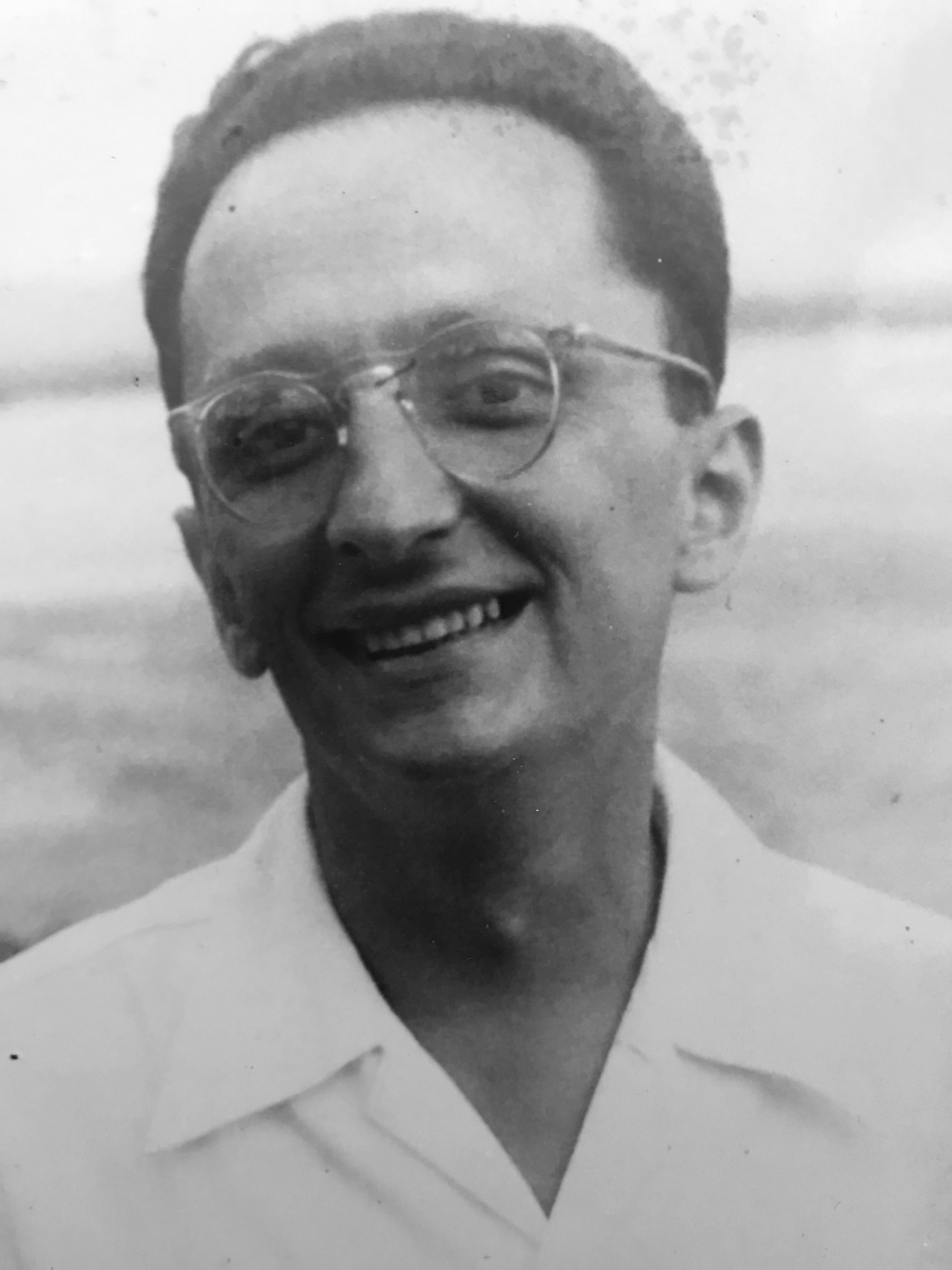
Here’s a photo of the man on whom I based the character, Hugo.

And here is my father, on whom Max is based.

January 27, 1938

Max’s workshop

Vienna

Max has the radio on whenever he can, day and night. He follows the news from as many sources as possible, hearing stories few others hear, and hearing the ones that everybody knows reported from widely varying perspectives. His shop is more popular as a source of news than it is of lamps, chairs, or radios.

“Listen to this,” he says to Hugo, who’s perched on stool at the workbench next to Max. “A German diplomat told a commentator I follow that Hitler is spending most of his time at his retreat in Berchtesgaden near the Austrian border.”

“I had heard that, yes,” says Hugo. “He’s so close he can see Austria.”

“Well, apparently he almost never goes out anymore, and here’s how he spends his time there: he has a huge collection of postcards of Vienna and other Austrian cities that he spreads out on his desk to look at while planning where to put his Brown Houses, the Nazi party headquarters. They say he spends hours at it. And he has a street map of Vienna tacked up on the wall where he’s marked the buildings he wants to replace with ones he’s designing himself. He’s obsessed—it takes up all his time.”

“Not good,” Hugo says. “Not good at all.”

“What concerns me almost as much is that I overheard someone else telling the same story to a group at the cafe yesterday and everyone thought it was funny. What do they think, that Hitler is a joke?”

“There’s no point in pretending that Hitler won’t be welcome here, Max. The Nazi tactic of causing chaos and confusion in Austria over the last few years has led most of the population to want peace at any cost, and they think becoming part of Germany will bring it.”

“It’s so ironic, isn’t it? That the man who tells the French Ambassador that he ‘will soon have Schuschnigg’s head’ should be associated with peace.” Max shakes his head. “No one believes that what I read in Feuchtwanger’s book is true either. It’s fiction, I’m told over and over, often in the most condescending way.”

“Classic it-could-never-happen-here thinking,” agrees Hugo. “Austria would never let the Jews be treated so badly. Well, we shall see soon enough.” He lights a cigarette. “I’ve finished almost all the new exit papers, by the way. Leo will be printing them in a few days.”

“That’s a relief. Are you including an Ausweis for Gisi’s mother and Gert’s parents? They would need them to get out, even if they aren’t Jewish.”

“I am, but I’m doing those last, in case I don’t have the time to finish them. Gert’s parents will never leave, and I seriously doubt Gert will. I think her family has always been more important to her than our crazy off-and-on relationship. What about Gisi?”

“She claims she’ll leave, but she started the new term at medical school this week and she told me she has some of the best professors in the program. And her mother steadfastly refuses to even consider following her. To be honest, I’m not sure if she’ll give all that up for me.”

“It’s a lot to ask. Gert would be leaving a promising career in fashion, a job she loves, and, as you saw at New Year’s, a very comfortable home that will come to her someday. What does she gain by leaving?”

Max looks pensive. “Gisi is in a similar position, minus the bourgeois apartment. What do I have to offer her? We would be leaving with not much more than the clothes on our backs.”

Hugo smiles wryly. “It sounds like you and I are talking ourselves out of leaving.”

“No, of course not. We have no choice. All Jews should be ready to go at a moment’s notice. It’s a shame so few are.”

“People don’t like to face an uncertain future. It’s so much easier to imagine that life will go on the way it is than to face the reality of a darker times ahead. I have first hand experience, though, because of Hilda and Karl’s disappearance. And I understand the pain of losing a child. I’ve already faced some of what the future could hold for many people.”

“Maybe words aren’t enough to convince people. Maybe firsthand experience is necessary. Although I have to say that for me, reading those chapters in The Oppermanns about the months that followed Hitler becoming Chancellor was enough.”

Hugo thinks for a moment. “We were fortunate to have Youth Leaders like Papanek and the others who set an example for us when they left in ’34.”

“That’s true. It’s also easier for us to imagine living somewhere else because we were raised in an Internationalist milieu. Remember? We were, what, eighteen, when we took part in the International Socialist Youth Congress? It’s very different than coming up in a Nationalist milieu that values Blood and Soil over Friendship and Peace.”

Hugo sighs deeply. “God, these are hard times.”

This is how is it’s done

From the New York Times, March 14, 1938:

While researching the annexation of Austria by Germany, I came across this speech given by British Prime Minister Neville Chamberlain to the Parliament the day after it happened.

In brief, Chamberlain says that on February 12, 1938, the Austrian and German Chancellors met and agreed on an extension of the framework set up by an earlier treaty. That treaty “provided, among other things, for the recognition of the independence of Austria by Germany and the recognition by Austria of the fact that she was a German State.”  

The following week, Austrian Chancellor Schuschnigg “decided that the best way to put an end to the uncertainties of the internal situation in his country was to hold a plebiscite under which the people could decide the future of their country.”

On March 11, two Austrian Nazi members of the Austrian Parliament “presented an ultimatum to the Chancellor. They demanded the abandonment of the plebiscite and threatened that if this was refused, the Nazis would abstain from voting and could not be restrained from causing serious disturbances during the poll.”

“Later that day, feeling himself to be under threat of civil war and a possible military invasion, the Chancellor gave way to the two Ministers and agreed to cancel the plebiscite on condition that the tranquillity of the country was not disturbed by the Nazis.”

That’s how it was done. It’s probably why the far right and its leadership is getting away with so much in the US now.

Text of original speech:

FOREIGN AFFAIRS (AUSTRIA).

HC Deb 14 March 1938 vol 333 cc45-169

3.37 p.m.

The Prime Minister (Mr. Chamberlain) The main sequence of events of the last few days will be familiar to hon. Members, but no doubt the House will desire that I should make a statement on the subject. The result of the meeting at Berchtesgaden on 12th February between the German and Austrian Chancellors was stated by the former to be an extension of the framework of the July, 1936, Agreement. Hon. and right hon. Gentlemen will recollect that that Agreement provided, among other things, for the recognition of the independence of Austria by Germany and the recognition by Austria of the fact that she was a German State. Therefore, whatever the results of the Berchtesgaden meeting were, it is clear that the agreement reached was on the basis of the independence of Austria.

On Wednesday of last week Herr von Schuschnigg decided that the best way to put an end to the uncertainties of the internal situation in his country was to hold a plebiscite under which the people could decide the future of their country. Provision for that plebiscite is made in the Austrian Constitution of 1934. This decision on the part of the Austrian Chancellor was unwelcome to the German Government, as it was also unwelcome to the Austrian National Socialists themselves. Matters appear to have come to a head on the morning of 11th March when Herr von Seyss-Inquart, who had been appointed Minister of the Interior as a result of the Berchtesgaden meeting, together with his colleague Dr. Glaise-Horstenau presented an ultimatum to the Chancellor. They demanded the abandonment of the plebiscite and threatened that if this was refused, the Nazis would abstain from voting and could not be restrained from causing serious disturbances during the poll. The two Ministers also demanded changes in the provincial Governments and other bodies. They required, so I am informed, an answer from the Chancellor, before 1 o’clock in the afternoon. The Chancellor declined to accept this ultimatum, but offered a compromise under which a second plebiscite should be held later, with regular voting lists. In the meantime, he said, he would be prepared to make it clear that voters might vote for his policy but against him personally, in order to prove that the plebiscite was not a personal question of his remaining in office. Later that day, feeling himself to be under threat of civil war and a possible military invasion, the Chancellor gave way to the two Ministers and agreed to cancel the plebiscite on condition that the tranquillity of the country was not disturbed by the Nazis. 

Another relevant excerpt: Hitler’s speech

This one is from the second volume of Two Suitcases, which is called Underground. If you haven’t read the first volume Red Vienna yet, order it at your local bookstore or through Amazon.

February 2, 1937

a cafe not far from Max’s workshop

Gisi turns the pages of the new issue of the Kronen Zeitung she spread on the cafe table. She’d seen several copies on her way to the cafe. The paper’s populist touch allowed it to survive the Fascist takeover of Austria and keeps it on the newsstands in working class neighborhoods.

On the second to the last page, she finds what she’s looking for: From Innsbruck to ItalyThree Winter Hikes, by Wilhelm der Wandersmann. It’s Max’s and her first effort at hiding coded information about safe escape routes in the paper. She’s pleased to see it, of course, and she feels confident that no one who doesn’t know the code could possibly suspect anything, but it bothers her to think about the lies she had to tell to get it published .

The son of the publisher, a sweet but naive young man, now waits for her after lecture every week, or worse, he arrives early and saves her a good seat. Gisi puts on her spectacles to discourage him, but it hasn’t worked. She can’t tell him about Max so she told him that she’s helping a cousin in Tyrol to get a start in journalism instead.

“My cousin is more of an outdoorsman than a writer,” she’d said to him, “but he wants to write a series of articles like this about hikes all over the country. He’d like to make his love of hiking pay for itself. That’s why he’s using a catchy byline instead of his own name.”

What she feels worst about is that the day she gave the publisher’s son the article, she let him take her out for coffee and a pastry. Encouraging him even that much is so wrong. 

Max rushes into the smoky cafe. “Sorry I’m late,” he says breathlessly.  “I sold another radio and had to pack it up. I only have two left now.” They kiss lightly. “So, let’s have a look at our man Wilhelm der Wandersmann’s article!”

The code isn’t complicated. It involves starting certain sentences with letters that indicate the political bent of the proprietors of inns and restaurants along the way. Each time Gisi and Max succeed in publishing another article, a new code will be shared, again in code, in the Arbeiter Zeitung.

It’s fantastic!” he says, smiling broadly. “I can’t wait to take the next hike with you.” The next hike will be considerably longer with at least two overnight stays, quite possibly three. 

Their conversation turns to how much fun they had hiking the trails for the article over the last six months, two of them more than once. In the end, they decided that only one of the three routes would be safe, and they’d written the article together, he injecting the humor into her fastidious accounts. 

“We should go on the next hike as soon as the snow melts,” he tells her.  “When’s your spring break?” 

“It’s at Easter, but Easter is early this year, at the end of March. It could still be very cold.”

“Then we’ll have to keep each other warm,” he smiles. And the date is set. 

“So,” he says, “that settled, let’s have a look at what else the paper has to tell us today.” He turns back to the front page and glances at the headlines. “Well, we knew the trade negotiations with Germany would fail, so that’s not news.” He fails to notice a piece of paper sliding from between the pages and falling to the floor.

Gisi picks it up. “Look at this, Max,” she says. “It’s a speech by Hitler. Someone seems to have printed out the whole thing and tucked it between the pages of the paper.”

“Hm. Somebody is getting ideas from us.”

“Shh. This speech was given a couple days ago, on the fourth anniversary of Hitler’s coming to power. Listen what he says here.” 

Max leans in and she reads aloud.

“And I can prophesy here that, just as the knowledge that the earth moves around the sun led to a revolutionary alternation in the general world-picture, so the blood-and-race doctrine of the National Socialist Movement will bring about a revolutionary change in our knowledge and therewith a radical reconstruction of the picture which human history gives us of the past and will also change the course of that history in the future.”

The blood-and-race doctrine of the National Socialist Movement,” repeats Max. “Horrifying words. On top of the blood-and-race problem, he uses the full name of his wretched party, which dares to co-opt our name, Socialist.”

Gisi wrinkles her nose. “Well, I don’t feel so proprietary about that, to be honest. If they want to call themselves Socialists, let them be socialistic. Populists like to make promises like income equality, so let the state take care of all its people, not just those with the right blood. It’s not the Socialist part of the National Socialist Movement that bothers me. It’s the Nationalist part. Now, listen to what he says next:

And this will not lead to an estrangement between nations; but on the contrary, it will bring about for the first time a real understanding of one another. At the same time, however, it will prevent the Jewish people from intruding themselves among all the other nations as elements of internal disruption, under the mask of honest world-citizens, and thus gaining power over these nations.’”

“Well, there it is” says Max. “He doesn’t mince words, our countryman.”

Gisi is still reading. “His defense of the Nazi takeover as a bloodless revolution is pure propaganda, too,” she points out. “He says there wasn’t even one window broken, but his compatriots here in Austria don’t seem to feel such reticence.”

Max says, “What bothers me is how he returns again and again to the way conditions have improved in Germany over the last four years. Here he says:

Within a few weeks the political debris and the social prejudices which had been accumulating through a thousand years of German history were removed and cleared away. 

May we not speak of a revolution when the chaotic conditions brought about by parliamentary-democracy disappear in less than three months and a regime of order and discipline takes their place, and a new energy springs forth from a firmly welded unity and a comprehensive authoritative power such as Germany never before had?’”

Gisi agrees. “Yes, those are the parts of the speech that will resonate with readers of the Kronen Zeitung in particular. Most of this speech is too high-flown for the ‘folk community’ he refers to but the message is clear.”

“Yes. Get rid of the vermin Jews, destroy democracy, and everyone will live happily ever after.”

“I’m so glad we got Wilhelm der Wandersmann’s article printed. Herr Wandersmann has plenty of work to do.”

‘And we should have our suitcases packed,” Max says.