The Day Before Everything Changes: Reflections on Friendship and Exile

I’m sure there are many reasons not to post the penultimate chapter of a work in progress before publication, but sometimes it feels to me as if the piece itself is begging me to get it out there now, on its own.

The chapter, “In the Company of Friends,” takes place on the day Austria gives up its independence and becomes part of Germany in March 1938, the day before Hitler marches triumphantly into Vienna, warmly welcomed by most Austrians.

I am posting it the day before Trump’s second inauguration.

The process and timing of writing Two Suitcases has always been more or less outside of my own volition. The parallels to events in the US aren’t something I look for and work at adding to my story. It’s the other way around. The story refuses to tell itself through me until the unfolding events push it to be told.

Those of you who’ve read Red Vienna or followed my blogs will be familiar with the characters and setting—I hope the chapter is meaningful even if you haven’t. Take the trouble to read it to the end, even if meeting the eight characters all at once is confusing. Don’t let the names of the Viennese foods trip you up either. They’re all described earlier in the story.

In brief, the young people in the group who come together in the chapter are all Social Democratic activists. For the four years covered in the second volume of Two Suitcases, they’ve been working underground to keep their vision of a kinder, more thoughtful, more equitable world alive. As Austria capitulates, most of them plan to go into exile.

Chapter 52

In the company of friends

Friday, March 11, 1938

early evening

Vienna

Gisi can hear the sound of Austrian State Radio everywhere as she hurries over to Max’s workshop, a covered bowl in a basket on her arm. There’d just been a radio announcement that the Plebiscite on Austrian independence had been canceled. Chancellor Schuschnigg would be making a major address to the country any minute, and Gisi wants to be with Max to hear it.

She’s not alone. Within the hour, nudged by a phone call or a knock on the door, everyone else in the group decides that they too would like to listen to the Chancellor’s speech in the company of friends. 

At his shop, Max and Leo move a big table close to the best radio, and the others bring eight odd chairs and stools to put around it. Near the table’s center is Gisi’s bowl of Kaiserschmarrn, its sweet fragrance surrounding it, a jar of applesauce beside it. 

Toni is warming some rind souppe on the coal stove. Its beefy aroma soon fills the little workshop and drifts into the store. On the workbench is a collection of bowls, cups, and spoons that Max brought down from his apartment, along with his last three cans of pickled herring.

Gert slices the loaf of black bread she brought and is putting it on the table when Hugo enters the shop with a smile and a swagger. 

“Look!” he cries when all eyes are on him. He pulls a bottle from his bag. “Slivovitz! A full bottle of everybody’s favorite plum brandy! What is there to save it for?” Eight glasses and cups are quickly found and filled.

Leo contributes a block of Bergkäse cheese. Felix, looking apologetic, sets out a bit of butter, an almost empty jar of honey, and half a jar of Powidl.

“What do you expect?” he asks. “I’ve been imagining leaving my home every day for weeks. Why would I have any food there?”

The crowning glory of the table is an Obstkuchen, a buttery cake that Anna baked and decorated with dried apricots and cherries as the rays of a canned peach sun. 

Felix is the last of them putting soup in his bowl when Max calls out, “Listen! Schuschnigg is about to speak!” as he turns up the volume of the radio. The music, a symphony by Beethoven, stops abruptly and the dignified voice of the Chancellor comes through.

“Women and men of Austria,

This day has placed us in a tragic and decisive situation. I have to give my Austrian fellow countrymen the details of the events of today.

The German Government today handed to President Miklas an ultimatum, with a time limit, ordering him to nominate as chancellor a person designated by the German Government, and to appoint members of a cabinet on the orders of the German Government. Otherwise German troops would invade Austria.

I declare before the world that the reports launched in Germany concerning disorders by the workers, the shedding of streams of blood, and the creation of a situation beyond the control of the Austrian Government are lies from A to Z. President Miklas has asked me to tell the people of Austria that we have yielded to force since we are not prepared, even in this terrible situation, to shed blood. We have decided to order the troops to offer no resistance.

I say goodbye with the heartfelt wish that God will protect Austria. God save Austria!”

The symphony resumes. No one says anything—they’re all in shock, though surely the announcement was inevitable. 

Max rocks back and forth on his chair. 

Gisi feels her tears rising. 

Anna’s anger shows in her eyebrows and trembling lips.

Hugo begins to speak a couple of times but stops. 

Beethoven’s music fills the shop.

Finally, Hugo raises his glass. “May God, or fortune, or whatever you believe in, protect us!” They each take a sip of the brandy.

Max looks at the table. “Let’s not waste this beautiful meal. Eat!”

“Wait,” cries Gert, “I have another toast.” She raises her glass again. “To friendship!”

Anna adds “And peace!” and they drink again.

Max glances at his empty glass. “Hugo, another round?” and Hugo pours out the last of the brandy.

Leo starts the toasts again. “To solidarity!”

“And to a kinder, more thoughtful, more equitable world!” adds Toni, and the last of the brandy is gone.

With bittersweet slowness, one by one, they pick up their spoons and begin to eat the rich, warm soup. 

After savoring her second spoonful, Gisi speaks. “This is so good, Toni. But why did you make it today? Rinde soupe, especially with so much meat in it,is Sunday fare at our house.”

Toni smiles ruefully. “I made it for Leo. Before the Chancellor announced his resignation, I was planning to take it over to his place. I thought, I thought…” she stops and looks at Leo, who has already finished his soup and is wondering if there is more. Now he looks at her, his companion for so many years, and his eyes fill with sadness. She continues, “I thought it might be our last meal together—for a while, I mean—or our last meal in Vienna. Oh, I don’t know what I mean.”

Anna looks around the table. “It’s true, isn’t it? This will probably be our last meal together for most of us.”

“You aren’t the only one to feel that way,” Hugo says. “It’s why we all came.” He picks up a plate and fills it with cheese, bread, and several pieces of pickled herring. The others follow, until nothing is left at the center of the table but the sweets.

Suddenly, flickering light pours through the small window at the front of the shop and the boom of chanting voices shakes the room. Max runs to look out. 

“It’s our neighbors,” he says, returning to the table. “Marching with torches and chanting Heil Hitler.”

Oh, God,” Anna replies. “Why is it always so hard to believe the worst until it’s staring you in the face?”

“Listen,” says Gisi. “I have an idea. After we’re done eating…”

“If anyone can still eat,” Anna responds.

Gisi looks at her. “Try,” she says. “When our stomachs are full of this delicious food, I want us to do an exercise I did in one of my psych classes. Max, do you have some paper and pencils here?”

Max, his mouth full of bread spread with butter and Powidl, nods yes and points to the workshop.

“Anna, since you’re not going to eat, why don’t you help me out by finding the paper and cutting or tearing it into pieces about as big as…” she pauses to think, “as big as an Ausweis.” 

“I’m eating,” Anna says, picking up a hefty piece of herring, putting it in her mouth, and chewing it slowly. “But I’ll do it later.”

The light and sound of the marchers fades into the distance.

“I suppose Miklas is in charge now that Schuschnigg has resigned,” Hugo muses. “Though Hitler probably has a successor in mind for the Chancellor’s position. Or maybe he’ll be Chancellor himself.”

Gert puts down her fork with a clatter. “Let’s not talk about it, Hugo. Let’s not talk politics for once.”

Hugo looks surprised and a little hurt. “Okay, what should we talk about then?”

Gisi is ready. “Let’s talk about the exercise I want to do.” She smiles as brightly as she can manage. “My professor gave us the assignment to make a list, in order of importance to each of us personally, of the five things we think matter the most.”

“In what sense?” asks Gert. “Do you mean things like money and housing? Or actions like pleasing your parents or doing work that makes you happy?”

“Yes, all of that, as well as qualities like patience and perseverance and generosity.”

“Okay, I’m ready to get the pieces of paper,” Anna gets up. “How many will we need?”

Gisi wrinkles her nose. “I think four per person will do. Max, can you find us all pencils or pens? Shall we do my exercise before cutting into Anna’s beautiful cake or after we eat it?” 

“After,” says Felix, starting to clear the table. No one objects.

“Max, is there water down here? I’ll wash these plates and we can use them for the cake,” Leo offers. 

A few minutes later the group settles down to make their lists, some at the big table, others scattered throughout the store, Max at his table in the workshop. Silence settles over them like snow. 

Gert is the first to finish. “What shall we do with our lists when they’re done?”

“Put them on the table where everyone can see them,” Gisi answers. “There’s a second part of the exercise coming.”

When all the lists are finished and everyone has read theirs aloud, she says, “Now, on your second piece of paper, write down an action anyone can take to create a world in which the ideas or things you most value can be realized in their largest sense. For example, to promote the value of ‘Peace on earth,’ you could write ‘try to always be kind’ for the second round.” 

“I get it,” Toni says. “I wrote down ‘my friends’ as a personal value, and I can think of dozens of ways to would promote friendship generally, like ‘appreciate everybody’s uniqueness’ or ‘think of others before yourself.’”

“That’s it. Try to make the action as universally useful as possible.” 

An hour later, and after another round of the exercise, Felix is picking up the plates again. Every crumb of the cake is gone. Hugo is copying out the same list eight times onto eight pieces of paper. Each of the friends signs their name eight times. 

Before they hug and say long goodbyes, they each have a copy of the actions tucked away in a safe place.

Take care of the old and the young, and those who have less than you  –  Gisi

Keep your sense of humor  –  Max

Be ready to let go. Remember what really matters  –  Anna

Hold your head high  –  Leo

Believe in magic  –  Gert

Breathe  –  Felix

Choose kindness  –  Toni 

Hold onto your vision of a better world – Hugo

January 1938, Vienna

To the credit of all the people who say “Can’t wait for the next volume!” on their reviews of Red Vienna, I’ve been working hard at it. Underground ends at the Anschluss, when most of Austria joyfully welcomes Hitler as their leader. which takes place from March 11th to 13th, 1938.

Here’s a taste of what I wrote today. As it seems so often, the news I read in the morning seems eerily parallel to what’s happening in my story.

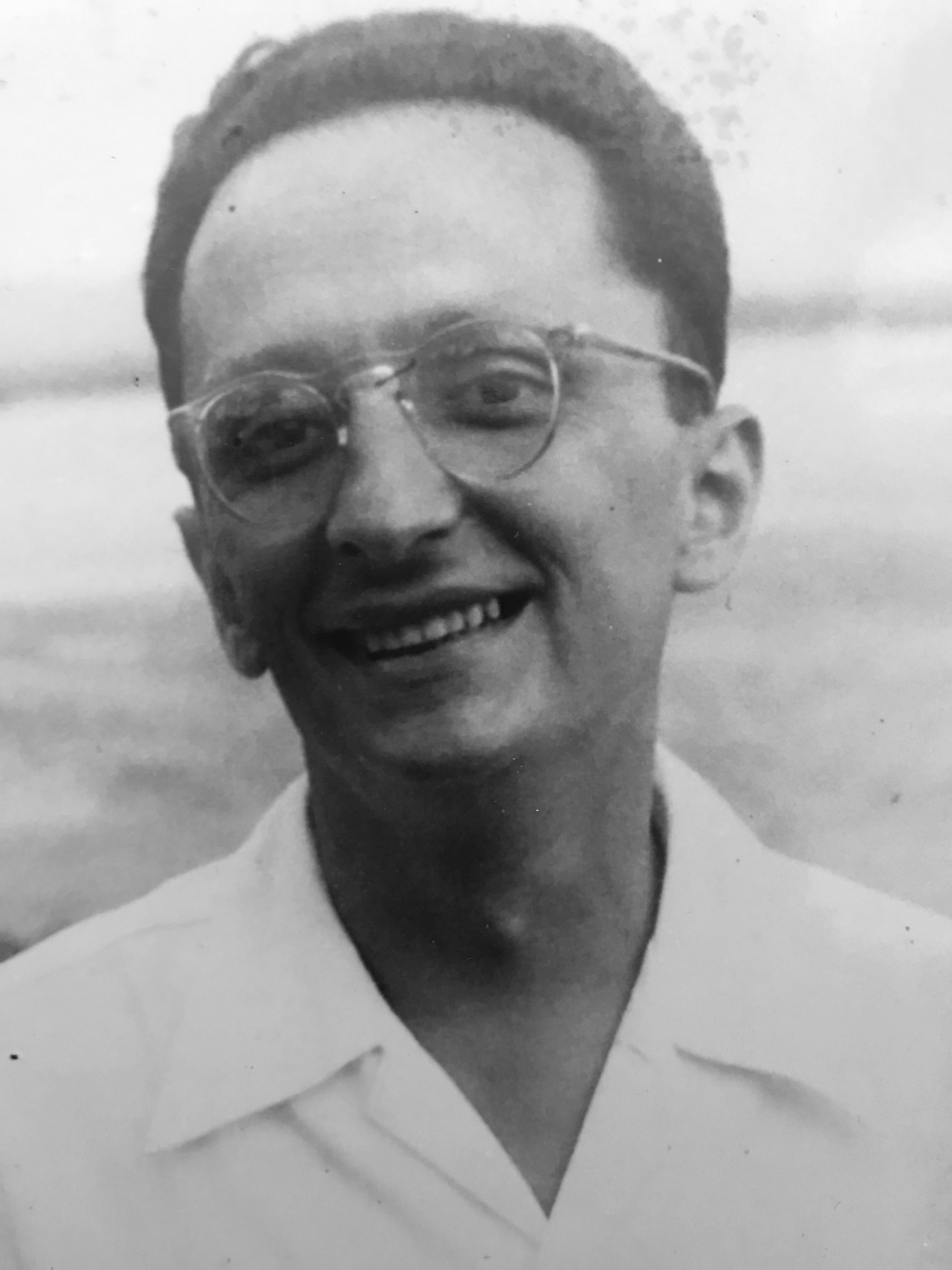
Here’s a photo of the man on whom I based the character, Hugo.

And here is my father, on whom Max is based.

January 27, 1938

Max’s workshop

Vienna

Max has the radio on whenever he can, day and night. He follows the news from as many sources as possible, hearing stories few others hear, and hearing the ones that everybody knows reported from widely varying perspectives. His shop is more popular as a source of news than it is of lamps, chairs, or radios.

“Listen to this,” he says to Hugo, who’s perched on stool at the workbench next to Max. “A German diplomat told a commentator I follow that Hitler is spending most of his time at his retreat in Berchtesgaden near the Austrian border.”

“I had heard that, yes,” says Hugo. “He’s so close he can see Austria.”

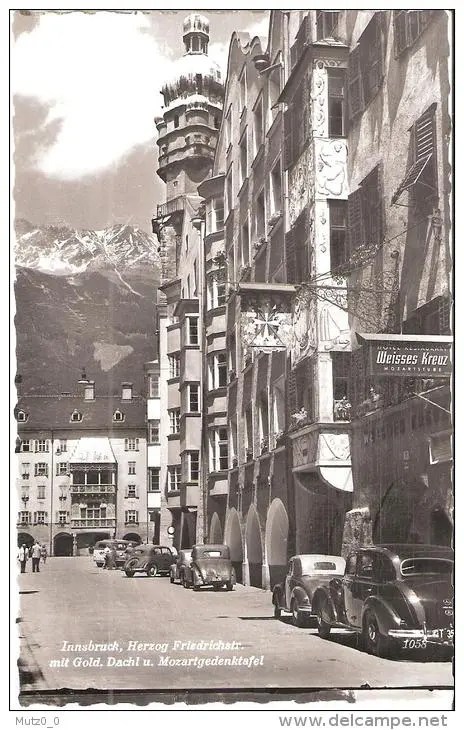
“Well, apparently he almost never goes out anymore, and here’s how he spends his time there: he has a huge collection of postcards of Vienna and other Austrian cities that he spreads out on his desk to look at while planning where to put his Brown Houses, the Nazi party headquarters. They say he spends hours at it. And he has a street map of Vienna tacked up on the wall where he’s marked the buildings he wants to replace with ones he’s designing himself. He’s obsessed—it takes up all his time.”

“Not good,” Hugo says. “Not good at all.”

“What concerns me almost as much is that I overheard someone else telling the same story to a group at the cafe yesterday and everyone thought it was funny. What do they think, that Hitler is a joke?”

“There’s no point in pretending that Hitler won’t be welcome here, Max. The Nazi tactic of causing chaos and confusion in Austria over the last few years has led most of the population to want peace at any cost, and they think becoming part of Germany will bring it.”

“It’s so ironic, isn’t it? That the man who tells the French Ambassador that he ‘will soon have Schuschnigg’s head’ should be associated with peace.” Max shakes his head. “No one believes that what I read in Feuchtwanger’s book is true either. It’s fiction, I’m told over and over, often in the most condescending way.”

“Classic it-could-never-happen-here thinking,” agrees Hugo. “Austria would never let the Jews be treated so badly. Well, we shall see soon enough.” He lights a cigarette. “I’ve finished almost all the new exit papers, by the way. Leo will be printing them in a few days.”

“That’s a relief. Are you including an Ausweis for Gisi’s mother and Gert’s parents? They would need them to get out, even if they aren’t Jewish.”

“I am, but I’m doing those last, in case I don’t have the time to finish them. Gert’s parents will never leave, and I seriously doubt Gert will. I think her family has always been more important to her than our crazy off-and-on relationship. What about Gisi?”

“She claims she’ll leave, but she started the new term at medical school this week and she told me she has some of the best professors in the program. And her mother steadfastly refuses to even consider following her. To be honest, I’m not sure if she’ll give all that up for me.”

“It’s a lot to ask. Gert would be leaving a promising career in fashion, a job she loves, and, as you saw at New Year’s, a very comfortable home that will come to her someday. What does she gain by leaving?”

Max looks pensive. “Gisi is in a similar position, minus the bourgeois apartment. What do I have to offer her? We would be leaving with not much more than the clothes on our backs.”

Hugo smiles wryly. “It sounds like you and I are talking ourselves out of leaving.”

“No, of course not. We have no choice. All Jews should be ready to go at a moment’s notice. It’s a shame so few are.”

“People don’t like to face an uncertain future. It’s so much easier to imagine that life will go on the way it is than to face the reality of a darker times ahead. I have first hand experience, though, because of Hilda and Karl’s disappearance. And I understand the pain of losing a child. I’ve already faced some of what the future could hold for many people.”

“Maybe words aren’t enough to convince people. Maybe firsthand experience is necessary. Although I have to say that for me, reading those chapters in The Oppermanns about the months that followed Hitler becoming Chancellor was enough.”

Hugo thinks for a moment. “We were fortunate to have Youth Leaders like Papanek and the others who set an example for us when they left in ’34.”

“That’s true. It’s also easier for us to imagine living somewhere else because we were raised in an Internationalist milieu. Remember? We were, what, eighteen, when we took part in the International Socialist Youth Congress? It’s very different than coming up in a Nationalist milieu that values Blood and Soil over Friendship and Peace.”

Hugo sighs deeply. “God, these are hard times.”

Two conversations

Here’s the chapter of Underground that I just finished. Gisi and Max are planning to write a second article with information coded in it about the safest routes for refugees to take to leave Austria if it’s necessary. It’s 1937, less than a year before the Germans will annex Austria.

Two Conversations

April 16, 1937

a cafe near Max’s shop

A couple weeks later, on that first balmy day of the year when everything blooms at once and the air is full of rich fragrance, Gisi is rushing down the city street on her way to meet Max. When she arrives at the cafe near Max’s workshop the outdoor tables are already filling with spring revelers. It had been a long, hard winter for so many, in so many ways. 

Gisi chooses an indoor table in a private corner, sits so she can watch the door, and pulls out a map from her bag. She unfolds it carefully and lays it flat on the table. Thoughtfully, she runs her finger along the routes from Austria to Italy that she and Max are considering. All of them are longer than the one they’d chosen for their first newspaper story. Even the shortest would require at least two overnight stays.

She has mixed feelings about going. Not only would all the proposed hikes take longer and require more preparation, but the story would take longer to tell and the article longer to write.  And, it would take up more space in the newspaper, making it harder to sell. She sighs. 

At the only other occupied table in the room, a couple in their forties is arguing. Though they’re trying to be quiet, Gisi can’t help hearing the woman’s adamant responses to her companion’s softer words.

“Don’t be a fool,” snaps the woman. “Mussolini will say whatever he wants Schuschnigg to hear.” A pause follows. “Of course he’s in league with Hitler! Why shouldn’t he be?” The pitch of her voice is rising. “Mussolini, Hitler, Franco, all the Fascists, they have nothing to lose by banding together.” Another pause. “Only we, the Jews, the immigrants, the travellers, the dark-skinned ones, all of us who are different, have something to lose!” A longer pause. Then she almost hisses, “But we have the money to get out, Fredl! And we have somewhere to go!” She listens for a moment and then says,  “I don’t care if you don’t like my sister. It doesn’t matter. She’s offering to help us.” Another long pause.” And whose family has the means to do it? Yours?” She snorts.

Now Gisi can hear the man’s voice too. They’ve forgotten she’s there.

“It’s not a matter of the money, Lotte,” he says, slumping forward, elbows on the table.  “You know that. You know it too well. But how can I leave my family, Lotte? What will happen to them?”

“You have a brother.”

“Yes, and you have a sister. Your sister has some good qualities and some less good ones—like my brother. No, I can’t leave. My life is built around caring for my family, and we’re rooted here.  My life is in this city, in this country, no matter who is in power.”

“And my life isn’t here? You think I’m not leaving anything behind by emigrating? The issue isn’t what we have here now, Fredl. It’s what we won’t have when Germany takes over.” From the corner of her eye, Gisi sees the woman raising her hand to stop her husband from speaking. “Don’t talk about me how assimilated your family is. My cousin tells me how it is in Germany now.  Jews have no rights. It doesn’t matter what kind of a Jew you are, rich or poor, practicing or not, we’re treated more and more like animals there. It’ll be the same here. Soon. Face it, Fredl. Is that what you want?”

“No. No, of course not.” He sits up and takes a sip of his coffee. “But we Viennese would never treat Jews the way the Germans have.” He puts down his cup. “We’re civilized here.” Even from across the room, Gisi can hear the doubt in his words. She realizes she hasn’t believed that for many years.

At that moment, Max enters the cafe bringing with him a rush of fresh air. He smiles at Gisi, who’s studying the map with a serious expression on her face. She looks up and smiles back at him, but the other couple’s argument is disturbing her, and her smile doesn’t reach her eyes.

He slips his jacket onto the back of the chair. “Well? Have you decided on which of the hikes we should take?” 

“Oh, Max, I don’t know. Sit down and we’ll talk about them, but I have to tell you right away, I’m not sure I want to go on any of them.” 

Max deflates as he sinks into his chair. “None of these particular hikes or none at all? Why not?” He can’t hide his disappointment. “I was so looking forward to it.”

Gisi lays out all her reasons: the time, the expense, the length of the article. It’s a strong argument and she becomes more convinced of it as she talks.

“So that’s it? Your mind is made up?” He stands up and begins to put on his jacket.

She relents. “I said we’d talk about the routes. You can still try to talk me into it. I just wanted you to know how I feel about it now.”

Max sits down again. “You’ve studied them? What did you find?”

“I read whatever I could find, and I talked to people. We were right about the routes we’ve been considering, but there are more. Smugglers have been using these trails for centuries. Now they’re in the business of smuggling people.”

“That makes sense,” he says. “It’s not too hard to find a smuggler to get you to Brno.” 

“Although they’re not always reliable, as Hugo discovered.”

“You never know what to expect of people you meet along the way. I heard a story about a guy hiking and skiing into Switzerland who was picked up by some Heimwehr soldiers. It turned out they were more interested in what was in his rucksack than in turning him over to the authorities. Anyway, Switzerland was a kilometer away and it was many kilometers to their headquarters, so they escorted him to the border and left him there. Unfortunately, they’d robbed him, so he had nothing to show at the border, and guards turned him away. He walked back the three days it had taken him to get that far—without money, papers, skis, or even a winter coat.” Max shakes his head. “Poor guy.”

“At least he survived,” Gisi says.

“That’s true. People trying to escape from Germany wouldn’t be so lucky.”

Gisi looks down at the map. She doesn’t want to think about the horrors people are facing. “There at least a dozen well-used routes,” she says. “The shortest is the one we already tried, from Innsbruck to the Brenner Pass. Next is this one.” She points to the map. “You take the bus from Innsbruck to Naubers, which is a ski resort where strangers don’t stand out, and then it’s two and a half hours on foot to the border at Reschen Pass. It’s a much more rigorous hike than the one we took, but not as long or dangerous as most of the high mountain routes. I didn’t even study those. There are also, even at the very high altitudes, a handful of mostly flat routes that run along rivers, but they would take a very long time, days and days, even a week or more.”

“So the only reasonable one for us to explore is over the Reschen Pass. And we can do that! It’s only two and a half hours, you said?” Max is pleased.

“But they say some parts of the walk are challenging if you don’t have a head for heights. Do you have a head for heights?” 

“Well…” 

“And we’d need mountaineering equipment, trekking poles, warm, light-weight jackets, and better boots than either of us have.”  

“Surely we can borrow what we need. Everyone in our circle supports this project.” He isn’t ready to give up.

She goes on, “It would be expensive, too. In addition to the train to Innsbruck, we’d have to pay for the bus to Naubers. Figuring out which of the hostel and restaurant owners would be willing to help refugees means we’d have to sleep and eat there, at least at some of them.”

Max has no response to that. “I don’t understand why you’re so negative about the project all of a sudden. Last time we talked about it you were all in favor. What happened?”

Gisi thinks. “I guess when I went into it more deeply, it didn’t seem so easy.”

“Nothing you’ve said has convinced me that it’s impossible though. Train, bus, and a two and a half hour trek—what’s so hard about that?”

“It’s everything together, but mostly, I find it frightening to imagine the two of us edging slowly along narrow  path on a cliff with a thousand meter drop-off below us.”

“Come on, Gisi! You’ve skied so many times!”

“This is different.”

“It’s not. And everything else, we can manage easily.”

“No, Max. It would be much longer than our last trip—six hours on the train to Innsbruck and three more to Naubers, at least one night in Naubers, another six hours round-trip on foot to the border, and another night in Naubers, and then a full day to get home. And that doesn’t include all the time it’ll take to talk to people in order to write the article. Or the time it’ll take to write the article. It’s just too much.”

“So you’re giving up? You’re not interested in our project anymore?”

She sighs. “I just think it’s too much.”

He doesn’t argue. Instead, he takes his jacket and walks out the door.

At the other table, the couple who’d been arguing earlier have stopped. The wife is staring at her husband stonily as he slowly finishes his pastry.

Outdoors, clouds cover the sun and a cold wind cuts across the cafe. People are putting on their sweaters and coats.

Two Suitcases – a window into the process of writing historical fiction

Currently, my characters Gisi and Max are traveling by train from Innsbruck to Venice over the Brenner Pass. In Venice, they’ll spend a couple nights in a youth hostel. It’s a much-needed short vacation for them, and a chance to try out Leo and Hugo’s recently forged Ausweis, or exit permit.

This is how may current writing process works. Once I’ve decided on a general framework for the next section I’m going to write, I do the research. I look at the history of the time and place in as close detail as I can—the Internet, for all its failings, is the most unbelievable library—as well as in the big picture. I fill pages and pages with cut and pasted images and text.

The archives of the New York Times are very useful, and I follow parallel stories in fiction and memoirs, and movies. I listen to music from the era. Currently, I reading Irene Wittig’s All that Lingers, which is set in the same time and place as Underground. The research for the particular section I’m writing now is taking me longer than usual because the characters are traveling to some places I’ve never been to.

When I’m feeling like I’ve done enough research, I start to imagine what my characters might do in the setting. Gisi and Max pass through Innsbruck on their way to Venice, so Gisi could see her cousin who lives there. The cousin’s husband is a Nazi; that could make for an interesting conversation. Maybe I’ll have Gisi and Max change trains in Innsbruck and give them a three hour wait, enough time to have meal with the cousins. Would Max be willing to do that?

Here’s how the piece I’ve written about that begins:

Chapter 21

Innsbruck

Vienna

September 2, 1936

When Gisi sees that other than by taking the night train, which would mean missing the views, the least expensive tickets she and Max can get to go to Venice includes a three-hour layover in Innsbruck. She suggests to Max that she write to her cousin Litzi to arrange to have lunch with her and her husband, Horst, who live there.

“I know he’s a Nazi,” she tells Max, “but I grew up with Litzi and I don’t want to lose her entirely. Surely we can steer the conversation away from hot topics.”

“You think so? Gisi, he hates me. He doesn’t even know me but he hates me. Why should I share a table with him?”

“Because you claim to be a pacifist? Because it takes two to tango?”

“I’m not sure I want to subject myself to that. I’m not sure I’m capable of it. I’m not Jesus Christ, Gisi.”

“He was perfectly well-mannered when I met him at Christmas a few years ago.”

“When he was pretending not to be a Nazi. Things have changed. He has no reason not to show his true colors now.”

“Then do it for me. If it gets ugly, we’ll stand up and leave.”

“Why don’t you and Litzi meet and I’ll spend the three hours in a bookstore or a cafe?”

“Maybe. But let me write and see what Litzi thinks. Then you can decide.”

Innsbruck

September 4, 1936

Litzi stands by the open window reading Gisi’s letter.

“Horst?” she calls into the hall. Her husband, returning from work with the daily paper tucked under his arm, hangs up his hat and comes into the sun-filled living room.

“My dear? You had a good day?”

“Yes, naturally. The boys haven’t come home yet, though, and I wanted to discuss this letter I received from Gisi today with you.” 

Horst pats his thick blond hair into place and makes himself comfortable on the divan. “Alright,” he says. “What is it?”

“First, Gisi asks me not to discuss this with you, but how can I not? You’re my husband. I have to. But if what she is suggesting does come about, I would ask you not to let her know that we talked about her proposal so soon.  You’re willing to do that?”

“Of course. What is she proposing?”

“Well, she and her friend Max will be in Innsbruck for a few hours on a stop between trains. They’re going to Venice for some reason. Since they’ll be here from eleven to two thirty, she suggests we have lunch together at a restaurant near the train station.”

“With Max? That sleazy Jew?”

“With Max. Though she says he isn’t eager to do it. He says he would rather wait at the station while she and I meet alone.”

“That sounds reasonable to me. Why not do that? I have no desire to share a table with a Jew, and a Socialist Jew at that.”

“I know he’s a Socialist Jew,” she tells Horst, “but I grew up with Gisi and I don’t want to lose her entirely. Surely we can steer the conversation away from hot topics.”

“You think so? Litzi, he hates me. He doesn’t even know me but he hates me. Why should I spend time with him?”

“Because you claim to be a Christian? Love your enemies? Blessed be the Peacemakers?”

“I’m not sure I’m capable of it. I’m not Jesus Christ, Litzi.”

“Then do it for me. If it gets ugly, we’ll stand up and leave.”

“Maybe. I’ll think about it.”