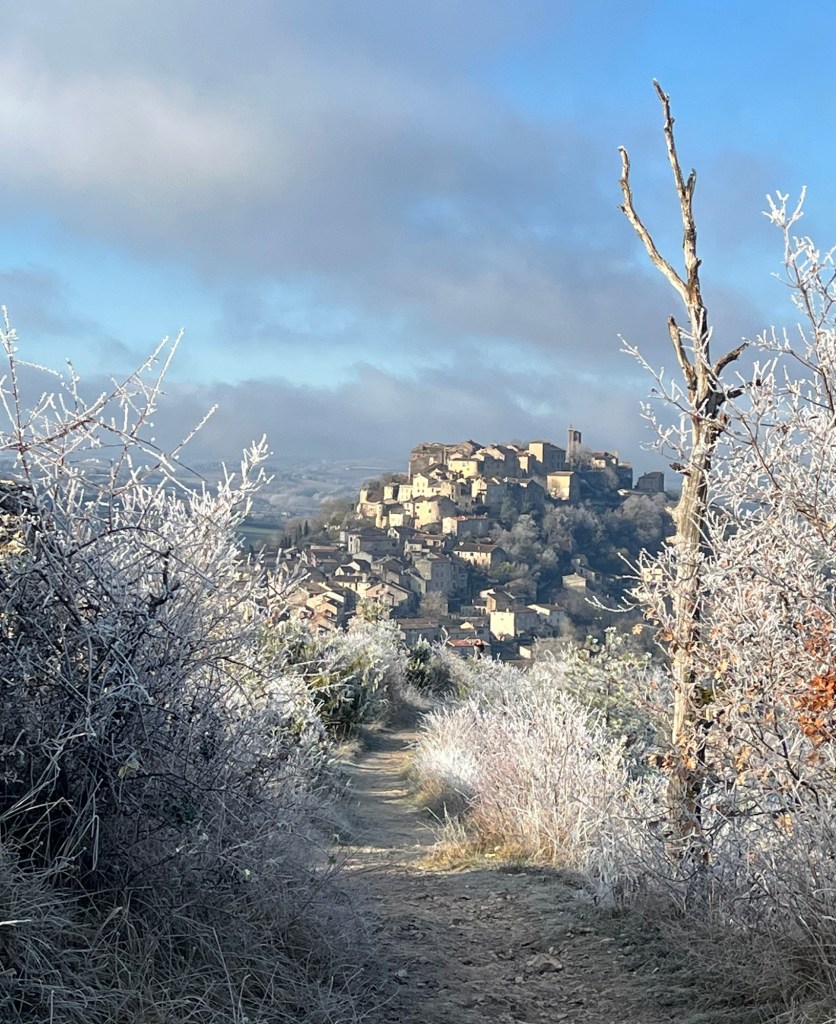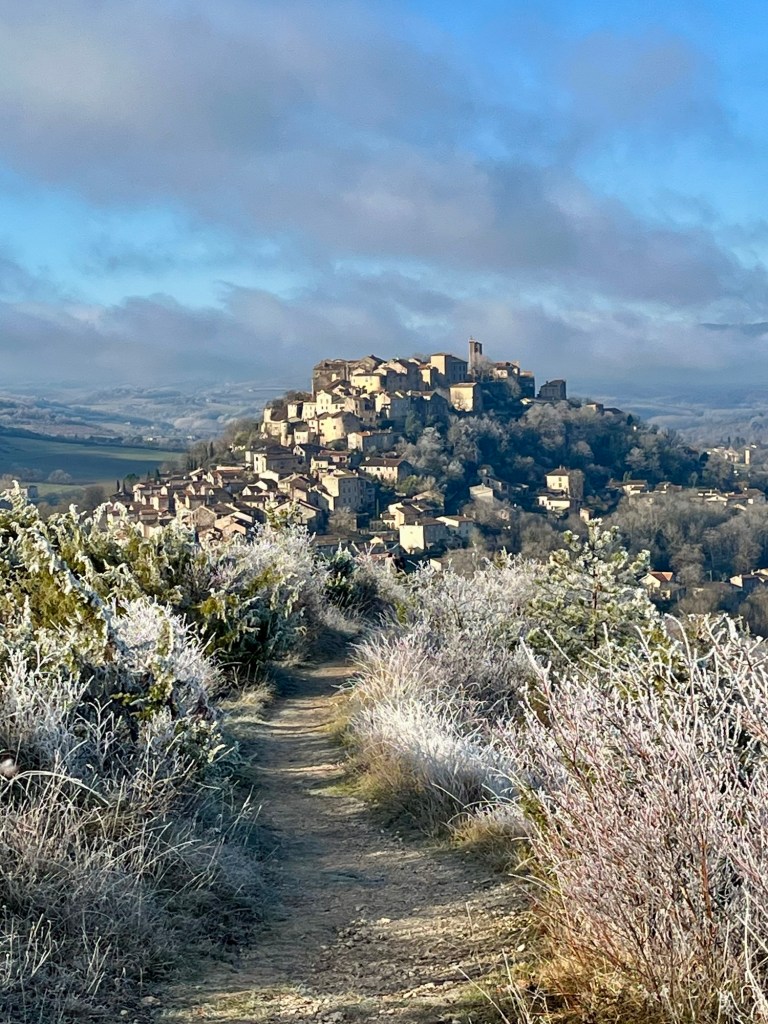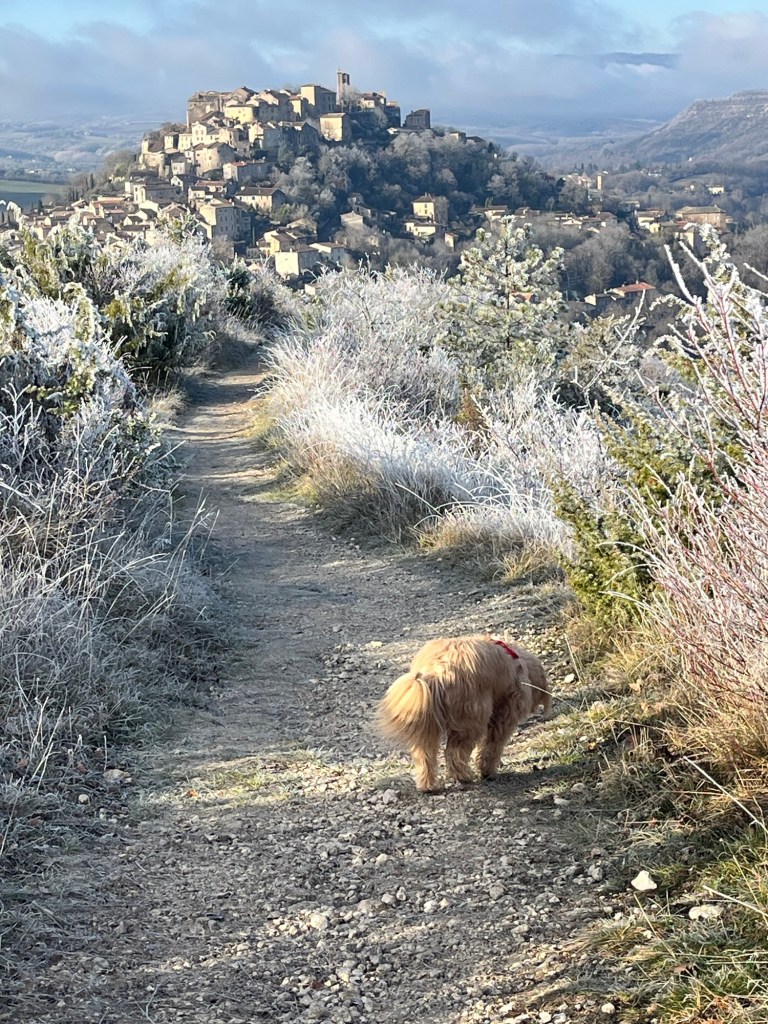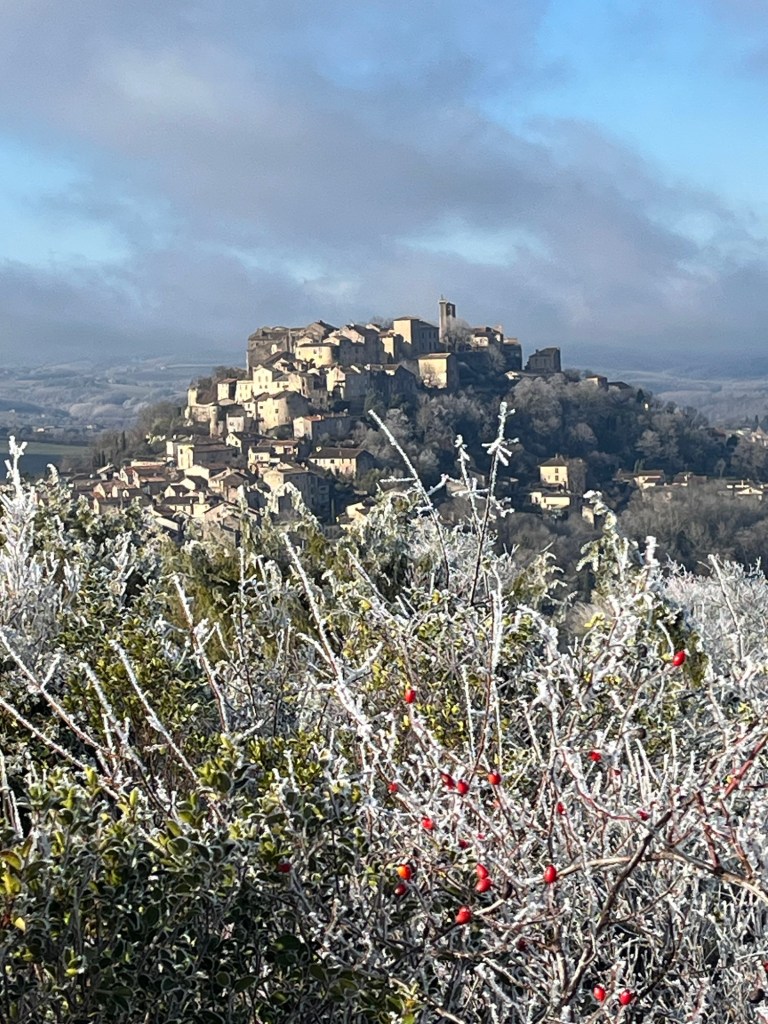
Everyday magic

Look! I’m doing an online presentation that you can sign up for using the link on the picture. It’s an extension of the ponderings I’ve been doing on my blog in recent months. See you there?

Type the word “magic” into the search on my blog to get an idea of what I’ll be talking about.

Use the link at the bottom of the description to sign up.

Link:

The Queen Of Cordes has fallen – la reine de Cordes est tombée

Last night the storm hit. All day I’d been watching the weather to see if Cordes was likely to be in the path of a small but exceptionally intense storm crossing the south of France. Yes, said the weather forecast, no, said the forecast, yes. By 6 in the evening it was here. In force.

La nuit dernière, la tempête a frappé. Toute la journée, j’ai regardé la météo pour voir si Cordes était susceptible de se trouver sur la trajectoire d’une petite tempête exceptionnellement intense qui traversait le sud de la France. Oui, disait la météo, non, disait la météo, oui. À 18 heures, l’orage était là. En force.

Mocha was frightened in advance, as she often is. When she tried to hide under the chair I was sitting on, she knocked over a full cup of tea. Tom and I were cleaning up the mess—there was tea on books, games, a pillow, the floor, the power strip for all the electronic devices, the chair itself, the side table, and the dog was dripping—as huge gusts of wind and rain tore down the streets and battered the village.

Mocha était effrayée à l’avance, comme elle l’est souvent. En essayant de se cacher sous la chaise sur laquelle j’étais assis, elle a renversé une pleine tasse de thé. Tom et moi étions en train de nettoyer le désordre – il y avait du thé sur des livres, des jeux, un oreiller, le sol, la barre d’alimentation de tous les appareils électroniques, la chaise elle-même, la table d’appoint, et le chien dégoulinait – alors que d’énormes rafales de vent et de pluie déchiraient les rues et frappaient le village.

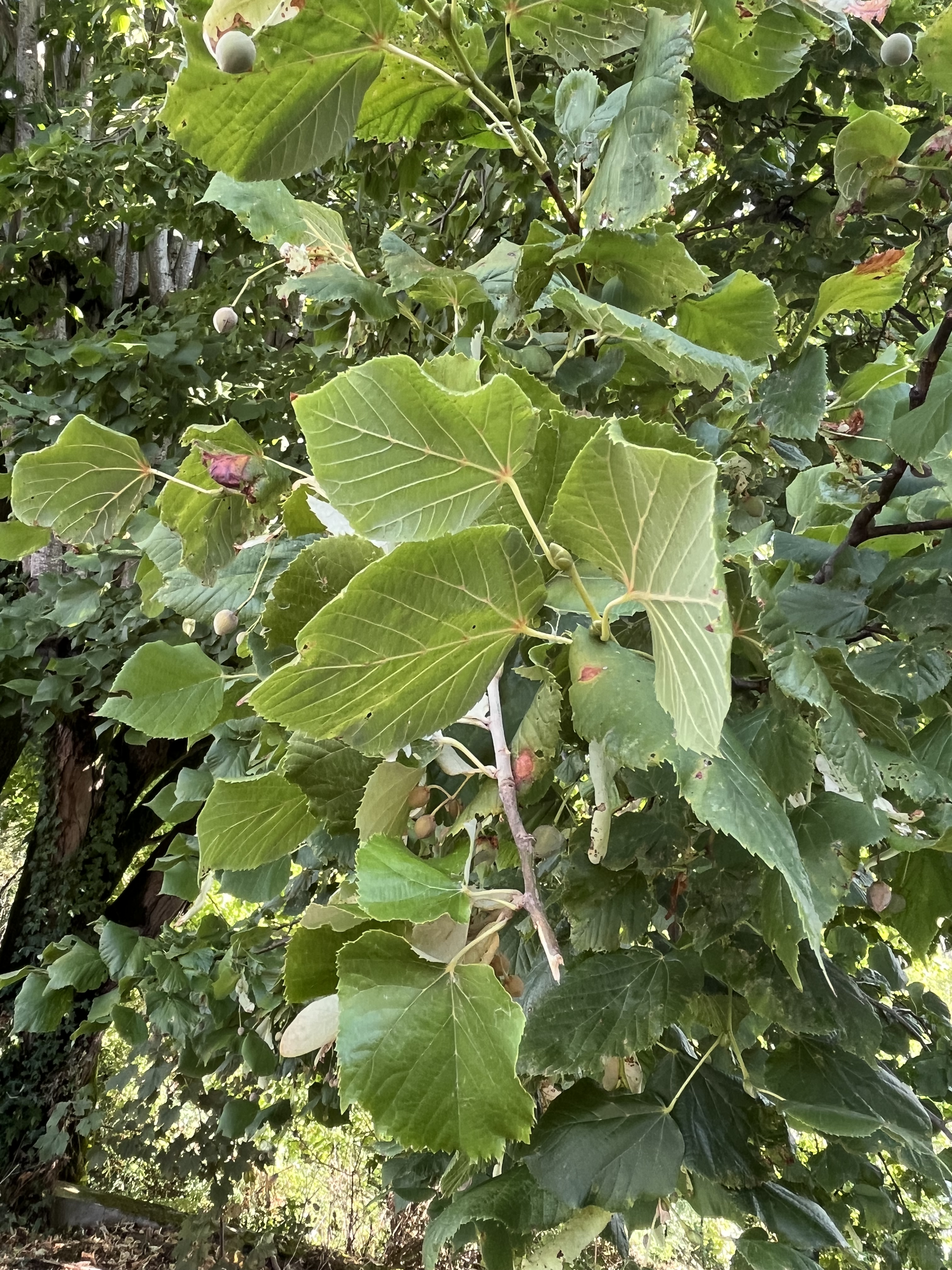
I didn’t know until morning that the huge linden tree at the Barbacane had fallen.

Je n’ai su qu’au matin que l’énorme tilleul de la Barbacane était tombé.

She had graced the square below the round tower guarding our fortified city for as long as anyone who was standing near me as we listened to the chainsaw cutting her to pieces could remember.

Elle ornait la place située sous la tour ronde qui gardait notre ville fortifiée depuis aussi longtemps que ceux qui se tenaient près de moi alors que nous écoutions la tronçonneuse la découper en morceaux pouvaient s’en souvenir.

Linden trees can be female or male, though their flowers are hermaphroditic. Cordes has several male trees—they’re the ones with the heavenly scent in the late spring—but the one at the Barbacane was female, and ready to drop her seeds. She was perfectly formed, with a beautiful round top that rose above the houses and provided a circle of deep shade.

Les tilleuls peuvent être femelles ou mâles, mais leurs fleurs sont hermaphrodites. Cordes possède plusieurs arbres mâles – ce sont eux qui dégagent un parfum céleste à la fin du printemps – mais celui de la Barbacane était femelle et prêt à laisser tomber ses graines. Il était parfaitement formé, avec une belle cime ronde qui s’élevait au-dessus des maisons et offrait un cercle d’ombre profonde.

After paying homage to her uprooted body, I took a little branch and visited some of the other grand trees pf Cordes. The black locust behind the library seemed very sad to me. So did the horse chestnuts, who are suffering from leaf-miners themselves. But the other lindens seemed the most affected.

Après avoir rendu hommage à son corps déraciné, j’ai pris une petite branche et j’ai visité quelques autres grands arbres de Cordes. Le robinier derrière la bibliothèque m’a semblé bien triste. Il en va de même pour les marronniers d’Inde, qui souffrent eux aussi de la mineuse. Mais les autres tilleuls semblaient les plus touchés.

When I touched the little branch I’d taken from the queen tree to the linden on rue de Colombier, the living tree grabbed hold of the branch of its queen tightly. As I held onto my branch and pulled on it gently, I could feel a vibration running through my body that made me not want to let go either.

Lorsque j’ai touché la petite branche que j’avais prise de l’arbre reine au tilleul de la rue de Colombier, l’arbre vivant s’est agrippé fermement à la branche de sa reine. Alors que je m’accrochais à ma branche et que je tirais doucement dessus, je sentais une vibration parcourir mon corps qui me poussait à ne pas la lâcher non plus.

In ancient Celtic societies, like the Gauls who lived here before the Romans, people gathered to celebrate and dance under linden trees, as well as to hold official meetings to restore peace and justice. The linden tree was believed to preserve the truth. In German mythology, it is the tree of peace and love.

Dans les anciennes sociétés celtiques, comme les Gaulois qui vivaient ici avant les Romains, les gens se réunissaient pour célébrer et danser sous les tilleuls, ainsi que pour tenir des réunions officielles afin de rétablir la paix et la justice. Le tilleul était censé préserver la vérité. Dans la mythologie allemande, il est l’arbre de la paix et de l’amour.

La Place du Tilleul by Jacques Chies https://galerie-labarbacane.fr/en/artiste/jacques-chies/

My heart is broken.

Mon cœur est brisé.

Peace, love and magic: some reflections on transitioning to fourth and fifth dimensional awareness

The dawning of the Age of Aquarius

A couple weeks ago, in response to a friend’s distress over the heart-wrenching news, I responded, “Maybe we’re moving from the three dimensional world into the fourth and fifth dimensions.”  

I said it lightly—and, sadly, I doubt that my friend was any less upset after I said it—but I do take refuge in the thought. It gives me comfort to imagine that, as the world as we know it becomes less and less sustainable, there’s more out there than meets the eye. 

After sending the idea into cyberspace, I spent the week reflecting on how such a shift might unfold. I stopped listening to the news, I focused on internal work, and I reflected on how the 3-D world might intersect with the 4 and 5 dimensional worlds.

It’s an area that’s interested me for as long as I can remember. Even as a child I had extraordinary dreams. I’m prone to synchronicity. I was more at ease in the world of make-believe than in the real world for many years. I love fiction, especially fiction with magical elements. Speculative and science fiction appeals, too, as do the edges of science and philosophy. It’s where I usually go, along with increasing my time in meditation and contemplation, when the world is too much.

So, for a week or so in mid-July, I paid more attention to my posture and my breath, I meditated more, and I tuned into the cosmic hum more often. Instead of the news, I listened to archetypal astrology—Richard Tarnas, Heather Ensworth, and Rick Levine—and I took lots of time for reverie.

In 1969, when the Fifth Dimension told the world about the dawning of the Age of Aquarius, astrologers believed it had already been happening in fits and starts for a long time. And the sun did shine in the late 60’s and early 70’s—for a little while anyway.

A whole generation of kids and young adults valued peace and love over money. I was in my late teens then, and I was completely swept away by hippie values. I still am. It’s heartbreaking that the promise often attributed to Jimi Hendrix, “When the power of love overcomes the love of power, the world will know peace,” hasn’t yet happened.

What astrologers are saying these days is that the transition to the age of Aquarius, which is indeed upon us, involves a major shift in consciousness, a change in essential values, and ultimately, a move from focusing on gathering goods to generating good.

Whether any of us alive on earth today will live long enough to enjoy such a world seems doubtful to me, but I see great value in releasing the expectation that life will return to the state it was in when we grew up. Opening one’s heart and mind to some of the infinite possibilities the future could bring seems like a much better option than hanging onto a vision of reality that’s crumbling into the past.
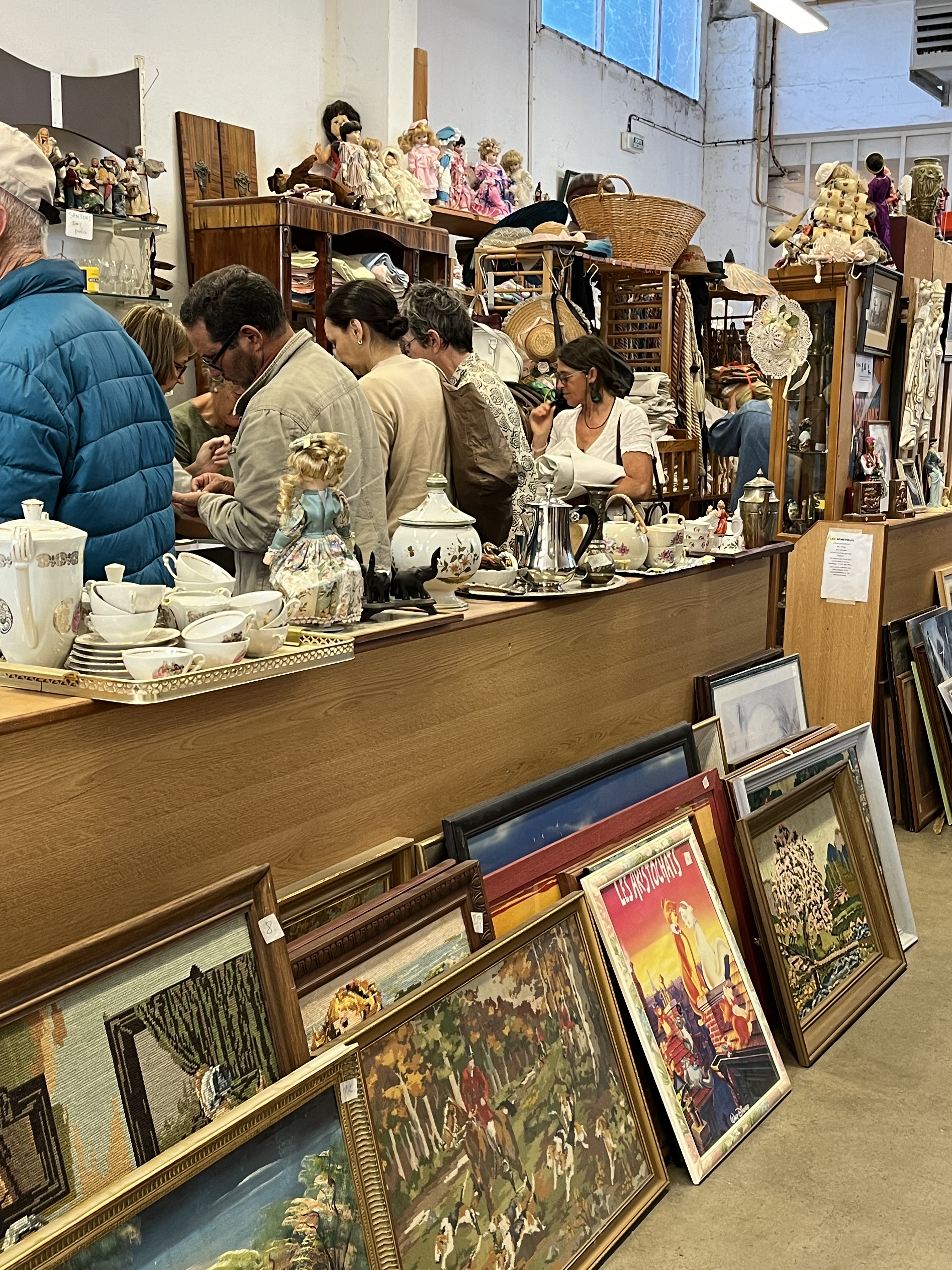
I love the idea that our perception of the measurable world will soon be enhanced by a greater understanding its more subtle aspects, as well as its place in the greater, less dense whole. 

The pull of the three-dimensional world 

Imagine my surprise then, when, in the midst of my dedication to exploring higher dimensions, the 3-D world intervened with an invitation to appreciate, if not acquire, a genuine treasure. 

Tom had recently come into a small inheritance. At the time, that money wasn’t three dimensional at all—it was some numbers on a screen. It occurred to me that rather than putting it in the bank, we might make it more productive by buying a building here in Cordes-sur-Ciel. Tom could move his little chocolate shop there, and an apartment or two would provide us with some income. I took time out from my reverie to look at what was on the market.
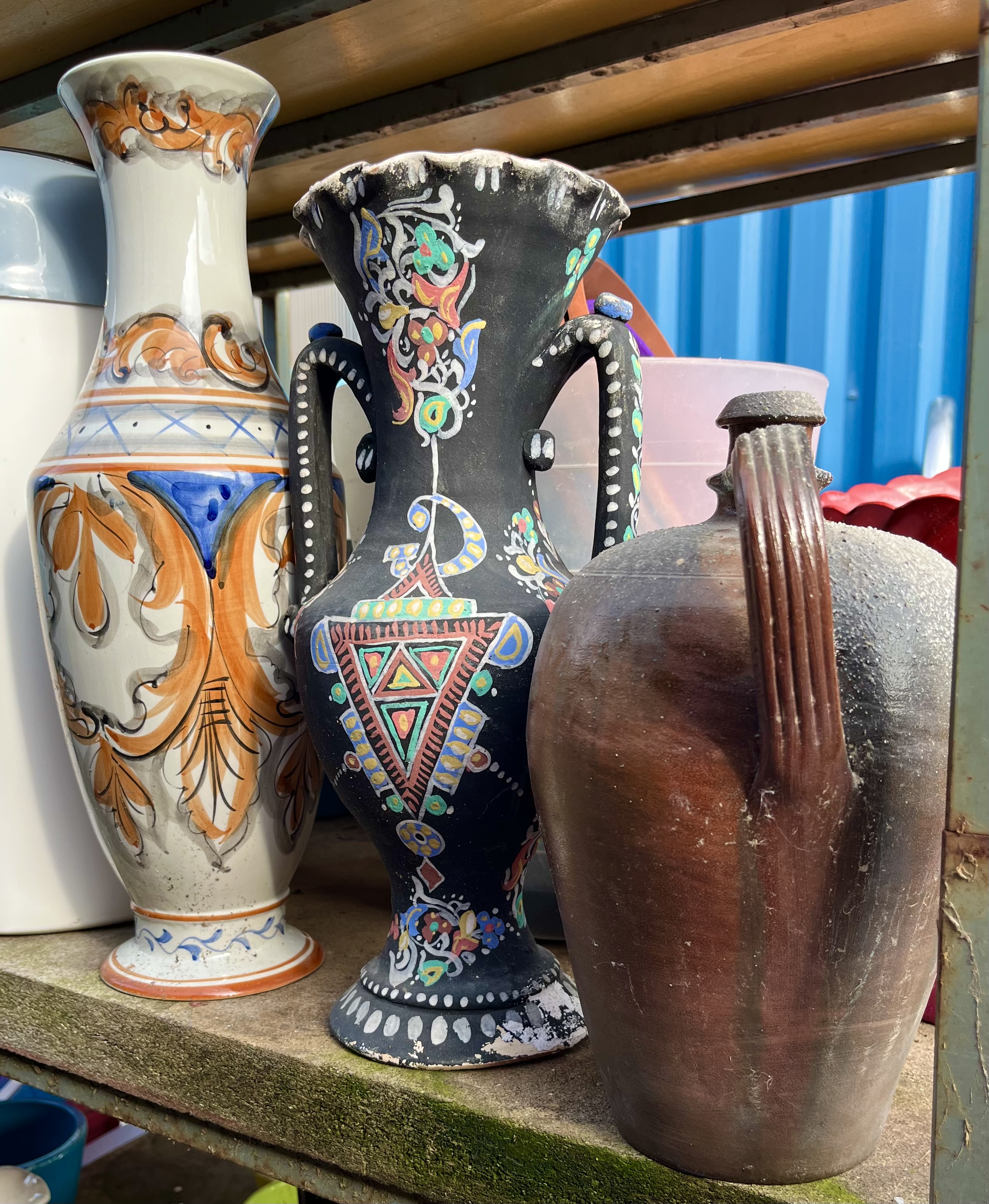
Who knew a magnificent piece of untouched old Cordes just 200 steps from our front door would immediately turn up? Such an opportunity! Unoccupied for 50 years but clean and sound, the owner had maintained it more or less as a memorial to her parents. Embossed wallpaper, plump feather beds, wool mattresses, lace curtains. And an old bakery.
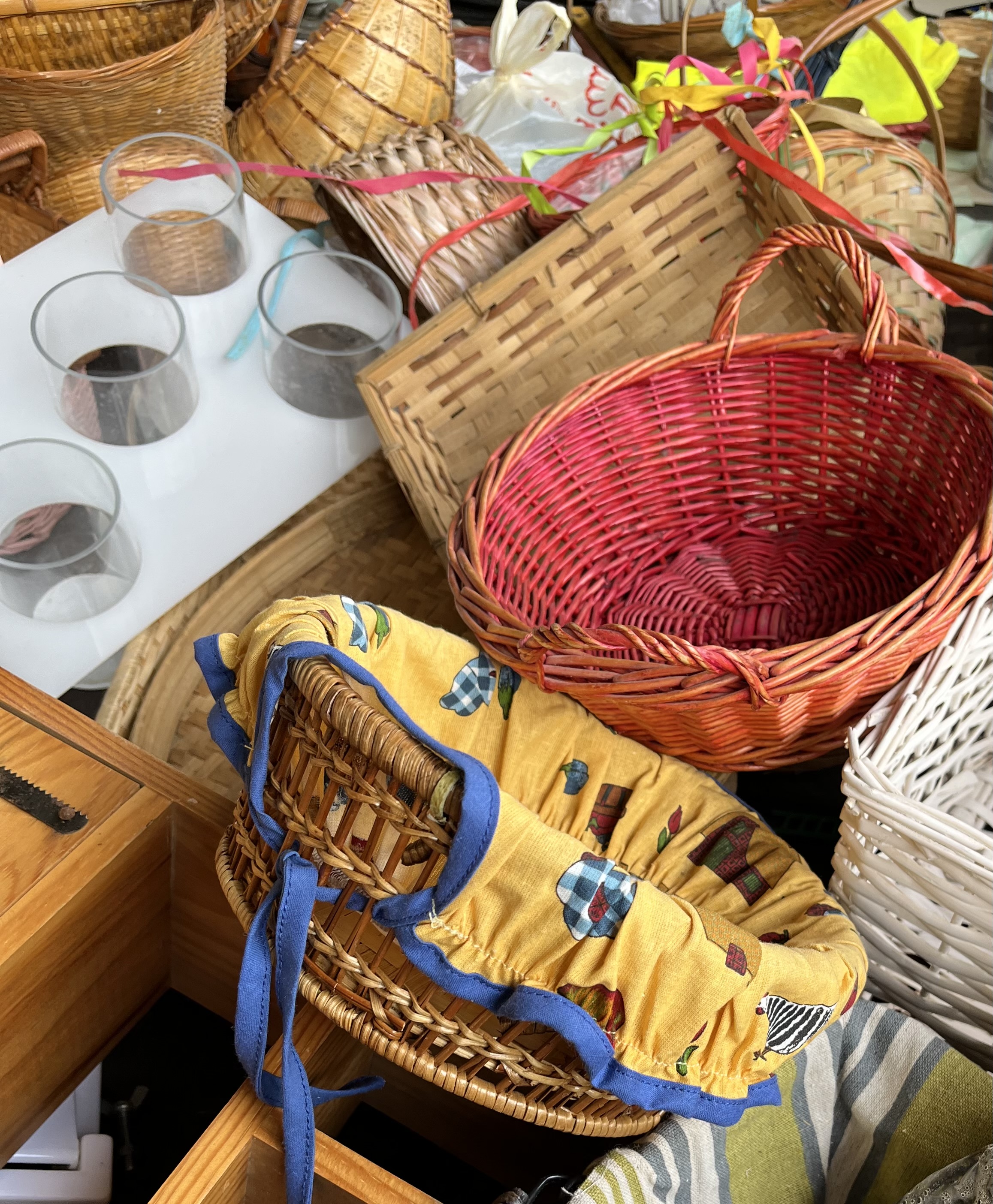
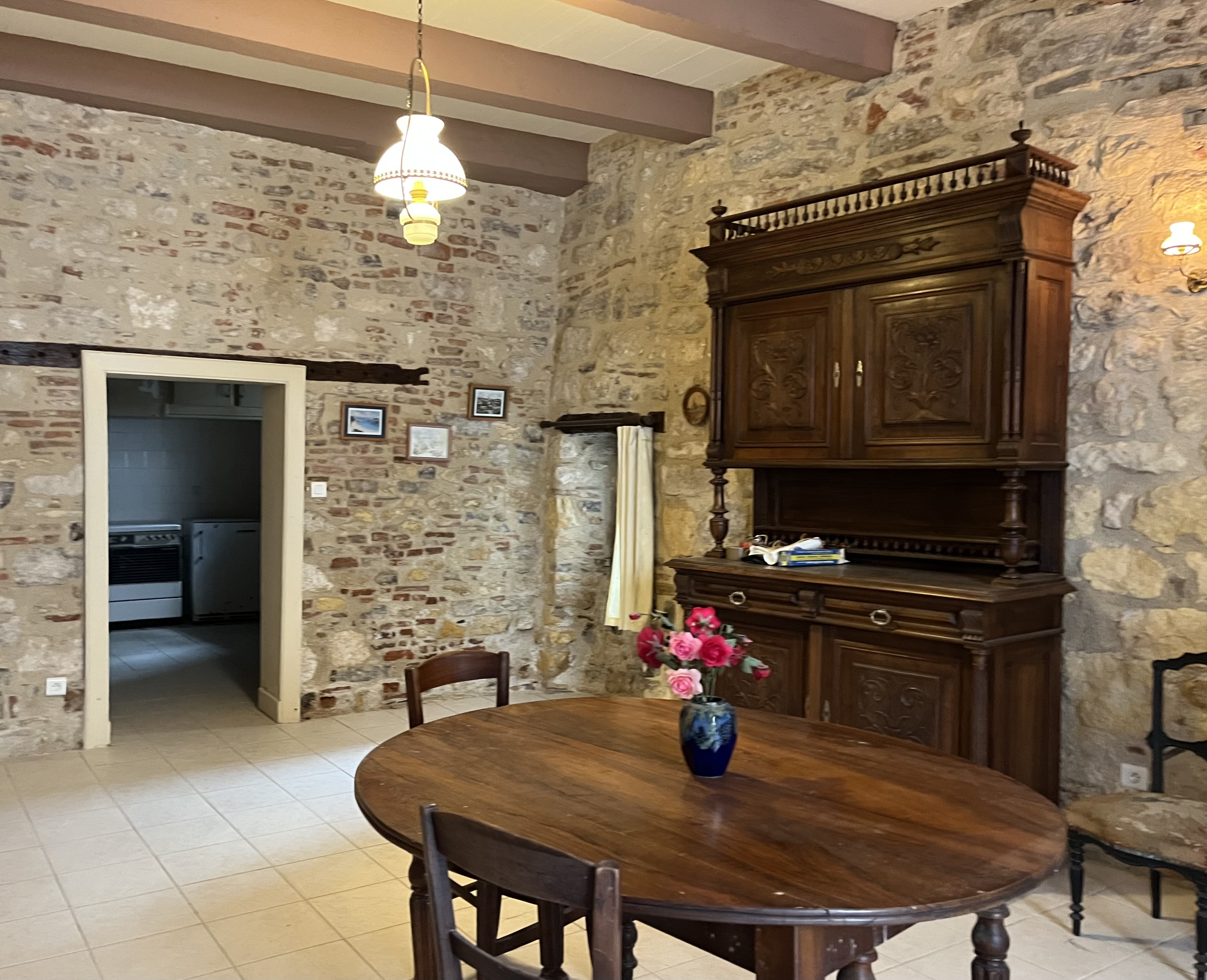
Tom’s shop would go in this room. That’s a kitchen behind it. Perfect.

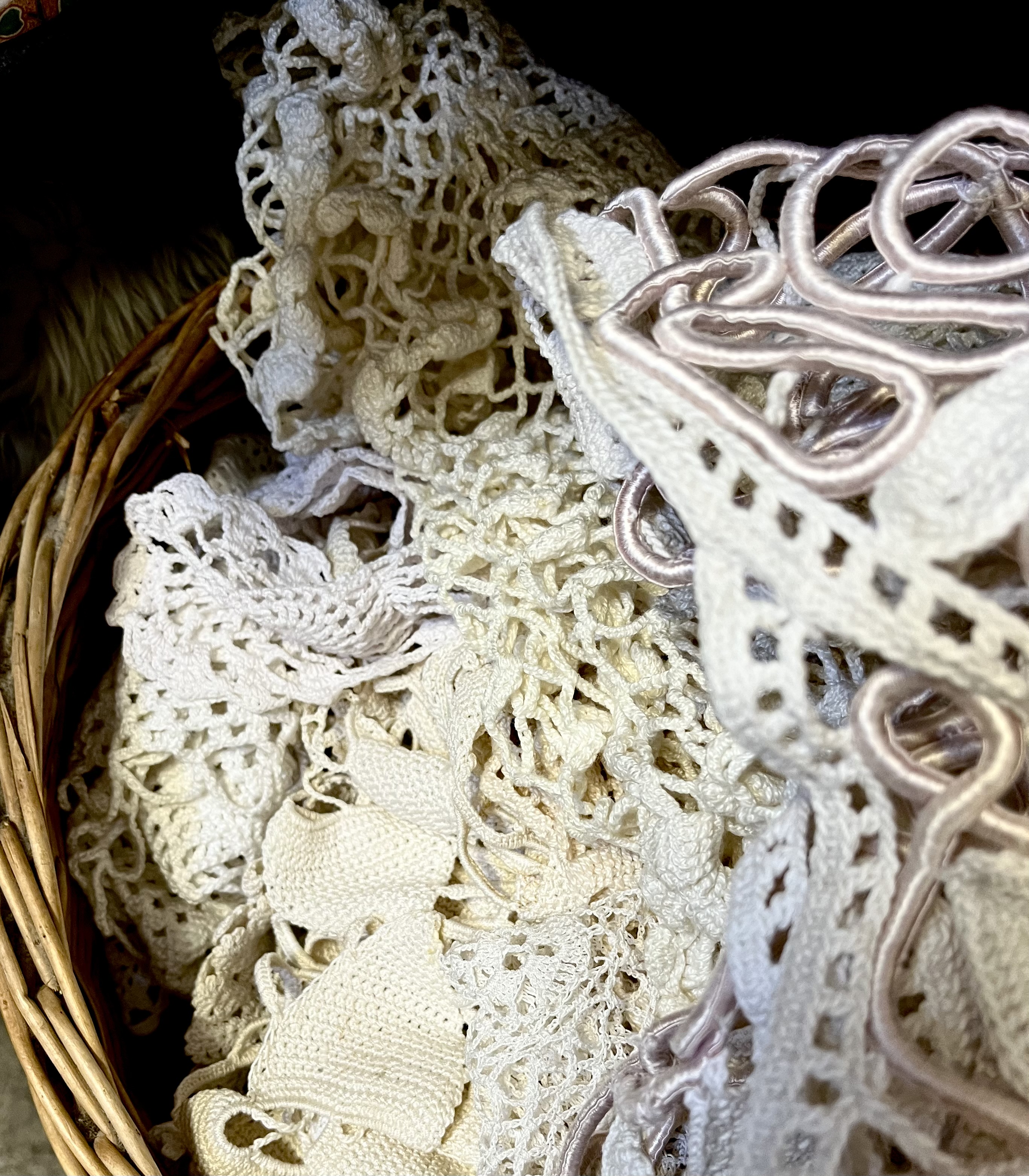
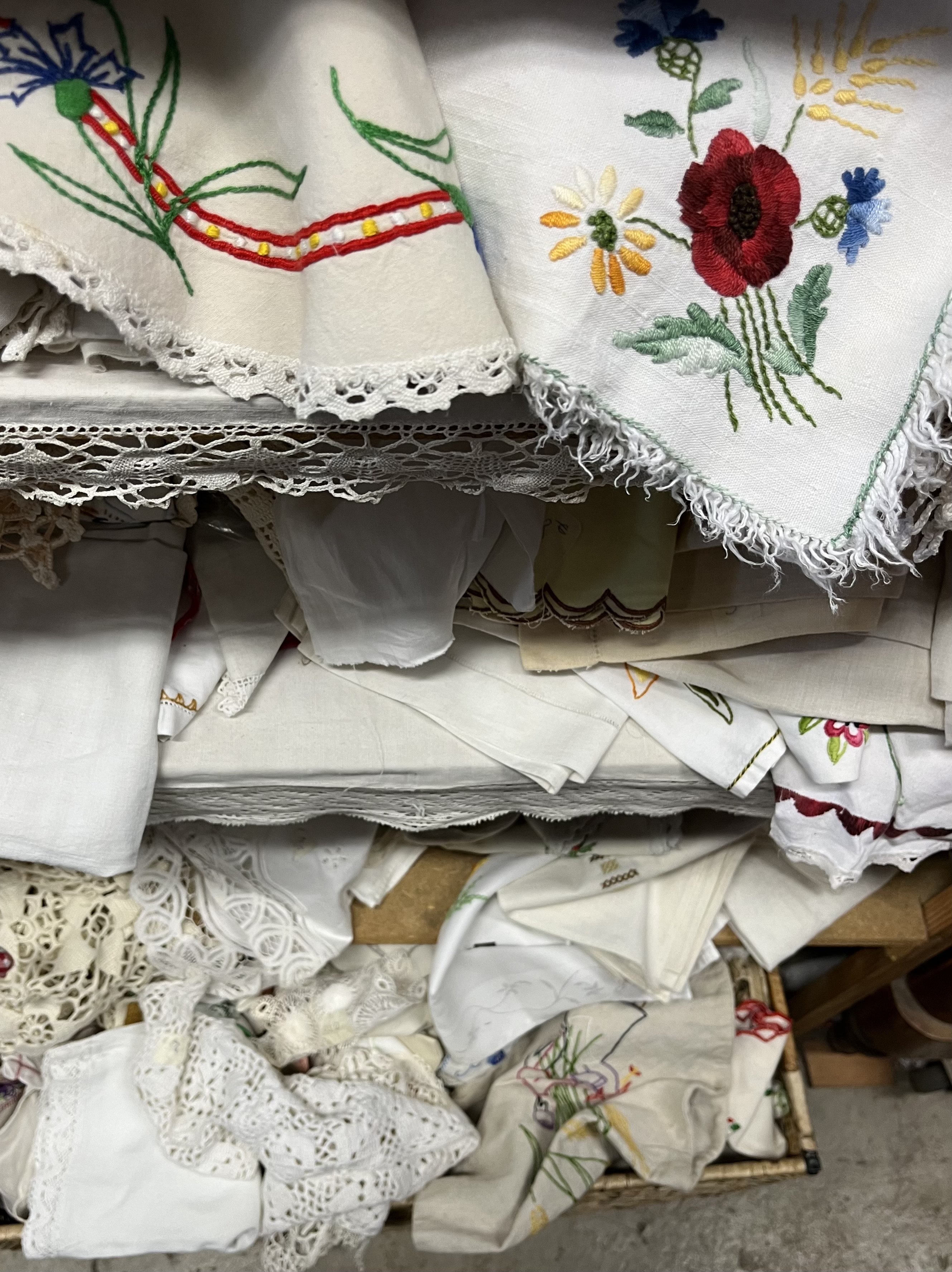
It is very, very charming, a magical place.

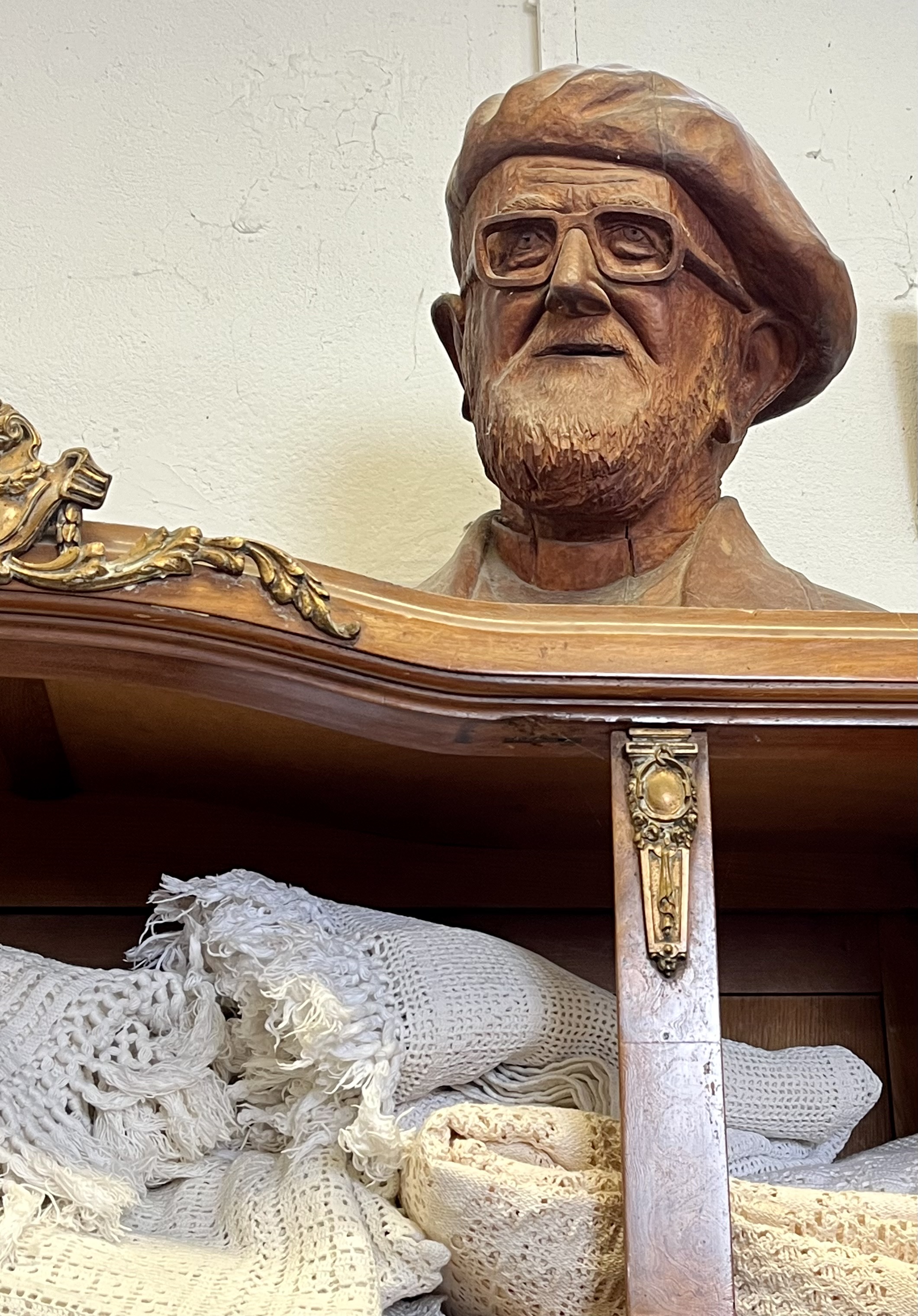
Filled with stuff like this.

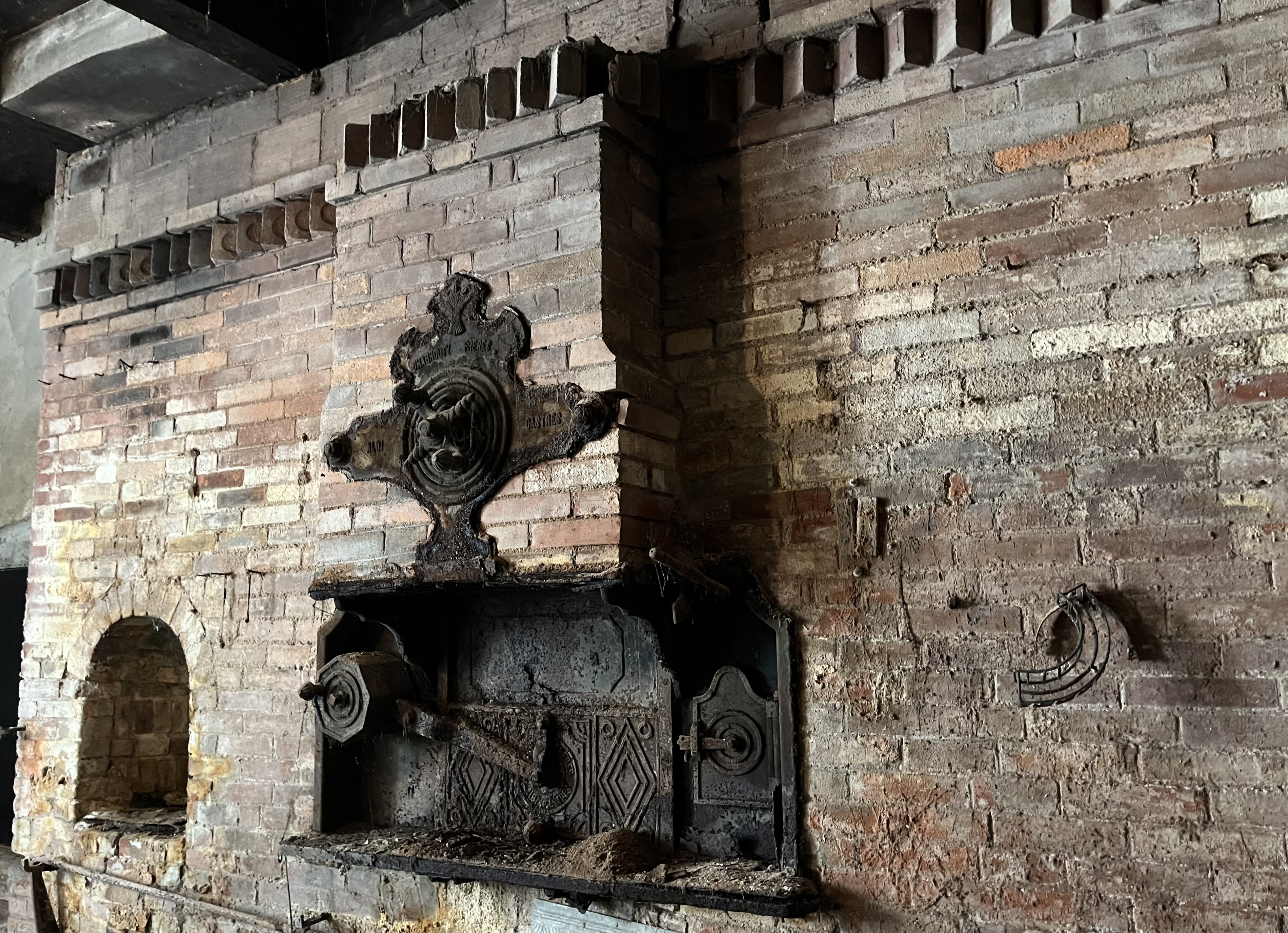
And that that ancient bakery!

Of course there are more a few black holes that would need to be dealt with, like the low wooden shelf or seat in the downstairs bathroom that I thought might be a well. When we lifted the top off, layers and layers of newspaper, paint, and rust showered down. No point in looking in.

But it would be possible for someone to live in that house almost as is. Some plumbing would probably have to be done, but the first floor has 25-year old decent wiring and lighting. The bedrooms are delightful as they are, and so is the upstairs bathroom. A temporary kitchen of some sort could be set up, though the old wood and gas cookers, gems themselves, are there.

With tax and fees, the house and bakery would cost roughly 100 000€. Tax is 950€/year. So appealing! I almost couldn’t resist.

The morning after we saw it, however, the weight of the project hit me. We live so lightly now: small house, very small electric car, and everything we need in walking distance. 

Why would I even consider taking on a huge stone building, no matter how beautiful it is?? Then I realized how much of my mental and physical energy had already gone into that place over the last three days! 

I went back to listening to astrology and contemplating existence outside the confines of time and space.

Beyond the confines of the 3-D World

Einstein identified the fourth dimension as time, already a stretch to envision as a dimension, but the fifth is even harder to understand. Our civilization is so thoroughly engrossed in the gross world of matter that we can barely imagine it. Subtler worlds, if our physical science-based understanding gives them any credence at all, are only very slowly being discovered. Ganesh Baba often pointed to the discovery of electricity when talking about increasing understanding of subtle energies.

On the second day I spent with Ganesh Baba, he drew a diagram on a paper napkin that he told me encapsulated his entire cosmology. In brief, in an endless cycle, consciousness creates matter, and matter evolves into consciousness. 

(To align with the yogic teaching that good posture is essential to conscious evolution, he placed “Homo Erectus,” meaning having a straight back, above “Homo Sapiens.” The spine running up the center is replicated in the human body as the chakra system.)

Ganesh Baba described eight fields functioning in eight dimensions: matter, energy, space, time, life, mind, intelligence, and consciousness, each more subtle than the last. He identifies the fifth dimension as life. Indeed, neither time nor life is understood very well at this point of human evolution, and mind is an even greater mystery.

The Cycle of Synthesis is an attempt at a 2-D representation of an 8-D cosmos, a fractal universe, microcosm in macrocosm and vise versa. It is not static—rather, it is constantly in flow, twisting and turning, expanding and contracting, in an infinite number of directions, smaller and smaller, greater and greater, replicating itself in an infinite number of manifestations, each one connected to all the others.

As in a Moebius strip, the twists in the helix at the center of the drawing indicate shifts from one dimension to the next.

Passing through them is like water going down a drain. The water turns more and more quickly until suddenly it’s somewhere else. I think the transition human consciousness is going through is like that.

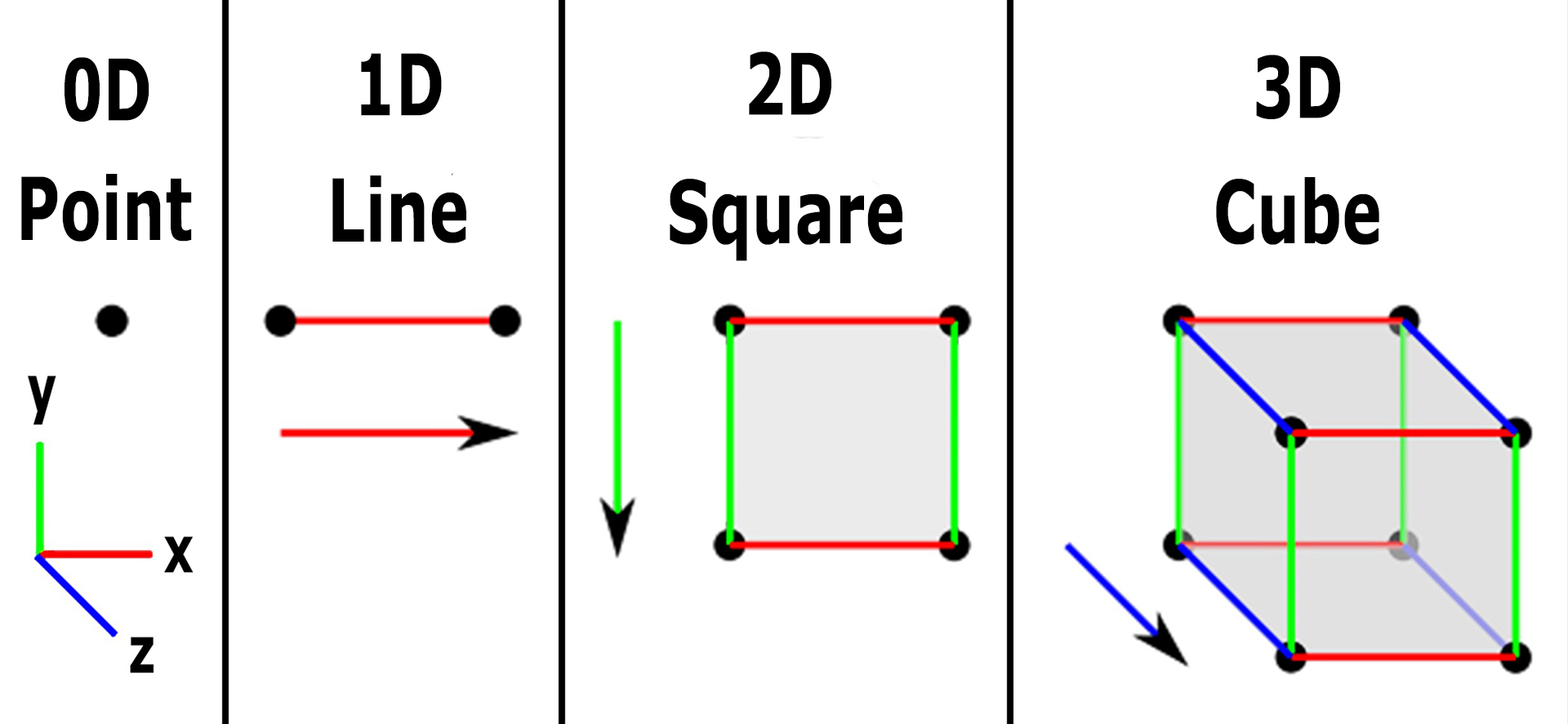
It’s interesting to consider that the perspective of the lower dimension is always subsumed into the perspective of the higher one, as when a point becomes a line, a line becomes a square, and a square becomes a cube.

If the point moves, a line exists. The line moves into a square, and the square moves to become a cube. Move the cube, and time exists. But beyond that?

What comes first? Consciousness or matter?

In most non-Western perspectives on existence, consciousness precedes matter. Even in the bible, God creates the earth. Assuming that only what can be measured is real is a recent twist in human understanding. It’s a limiting conception, though certainly a useful one in the practical world. If the great god of civilization, Science, wants to survive the coming twist, it will have to let go of the shores of time and space and greet the coming age of immeasurability with curiosity and eager anticipation.

I have less hope for the other worldwide religion of our era, the Economy, and its god, Money. I can easily see Mr. Moneybags falling off the edge of the earth to become a monster. An idea that particularly struck me during my studies at Pacifica Graduate Institute is that as dominant mythologies shift, for example from the “pagan” religions to Christianity, the old gods are forced underground, or off the edge of the earth, where they’re perceived as devils. It happens every time.

In Ganesh Baba’s model, following the downward arrow on the left, consciousness condenses into matter. Then, as it evolves back toward its source, more and more of the whole becomes comprehensible. As well as being reflected in the human body as the chakras, the Cycle of Synthesis mirrors Indian theory of the Yugas, a cycle of epochs in which the understanding of subtle things recedes as the earth moves away from the center of the universe, and increases again after it reaches its nadir and moves toward the center again.

So, if, as many astrologers are now saying, we are moving out of the Kali Yuga, the period of least understanding, into an era in which subtle energies will become more apparent, we will have to learn to navigate in the bio-psychic and intello-conscious fields in Baba’s diagram, the dimensions beyond space and time.

One way to do that is to begin by paying more attention to the interface, the twist, the liminal place, where fourth and fifth dimensional events show up in the 3-D world.

That’s why the dramatic incursion, in the form of that very attractive, very large three-dimensional stone house, into my fourth- and fifth-dimensional musings struck me. It was magic. That opportunity came into my physical world via a current of synchronicity. Its appearance overrode the laws of time and space, and I was very nearly beguiled.

What’s next?

Now, I’m on the lookout for magic. I’m asking a question before going to sleep, hoping for a response in my dreams. I’m actively looking for coincidence, actively seeking synchronicity.

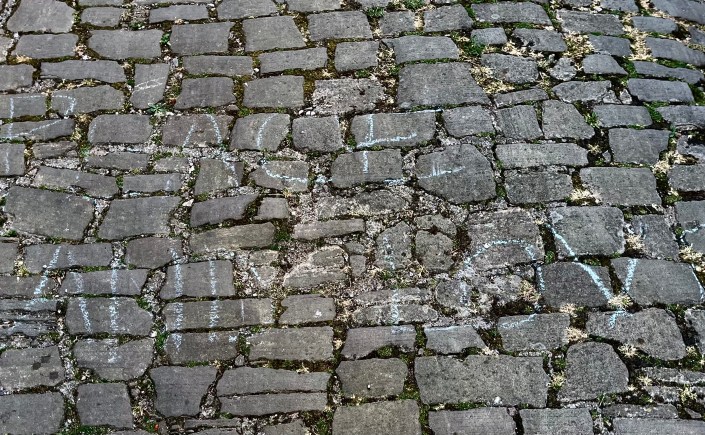
So it was that I noticed some writing in blue chalk on the cobblestones of Rue Saint Louis as I walked Mocha one morning this week, when I had just begun this essay. The message is a little hard to read, but the words are in English, even though I found it in our beautiful French village.

Rue Saint Louis

PEACE AND LOVE

It’s still the answer.

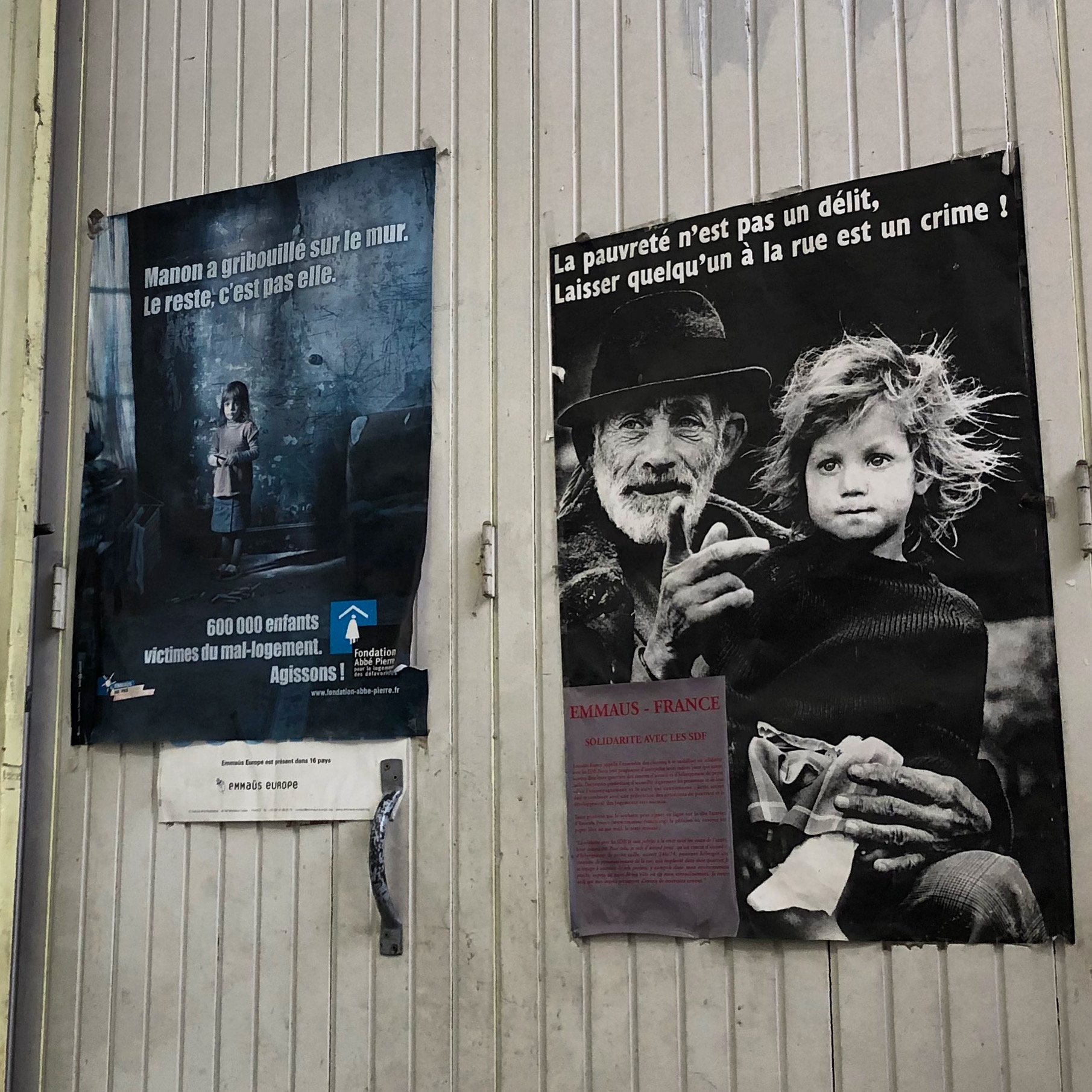
And now for something completely different…Emmaüs in Carmaux

When Hitler took Austria, 1938

Adolf Hitler and Kurt Schuschnigg, from The Evening Post, February 17, 1938

The end of the second volume of Two Suitcases is taking much longer than I would like. It’s not only that the holidays here in Cordes-sur-Ciel are surprisingly convivial, but also that the historical setting is difficult. I’m writing about the Anschluss, when Austria merges into Germany between March 11 and 13, 1938. The significance of the event requires extra detail, and I like to get the small things as historically accurate as I can. That means returning to my resources, including as many primary ones as possible.

My consistently favorite source is George Gedye, a left-leaning foreign correspondent who reported from the midst of the tumultuous events. He was an embedded reporter—before the term came into common usage.

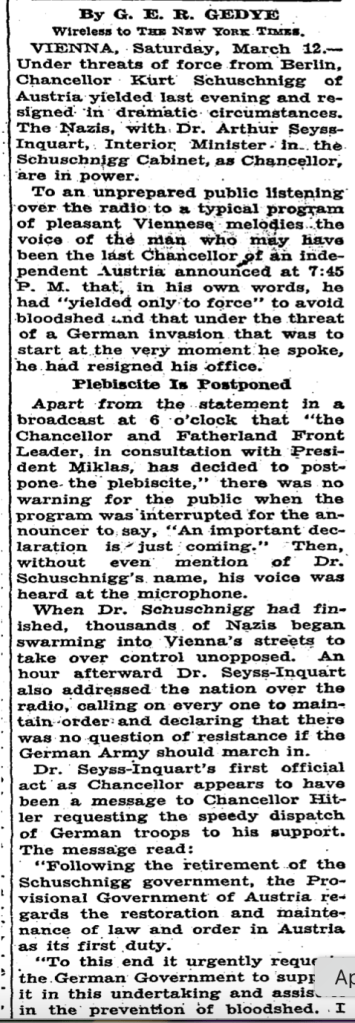
Today I’m working on Friday, March 11, the day Austrian Chancellor Kurt Schuschnigg capitulates to Hitler’s demands. Here’s part of a long article in the New York Times that Gedye submitted from Vienna.

It continues to amaze me how often my writing has strong parallels to the current political situation in the US. Sometimes it seems I can’t move ahead in the book until the current events catch up. That’s usually when I go deeper into the research again. Unless I’m interrupted.

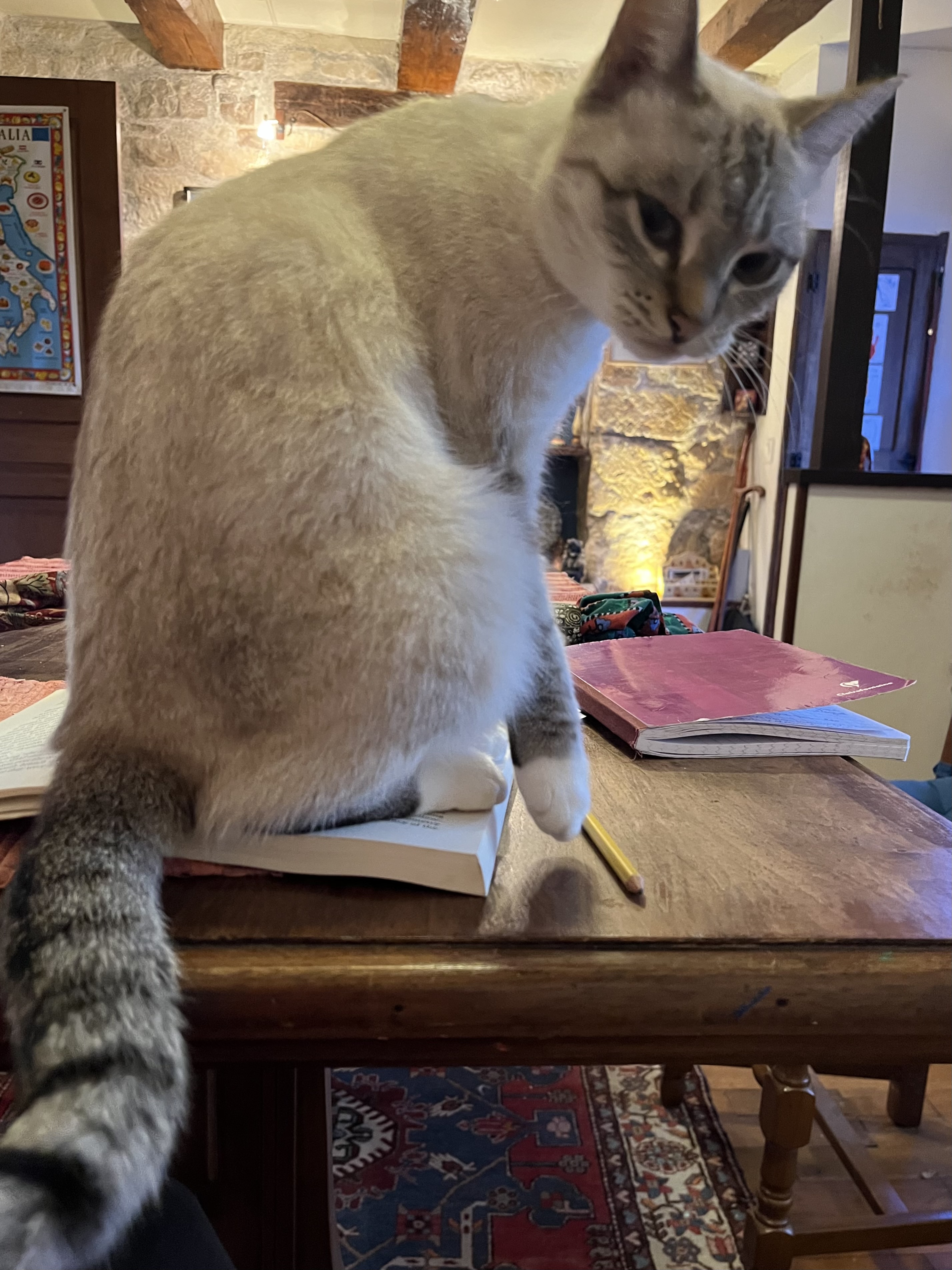
Ella is helping out by sitting on Gedye’s book, Betrayal in Central Europe.

—or there are friends visiting, or apèro waiting at a neighbor’s place—or someone knocking on my door with New Year’s greetings, or a holiday dinner party to go to—or a New Year’s Eve dance party, or a concert, or a solstice ceremony or an art opening… Phew. No wonder I’ve done so little writing.

I’m looking forward to the winter.

Tiny Worlds: Discovering Secrets in Abandoned Spaces

For years I’ve watching the slow disintegration of the door of an abandoned house on rue de la Bouteillerie. Once in a while I take a picture of it, or of some part of it.

Yesterday I took a few pictures. Here’s the first one:

You can eat that plant with the round leaves. It’s called Le Nombril-de-Vénus (Umbilicus rupestris), Venus’s belly button, in French, or Pennywort in English.

It wasn’t till I got home and took a look at the pictures, though, that I realized that some magic is taking place behind that door.

There’s a tiny world with a staircase inside!

I wonder if very small people use those stairs?

Next time I pass I guess I’ll have to lie down on my stomach to get a better look.

The Rise of Austria’s First Dictatorship: Key Insights

In the process of writing the second volume of Two Suitcases I continually return to historical sources to check that I’m getting the story right. As I reviewed and revised a chapter in which the Revolutionary Socialist Party of Austria is introduced, I came across an article I hadn’t read before, “Thinking
 Cosmopolitan
 or 
How
 Joseph
 became
 Joe 
Buttinger” by Philipp Luis Strobl. What a find!

Joseph Buttinger will be making at least a cameo appearance in my new novel, but I think his story should be shared now because of its relevance to the current political situation in the US. I’ve cut and pasted the opening below. The entire article, even in its slightly flawed English translation, is worth reading. Read it here: http://www.science.usd.cas.cz/Presentations/Strobl.pdf

On
 May
 27,
 1932,
 the
 Austrian
 parliament
 approved
 a
 new
 government
 that
 would change
 the 
democratic 
course 
the 
country 
had
 pursued 
since the 
end 
of 
the 
First 
World War.
 The
 new
 chancellor
 Engelbert
 Dollfuß
 now
 was
 in
 charge
 of
 the
 country’s leadership.
 On
 October
 1,
 he
 used
 a
 so‐called
 “emergency
 degree”,
 a
 wartime
 relict,
 to rule
 the 
country 
without 
the 
approbation 
of 
the 
Austrian
 parliament. 
That
 was 
the
 hour of
 birth
 of
 Austria’s
 first
 dictatorship.
 The
 consequences
 for
 the
 people
 were
 fatal. Unliebsame
 Personen
 as
 “unpleasing”
 persons
 were
 called
 at
 that
 time
 had
 more
 and more
 problems
 living
 a
 normal
 life.
 Particularly
 intellectuals
 who
 were
 engaged
 in
 the ideas
 of
 psychoanalysis,
 neopositivism,
 or
 austromarxism
 (socialism)
 had
 to
 fear reprisals 
from
 the
 government. Life 
became
 very 
hard
 for 
the
 government’s
 opponents, but
 for
 most
 of
 these
 persons,
 the
 situation
 turned
 from
 bad
 to
 worse
 with
 the incorporation
 of
 Austria
 into
 Hitler’s
 German
 Reich
 in
 1938.
 So‐called
 “enemies
 of
 the government”
 were
 forced
 to
 emigrate
 ‐
 and
 many
 of
 them
 did
 so.
 According
 to
 a
 1941 Office
 of
 Strategic
 Service
 memorandum,
 more
 than
 40,000
 Austrians 
had immigrated
 to the
 United 
States 
during
 the
 three
 years
 since
 the
 “Anschluss”
 in
 1938. This
 paper
 is
 about 
one 
of 
those 
who
 emigrated
 as
 a 
result 
of 
ideological
 reasons.

Synchronicity: Tarot Cards, the Witches’ Market, and the Aurora Borealis

Sometimes I have extraordinary dreams—some of them are told in the links below—and sometimes my life is filled with extraordinary synchronicity. A few weeks ago I was graced with a series of delightful synchronicities.

That weekend, Tom was still in Africa so I had plenty of time to work on my book. There were no real meals to think about, minimal shopping to do, just the dog to walk, which is good for me and almost always a pleasure. I was on a roll.

The last three chapters that I’d written were all pretty dark— the excerpt I published here a few weeks ago is part of one of them—so I decided to add in a lighter one. I gathered my characters in Gert’s parents’ sitting room for New Year’s Eve, had Gert put on some popular music with funny lyrics—it was good fun to do that research—and pretty soon everyone was singing and dancing. They couldn’t dance for all the hours before midnight though, so I figured they could play games. More interesting research. No parlor games popped up, but card games were popular. The first card games from that time and place that came up in my search were played with tarot cards. Good idea. Let the characters play the game and afterwards draw a card. Or better, I’d draw a card for each of them.

The characters probably would have used an Industrie und Glück deck, but I used what I had on hand—I’ve accumulated a good number of tarot decks over the years. The first one I found was my well-worn Waite/Rider deck from the 1970’s.

An Industrie und Glück deck:

I divided out the major arcana cards from my deck, drew one for each of the characters, and then wrote them into my story:

Gert puts one of the decks into two piles. “Pull the chairs back into a circle with a table at the center while I sort the cards.” When the chairs are in place she explains, “I’m putting the major cards, the tarocks, in one pile and the minor cards in the other. Then we’ll each draw one of the tarocks, and I’ll explain what they mean. Or at least what I think they mean.”

“Ooh, she’s going to tell our fortunes!” says Toni. “How exciting!”

“Me first!” Gisi calls out. “I want to get it over with.”

“Okay.” Gert shuffles the smaller set of cards and fans them out so Gisi can choose one.

Gisi looks at the backs of the cards carefully. She runs a finger over them. “No,” she says. “I can’t do it. Someone else has to start. Sorry.” She sits back in her chair.

“I’ll do it!” volunteers Max. Gert shuffles the cards again and fans them out for Max. He doesn’t hesitate, immediately drawing a card from the center of the deck and turning it over.

“It’s Der Naar, the Fool. What does it mean?” he asks Toni.

“Well, that’s appropriate,” she laughs. “It’s the wild card in the deck. It symbolizes beginnings, innocence, spontaneity, and a free spirit.”

“Very appropriate!” Hugo agrees. “I’ll go next.” He runs his finger over the cards a few times before drawing Der Herrscher. 

Gert smiles.The Emperor. Another good fit. The Emperor represents authority, the establishment, structure, and a father figure. He’s the ultimate ruler of the world.”

“Good God,” says Hugo. “Is that how you all see me? I always wanted to be an artist. Isn’t there an artist card?” 

“You are an artist,” says Anna, “but the card fits, Hugo. Accept your destiny.” Everyone laughs.

Leo volunteers next. He draws the Magician.

“Ah, my favorite,” says Gert. “Der Magier is the first of the Tarocks. It symbolizes manifestation and means that you can make your wishes come true.”

“Phew! A lucky one for me! What should I wish for?”

“That’s up to you,” Gert replies.

“Then I wish the power of Der Magier for all of us. May all our wishes come true.”

“Leo, generous as always! Thank you, my friend,” says Hugo.

The last rays of sun fill the room.

Everyone is smiling.

“Thanks!” says Anna. “I’ll go next, now that I have the power to make my wishes come true.” She takes only a moment to draw Die Sonne, the Sun.

Gert claps her hands. I think Leo’s card worked. Die Sonne signifies enlightenment, joy, marriage, and happiness.” Anna looks at the card and grins.

“You are an excellent fortune teller, Gert,” says Gisi. “I guess I’ll risk taking a card now.”

Gert reshuffles and fans the deck out on the table. Gisi looks over the back of the cards several times, pauses, and then slowly draws out a card slowly. She studies closely, holding it up to see it better. “I have no idea what this means,” she says, turning it around so everyone can see.

“Oh, it’s der Gehenkte, the Hanged Man,” says Gert. “It’s a complicated card, but it generally points to pausing—voluntarily or involuntarily—in order to assess your situation. It can also mean that it’s time to shift your perspective. Sometimes it means you’ll have to make a sacrifice.”

“Aha!” says Max, rubbing his hands together. “I thought this would go a little deeper eventually. I think it’s an accurate reading of where you are in life, Gisi—of where we all are, no? Very interesting, Gert!”

“It is a good representation. All of our lives are held up right now, aren’t they. None of us knows where we’ll be in a year,” muses Gisi, tracing the form of the hanged man with her finger.

 Hugo says, “I think all the cards have all been pretty good representations of who we are, or of who we could be.”  

“I’ll go next,” Toni volunteers, and Gert lays out the cards again. Toni also takes her time to choose. Eventually she closes her eyes and stabs randomly at a card. 

“The Hermit,” announces Gert. “Huh. Der Eremit isn’t a card I would have associated with you, Toni. The Hermit is a person who gains wisdom by being alone, through introspection. It also means the answer to your question will be found within.”

Toni is surprised too. “Soul-searching certainly isn’t something I’ve done much of so far in my life. All the other cards have seemed so exactly right though. Maybe I should take it up.”

“My turn now,” calls out Felix. “I’m so curious! Every one of these cards has been fascinating to consider.” Gert offers him the deck.

“Temperance. Die Mäßigkeit. Moderation,” she says when she see what he chooses. “Is that you, Felix? Or is the card advising you to be more balanced, more patient?”

“The latter,” says his brother. “Obviously.”

“I beg your pardon, Leo. I am the model of Patience. I ooze Balance from every pore.”  Felix stands on one leg, extending his arms, wobbling a bit, but then holding the pose.

“Very good!” Anna claps and the rest of the group joins in. 

“And now,’ Gert says. “I’ll pick one for myself.” She shuffles the cards three times and then riffles them. At last she chooses a card. 

It’s Der Tod, the Death Card. 

Everyone in the circle looks stricken. 

“Wait, wait,” Gert cries. “It doesn’t mean death literally! None of the cards are meant to be understood literally. It symbolizes transformation or change, or an ending.”

Anna sighs audibly.  “Of course, none of them is literal. Still, it’s shocking to draw it.”

Gert is shaken, but she hides it. “How about if we transition to Jause now? My parents will be home any minute. Come help me in the kitchen, ladies.”

When I had written that far, I took a break and walked the dog up the hill. It was surprisingly crowded in the village Saturday afternoon. Then I remembered that it was the day of the Witches’ Market!

There must have been half a dozen readers or sellers of Tarot readers there.

The second synchronicity occurred a week or so later. My chapter was dated January 25, 1938, so I followed my usual process of looking up what happened in Vienna at the time. It was a tense time then, six weeks before the Anschluss, when Austria merges into Germany.

In late January that year, the Northern Lights were visible in Vienna for the first time since 1805, just days before Napoleon marched into Vienna. Many Viennese saw their appearance in 1938 as an omen. Others were more hopeful—they thought it marked the birth of a princess in Holland.

I wrote the Aurora Borealis into my story by weaving together bits of whatever eyewitness reports I could find. The pictures were all in black and white, but the words were evocative. I went to bed imagining it.

In the morning, I saw that my social media was filled with pictures of the current Aurora Borealis.

A Marriage of Convenience – an excerpt from Underground

Underground is the second volume of Two Suitcases. This is an early draft of one of its chapters, including the photographs I used to write parts of it.

Chapter 39

Doctor Rudy Pollack

August 28, 1937

Westbahnhof station, Vienna

Dr. Pollack arrives by train. A tall man in his mid-fifties, portly but not overly so, he has  a generous moustache and wears small rimless spectacles. In one hand, he carries an old leather suitcase, and in the other, a smaller bag, and his hat. Anna and Max, who’d been waiting at the station, recognize him immediately from the photograph he’d sent. Anna slips it back into her bag the moment they spot him. 

“Dr. Pollack!” she calls out, and he turns toward her and smiles. 

“Fräulein Baum! Call me Rudy, please.” He puts down his suitcase and offers her his hand. “I’m very glad to meet you at last,” he says slowly in German.

“And I you! Do call me me Anna,” she says, and then she introduces her brother. Max picks up the older man’s suitcase and leads them out of the station to the tram stop, where they stand and wait together.

Dr. Pollack makes a wry face. “My German is very poor. You will have to forgive me.” He has a gentle manner, Anna thinks, and his eyes are kind.

“And my English is very poor,” she answers in careful English. “We will have to forgive each other.”

“But we will manage!” they both say, he in German, she in English, and all three of them laugh.

Anna continues in English, hoping she’ll remember the words she’d copied into her little notebook that morning, and that she’ll pronounce them well enough to be understood. “We will take you first to your hotel, and then, if you are not too tired, we will go for something to eat at the Prater.”

He responds in English. “Well said! I am happy to go to my hotel and then eat at the Prater.” 

On the tram, Max and Anna share a seat. “I think it will work out, Anna,” Max says. “You can tell right away that he’s a good man.“

A few hours later, Gisi, Max, Anna and Rudy emerge from another tram. In front of them, the Riesenrad, the tallest ferris wheel in the world, rises high above the trees and buildings, its thirty coaches carrying a dozen passengers each, swinging gently.

“Cor, Blimey!” says Rudy in English, looking amazed. “It’s enormous, indeed!”

“Cor, Blimey,” repeats Anna slowly.  “It is en…nor…” but she can’t remember the rest. She sighs.

“You’ll learn, Anna,” Gisi says to her. “Don’t worry. It won’t take long.”

The conversation goes on like that, Rudy exclaiming over the park-like grounds, the rides and games, and the crowds, young and old, rich and poor. Between them, they piece together a basic understanding. 

Eventually a grand plaza with a massive domed building at its end opens in front of them. Crowds fill the long, broad, tree-lined square, almost everyone moving in the direction of the ornate exposition complex, the Rotunde, at the end.

“It’s especially busy today because Die Messe Wien, the Vienna Fair, will only be at the Rotunde for one more week,” remarks a short man beside them in perfect English and then in German. He points toward the great gates of the exhibition center with his cane. Wearing a slightly floppy black hat and baggy trousers, he paces himself to seem like he’s part of their party, though no one noticed him before. “It’s the greatest exposition in the world in the most magnificent setting in the world. You are on your way to see it?” He switches between languages remarkably fluidly. 

“No,” Max responds. “Not today.”

“But it is very much worth your time! There are hundreds of marvelous exhibits from every corner of Austria, all the latest and best products are on display for you to see or try. Please reconsider. I would be delighted to be your guide.” He tips his hat. “Let me introduce myself—I am Hans Wurstel.”

“We don’t need a guide, Herr Wurstel, thank you,” says Anna firmly, but the little man continues, first in German then in English. 

“A translator, then. Forgive me for eavesdropping but I couldn’t help noticing your difficulties in communicating.” 

“Okay, Herr Wurstel,” Rudy agrees. “I’m willing to pay you to translate for a short time.” He turns to the other two and says, “This will make it so much easier.”

Herr Wurstel translates his words and thanks Rudy. Turning to the German-speakers again, he tells them, “Your English friend is both wise and kind.” In both tongues, he goes on. “Let me tell you something about the Prater as we walk. Where did you say you were going?”

Anna, Max and Gisi look at each other in surprise. “We hadn’t said,” Max says. He smiles just a little as he continues, “but, in fact, we are on our way to a restaurant to eat some würstel .” 

He isn’t sure that he trusts the fellow, especially with name like that, but having a translator is probably a good idea. Marriage is a serious thing. 

Gisi doesn’t like the little man at all. She promises herself that she will keep a constant eye on him, and tucks her bag more securely under her arm.

Anna feels relieved. How fortunate, she thinks, that they should meet such a bright and funny man to provide just the service they need at the moment they need it. And more fortunate even, is that there is someone among them who’s willing and able to pay for it. 

The little man laughs heartily. “Of course! You came for wurstel, the sausage, and you found Wurstel, the translator and guide. I am indeed the man of the moment. Not only is Wurstel my name—not an easy one to grow up with, you can imagine—but we have just passed through Der Wurstelprater,  the world’s most amusing amusement park. The Prater itself is much larger, of course.” He indicates the enormity of the rest of the park with his stick, nearly hitting several passers-by.

The group spreads out to give their guide room. 

“The Prater was originally Austria’s Imperial Hunting Ground, and only imperial guests could enjoy it. But in 1766, Emperor Josef II, a great reformer, donated part of his grounds to the city to be used as a park. He’s believed to have said, ‘If I only wanted to associate with people of my own kind, I could stay in the Imperial Crypt.’”

“He was ahead of his time,” comments Anna.  

“It didn’t take long for inns, cafes, and Lebzelter, gingerbread, bakers to line its boundary. Many of the restaurants served the same delicious wurstel that you’ll be having this evening. When puppet theaters, seesaws, merry-go-rounds, and bowling alleys appeared behind the restaurants, the area became known as the Wurstelprater.”

When was the Riesenrad built?” asks Rudy. 

“In 1897. It was a great success at first, but during the Great War it was almost dismantled. By then it was badly run-down, and close to being sold for the value of the iron, which was much needed for the war. It would have happened, the great wheel might have met its demise, but oddly, not enough workers could be found to take it apart. Instead a rich business man came forward, bought it, and restored it. It’s still privately owned.”

“I could have told that story,” Max mutters to Gisi. “We didn’t have to pay for it.”

“You could have told it in English?” she asks softly. 

Wurstel continues. “But the Rotunde, which you see before you now,was built in 1873 for the World’s Fair. Its dome is the largest in the world, larger, I’m proud to say, than even the Pantheon in Rome.” They pause to admire the massive structure. “It weighs 4000 metric tons. Can you imagine?”

Ten minutes later, they’re approaching Zum Walfisch

“Can’t miss it!” cries Herr Wurstel, standing below the large signs pointing to the popular restaurant.

“Wait, let me take a picture of you there,” says Rudy, pulling a camera from his bag.

“Certainly,” agrees the little man. “If you will give me one moment.” He takes off his hat, blows on it to get rid of the dust, and, in a few deft movements, gives it more of a point at the top. Once the black hat is back on his head in a satisfactory position, he pulls a cigar from his pocket, lights it, and takes a couple of puffs. Thrusting one leg forward and holding the cigar up as if he’s about to take another puff, he says,

“There. I’ll hold this pose. Go ahead and take your picture. And then we’ll have the rest of you here with me for another shot. Good?”

Rudy is ready, and the shutter of his camera clicks.

Herr Wurstel releases his pose. “Now, another one with just Fraulein Baum and me.”

“Wait!” cries Gisi. “How much will these photos cost? Do you charge people to be in their pictures?” Herr Wurstel translates for Rudy.

Rudy replies to him in English and Wurstel says to the others, “He says the cost doesn’t matter—he just wants to remember this lovely day.”

“I want to talk to you privately,” Max says to Anna and Gisi as he leads them out of hearing distance. “It’s not the cost—though it takes some chutzpah to charge people to take your picture—it’s that we don’t know where the photos could end up. They could be lost or stolen and fall into the wrong hands. Then there would be proof of this encounter.”

Anna looks at him as if he’s crazy. “I’m marrying Rudy at the Rathaus tomorrow. What more proof could be needed?”

“I don’t know. You never know. These times are so uncertain.” 

Gisi says, “Dr. Pollack’s reputation could be harmed, I imagine, if the photos got into the wrong hands.”

“I say it’s his decision.” Anna is clear. “If Rudy wants the photos, and he doesn’t care if Wurstel charges for his presence in them, he can do what he wants. I’ll smile. I owe it to him.”