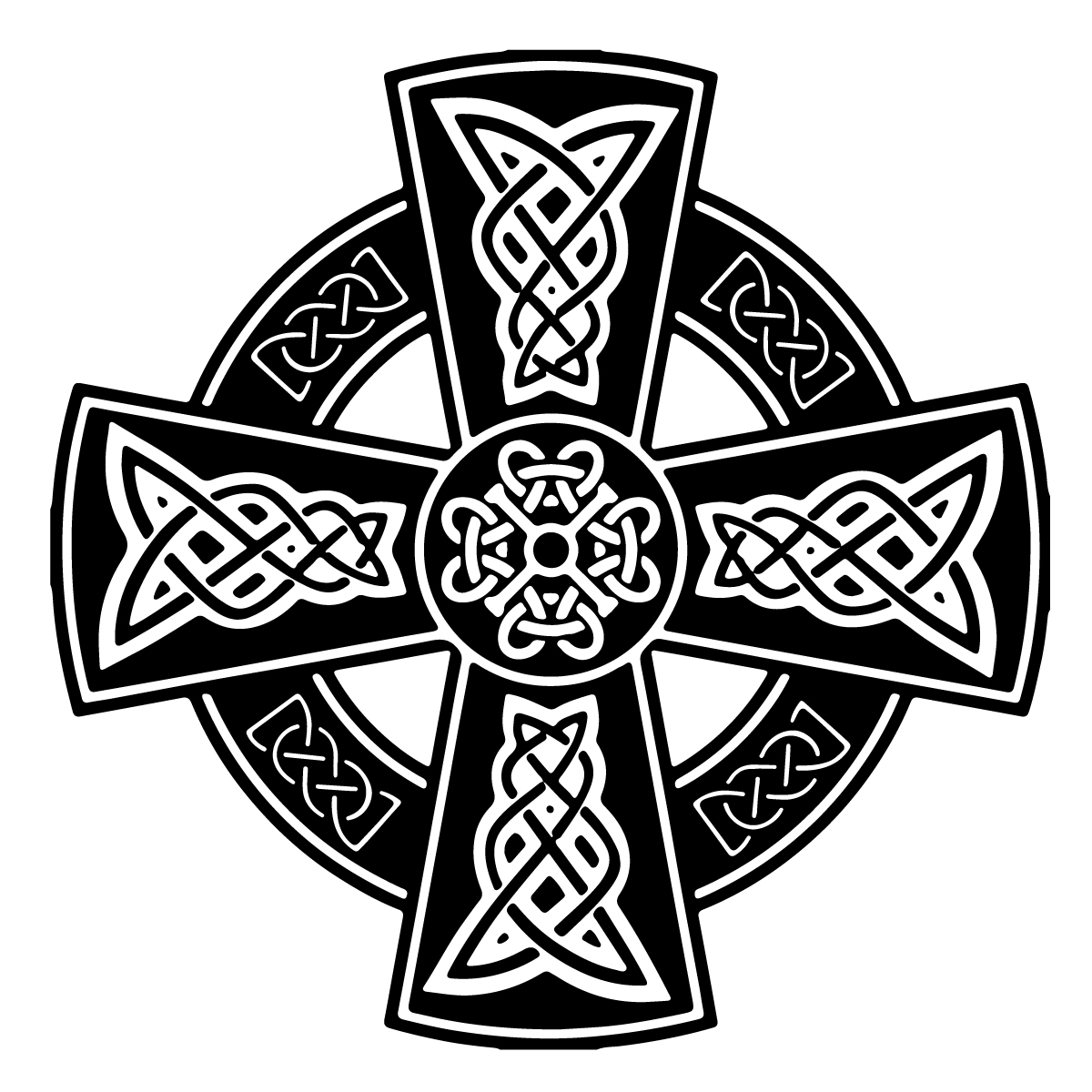
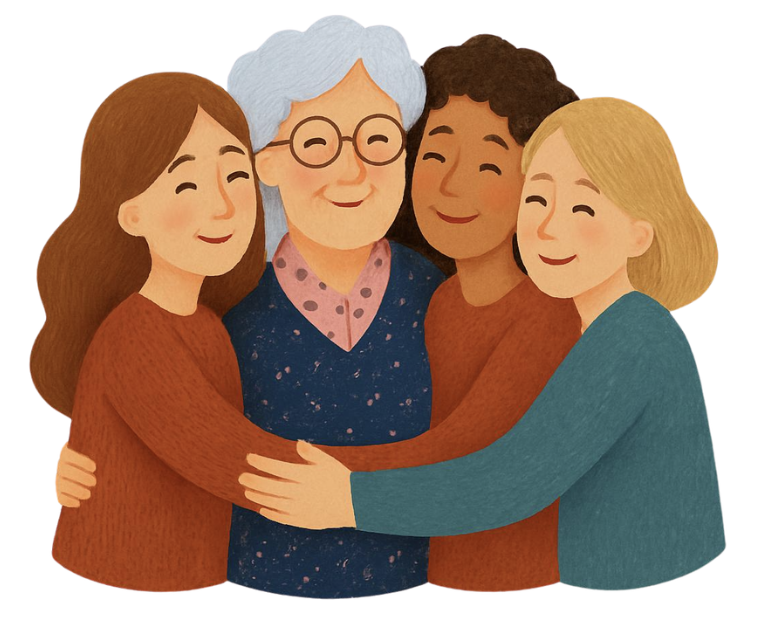
At just before six in the evening on February 20, 2026, I was immersed in a Japanese-style hot tub, perfectly round and not too hot, with three dear women friends. With our legs bobbing in the warm water in front of us, the four of us formed a Celtic cross.
It was a seminal moment. We all knew it.
At just that time, the conjunction of Neptune and Saturn was exact. Not only was it exact, which happens every 36 years, but it was exact at 0° Aries, which only happens every 6000 years.
And, not only was it exact, but it fell exactly on the north node of the moon in my birth chart. And we were at that spa at that moment to celebrate the birthday of one of the other women.
That’s a lot of astrology to unpack, and I’ll do it, but first, take a look the Sabian symbol for 0° Aries:
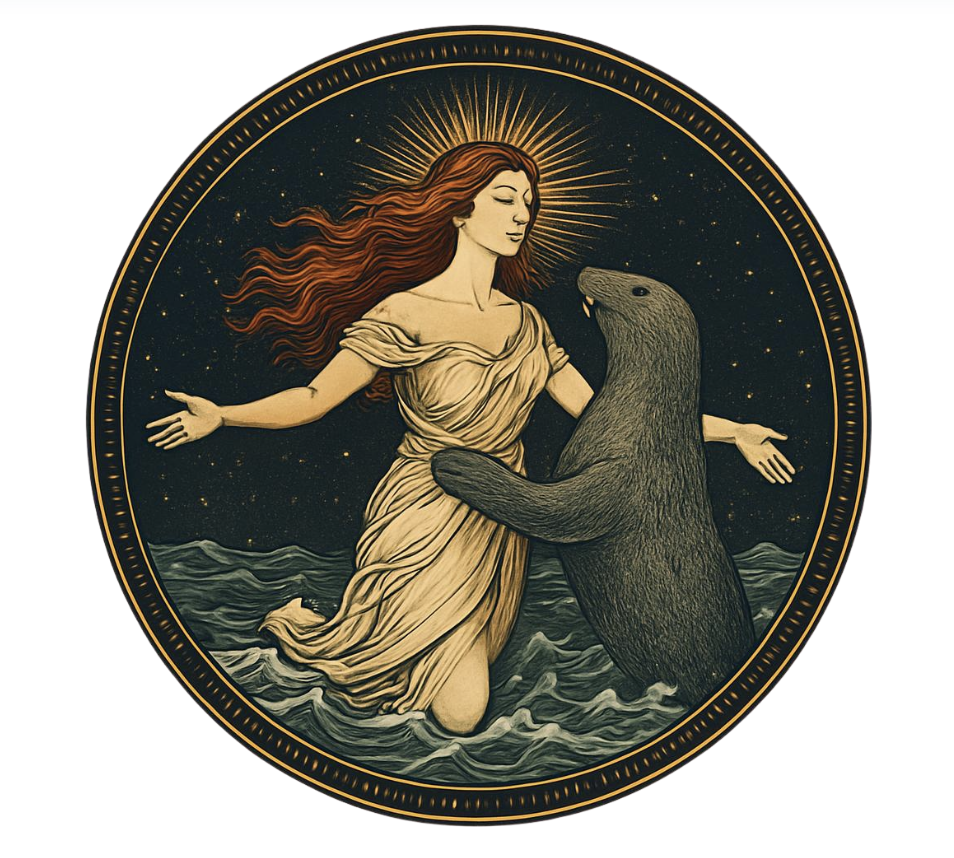
A Woman Just Risen From The Sea; A Seal Is Embracing Her
I hoped the four of us would take that moment to rise from the water and embrace, but, sadly, the water wasn’t welcoming enough for any of us to feel like submerging.
So we meditated and emerged from there to embrace.
What’s the significance of all this?
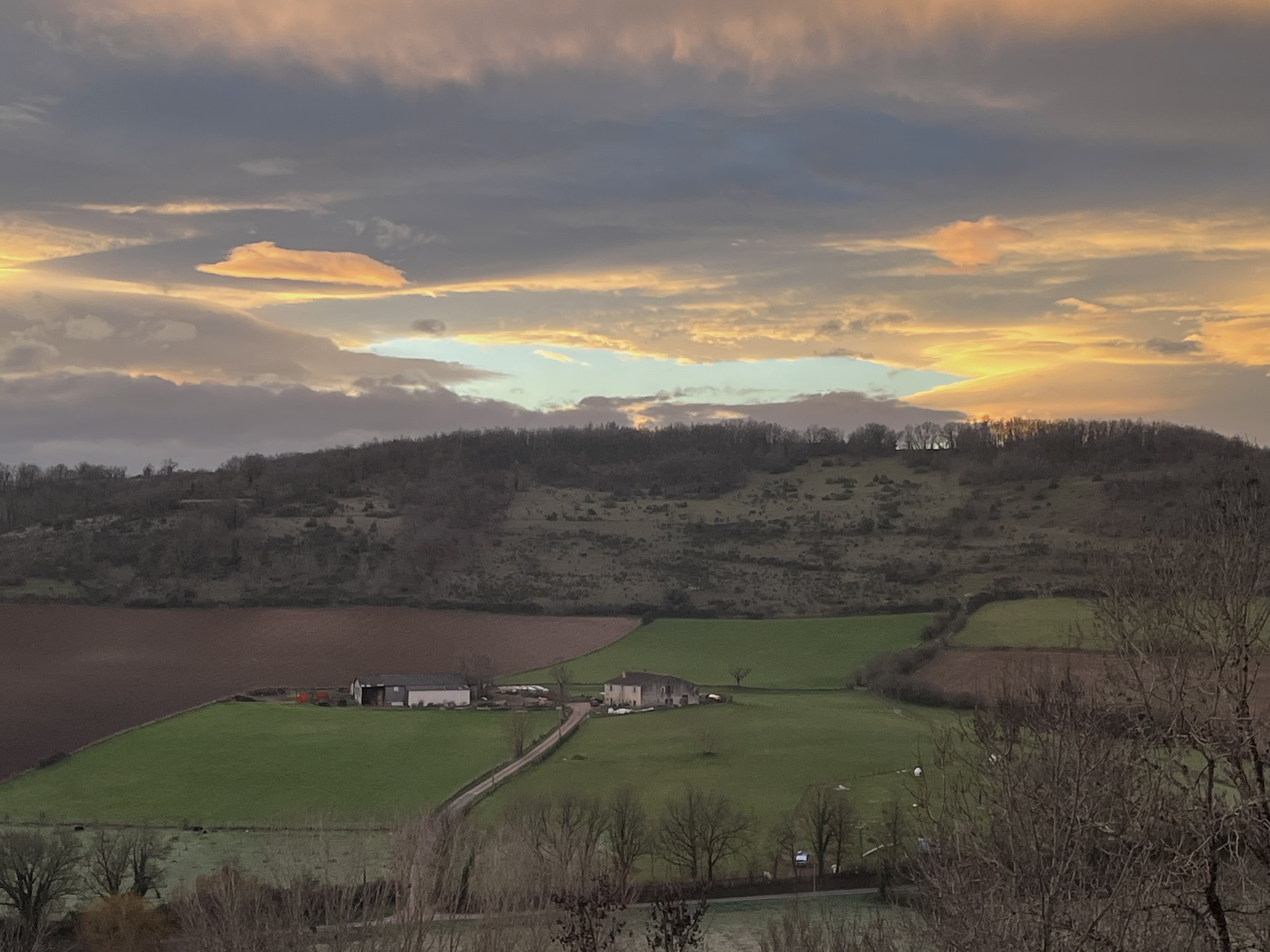
Last night I dreamed that I was deep in a forest with a group of people. We’d had to escape from somewhere and there was a question about whether we had brought the right stuff with us and whether there was enough food. It was a fairly large group of people, maybe twenty or thirty. I was at the back of the group, walking slowly with a companion. When we caught up with the others, they were cooking and eating. I was happy to see that they had roasted some chicken and that I had a choice of either a leg or a breast piece—I didn’t want them both because it seemed like too much.
Our whole civilization is entering the deep woods of uncertainty, and the question of whether we’re bringing the right things with us matters. The dream is reassuring—there’s enough chicken for us to have a choice, even if we’re the last to be served. Yet it would be a mistake to take it literally. Most of us won’t have to carry chickens along as we navigate the deep woods. We have to take some form of symbolic sustenance.
In the fall, while preparing a presentation for the Seeker’s Compass (watch it here: https://youtu.be/iQIEb5dbF9w), I remembered the profound importance of living symbolically. I’ve appreciated the idea since I was fourteen or so, when the marvelous creative writing teacher at my summer camp introduced us to the power of myth through the work of CG Jung and Joseph Campbell. (My eternal thanks go to Joe Beatty at Lighthouse Art and Music Camp). Ever since, I’ve attended to the metaphors behind details of daily life. I even studied myth at Pacifica and, in my work with Alice O. Howell, focused on seeing the sacred on the commonplace as well as on astrology—but when I used those words “living a symbolic life” in that talk, something powerful reawakened in me.
In the talk I said something like, “In these liminal times, living a symbolic life is surely one of the ways through to the next world.” It wasn’t a phrase I intended to put into that talk, which I gave several times, live and on camera, with and without notes. It wasn’t in my notes.
After the talk, I thought, huh, good thing nobody asked me a question about that—I wouldn’t have known what to say, or who to attribute it to for certain. I thought I remembered hearing it first in a talk by James Hillman at Pacifica, and had assumed it was his. It actually comes from Jung himself. In The Symbolic Life: a collection of miscellaneous writings, he says,
You see, man is in need of a symbolic life – badly in need. We only live banal, ordinary, rational, or irrational things . . . but we have no symbolic life. Where do we live symbolically? Nowhere except where we participate in the ritual of life. . . .
Have you got a corner somewhere in your house where you perform the rites, as you can see in India? Even the very simple houses there have at least a curtained corner where the members of the household can perform the symbolic life, where they can make their new vows or their meditation. We don’t have it; we have no such corner. We have our own room, of course, – but there is a telephone that can ring us up at any time, and we always must be ready. We have no time, no place.
We have no symbolic life, and we are all badly in need of the symbolic life. Only the symbolic life can express the need of the soul – the daily need of the soul, mind you! And because people have no such thing, they can never step out of this mill – this awful, banal, grinding life in which they are “nothing but.” . . .
Everything is banal; everything is “nothing but,” and that is the reason why people are neurotic. They are simply sick of the whole thing, sick of that banal life, and therefore they want sensation. They even want a war; they all want a war; they are all glad when there is a war; they say, “Thank heaven, now something is going to happen – something bigger than ourselves!”
These things go pretty deep, and no wonder people get neurotic. Life is too rational; there is no symbolic existence in which I am something else, in which I am fulfilling my role, my role as one of the actors in the divine drama of life.
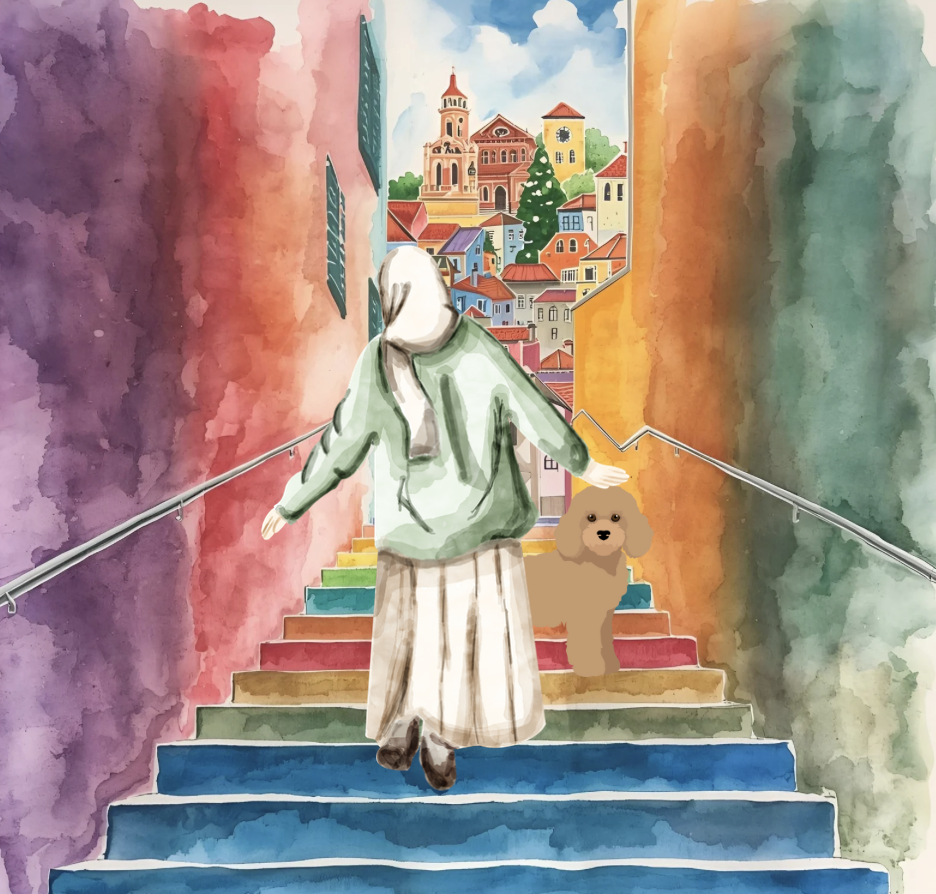
After I copied and pasted the above text into this essay, I thought I’d look for an image to illustrate the concept, maybe something from Jung’s The Red Book. The very first image that came up in my search was this one:
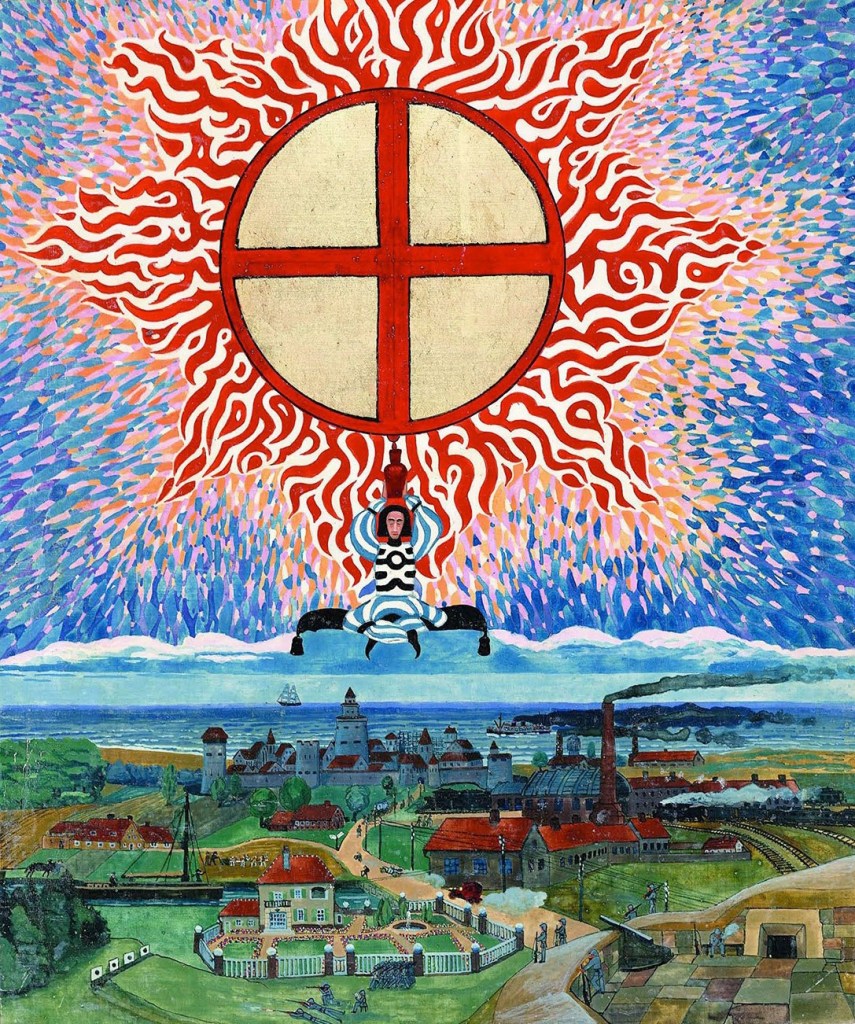
Over the top synchronicity.
But to return to the astrology that marked the moment: when the woods get deep and all the trees look alike, I often look up at the stars. Astrology provides a symbolic map for understanding changes in our personal and civilizational lives.
Astrology divides the celestial sphere into 12 sections or signs of 30 degrees each, for a total of 360 degrees. 0° Aries is considered the first degree of the zodiac, the threshold of a new level in the upward spiral of change. The exact passage, or conjunction, of two planets that appear to be moving slowly through the heavens, occurring at 0° Aries begs exploration.
Saturn is the furthest away of the seven “planets,” which in astrology include the sun and the moon, which are visible to the naked eye. Thus, it’s what holds the “world” together, the outer boundary, the structure.
Neptune, discovered using a telescope in 1846, was assigned the farthest out concepts of the time: imagination, illusions, dreams, the abstract, the mysterious.
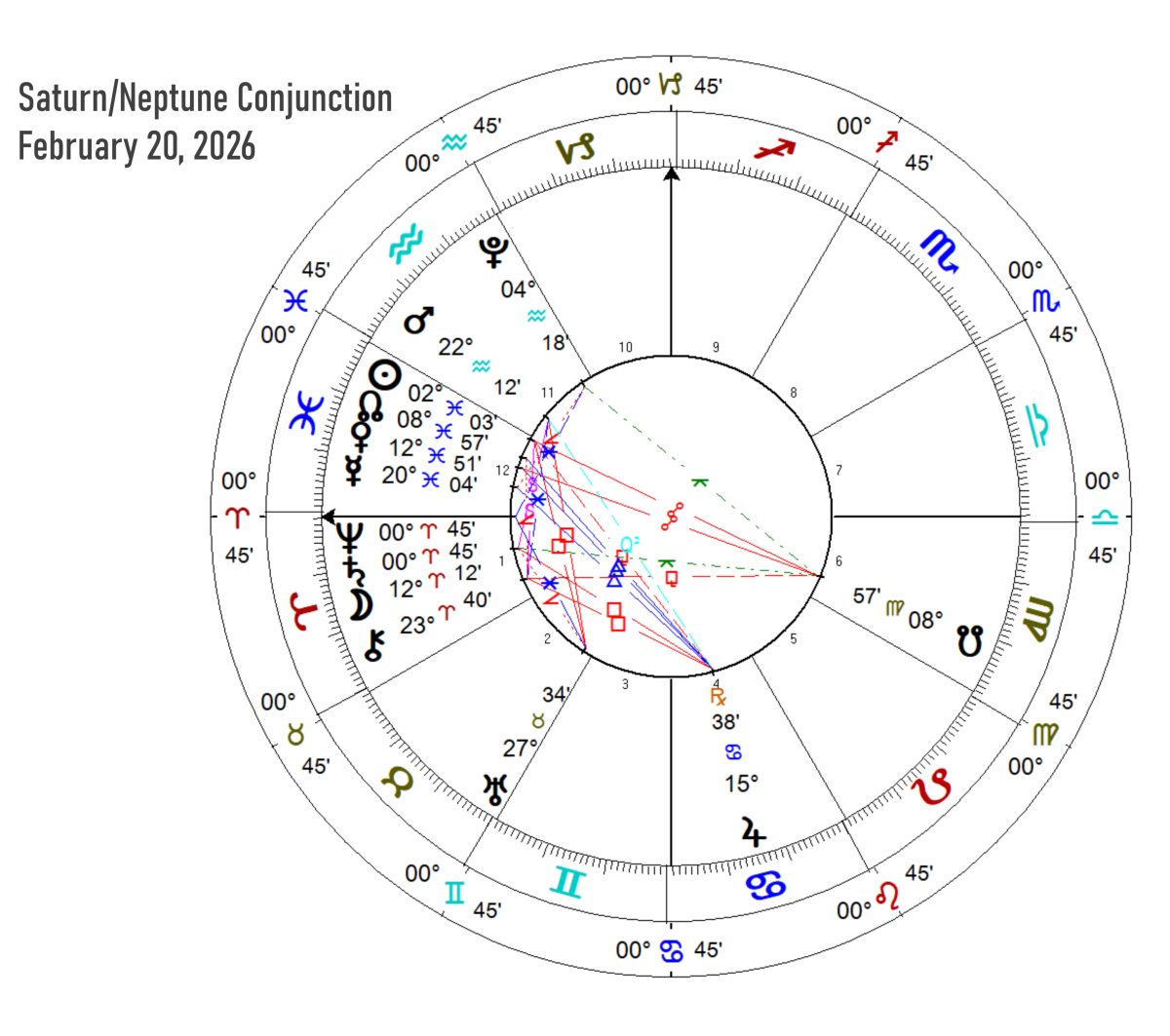
The conjunction of Saturn and Neptune indicates a merger of structure with dreams.
In a birth chart, the planets are laid out on the zodiac in the position they were in at a person’s birth, each planet at a certain degree in one of the twelve segments, or signs.
In 1925, an astrologer, Marc Edmund Jones, and a clairvoyant, Elsie Wheeler, created a series of 360 images, one for each of the degrees of the zodiac. They called them the Sabian symbols. Each one is completely unique. For example, the woman rising from the sea embraced by the seal is followed by a man entertaining a group of people, and a few degrees later, by a triangle with wings.
In addition to the planets, there are other markers that are assigned meaning, among them the lunar nodes, which mark the moon’s orbit as it intersects the apparent path of the sun. The south node is said to show what a person comes into life with, and the north node what their purpose is.
One of the basic things astrologers do is to compare the position of the planets in the sky at present, or at any given time, to their positions at the time of one’s birth. Thus, I knew that the rare conjunction of Saturn and Neptune at 0° Aries coincided with the position of the north node in my birth chart at 0° Aries. When I looked up the significance of that, Astrology.com said, “When planetary transits touch your north node directly, you’ll find significant, destined events and meetings take place. The north node is uncharted terrain and unlocks the key to your life’s purpose.”
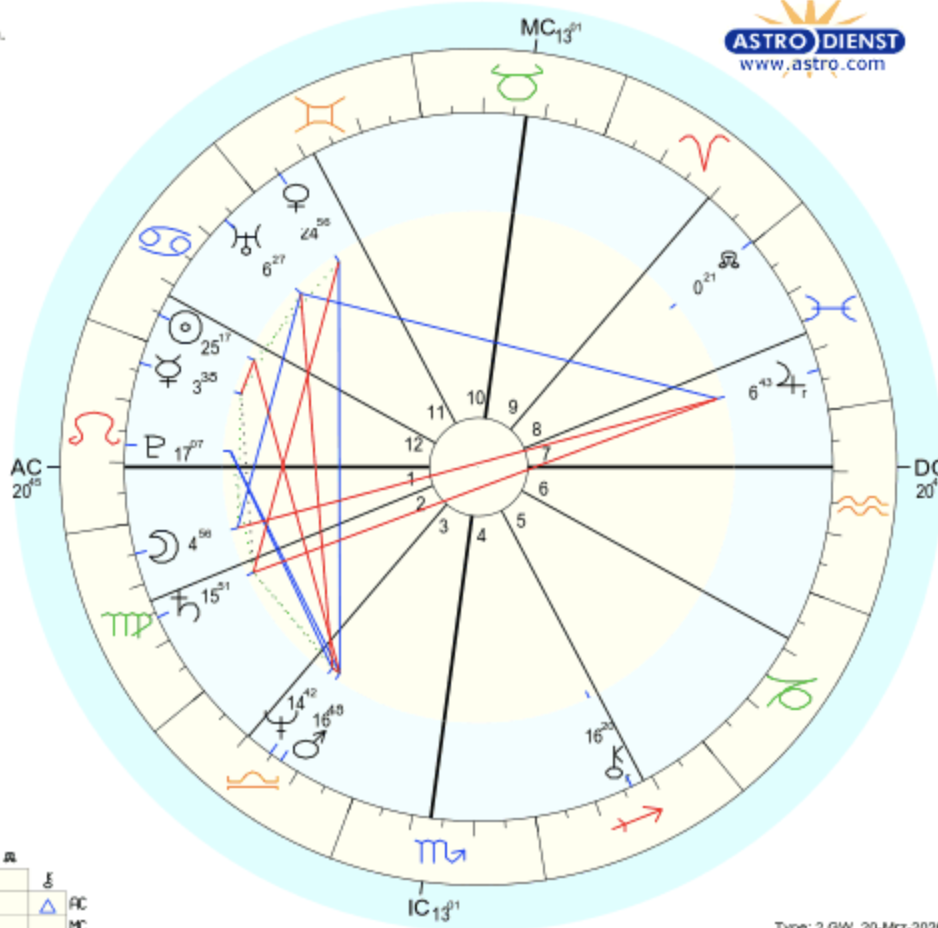
So, there I was, creating one of the four limbs of that cross in a circle at the exact moment of the structure/dream collaboration, at the exact point in time when I am supposed to come into whatever I came into this life to do. And with three dear friends, one of whose birthday was at the same time.
It’s taken too many words and too much time to get to this point in the story, so I’ll explore where the experience took me in my next post.
 Eve Neuhaus