Two Suitcases – an update and an excerpt

I haven’t had much time to write lately. What with watching Éva, charming but nonetheless 19 months old, up to five days a week; sorting and emptying this enormous house and getting it ready for the market; hosting a slew of wonderful guests, some paid, some not; and best of all, having our whole, hilarious family here for over a week, entailing regular meals for between 15 and 23 guests (impossible without the help of my sister-in-law,  Joanne Currie), quiet moments are scarce.

AND YET, the ancestors haven’t let up on me. Material floods in. My parents’ papers from Vienna, Paris, and Verfeil. Above, their identification papers from Tarn-et-Garonne, in France. Below, a history of the Social Democratic Party in Brigittenau, the neighborhood in Vienna where much of what I’m currently writing takes place:
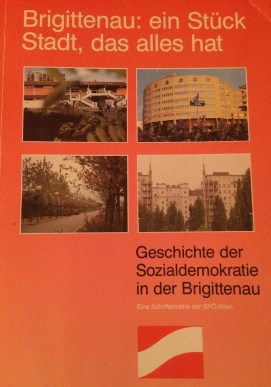
red Briggittenau book

I’m overwhelmed with gratitude.

Here’s a draft of the section I managed to write during all the uproar of the last couple weeks.

July 12, 1929

Vienna

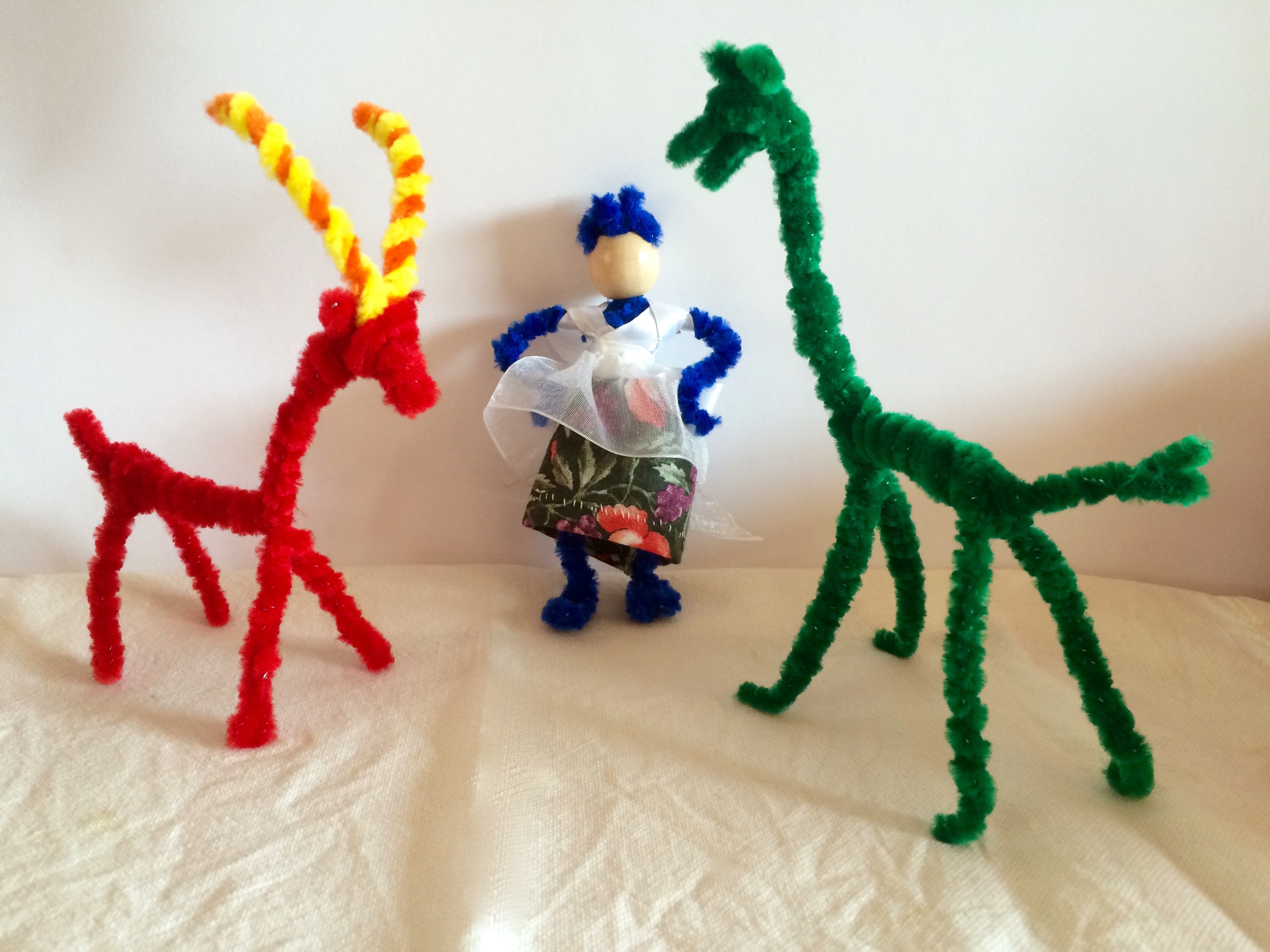
Gisi looks into the old mirror on the inside door of the armoire and straightens her red tie for the fifth time. Her new blue shirt looks good but the tie isn’t hanging quite right. She wants everything to be perfect. Finally the tie is right. She takes Mitzi, the pipe cleaner antelope her grandmother made, from her shelf in the armoire and slips her into her pocket. Mitzi always comes along to important events. Moments later, Gisi is hurrying down the stairs to catch the streetcar to the Heldenplatz for the opening ceremony of the Second International Socialist Youth Congress. 

The sight that meets her as she steps out of the car is stunning. As always she is early – but the huge plaza in front of the Hofburg Palace is already filling with many thousands of young people. Troops of children, from seven years up, their leaders, and throngs of young adults are pouring from every direction, following and clustering around red flags in a variety of shapes and sizes. 

All the same beautiful deep red, the flags symbolize International Socialism. At the entrances to the courtyard and on the steps of the palace, tall, narrow flags flutter from very high poles. Similar narrow flags are scattered across the plaza, but most of the thousands and thousands of flags – everyone is carrying one – are simple rectangles of red. Each group carries at least one to which they’ve added a symbol to identify themselves, but the great majority are just red. It is so inspiring! As Trude winds her way through the sea of color and eager young faces, she’s filled with the excited energy of the crowd. 

“Hi!” she calls out, waving her arm at Leo and Felix when she spots them on the steps to the Federal Chancellery, where their group is gathering. The brothers got up at four in the morning in order to stake a claim on this fine spot. “How great! We have a perfect view!” Gisi says. She climbs up a few more steps to survey the plaza. 

Never before has such a group gathered.

“You won’t be able to stay up there,” Leo tells her. “Those steps are reserved for functionaries more important than our little group of event coordinators.”

“It’s remarkable!” says Felix, his eyes never leaving the gathering attendees. “It’s like an enormous symphony orchestra!”

Max and Anna arrive next. 

“We were just at the station,” says Max. “What a welcome we gave! A good-sized brass band was there and they were playing loud, but we young people were even louder. As the train pulled in, we formed a long, broad wall along the tracks, and waved and chanted ‘Friendship, Friendship!’ You should have seen the eyes of our comrades on the train!”  

Next come Hugo and Gert, she, in the new spring coat she made for herself out of offcuts from the dressmaker’s shop where she works. 

“It’s beautiful!” says Gisi, seeing the coat for the first time. “You’re so creative with so little!” 

“That is truly a compliment,” Gert replies. “Your mother is the queen of creative reuse! And you’re no slouch yourself.” Gisi smiles and turns a little to model her grey skirt, recently an old coat, swinging it outward gently to let the red trim show.

“Thanks! I’ll never be as good a seamstress as my mother, though,” she says. “I can’t compete. That’s why I worked so hard to get into Gymnasium.”

“That’s not true. You’re so smart! You’d be bored being an apprentice like me.”

“I don’t think I’d mind if I could work for someone else in a big shop like you do. But I would have to work at home for my mother! I wouldn’t be able to stand it!”

“I understand perfectly!” Gert laughs. 

The group is talking animatedly as the musicians seat themselves on the large balcony above the palace entrance. Then Anna looks up in surprise. 

“Emil!” she cries out. “You came!” 

“Would it be alright if I join you?” asks Emil.

“You aren’t part of our group,” says Hugo. “You really shouldn’t…”

“Why not?” Anna’s voice cuts sharply over Hugo’s. “Everyone, let me introduce my friend from the University, Emil Bloch. Emil, these are my friends in the events coordination group I told you about. Hugo Preis, the rude one there,” she glares at Hugo, then goes on, “and Gert Braun, his girlfriend, Leo and Felix Goldfarb, my brother Max of course you know, and this is Max’s girlfriend, Gisi.”

Emil subdues his inclination to flinch at her boldness, and nods and smiles at each one of Anna’s friends. “Glad to meet you,” he says. Only Gisi notices his discomfort with the way Anna spoke over Hugo; she feels the same way herself.

The orchestra begins with Richard Strauss’s “Festival Procession.” By the time they finish and the chorus joins in for the “Wake Up” from Wagner’s Meistersinger, every heart in the massive plaza is joined to every other. 

The hope of a new world is gathered.

Otto Felix Kanitz, founder of the Red Falcon scouts and head of the progressive Kinderfreunde school at the castle, Schönbrunn, greets the Future of Socialism, standing in the plaza before him. Karl Seitz, the mayor, welcomes them all to Red Vienna, living proof that a City of the People, For the People, is possible. The Dutchman Koos Vorrink, speaking for the International Youth Movement, announces that internationalism, the Internationale, the greatest conception of what humanity can be, is alive and flourishing. The orchestra is drowned out by the enormous cheer that rises from the crowd as the red flag of International Socialism is carried up onto the dais.

In the afternoon, guided tours of Vienna are offered, and most of the young people spread out over the city in small groups, visiting the social housing complexes as well as St. Stephen’s Cathedral, the Opera House, and other sights. The event coordination group splits up to prepare for the twenty-five concerts, celebrations, and performances that will be offered all over the city that evening.

Anna is the leader of the group preparing for Josef Luitpold’s poetry reading in the large meeting room at Karl-Marx-Hof  that evening. She intends to get there at 6, but how can she refuse when a group of her friends says they were going to a café for a drink and a bite to eat? 

“Hey, redhead, you come too,” one of them calls to Emil as he links arms with Anna and pulls her along. 

Emil is very entertaining on a couple of beers –Anna already knows that. An hour passes in laughter as comical imitations of the morning’s speakers mix with deep appreciation of the Youth Congress so far. The sheer numbers! The power of the language: “a City of the People, for the People.” And how tightly organized the congress is!

Oh my! Anna realizes that she should have left for Karl-Marx-Hof ten minutes ago. 

“I’ll find something for you to do, Emil,” she says over her shoulder as she hurries down the street. “But you really should have decided to come when I first invited you. We would have found a good job for you.”  He catches up with her. For a few moments, their long strides match.

“I’m usually good at making myself useful wherever I am. What still needs to be done before the bard declaims?” he asks.

“Just tag along and I’ll see when we get there.”

They board the tram together.

Gisi arrives at Karl-Marx-Hof and heads straight to the large meeting room. The room is unlocked, and but no one is there. She looks at her watch: half an hour early. All the way over, she worried she would be late. Well, she is not.

The high-ceilinged room is lovely in the late summer afternoon. The windows are open wide, letting in a pleasant, fresh breeze. Summer sun fills the space and bounces off the glistening wood floor. At the front, the podium is already on the dais. Banners hang on all the walls. Hundreds of folding chairs are neatly stacked on wheeled carts lined up along the back wall. 

The center of the room is gloriously open.

As quietly as possible, almost on tiptoe, Gisi crosses the huge room. She hangs her bag on the back of a folding chair, squints to look at the whole room, and then checks her watch again.

Humming the Skaters Waltz to herself very softly, Gisi begins to glide around the perimeter of the room, sliding on the highly polished floor as if she were skating. After just a few bars, she realizes how much more smoothly she could glide if she weren’t wearing shoes, so she pauses, unbuckles her sandals, and slips them off. Looking at her watch one last time, she leaves her shoes under the windows, and begins the waltz again. Her thin stockings slide beautifully. 

This time she sings out the melody, dah, dah, dah, dah!  Soon she leaves the edge of the room and glides across the middle. Then she skates around happily, making figure eights and graceful curves, singing all the time, until she notices with a shock that someone is standing in the door watching her.

It is Emil, who arrived at Karl-Marx-Hof with Anna a few minutes ago. 

“Go ahead of me, Emil, and go and see if we need to turn on the lights in the large meeting room,” said Anna, who needed to stop in at the office first.

When Emil gets to the large meeting room, it is filled with light, and a fairy, some lithe little thing in a blue blouse, a pretty skirt, and stocking feet, is dancing around the room alone, accompanying herself with a slightly off-key version of Skater’s Waltz. 

He is instantly enchanted. Should he announce his presence? Surely she will see him on one of her turns. In the meantime, he takes in the sweetness of this young girl dancing by herself so beautifully. 

When she sees him, Gisi is mortified. Her heart pounds and blood rushes to her face. A man saw her being so silly! 

Without retrieving her shoes, she heads toward the door to see who it is. When she realizes it’s Anna’s friend Emil, she’s even more upset. He must be at least Anna’s age – what, 20? – and he stood there watching her make a fool of herself. When did he come? How long was he watching her?  Suddenly she’s angry. How extraordinarily impolite of him! 

Breathing heavily, she stomps over to where Emil is leaning in the doorway. How dare he look so relaxed, so nonchalant? His long limbs remind her of a grasshopper. 

“Why are you here?” she asks bluntly. She is standing firmly in front of him, hands on her hips, looking up. He’s a head and a half taller than she. “Didn’t Anna tell you the poetry reading doesn’t start for another hour and a half?”

“Anna sent me up here to turn the lights on for that very event,” says Emil. “It seems it isn’t necessary.” He smiles at the fire in her eyes. 

Footsteps echo from down the hall. 

“Ah, here is the great leader herself,” he finishes, looking down the hall and calling out, “Anna, Gisi is already here!”

“Gisi! Well, there are three of us. Let’s set up the chairs,” says Anna, entering, brisk and businesslike, apparently not noticing Gisi’s stocking feet. 

Gisi gets to work, grabbing her sandals as discreetly as possible as she passes the windows, and scrambling to put them on while Emil and Anna are talking. 

Soon the rest of the group arrives, all of the three hundred chairs are set up and coffee is brewing in a samovar. 

The poetry is mythic, thrilling, larger than life. It speaks equally to the glory and the utter humility of humanity.  It extols peace and condemns militarism. The crowd cheers and swoons.

Emil wonders if he is the only one in the room who considers it bombastic and grandiose. But he is no fan of Wagner, either.
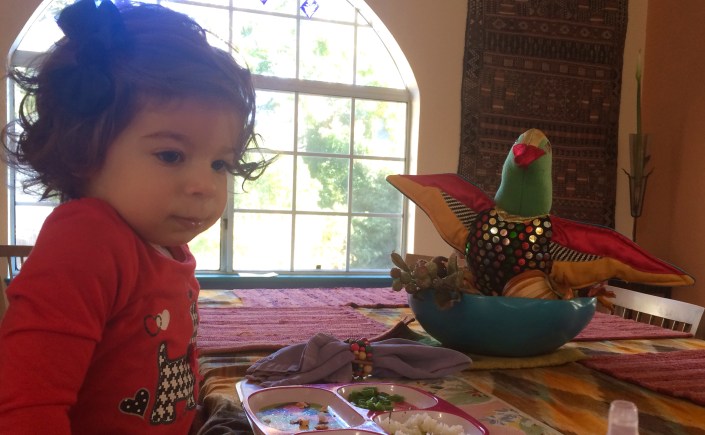
An Enormous Hummingbird

“Hummingbird!” Éva shouted. We’ve had this beautiful puppet around the house for years, but it never occurred to me that it was a hummingbird. After all, it’s over a foot high.

Éva’s impression of a hummingbird comes from Hildegarde Hummingbird in the Mr. Rogers opera she still wants to see every time she comes here. Hildegarde Hummingbird is about the same size as our puppet, so it’s really no surprise that Éva recognized the enormous one in our basket of puppets.

That makes seven hummingbirds. It’s enough to give you hope.

Two Suitcases: a wink from Emil

My desk is filled with photos my parents and their friends in the 1920’s through the 1940’s. None of the main characters in my historical fiction novel-in-progress, Two Suitcases, is alive.

I should have asked more questions.

IMG_7014I write from pictures, from old newspaper articles and newsreels, from family stories told many times or just once, from snatches of memory, from dreams. I read about the period and places where the story is set incessantly. Then I make up stories that could have happened.
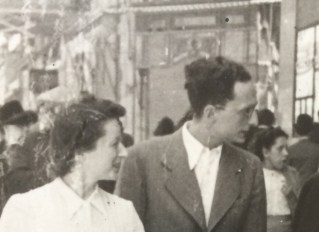
IMG_7015

There are four main characters in Ida 1940'sthe story: my mother and father, called Gisi and Max, my father’s sister, Ida, who’s Anna in the book, and a friend of the family, whom I call Emil. Six more characters play secondary roles. None of these are entirely fictional, but what they do in the novel is certainly not what they did in life. It’s fiction.


Sometimes I wonder if they approve.

I had the great fortune to be with both my parents when they died, and I was close to my aunt till the end, but until yesterday, I thought Emil died about eight years ago and no one knew to contact me.

In yesterday’s mail I found a beautiful handwritten note.

It says,

“Emil passed away October 3, a few weeks before his 102nd birthday. He was in good health and excellent spirits. He died peacefully at home. His heart stopped while he was reading the Wall Street Journal.”

The perfect ending.

I said good-bye to Emil in 2008 on my way home from India. I already lived in California then and came east very rarely. Emil was his usual gracious and elegant self. It was five years after my mother died, and he told me for the first time how he’d loved her. At 95, he was still walking long distances every day, but we talked about the likelihood that this would be our last meeting. He filled my rental car with treasures from his beautiful house and we stood in the driveway a long time saying good-bye.

Caught up in the hurly burly of home, I didn’t write a thank you note for some months. When I did, it came back stamped “unknown.” I mourned.

I should have asked more questions.

I missed seven good years of Emil’s life.

Still, over these last couple months, the character, Emil, has been pressuring me to give him a more and more important role in the story. He’s been developing more personality, more, in fact, than any of the others, save Ida, and that perhaps because she acts as a foil to him. His voice is clearest.

If that note isn’t a wink, I don’t know what is.

Thanks, Emil. It feels like you approve.

Peace, rainbows and more hummingbirds

The shadow of the peace symbol in the reflection of the rainbow showed up in my laundry yesterday. It lasted about two minutes, but I had my phone in my pocket and click, I caught it.
Since the Paris attacks, my life has been full of synchronicities. Jam-packed.
The hummingbirds alone.

There was a fifth hummingbird in my mailbox the day I posted the hummingbird blog.

IMG_7255
Obviously the hummingbirds are asking for my help. They want to get their message heard. I’m still contemplating their message.
Surely these magical creatures are coming to remind me that there is always possibility in the world, always hope, no matter how bad things get in the outer world. After all, the outer  world is created out of our stories.
I keep returning to “A Windstorm in Bubbleland,” the Mr. Rogers opera that Eva and I watch, in which Hildegarde Hummingbird is a Cassandra figure. It’s her job to warn the people that their world is about to end. A windstorm is coming to Bubbleland, but no one believes her. They don’t want to.
The end of the world begins and only Hildegarde can stop it. In a truly operatic moment, she nearly succeeds. In the end, she needs the help of the people in Bubbleland. When they flap their wings together, the wind is defeated and Bubbleland is saved.
Throughout the opera, Hildegarde reminds the people that she isn’t saving their bubbles, she is saving them.
When I wrote last week’s blog four hummingbirds had come.  Then there were five. I hadn’t opened the envelope with the picture of the fifth one on it when I began this blog.
Ha, just opened it and there’s not a single hummingbird in the literature, which is a request for money from the Nature Conservancy — but there is 
hummingbird sticker
a beautiful hummingbird sticker!!

Six!

Hummingbirds (or, The End of the World)

From Tuesday to Friday each week, I watch a little girl called Éva, who is 17 months old. She is a delightful child, full of life, curiosity, and good humor.

This week Éva wasn’t feeling well, so we watched one of Mr. Rogers’ operas, “Windstorm in Bubbleland,”1475 over and over. Éva is born to opera: her father is the director of OperaSLO, and her mother is a great lover of opera.

I enjoyed Windstorm so much that I played it for Tom and later for a friend.

In the opera, Hildegarde Hummingbird, played by Lady Elaine, warns the people of Bubbleland that a great windstorm is coming, but no one will listen to her.

“Why won’t you believe me?” she asks, and the people of Bubbleland sing back,

“Because we don’t want to!”

The summary of Windstorm in Bubbleland on IMDB ends:

The wind attempts to utterly demolish Bubbleland. The fate of the world rests in the wings of an unsung feathered heroine.

IMG_7245This morning, the morning following the Paris attacks, the dawn of the apocalypse, I came across an old, handmade book hidden among some papers I was sorting for our coming move. It is a poem by Walter Gruen, written in December, 1939, while he was interned in Meslay du Maine, France, along with the artist who created the little book, Hugo Price, my father, and many other Austrian and German Socialists, intellectuals and artists.

The Song of Barbed Wire

Black and full of clouds

hardly any stars shine in the sky…

Will the night ever go away and the sky begin to lighten?

Barbed wire

separates us from love.

Longing consumes us.

When will freedom blossom?

Freedom, ah, you are so ardently awaited!

Every suffering

has its end.

The sun rises again…

March storms rage,

Longing becomes fulfilled!

Barbed wire

in all the lands

freedom is denied …

March storms will thunder

Freedom will return.

Moments after I shared the book with Tom, we discovered a hummingbird trapped in each of the three skylights in our bedroom. Three hummingbirds! Three rufous hummingbirds, the California version of Hildegarde, banging their heads against the glass.

We tried to free them, but it was time to go to the farmers’ market. After making sure the cats were elsewhere, we left the three hummingbirds to exhaust themselves until they fell, and hopefully to fly away when they recovered.

As I got into the car with my bags for the market, I moved a piece of paper from my seat. It was a flyer for a friend’s radio show:

my WIN card copy

Four hummingbirds!

A couple hours later, two of the three in the skylights were gone. The last one, like Hildegarde at the end of the opera, lay silent on the floor. As I picked the tiny body up, it woke, shook itself, and flew off. Like Hildegarde.

Traditionally a harbinger of the joy of life and of synchronicity, hummingbirds also symbolize courage, adaptability, determination and flexibility.

Four hummingbirds show up just when I’m feeling the end of the world is surely at hand. There must be a message here, don’t you think?

Two Suitcases – Schillerlocken

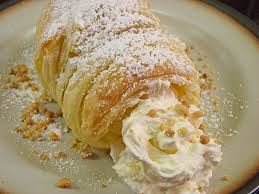
For your enjoyment, a new draft of what I think of the pastry scene. And afterwards, take a look at Two Suitcases’ GoFundMe campaign.

(I’ll have to get Tom to make Schillerlocken to get a bigger picture, I think.)

April 22, 1929

The University of Vienna, Ringstrasse

 Anna hurries out of her first afternoon class, Dr. Charlotte Buhler’s lecture on Child Development. After experimenting with sitting on three different benches, she settles on the second, and, her book bag settled on her lap, looks first to the right, and then to the left, and then to the right again. She intends to keep an eye on the door Emil may emerge from, while simultaneously watching the route he is likely to take to the Konditorei where they’d first met, in case she misses him coming out. 

She doesn’t have long to wait. Emil’s mop of wild hair is obvious above the group of students pouring out of the Mathematics building.  He’s walking with someone and gesturing animatedly. What next? Should she stand up and go to him? Or hope that he notices her there on the bench? The courtyard is crowded and noisy now. 

Anna decides she shouldn’t chance sitting, so she stands up and makes her way toward Emil across the current of chattering students, glad of her own height. Should she call out? She will miss him if she doesn’t. She is raising her arm, about to wave, about to call out his name, when he turns, spots her, and grins. He says something to his companion and makes his way, cross-current, to where she is. 

“Hello!” he says, genuinely glad to see her. “I was hoping we’d run into each other again!”

“And I you!” she says. He’s very handsome despite the pockmarks all over his face. She hadn’t noticed them before, but it’s not such an uncommon sight. Lots of children get smallpox and most of them die. He’s lucky to have survived, she thinks. Money and good doctors: always a help.

“Join me for Jause, will you? I’m going to Sluka.” 

“I’d love to,” says Anna, and she lets herself be drawn into the outward flow of the crowd, with Emil at her side. Then it hits her. Sluka! Not the little bakery where they’d met! What have I done? What kind of fool am I to have accepted?

Konditorei Sluka is one of the best bakeries in the city. It is elegant, luxurious, and outrageously expensive, a place inhabited by tourists, the wealthy, and even the very wealthy. The Empress Elisabeth was a regular customer! Ida knows where it is, of course, but she has never been inside. As a child she looked through the window with longing and more recently with disdain. Frantically, she searches her mind for a reason to back out now, to decline Emil’s offer, to walk away and never see him again. 

They are too different; they’ll never get past their class differences. She is poor. He is rich. That is that.

Before she can decide on an excuse, he turns to her and asks how she likes her coffee. With cream? One teaspoon of sugar or two?

By the time they reach the Konditorei, Emil and Anna have discussed their mutual enjoyment of good coffee, pastry, and the cinema, as well as establishing the comforting fact that they are both Jews. 

Once in the bakery, however, the problems begin. Ida has no money. She could allow Emil pay for a small cup of coffee, but it is much too soon in their acquaintance to let him buy her pastry. 

She looks around. A wall of ceiling-high windows draped in diaphanous curtains fills the lavish bakery and cafe with light. Glistening chandeliers hang above and matching lamps extend from the walls all around. The walls are deep yellow with gold trim, interspersed with panels of pale green framed in rich brown. Ladies in silk and satin and dapper gentlemen sit at highly polished round tables, cutting their pastries with forks and knives. The chairs have graceful bent wood backs and legs so delicate that Ida wonders how people dare to sit on them.

Emil leads her to the pastry case. The polished wood and glass case radiates golden light. Ornately decorated pastries and cakes satisfy every visceral sense: moist cream fillings; bright fruit slices shimmering in fruity glazes atop voluminous cakes; crispy puff pastry layers surrounding vanilla scented creams; soft nut tortes offering only a fleetingly crunchy resistance to the bite while rewarding one’s every nutty desire; unctuously melt-in-the-mouth coffee butter creams topped with crunchy crushed coffee beans.  

“So,” asks Emil, “What is your favorite? Perhaps the Schillerlocken, so creamy and crispy—an excellent contrast—or the Indianer with its opposing flavors, chocolate and vanilla?” He moves slowly along the curved glass case. “I love the Haselnusstorte because it’s so light and creamy. Ah, there is the notorious Punschkrapfen, delectable pastry soaked with our lovely Austrian rum.” He wanders on, pointing to one elaborately decorated pastry after another. “As for myself, I have a hard time deciding between the Mohnstrudel—oh, that delicious filling of ground poppyseed mixed with red plum jam and raisins—and the Topfengolatschen, with its wonderfully sour Topfen cheese filling. But in the end,” he says, arriving at the far end of the case, “I am usually my boring self, and I order the Buchteln.”

Emil’s enticing ode to pastry gives Anna a moment to think about how she will handle the situation.

“Emil,” she begins, having decided to be straightforward and perfectly honest in her explanation. “Emil,” she begins again, though she is not ordinarily a person who loses confidence in what she is saying and needs to begin again. “Emil,” she says, “Let me be forthright with you…” 

“Gruess Gott, Herr Bloch, I have kept the two Buchteln, the lightest ones again, especially for you. May I wrap them for you as always?” asks the comfortably round woman behind the counter.

Emil puts a soft hand on Anna’s arm to indicate that he’ll listen to her in a moment, and answers,“Thank you, that is very kind of you, Frau Charlotte, but the lady and I will be taking a table today. I am just recommending all my favorites to Fraulein Anna.”

“Would Herr Bloch like to take that table near the window? We are very crowded at this time of the day.”

“Thank you very much, Frau Charlotte. The table next to the window is fine.” 

“Thank you, Herr Bloch. It is our pleasure,” she says.

Emil smiles at her. “See you the next time!” 

Then he takes Anna by the elbow and guides her through the maze of silk and satin and fine wool, past masterpieces in cream, butter, and golden pastry, through fragrant clouds of the scents of coffee and baking. Forks and knives clink; the conversation is just loud enough.

Anna cannot help comparing her father’s choice of venue for afternoon coffee with Emil’s.  At least one can be heard here. Nobody is arguing politics. She will tell Emil she can’t accept his offer to pay when they sit down.

Their table is near the center of the front window, where the sheer curtains are swept back, and one can watch the people walking by on the Rathausplatz. Emil holds Anna’s chair out for her. 

As she lifts her skirt to seat herself, Ida remembers what she is wearing: a dress so often updated and remade that no one could mistake it for anything else. Everybody in the room will know exactly what social class she belongs to the moment they look at her. Most of them already do.

Well, she thinks, so what. Here is an opportunity to prove that class doesn’t matter. She straightens her back and holds her head high. 

“Emil, listen. I haven’t any money at all. I can’t afford a pastry and I don’t feel comfortable letting you pay. I’ll have a small cup of coffee, and that’s all.” 

“What? You’ll let this excellent opportunity go by? You are so often offered your choice of such exceptional pastries?”

“It’s not that. Of course not. It’s just that we don’t know each other!”

“I know that you like your coffee with cream and just a little sugar. And that you enjoy funny films.”

A waitress in a crisp black dress and a frilly white apron is already standing next to their table. 

“Good afternoon, Herr Bloch. Are you ready to order?”

“Indeed I am, Fraulein Inge,” Erich  answers. “For me, the Buchteln and einen Verlaengerten, and for the lady, einen Melange, and the Schillerlocken.”

“No! Just the coffee for me, please!” Anna says.

“Be so kind as to bring the Schillerlocken as well, Fraulein Inge,” Emil tells the waitress. “That will be all for now.”

As the waitress moves on to another table, he lowers his voice and says to Anna, “I’ll eat it if you won’t. But I hope you won’t be so silly.”

A few minutes later the voluptuous dessert is sitting in front of Anna. She looks at the roll of delicate, flaky pastry with its dusting of powdered sugar and sprinkling of chopped walnuts, its filling of luscious, lightly sweetened whipped cream spilling onto the plate. With a sigh, she picks up her dessert fork. Emil is sipping his coffee and looking across the room.

Tentatively, she presses the long edge of her fork into the pastry. The consequences of cutting into the crispy roll are immediately apparent: the whipped cream will spurt out and spill over the gold rim of the bone china plate and onto the paper doily below it. 

She turns the fork and scoops up a little of the cream. She puts it in her mouth. Oh my.

“Good?” he asks, returning his attention to Anna. 

The cream is such a luxury and she is so hungry for something sweet, for something special, that she almost has no words. Between bites she manages, “It’s wonderful! It reminds me something my grandfather brought me for my birthday when I was very small.”

“I think it is the best in Vienna, “ he says. “But you must try the pastry.” 

Anna has eaten all the cream and every little bit of walnut from around the crispy roll. Now there is no option but to attack the roll. With vigor borne of the pleasure she found in eating the cream, Anna strikes the crisp pastry with her fork. 

It is worse than she anticipated. The cream spews out, flying over the edge of the plate, over the edge of the table, and onto her dress.

Without speaking, Emil hands her his still-perfectly-folded cloth napkin.  

Anna wipes the errant cream from her bodice. “How clumsy I am!” she says, looking down.

Emil is surveying the room again. “I didn’t see a thing,” he says. Then he turns back to her and continues more softly, “Do you see that man near the pastry case with the short black beard and pince-nez?”

Anna gives up on her dress and glances in the direction Eric is indicating with his eyes, a quirk of his mouth, and his eyebrows. If she weren’t so embarrassed, she would find the gesture endearing. She sees the man with the beard.

“That’s Viktor von Ephrussi, the banker,” Emil says so quietly she can barely hear him. “I can’t see who is with him.”

Anna’s eyes widen. What am I doing here? Viktor von Ephrussi.

“Von Ephrussi, you said? You aren’t aware that aristocratic titles haven’t been used since 1918?” She shakes her head in disbelief. “I’m afraid you aren’t much of a candidate for membership in the SAJ.” 

Emil blushes deeply, one of the difficulties that comes with having red hair.

“You are right, of course,” he says. “It slipped off my tongue. It’s what my parents call him, you see. As for myself, I never think of the man, but there he is, and he is a great hero in my family.”

Anna decides to discontinue her acquaintance with Emil as soon as possible.

The pastry, most of its cream gone, is more compliant throughout the rest of their visit to Sluka. Anna refrains from saying anything disparaging about the very, very rich and their role in the woes of society. Instead, they speak of films.

As they walk back to the University, they share their favorite scenes from Charlie Chaplin’s movies: the boxing scene in “City Lights,” the barber scene in “The Barber Shop,” the fight scene in “The Kid.”  When they part, Anna hears herself agreeing to meet Emil for a simple coffee in two days’ time.

Two Suitcases: A Window into my Work

Here’s a look into the process of writing Two Suitcases:

timeline

This is one of several timelines I’m using to structure the book. This one was meant to have historical events at the bottom, events and pictures from my parents’ and their friends’ lives in the middle, and trends at the top, but it’s pretty mixed already. It was a good plan anyhow.

herd of pipe cleaner animals

A small herd of pipe cleaner animals has invaded my chapter chart.

Fritz, Trudy and three pipe cleaner friends

My favorite pictures of my parents and the first of the pipe cleaner friends.

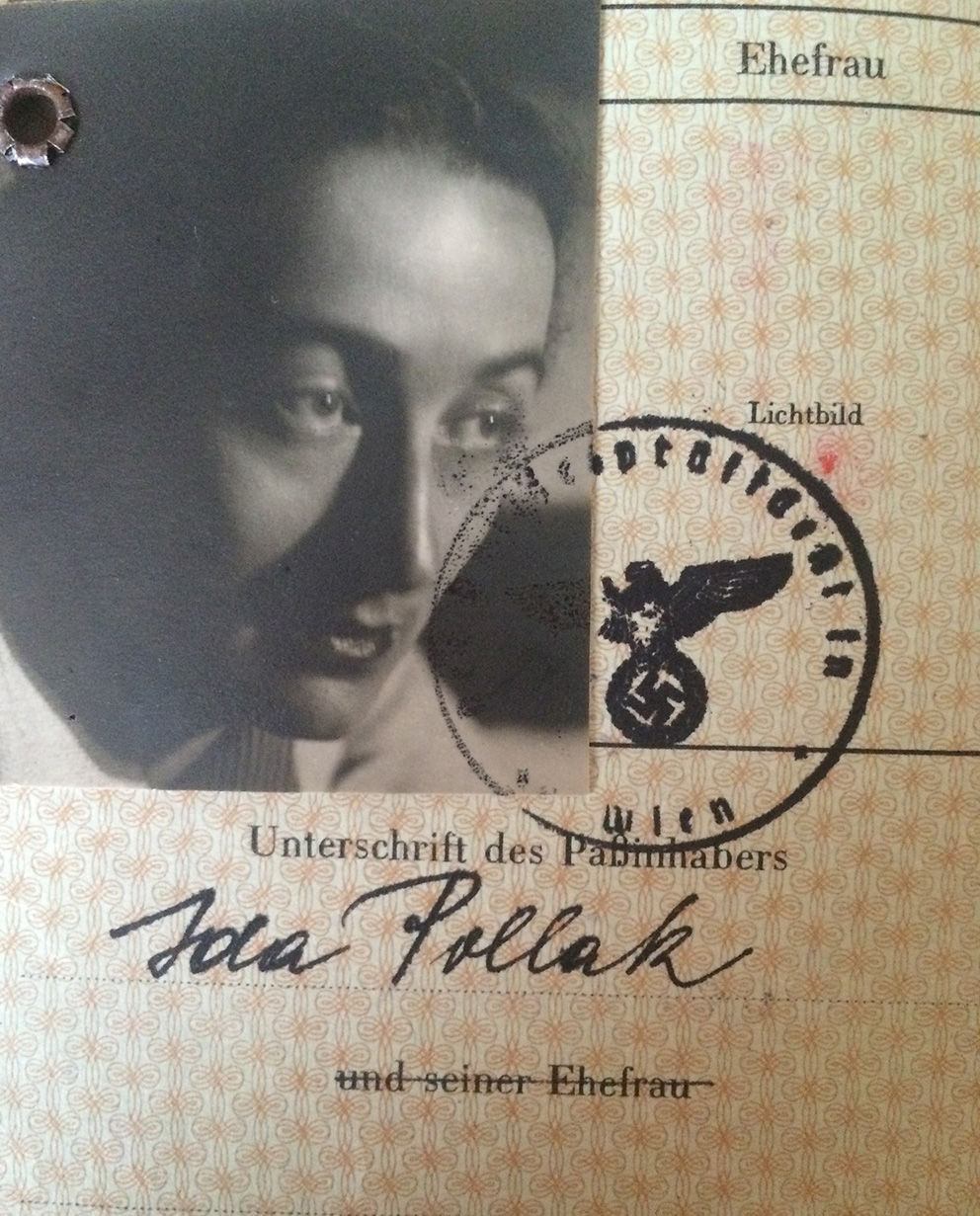
Ida's passport picture      Ida's passort front page

These are pages from my aunt’s passport, issued in German-occupied Vienna in 1938.

And here are a couple of less distressing shots:

blue lady sunbathing

A blue lady sunbathing.

blue lady dancing

And one dancing.

And, as promised, a snippet of what I’m working on now. This is yesterday’s work, in more or less first draft.

April 22, 1929

The University of Vienna, Ringstrasse

Anna hurries out of her first afternoon class, Dr. Charlotte Buhler on Child Development. After experimenting with sitting on three different benches, she settles on the second, and, with her book bag on her lap, she looks first to the right, and then to the left, and then to the right again. It’s her intention to keep an eye on the door she expects Emil to emerge from momentarily, while simultaneously watching the route he is likely to take to the Konditorei where they’d first met, in case she misses him coming out. 

She doesn’t have to wait long. Emil’s mop of wild hair is obvious above the group pouring out of the Mathematics building.  He’s walking with someone and gesturing animatedly. What next? Should she stand up and go to him? Or hope that he notices her there on the bench? The courtyard is crowded and noisy now. 

Anna decides she shouldn’t chance sitting, so she stands up and makes her way toward Emil across the current of chatting students, glad of her own height. Should she call out? She’ll miss him if she doesn’t. She raises her arm and is about to wave, about to call out his name, when he turns, spots her, and grins. He says something to his companion and makes his way, cross-current, to where she is. 

“Hello!” he says, genuinely glad to see her. “I was hoping we’d run into each other again!”

“And I you!” she says. He’s very handsome despite the pockmarks all over his face. She hadn’t noticed them before, but it’s not such an uncommon sight. Lots of children get smallpox and most of them die. He is lucky to have survived, she thinks. Money and good doctors, that’s always a help.

“Join me for Jause, will you? I’m going to Sluka.” 

“I’d love to,” says Anna, and she lets herself be drawn into the outward flow of the crowd with Emil at her side. Sluka! Not the little bakery where they met! What have I done? What kind of fool must I be to have accepted?

Konditorei Sluka is one of the best bakeries in the city. It is elegant, luxurious, and outrageously expensive, a place inhabited by tourists and the wealthy, even the very wealthy. The Empress Elisabeth was a regular customer! Ida knows where it is, of course, but she has never been inside – though she has looked into the window longingly many times. Frantically, she searches her mind for a reason to back out now, to decline Erich’s offer, walk away and never see him again. They are too different; they’ll never get past their class differences. She is poor. He is rich.

Before she can decide on an excuse, he turns to her and asks how she likes her coffee. With whipped cream? One teaspoon of sugar or two?

By the time they reach the Konditorei, Emil and Anna have discussed their mutual enjoyment of good coffee, pastry, and the cinema, as well as establishing the comforting fact that they are both Jews. 

Once in the bakery, however, her problems begin. Ida has no money. She could allow Emil pay for a small cup of coffee, but it’s much too soon in their acquaintance to let him buy her pastry. 

Anna turns and looks around the Konditorei. High windows draped in sheer curtains fill the dining area with light. Glistening chandeliers in several sizes hang from the lofty ceiling. The walls are deep yellow with gold trim and pale green panels framed in rich brown. Elegantly dressed ladies and gentlemen sit at highly polished round tables cutting their pastries with forks and knives. The chairs have graceful bent wood backs and legs so delicate Ida wonders how people dare to sit on them.

She takes a deep breath.

The pastry case in front of them radiates golden light. Ornately decorated pastries and cakes satisfy every visceral sense: moist cream fillings, bright fruit slices shimmering in fruity glazes atop voluminous cakes, crispy puff pastry layers surrounding vanilla scented creams, soft nut tortes offering only a fleetingly crunchy resistance to the bite while rewarding one’s every nutty desire, unctuously melt-in-the mouth coffee butter creams topped with crunch.    

“So,” asks Emil, “What is your favorite?”

Two Suitcases – progress and a little taste of what’s to come

Today, even though I had most of the day to work on my new book, I only added a few lines and revised a short section. Instead, I worked on a crowd-sourcing site I’m planning to put up to help pay for the increasingly necessary research trip to the settings of the novel next spring. You can see the opening image of the site above. The day turned out to be more fun than I anticipated because, as incentives for people who are willing to support the project, I’m making and sending out pipe cleaner animals. Today I practiced making some to be sure I really could do what I’m promising.

IMG_7009

Some of you, I’m sure, are shaking your heads and asking, pipe cleaner animals? Here’s the reason. When I was a child, I had a collection of pipe cleaner animals made by one of the people in my parents’ circle. Unexpectedly, they turned up in Two Suitcases, playing a sort of Jiminy Cricket or Rosenkrantz and Guildenstern role. Here’s the beginning of the book in its current draft:

Chapter 1

Meeting

December 31, 1954

Brooklyn, New York

I lift the green pipe cleaner giraffe with the toothbrush neck from the shelf under the window and turn him toward the rising voices. “I doubt it,” he says. “Not anytime soon.”

The red antelope with wishbone horns snorts. Her attention is mostly absorbed in remaining upright. A powerful breeze rushes through the window, open an inch or so to mitigate the heat and cigarette smoke in the room. It hits the antelope’s oversized horns directly. She staggers but doesn’t topple. 

“It won’t be over till after bedtime,” she says grumpily. “Once they start to shout, we should make ourselves comfortable.” 

The blue pipe cleaner lady with the red plastic dress is upside down at the moment. The antelope is already packing their belongings—two acorn caps, a hard candy wrapped in foil and two carefully folded pieces of foil from candies eaten earlier—into her dress, which until recently topped a canister of whipped cream. They’d already chosen which of their things to leave behind and which to take. The ashtray is too heavy and they didn’t think they should touch the lovely china cigarette box. Anyway, they only have the lady’s whipped cream top dress to carry things in. Too bad the third acorn cap doesn’t fit. They’ll have to share plates at their next place, wherever that is.

“I’m so sorry I can’t help you with the packing,” the giraffe says. “But I’ve got a stiff neck.” He bobs the toothbrush to see if anybody gets the joke. “I’m very good at seeing over things, though.” Bravely, he hops up onto the windowsill and, bracing himself against the woodwork so as not to blow away, he peers out into the Brooklyn night. “It’s still raining, and the lights are on,” he reports. “Even in the park.”

I move all three of them to the bookshelf below the window and rearrange the pillows I took from the sofa on the floor around me. I am usually in bed by dark, but tonight I am in New York with my parents, visiting their friends. As always, I chose the most beautiful pillows, the ones with the multi-colored covers Fanny weaves. To my right, a heavy cast-iron radiator chuffs out heat relentlessly. I like sitting near the radiator, but the apartment is so warm, it makes me sleepy even when I don’t want to fall asleep.

Turning back toward the toys, my eye is caught by the bold, black calligraphy on the spine of one of the books. Die Sozialdemokratie und die Nationalitätenfrage it says, though at four, I couldn’t have read nor understood it even if it was in English: Social Democracy and the Nationality Question. There are a great number of beautiful books, some hand-printed and neatly bound with string. Some have pictures, black and white prints made from woodcuts. I’ve studied these closely. One picture fills a whole page. It’s a big tree with its trunk breaking in a thunderstorm. There are only four words on that page: O schwanken! O taumel! – my mother says they mean something like “Oh, sway! Oh, tremble!”

I’ve asked to hear the stories that go with the pictures, but everyone says I wouldn’t understand, so I make up my own stories to go with the pictures and look at the shapes of the words and letters. I especially like the books with the clean, tall, squared-off letters. The invitation to the evening’s gathering of my parents’ friends was hand-lettered in the same elegant style.

That’s as much as I’m willing to give away now, but to be honest, I’m not very good at keeping my own secrets, so more of the book is likely to show up here. In the meantime, watch for the crowd-sourcing site, which I hope to have in order within a week or two. This is so much fun!

Two Suitcases – project, process and progress

Tom and I are getting ready to sell our house next spring or summer.

Big decision!

We’ve been in San Luis Obispo for seventeen years, longer than we lived in Trumansburg, longer than Tom ever lived anywhere and pretty close to that for me. We’re not planning to leave San Luis, just this big house, which has been feeling more and more burdensome over the last year.

Here’s a short-lived glimpse into our home: this is one of my Airbnb listings. I’m taking all three listings down after Labor Day to give us time to get the house ready to be shown and to give me time to write. (The pictures on the Airbnb site were taken a year or so ago.)

I imagine us moving to a beautiful two or three bedroom place with enough room for Tom’s piano and for my new project, the work-in-progress that my next series of blogs will follow.

I’m working on a new book, historical fiction based on my parents’ story. I call it Two Suitcases because my parents left Vienna in 1938 with two suitcases, Paris in 1940 with two suitcases, and a village in the south of France in 1942 again with only two suitcases. It’s an extraordinary escape story, a re-examination of social democracy in the Red Vienna years, and an exploration of values. How do you choose what goes into two suitcases?

Nothing I’ve done for a long time has excited me as much as doing the research for the book and beginning to write it.

The story follows a group of friends and family who work for the Social Democratic Party in Vienna during the 1930’s and remain friends for the rest of their lives.

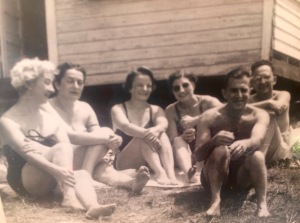
group at McCorkels'Here they are relaxing at a cabin in the Catskills right after the Second World War.

There are four main characters.

My mother:

Trudy's passportThis is her passport picture from 1942

My father:

Fritz 1940's

in the late 1940’s

My Aunt Ida:

Ida 1940's

also in the 1940’s

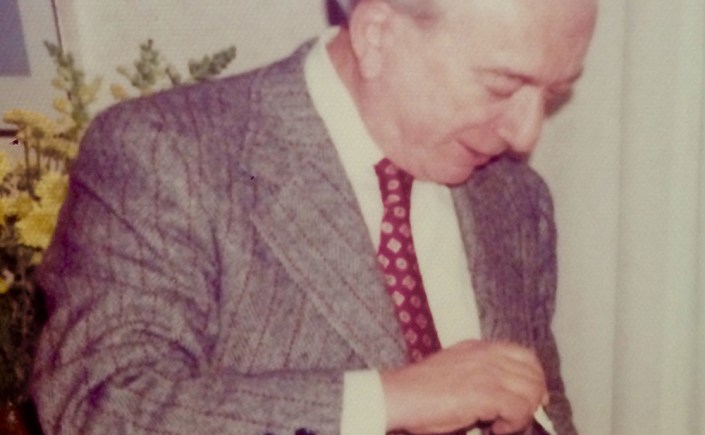
And my Uncle Eric, of whom I only have a picture taken many years later, in the 1970’s:

Eric

a gracious man with an elegance still evident when he was 93.

 As I write, I’ll share snippets of the text here and reflect on my writing process. Stay in touch!

Aberduffy Day

2927847289_c0ecabe4bb_zAlice O. Howell celebrated Aberduffy Day on Tuesday, October 28, about three weeks before what would have been her 92nd birthday. She left easily, surrounded by family.

At yesterday’s Samhain ritual, when Kathy and Barbara encouraged us to visit with our loved ones and bring back memories, messages and perhaps a gesture, Alice’s image and words came to me instantly. She floated in, full of grace, expressing immense joy in her release from that cumbersome body and in her reunion with Walter. Then came the gesture: raise a dram! So, after lunch, we got out the brandy and toasted her. On this day of special liminality, perhaps you might like to join me at sunset, wherever you are, in raising a dram. Get out the best scotch, face the sun, invoke Sophia, and raise a dram to Alice, Mercy Muchmore, IonaDove. She taught me so much. In bittersweet joy, Eve
holy-spirit-dove-st-peters
Invocation
O Holy Sophia, Holy Wisdom, Holy Joy hidden for so long come forth and reveal yourself in the world and in our souls!
Help us to see with a loving eye Help us to hear with in wit and intuition
Show us how to be natural and kind Show us how to find ourselves in one another
Lead us from who we think we are to who we really are
Let us learn from the flowers that we need not strive so hard
Teach us to allow that Light from within to unfold us as a gift like your Rose.
a. o. howell