To the credit of all the people who say “Can’t wait for the next volume!” on their reviews of Red Vienna, I’ve been working hard at it. Underground ends at the Anschluss, when most of Austria joyfully welcomes Hitler as their leader. which takes place from March 11th to 13th, 1938.
Here’s a taste of what I wrote today. As it seems so often, the news I read in the morning seems eerily parallel to what’s happening in my story.

Here’s a photo of the man on whom I based the character, Hugo.
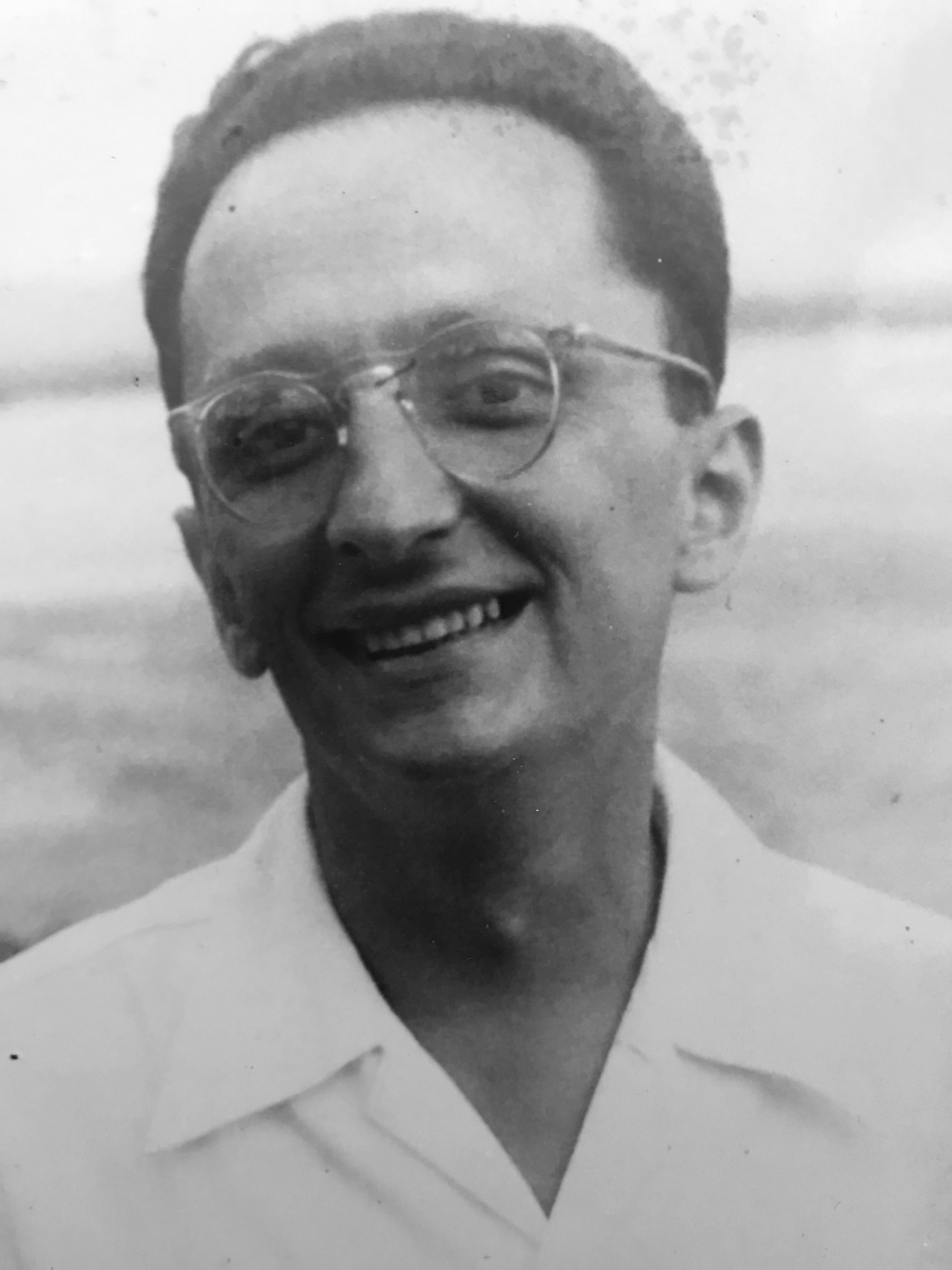
And here is my father, on whom Max is based.
January 27, 1938
Max’s workshop
Vienna
Max has the radio on whenever he can, day and night. He follows the news from as many sources as possible, hearing stories few others hear, and hearing the ones that everybody knows reported from widely varying perspectives. His shop is more popular as a source of news than it is of lamps, chairs, or radios.
“Listen to this,” he says to Hugo, who’s perched on stool at the workbench next to Max. “A German diplomat told a commentator I follow that Hitler is spending most of his time at his retreat in Berchtesgaden near the Austrian border.”
“I had heard that, yes,” says Hugo. “He’s so close he can see Austria.”
“Well, apparently he almost never goes out anymore, and here’s how he spends his time there: he has a huge collection of postcards of Vienna and other Austrian cities that he spreads out on his desk to look at while planning where to put his Brown Houses, the Nazi party headquarters. They say he spends hours at it. And he has a street map of Vienna tacked up on the wall where he’s marked the buildings he wants to replace with ones he’s designing himself. He’s obsessed—it takes up all his time.”
“Not good,” Hugo says. “Not good at all.”
“What concerns me almost as much is that I overheard someone else telling the same story to a group at the cafe yesterday and everyone thought it was funny. What do they think, that Hitler is a joke?”
“There’s no point in pretending that Hitler won’t be welcome here, Max. The Nazi tactic of causing chaos and confusion in Austria over the last few years has led most of the population to want peace at any cost, and they think becoming part of Germany will bring it.”
“It’s so ironic, isn’t it? That the man who tells the French Ambassador that he ‘will soon have Schuschnigg’s head’ should be associated with peace.” Max shakes his head. “No one believes that what I read in Feuchtwanger’s book is true either. It’s fiction, I’m told over and over, often in the most condescending way.”
“Classic it-could-never-happen-here thinking,” agrees Hugo. “Austria would never let the Jews be treated so badly. Well, we shall see soon enough.” He lights a cigarette. “I’ve finished almost all the new exit papers, by the way. Leo will be printing them in a few days.”
“That’s a relief. Are you including an Ausweis for Gisi’s mother and Gert’s parents? They would need them to get out, even if they aren’t Jewish.”
“I am, but I’m doing those last, in case I don’t have the time to finish them. Gert’s parents will never leave, and I seriously doubt Gert will. I think her family has always been more important to her than our crazy off-and-on relationship. What about Gisi?”
“She claims she’ll leave, but she started the new term at medical school this week and she told me she has some of the best professors in the program. And her mother steadfastly refuses to even consider following her. To be honest, I’m not sure if she’ll give all that up for me.”
“It’s a lot to ask. Gert would be leaving a promising career in fashion, a job she loves, and, as you saw at New Year’s, a very comfortable home that will come to her someday. What does she gain by leaving?”
Max looks pensive. “Gisi is in a similar position, minus the bourgeois apartment. What do I have to offer her? We would be leaving with not much more than the clothes on our backs.”
Hugo smiles wryly. “It sounds like you and I are talking ourselves out of leaving.”
“No, of course not. We have no choice. All Jews should be ready to go at a moment’s notice. It’s a shame so few are.”
“People don’t like to face an uncertain future. It’s so much easier to imagine that life will go on the way it is than to face the reality of a darker times ahead. I have first hand experience, though, because of Hilda and Karl’s disappearance. And I understand the pain of losing a child. I’ve already faced some of what the future could hold for many people.”
“Maybe words aren’t enough to convince people. Maybe firsthand experience is necessary. Although I have to say that for me, reading those chapters in The Oppermanns about the months that followed Hitler becoming Chancellor was enough.”
Hugo thinks for a moment. “We were fortunate to have Youth Leaders like Papanek and the others who set an example for us when they left in ’34.”
“That’s true. It’s also easier for us to imagine living somewhere else because we were raised in an Internationalist milieu. Remember? We were, what, eighteen, when we took part in the International Socialist Youth Congress? It’s very different than coming up in a Nationalist milieu that values Blood and Soil over Friendship and Peace.”
Hugo sighs deeply. “God, these are hard times.”
 Eve Neuhaus
The word “Jew” could be replaced by the words “undocumented immigrant” (“WHERE ARE YOUR PAPERS? YOUR PAPERS ARE NOT IN ORDER!”) to bring the eerie parallel up to date. Yet many of the immigrants have sought refuge here because the US Empire (917 military bases in 98 countries) has made conditions impossible in their home countries. To what extent might Trump’s promised deportation raids resemble pogroms? Yet even under Biden/Harris, if the US is truly after someone, not being in the US is not sufficient for safety. Julian Assange was not a US citizen, was not in the US, but had to plead guilty to journalism to escape indefinite confinement and reunite with his family. It would be interesting to know how many USans are currently contemplating leaving the country, and, if so, where they might go that they would feel safer Thank you so much for writing books that are not only gripping and full of heart, but timely as we try to make sense of 2024. As poisonous rhetoric infects our elections, let us remember the wise counsel of Walt Whitman: “Question everything you are told. Dismiss that which insults your soul.”
Trump’s announcement today that he will appoint Tom Homan as “Border Czar” (a weird job title in itself, although Biden/Harris also used it–important to know that his role is expected to transcend the border and include immigration raids anywhere in our interior), with his hard-nosed record as a heartless enforcer–family separator, etc.–makes the feared parallels that much more alarming. The word “pogrom” may not turn out to be that inaccurate for what impacted communities might be facing. How to respond is a complicated question, but having your characters wrestle with similar realities can help frame our own urgent conversations.
It doesn’t sound good. One of the disturbing things about the period in which my books are set is that so many people are completely unaware of the extreme suffering that’s going on. We’ll see how things unfold in the US, but I’m not hopeful.
Yes, it is frightening what we are up against, and the presence of Elon Musk as a sort of unelected co-president, with his immense wealth and charisma, and huge space-based “communications” (and surveillance) infrastructure, could give an oppressive regime more capability for finding their targets than even the Nazis had. Unfortunately, Trump’s legacy of the wall, which is largely intact and may soon be completed, to the great detriment of jaguars, ocelots, and other blocked creatures, has changed the nature of the migration from informal movement by completely harmless poor people (children’s author, Byrd Baylor lived alone as a lady in her nineties along one migrant route through the Sonoran desert, and provided water and other necessities to people coming through, and never had a frightening experience with any of the appreciative migrants in pre-wall times) to something far more sinister; now the non-port-of-entry crossing points are few, dictated by geology or created with a blowtorch, and every one is OVERSEEN by drug lords and/or human traffickers. A criminal element has taken over, and regular folks either need to have enough money to pay extortionate fees to the criminals, or they are the merchandise, with all the abuse such a situation implies. MAGA folks are correct that the situation at the border has gotten out of control, but incorrect if they think Trump has anything resembling a solution! Meanwhile, the question of what life will be like for the undocumented in our nation’s interior raises parallels with the situations in your books, exacerbated by the near-universal adoption of such surveillance tools as cell phones (as someone who continues to refuse to adopt this neurological-health-assaulting technology, I find myself shut out of more and more aspects of commerce and society) and looming threat of “digital ID’s,” the noose is tightening around undocumented immigrants and any others who may fit into categories considered inimical to those in power. How do we create the space in which effective resistance can arise?
Oh, Eric.
Since the election I’ve found the news too painful to follow. Instead, I’ve immersed myself in music, in nature, with friends, in community events—and in making the corrections in Red Vienna for a second edition.
Thus, your vivid picture of the border struck me like an arrow. I love Bird Baylor’s work! (Can I cut and paste your words to quote in a blog post and/or social media?)
The border is such a powerful archetype in these times. So many worlds are so close to the edge. We are all at some sort of border right now.
It strikes me once again that both sides are right about what the issues are— but their solutions have vastly different consequences.
And also by how guided we are by the paradigms we accept. Paradigms that are constantly reinforced by the media you pay attention to—hence the vast power of Faux News.
Through a delightful synchronicity, I recently came across a powerful Belgian documentary about why things are they way they are. It’s “Paradigma” by Jurgen Buedts, and you can rent it from Vimeo. I’ll link it below. It’s worth the few dollars or euros.
In the end, though, every time I confront the realities of these times, I can’t come up with a better solution than to be kind to my neighbor, to whoever I meet. Lead with the heart.
Thanks again, Eric, for the extraordinary work that you do.
From Paradigma’s website:
A cinematic essay employing archive footage to unveil that nothing is real and everything is permitted when justified by the narratives constructed in our heads.
Using only archive footage, “Paradigma” uncovers that the problems we’re facing today are anything but new. The many consequences of climate change, the erosion of trust in democracy and the proliferation of fake news have been around for decades. “Paradigma” is a cinematic essay that delves into our collective failure to address these challenges at their core, revealing Western societies to be stuck in a loop.
Human civilizations are held together by the stories they share. However, these stories possess the potential to transform into entrenched habits and traditions that, over generations, become seemingly indisputable. These paradigms, which influence our daily actions almost unnoticed, can only be rewritten if we consciously recognize them for what they truly are. And so the true question becomes: do we make our stories or do we let those stories make us?
Hasty answer as I prepare to catch a bus to county supervisors…on the question of whether you can quote me, I must bifurcate the answer: YES to quoting me on your blog posts; NO to ANY presence of mine on social media, a terrain I scrupulously avoid. I, too, have resisted digging too deep into current news, although as an active citizen of this country, I am responsible, so have been focusing on the immediate challenges, such as an upcoming hearing on a Draft EIS on Diablo relicensing. One way to get up to date is to visit the website of No More Deaths (I admit I have not done so recently–could be an emotional deep dive!), a Tucson-based non-profit dedicated to putting out water and other life-saving resources in the Sonoran Desert for those crossing; a few years back, Chaponica and the Chase Family asked my advice on a non-profit to benefit from their annual post-Thanksgiving run-to-the-sea, and a few years before that, when Nathan Koren was getting married to Jothi Jayadevan and the couple specified that the only wedding gifts they wanted was contributions to organizations helping refugees, and they asked my advice on a US organization–in both cases, No More Deaths rose to the top in my mind. In any event, Bird Baylor allowed No More Deaths to use her property to expand her ability to help the people passing through, and so they may have recent news of her and the situation in her home territory or what had been her home territory. The sitaution is probably ugly and deteriorating, but unfortunately Trump can’t take ALL the blame, and the corruption endemic in the current Biden regime is partly responsible for the Trump victory, just as the right-wing Modi gained office due to promising to make a clean sweep of the corruption endemic to the more “progressive” office-holders that he replaced. The collusion of the Biden-era Homeland Security Department with human traffickers DOES need to be investigated; it is too bad such investigation will be at the hands of an incoming regime with an agenda that will take more revenge on the victims than on the perpetrators. Such gestures as “giving” incoming asylum-seekers cell phones and designated places to live could come in very handy to those seeking to track them down for their persecution and/or removal. In my mind, any solution to the very real mess that has developed should not focus on mass deportation, but on 1. Ceasing the overt and covert interference in other nations that creates the conditions people come here to flee, 2. Prosecuting traffickers and other exploiters for their crimes, and 3. Assisting in the return to their home countries, once these have ceased to suffer from US-imposed violence, instability, and deprivation, for those who wish to do so, while creating an orderly path to citizenship for those who wish to stay. Oops–once I get going, I get into quite a rant! Gotta run if I want to catch the bus! Forgive the breathless and disorganized tone of this hasty response!
Well,I missed THAT bus and the ability to comment on one of the items I had intended to; hope to catch the next bus for other items of importance at County Supervisors. Anyway, now that I can get back online and add a bit, want to end on a POSITIVE note: what can local people do, what ARE local people doing? Here in SLO County, the Unitarian-Universalist Church of SLO is offering no-cost immigration legal services. These can be accessed by anyone who could benefit from them on first and third Sundays between 12:30 and 2:30 pm, no appointment needed, at the church, 2201 Lawton Avenue, just east of Meadow Park. Those unable to access this location at such times can call 805-439-0188, ext. 4. The services offered include: “General immigration legal consultation, DACA renewal, naturalization, green care renewal or replacement, freedom of information act inquiries, emergency safety planning, and referrals to legal partner agencies. This is an excellent example of grassroots organizing in the face of real threats, and a model I hope is emulated far and wide!!