
Currently, my characters Gisi and Max are traveling by train from Innsbruck to Venice over the Brenner Pass. In Venice, they’ll spend a couple nights in a youth hostel. It’s a much-needed short vacation for them, and a chance to try out Leo and Hugo’s recently forged Ausweis, or exit permit.
This is how may current writing process works. Once I’ve decided on a general framework for the next section I’m going to write, I do the research. I look at the history of the time and place in as close detail as I can—the Internet, for all its failings, is the most unbelievable library—as well as in the big picture. I fill pages and pages with cut and pasted images and text.
The archives of the New York Times are very useful, and I follow parallel stories in fiction and memoirs, and movies. I listen to music from the era. Currently, I reading Irene Wittig’s All that Lingers, which is set in the same time and place as Underground. The research for the particular section I’m writing now is taking me longer than usual because the characters are traveling to some places I’ve never been to.
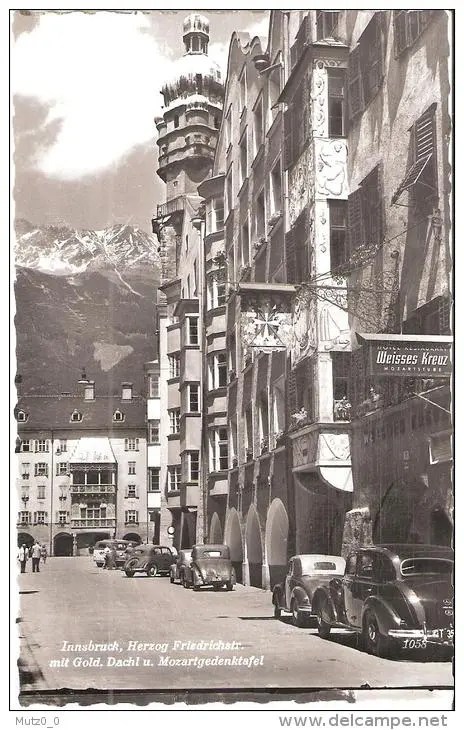
When I’m feeling like I’ve done enough research, I start to imagine what my characters might do in the setting. Gisi and Max pass through Innsbruck on their way to Venice, so Gisi could see her cousin who lives there. The cousin’s husband is a Nazi; that could make for an interesting conversation. Maybe I’ll have Gisi and Max change trains in Innsbruck and give them a three hour wait, enough time to have meal with the cousins. Would Max be willing to do that?
Here’s how the piece I’ve written about that begins:
Chapter 21
Innsbruck
Vienna
September 2, 1936
When Gisi sees that other than by taking the night train, which would mean missing the views, the least expensive tickets she and Max can get to go to Venice includes a three-hour layover in Innsbruck. She suggests to Max that she write to her cousin Litzi to arrange to have lunch with her and her husband, Horst, who live there.
“I know he’s a Nazi,” she tells Max, “but I grew up with Litzi and I don’t want to lose her entirely. Surely we can steer the conversation away from hot topics.”
“You think so? Gisi, he hates me. He doesn’t even know me but he hates me. Why should I share a table with him?”
“Because you claim to be a pacifist? Because it takes two to tango?”
“I’m not sure I want to subject myself to that. I’m not sure I’m capable of it. I’m not Jesus Christ, Gisi.”
“He was perfectly well-mannered when I met him at Christmas a few years ago.”
“When he was pretending not to be a Nazi. Things have changed. He has no reason not to show his true colors now.”
“Then do it for me. If it gets ugly, we’ll stand up and leave.”
“Why don’t you and Litzi meet and I’ll spend the three hours in a bookstore or a cafe?”
“Maybe. But let me write and see what Litzi thinks. Then you can decide.”
Innsbruck
September 4, 1936
Litzi stands by the open window reading Gisi’s letter.
“Horst?” she calls into the hall. Her husband, returning from work with the daily paper tucked under his arm, hangs up his hat and comes into the sun-filled living room.
“My dear? You had a good day?”
“Yes, naturally. The boys haven’t come home yet, though, and I wanted to discuss this letter I received from Gisi today with you.”
Horst pats his thick blond hair into place and makes himself comfortable on the divan. “Alright,” he says. “What is it?”
“First, Gisi asks me not to discuss this with you, but how can I not? You’re my husband. I have to. But if what she is suggesting does come about, I would ask you not to let her know that we talked about her proposal so soon. You’re willing to do that?”
“Of course. What is she proposing?”
“Well, she and her friend Max will be in Innsbruck for a few hours on a stop between trains. They’re going to Venice for some reason. Since they’ll be here from eleven to two thirty, she suggests we have lunch together at a restaurant near the train station.”
“With Max? That sleazy Jew?”
“With Max. Though she says he isn’t eager to do it. He says he would rather wait at the station while she and I meet alone.”
“That sounds reasonable to me. Why not do that? I have no desire to share a table with a Jew, and a Socialist Jew at that.”
“I know he’s a Socialist Jew,” she tells Horst, “but I grew up with Gisi and I don’t want to lose her entirely. Surely we can steer the conversation away from hot topics.”
“You think so? Litzi, he hates me. He doesn’t even know me but he hates me. Why should I spend time with him?”
“Because you claim to be a Christian? Love your enemies? Blessed be the Peacemakers?”
“I’m not sure I’m capable of it. I’m not Jesus Christ, Litzi.”
“Then do it for me. If it gets ugly, we’ll stand up and leave.”
“Maybe. I’ll think about it.”
 Eve Neuhaus
Wow! This is both a vivid window into a fraught time, and an oblique view into OUR time! Here in the US, the last few years have been afflicted by a more PERSONAL sense of political divides than what used to pass for “normal.” The swkwardness of, or avoidance of, “sharing a table” with someone of a political alignment that considers oneself or one’s loved one “the enemy.” Yet isn’t the ability to share a table, to have conversations that traverse awkward areas of difference, a prerequisite for keeping a nation together? Yes, I would feel a sense of repulsion at sharing a table with Horst, but avoiding this would deny me an opportunity to gain at least a fragmentary understanding of what makes him tick, and deny him a chance to accidentally discover common ground with an “enemy.” Here, now, in the US, there needs to be more table sharing between MAGA hat wearers and undocumented immigrants, between covid vaccinated folks and unvaccinated folks, between “Moms for Liberty” and LGBTQ folks including drag queens. The lack of such sharing hurts us all, and, with no intention of trivializing the Holocaust, I can’t help but see the Holocaust as a warning of how bad it can get if we allow social divisions and prejudices to fester and be orchestrated by psychopathic “leaders” into hate. I am looking forward to seeing whether Gisi, Max, Horst, and Litzi end up missing an opportunity, or whether they end up sharing a talbe, and, if the latter, where the conversation leads and what it reveals! Thank you, Eve, for keeping us on pleasurable tenterhooks!
Once again, Eric, you see why the Two Suitcases story wants to be told now. Lately, my mother’s voice has come back to me urging me to work on it. Don’t let those repeating patterns have the same horrible outcome she shouts at me.
If people with differing perspectives sit at the same table, preferably eating, and at least try to have a civil conversation that comes round to meaningful subjects, many of those repeating patterns—like projection and othering—will be broken, and something new will evolve. I have a feeling things won’t go well between Horst and Max, but we’ll see what the muses bring. Thanks again for your always thoughtful responses. (I’ll be in Pleasanton for 6 weeks, June -July. We’ll get together.)
Hopefully, the needed conversations among people of very different perspectives could enter dimensions that transcend the narratives that box people in. As Bayo Akomolafe observes: “The point of the departed arrow is not merely to pierce the bullseye and carry the trophy; the point of the arrow is to sing the wind and remake the world in the brevity of flight. There are things we must do, sayings we must say, thoughts we must think, that look nothing like the images of success that have so thoroughly possessed our visions of justice.”
Isn’t he fantastic !
I don’t know if Black History Month is celebrated in France, but here in the US it occupies the month of February, and as I was immersing myself in the wisdom of various prophetic African Americans of the recent past, I came upon some thoughts of Audre Lorde that have a very direct bearing on the struggle of Gisi and Max, Horst and Litzi as they decide whether to risk sharing a table and perhaps airing their differences. Although Audre Lorde was unknown to these characters, being in their future, and although Horst might be predisposed to disregard the thoughts of a non-straight non-Aryan, I thought I would share them with you as you ruminate on whether they will come together, and on where the conversation might go if they do:
“It is not difference which immobilizes us, but silence.”
“When we speak, we are afraid that our words will not be heard or welcomed. But when we are silent, we are still afraid. So it is better to speak.”
“Without community, there is no liberation…but community must not mean a shedding of our differences, nor the pathetic pretense that these differences do not exist.”
“Institutionalized rejection ofdifference is an absolute necessity in a profit economy which needs outsiders as surplus people. As members of such an economy, we have been programmed to respond to the human differences between us with fear and loathing and to handle the difference in one of three ways: ignore it, and if that is not possible, copy it if we think it is dominant, and destroy it if we think it is subordinate.”
“The sharing of joy, whether physical, emotional, psychic, or intellectual, forms a bridge between the sharers which can be the basis of understanding much of what is not shared between them, and lessens the threat of their difference.”
Have a great month!
What a superb collection of quotations, Eric! And you’re right, they apply perfectly to the situation in my book. Thank you.
More from Eve!
Brilliant ! And fascinating… xLx
Very nice Eve. I’m just now seeing how you put your blog, writing and book publishing together. …. This is cross-media genius!
Good Morning Eve🙏🏻
At one point you asked if I would look at your writing. I would be happy to:)
I would like to give you an idea of what that would look like so you can decide if you want me to🤣🤣
I had several friends give me ideas and my writing though not a novel, I think became fuller with their suggestions. We all write differently and that is good. I offer you this snippet though I know it can be painful to receive at times:) This is sent with love💕
I thought about this Chapter 21 paragraph and this came to me…..
When Gisi was looking at the time tables for the train to Vienna, she realized that they would miss all the beautiful scenery if they took the night train. This trip was the next step on their escape plan and she wanted it to go smoothly, but they had been under so much stress, she also wanted it to be lovely time away.
An idea then came to her when she saw the train schedule for the following day. One journey was three hours longer but it stopped in Innsbruck, where her cousin Litxi lived! She hadn’t seen her in such a long time and this was the perfect opportunity to get together.
Chapter 21
Innsbruck
Vienna
September 2, 1936
When Gisi sees that other than by taking the night train, which would mean missing the views, the least expensive tickets she and Max can get to go to Venice includes a three-hour layover in Innsbruck, she suggests that she write to her cousin Litzi and arrange to have lunch with her and her husband, Horst, who live there.
>
Eve thanks for sharing this extract. Knowing about all the ways that you prepare to write is also very interesting (especially to this frustrated writer 😉
I like the way the two scenes are almost mirror images, the conversation and the spouses’ reasoning.
As a general comment, I find it’s interesting but also scary when writers and cinematographers depict the ‘normality’ of life around the rising of the National Socialists. But we need to be open to these stories, eve more so now, so that we see, yes, it was possible, it did happen. We need to ask: what is going on now that could lead to future atrocities, if we stand by and let the far right have a legitimate voice?
Sorry, got a bit carried away there. Suffice to say, you give us a lot of food for though, Eve. Thank you.
Hi Janet. Yes, that’s pretty much the reason I keep working on telling this story. It’s all about the parallels. Sadly, I don’t think it makes much of a difference. Thanks so much for your comments!