Dreams and Everyday Magic: the Fairy Godmother costume

Early this morning, at about 4:30, I was woken by a dream.

Someone is knocking at the door. I know it’s still night and at first I resist answering. The knocking persists, so at last I get up and go downstairs. At the door is the UPS man who shows up periodically in my dreams. He’s in this one, for example: https://eveneuhaus.com/2017/04/22/the-changing-room/) In the new dream, he hands me a soft package wrapped in white paper.

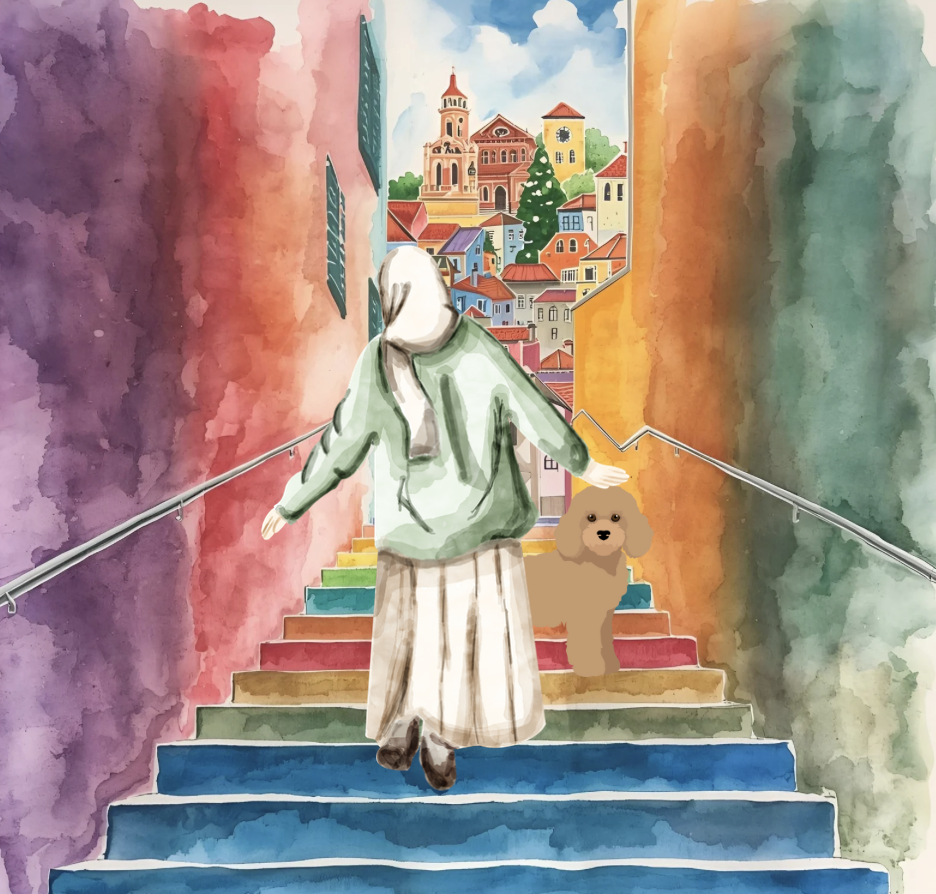
When I unwrap it, I see that it’s a fairy godmother dress, complete with folding wings. I am delighted.

As I wake up, my inner eyes still on the sparkling costume, I realize that I’d been blessed with another gift from Alice O. Howell, the third powerful vision she’s blessed me with.

The first came in a dream too, the night before I had my first of our long interchange of e-mails, talks on Skype, and occasional visits. In that dream, the central image was a telescope or kaleidoscope that I found in my pocket unexpectedly. When I looked into it, my own eye looked back.

The second was a vision in a meditation a couple days after she passed. In it, she was flying back and forth past me merrily, calling out “Look! I’ve left that troublesome body!”

And now she sends me a fairy godmother costume right when I need one. Oh my goodness, I am grateful beyond words.

Over the last few weeks, I’ve been busy preparing my talk for the Seekers Compass on November 16. Deadlines suit me. I like to work intensively on a project, and I have been working very intensively on this one. Day and night.

The talk is titled “Everyday Magic- synchronicity, symbols, and in-sight.” I gave it the name before I had any real idea about what I’d be saying, but I trust my intuition in matters like this. I planned to began the research by looking up the word “synchronicity.” I wanted to now what people are saying about it now.

Imagine my pleasure when the first thing that came up, before I even opened the search, was an announcement of a podcast, just released, in which someone I knew briefly about ten years ago is interviewed on the very subject. It was Laura London with Christophe LeMouël on “Speaking of Jung” speaking of his recently released book, Conversations with Marie-Louise von Franz on Synchronicity and Numbers: Insights and Amplifications.

I was off. I spent at least a couple of weeks down that rabbit hole.

Somewhere along the way, an app for recording and analyzing dreams, Temenos, was recommended. I downloaded it and immediately began having a series of dreams related, not surprisingly, to my upcoming talk. Using the voice recorder is much easier than writing down dreams. And, as these things go, the more you pay attention to your dreams, the more you remember them.

Weeks pass. I begin an outline of my talk but it’s uninspired. I start over, this time using images. Since it’s an online presentation, I pull up Keynote, which I haven’t used for many years, and start to play with it. As those of you close to me know, I’ve always been drawn to computer technology. It runs in my family. Alice gave me permission to love it when she explained that the waves of the symbol of Aquarius are energy waves, not water waves. Aquarius is an air sign. She eagerly embraced electronic communication.

The images I came up with soon coalesced into a detailed breakdown of the diagram Ganesh Baba drew for me on a paper napkin in a diner in Watkins Glen, New York, in 1979, the first full day I spent with him. It’s a diagram of the cosmos. At the time that he drew it for me and pounded the numerology associated with it into my head, we thought we only had that time together, so there was a strong sense of urgency. “This is your work,” he told me. Study it, remember it, and pass it on.

Ganesh Baba the day we went to Watkins Glen

It took me about two weeks to get an explanation of his diagram into images and language that I hope will be intelligible. Yesterday afternoon I decided that part of my presentation was finished.

When I went to bed I asked for a dream to guide the rest of my presentation, which is, after all, about Everyday Magic: Synchronicity, Symbols, and In-Sight.

I got a Fairy Godmother costume from Alice.

To top it off, I had a related vision about it in my meditation this morning, but I think I’ll save that for the talk itself.

Now I’m off to work on that presentation again, feeling very grateful indeed.

White stones, a monkey and a crocodile: further reflections on magic in daily life

Des pierres blanches, un singe et un crocodile : autres réflexions sur la magie dans la vie quotidienne

The Friday following the one when the black stones appeared and disappeared, I went back to Emmaüs to see if the person who’d taken them home inadvertently might have brought them back.

Le vendredi suivant celui où les pierres noires étaient apparues puis avaient disparu, je suis retourné à Emmaüs pour voir si la personne qui les avait emportées chez elle par inadvertance les avait peut-être rapportées.

The day began well with a slow drive—our Ami only goes 45km (28mph)—through the hills, lush green with all the rain, while chatting with a friend, Anu, who’s only in Cordes a short time each year.

La journée a bien commencé par une balade tranquille en voiture – notre Ami ne roule qu’à 45 km/h – à travers les collines verdoyantes après la pluie, tout en discutant avec une amie, Anu, qui ne passe que peu de temps à Cordes chaque année. 

It was on our walk to Emmaüs from the car that I made my first mistake. As I was telling Anu about the ephemeral black stones, we passed a woman talking to a couple as she bent over to arrange some white stones in a tray in front of her garage door. We laughed—white stones this week!—and I’m certain I heard the words, “la magie des pierres,” (the magic of stones) but we didn’t stop to hear more.

C’est lors de notre promenade entre Emmaüs et la voiture que j’ai commis ma première erreur. Alors que je parlais à Anu des pierres noires éphémères, nous avons croisé une femme qui discutait avec un couple, penchée pour ranger des pierres blanches dans un plateau devant la porte de son garage. Nous avons ri– des pierres blanches cette semaine !–et je suis certaine d’avoir entendu les mots « la magie des pierres », mais nous ne nous sommes pas arrêtées pour en savoir plus. 

Did I pause to hear more? No.

Me suis-je arrêté pour en savoir plus ? Non. 

The black stones had not been returned to the store. My round table wasn’t there, not was the small carpet for the upstairs landing.

Les pierres noires n’avaient pas été rapportées au magasin. Ma table ronde n’était pas là, pas plus que le petit tapis destiné au palier à l’étage.

But, in the same place in the kitchen section that I’d found the black stones on the glass candy dish the previous week, I found a brass monkey on a crocodile.

Mais, au même endroit dans la section cuisine où j’avais trouvé les pierres noires sur le plat à bonbons en verre la semaine précédente, j’ai trouvé un singe en laiton sur un crocodile.

“What a treasure!” said the guardian of the kitchen section as she wrapped my 1€ find in newspaper.

« Quel trésor ! » s’exclama la gardienne du rayon cuisine en emballant ma trouvaille à 1 € dans du papier journal. 

On our way out of the store, I unwrapped it to show Anu, who, being Indian, immediately recognized that my treasure was from the Panchatantra teaching story, “The Monkey and the Crocodile.” We were talking about that as we passed the tray of white stones, still displayed in front of the garage door.

En sortant du magasin, je l’ai déballé pour le montrer à Anu qui, étant indienne, a immédiatement reconnu que mon trésor provenait du conte pédagogique du Panchatantra, « Le singe et le crocodile ». Nous en parlions en passant devant le plateau de pierres blanches, toujours exposé devant la porte du garage. 

Did I stop to take a picture? No.

Est-ce que je me suis arrêté pour prendre une photo ? Non.

When I came home, I looked up the story. Here’s my favorite rendition of it:

The Monkey and the Crocodile

https://worldstories.org.uk/reader/the-monkey-and-the-crocodile/english/993

Once upon a time, a monkey lived in a tree by a river. The monkey was alone as he had no friends or family but he was happy and content. The tree gave him plenty of sweet jamun fruit to eat. It also gave him shade from the sun and shelter from the rain.

One day, a crocodile was swimming up the river. He climbed on to the bank to rest under the monkey’s tree.

‘Hello,’ called the monkey, who was a friendly animal.

‘Hello,’ replied the crocodile, surprised. ‘Do you know where I can get some food?’ he asked. ‘I haven’t had anything to eat all day and I am hungry.’

Now you might think that the crocodile would want to eat the monkey, but this was a very kind and gentle crocodile and the thought never entered his head.

‘I have lots of fruit in my tree. Would you like to try some?’ said the monkey, who was also very kind.

He threw some jamun fruit down to the crocodile. The crocodile was so hungry that he ate up all the jamuns even though crocodiles don’t usually eat fruit. He loved the sweet tangy fruit and the pink flesh made his tongue turn purple.

‘Come back whenever you want more fruit,’ said the monkey, when the crocodile had eaten all he wanted.

Soon the crocodile was visiting the monkey every day. The two animals became good friends. They would talk, tell each other stories and eat lots of sweet jamuns together.

One day, the crocodile told the monkey about his wife and family.

‘Please take some fruit for your wife as well when you go back today,’ said the monkey.

The crocodile’s wife loved the jamuns. She had never eaten anything so sweet before but she was not as kind and gentle as her husband.

‘Imagine how sweet the monkey would taste as he eats these jamuns every day,’ she said to her husband.

The kind crocodile tried to explain to his wife that he could not possibly eat the monkey.

‘He is my best friend,’ he said.

The crocodile’s greedy wife would not listen. To get her husband to do what she wanted, she pretended to be ill.

‘I am dying and only a sweet monkey’s heart can cure me!’ she cried to her husband. ‘If you love me, you will catch your friend the monkey and let me eat his heart.’

The poor crocodile did not know what to do. He did not want to eat his friend but he could not let his wife die.

At last, he decided what he must do and the next time he visited the monkey he asked him to come to meet his wife as she wanted to thank him in person for the lovely jamun fruit.

The monkey was pleased but said he could not possibly go because he did not know how to swim.

‘Don’t worry about that,’ said the crocodile. ‘I’ll carry you on my back.’

The monkey agreed and jumped onto the crocodile’s back.

So the two friends moved out into the deep wide river.

When they were far away from the bank and the jamun tree, the crocodile said, ‘I am so sorry but my wife is very ill and says that the only cure is a monkey’s heart. I am afraid that I have to kill you, although I will miss our talks.’

The monkey thought quickly and said, ‘Dear friend, I am very sorry to hear of your wife’s illness. I am glad that I will be able to help her but I have left my heart behind in the jamun tree. Do you think we could go back so that I can fetch it?’

The crocodile believed the monkey. He turned and swam quickly to the jamun tree. The monkey jumped off his back and climbed into the safety of his tree.

‘I thought you were my friend,’ he called. ‘Don’t you know that we carry our hearts within us? I will never trust you again or give you fruit from my tree. Go away and don’t come back.’

The crocodile felt foolish. He had lost a friend and a supply of good sweet fruit. The monkey had saved himself because he had thought quickly. From that day on, he never trusted crocodiles again.

Quand je suis rentré chez moi, j’ai cherché cette histoire. Voici un lien vers le conte en français :

Le Singe et le Crocodile

It took me about a week of asking my French neighbors to learn that putting white stones in front of your house for good luck or to make it welcoming is an old, local custom, and even longer to find an article about it.

Il m’a fallu environ une semaine pour apprendre, en interrogeant mes voisins français, que placer des pierres blanches devant sa maison pour porter chance ou la rendre accueillante est une ancienne coutume locale, et encore plus longtemps pour trouver un article à ce sujet.

The article begins:

Healing stones in the French countryside: forgotten knowledge

Not so long ago, the French countryside was rich in ancestral knowledge passed down from generation to generation, whispered in hushed tones or through age-old gestures. Among these traditions, the art of healing with stones, known as lithotherapy, held a discreet but essential place in the daily lives of villagers.”

Since learning about the magic of white stones, I’ve noticed how often there’s one white cobblestone on the street in front of houses, or a white stone placed at the corner of a house. I got to know my neighbors better by asking my neighbors about the custom, and I put a couple white stones on my own windowsill, too.

Depuis que j’ai découvert la magie des pierres blanches, j’ai remarqué qu’il y avait souvent un pavé blanc devant les maisons ou une pierre blanche placée au coin d’une maison. J’ai adoré interroger mes voisins sur cette coutume et j’ai moi-même placé deux pierres blanches sur le rebord de ma fenêtre.

So, even though I missed the opportunity to learn the magic of the stones from the woman in Carmaux, and I missed the chance to take a picture there, I did get another good story.

Ainsi, même si j’ai raté l’occasion d’apprendre la magie des pierres auprès de la femme de Carmaux, et même si je n’ai pas pu prendre de photo là-bas, j’ai tout de même obtenu une autre belle histoire.

The moral of the Monkey and the Crocodile and of my own story is similar.

Even though bad things happen, good thinking and smart actions can lead to happy endings.

La morale de l’histoire du singe et du crocodile, et celle de ma propre histoire, est similaire..

Même lorsque des événements malheureux surviennent, une réflexion positive et des actions intelligentes peuvent mener à une issue heureuse.

My first professional review!

Today, while searching for something else, I came upon a review of Red Vienna that I didn’t know existed.

Here it is:

I feel … understood.

It makes me want to cry, because really, what more do any of us want?

Read the review, read the book—get it from bookshop.org or through your local bookseller.

The second volume of Two Suitcases, Underground, is moving closer to publication. I’m currently looking for people who’d like to read the manuscript and write me a blurb for the back cover or the inside front pages. If you’re interested, write to me and I’ll send you the first 20 pages. Then if you decide you want to continue, I’ll send you more.

Now I think I’ll reread that review and feel appreciated. What a feeling. I am so very grateful.

True magic: some black stones, three wine glasses, and a good story

La vraie magie : des pierres noires, trois verres à vin et une bonne histoire

For several weeks, I’ve been watching for magic in my life. An explanation is in my post from two weeks ago, Peace, Love, and Magic. The post that follows it, The Queen of Cordes, is an illustration. And since then, my life has been filled with ordinary magic. It seemed as if all I had to do was hear about a problem, and a solution would appear. I found the keys my neighbor lost. I found the right person to care for a friend’s gîte. In record time.

Depuis plusieurs semaines, je suis à l’affût de la magie dans ma vie. L’explication se trouve dans mon billet d’il y a deux semaines, Peace, Love, and Magic. Le billet qui suit, La reine de Cordes, en est l’illustration. Et depuis, ma vie est remplie de magie ordinaire. Il me semblait qu’il suffisait d’entendre parler d’un problème pour qu’une solution apparaisse. J’ai retrouvé les clés que mon voisin avait perdues. J’ai trouvé la bonne personne pour s’occuper du gîte d’un ami. En un temps record.

So naturally, I thought last Friday would be a good day to go to Emmaüs, the best thrift store in the world. (I wrote a story about that too, Emmaüs in Carmaux).

C’est donc tout naturellement que je me suis dit que vendredi dernier serait un bon jour pour aller chez Emmaüs, la meilleure friperie du monde. (J’ai d’ailleurs écrit un article à ce sujet, Emmaüs à Carmaux).

“I feel lucky today,” I told the friend with whom I went to Carmaux. And indeed I was!

« Je me sens chanceux aujourd’hui », ai-je dit à l’ami avec lequel je me suis rendu à Carmaux. Et c’est vrai que j’ai eu de la chance !

Neither the round table nor the small carpet that I’ve been on the lookout for months was there—you don’t go to Emmaüs for specific things in any case—but in the kitchen section, in a heavy glass candy dish, was a collection of polished black stones. There were about twenty of them, different kinds, some that you could hold up to see a glint of light, others opaque, different shapes and sizes but all beautifully polished, ranging from the size of a marble to that of a walnut.

Ni la table ronde ni le petit tapis que je cherchais depuis des mois n’étaient là – on ne va pas chez Emmaüs pour des choses précises de toute façon – mais dans le rayon cuisine, dans un lourd plat à bonbons en verre, se trouvait une collection de pierres noires polies. Il y en avait une vingtaine, de différentes sortes, certaines que l’on pouvait tenir pour voir un reflet de lumière, d’autres opaques, de différentes formes et tailles mais toutes magnifiquement polies, allant de la taille d’une bille à celle d’une noix.

(An AI generated picture of the stones. In real life the shapes were all organic, but I couldn’t figure out how to get rid the geometric ones in this picture. Une image des pierres générée par l’IA. Dans la réalité, les formes étaient toutes organiques, mais je n’ai pas réussi à me débarrasser des formes géométriques dans cette image.)

~

For years, I’ve been collecting black stones to give to people. Somewhere, a long time ago, I read that a black stone will absorb negative energy, particularly the negative energy you pick up from others. A useful tool, no? The trick is to state that you believe the stone can do it—black is absorptive after all—and then to hold the stone in the palm of your hand for a little while, concentrating on it. After a few seconds or minutes, the stone can be set aside. For a while, I was even sewing little sacks to keep the stones in.

Pendant des années, j’ai collectionné des pierres noires pour les offrir aux gens. Quelque part, il y a longtemps, j’ai lu qu’une pierre noire absorbait l’énergie négative, en particulier celle que l’on reçoit des autres. Un outil utile, non ? L’astuce consiste à dire que vous croyez que la pierre peut le faire – le noir est absorbant après tout – puis à tenir la pierre dans la paume de votre main pendant un petit moment, en vous concentrant sur elle. Après quelques secondes ou minutes, la pierre peut être mise de côté. Pendant un certain temps, j’ai même cousu de petits sacs pour y ranger les pierres.

It works. Maybe it works literally—who knows?— but it definitely works psychologically. The act of imagining negative energy being drained from you is enough to change your perspective from being “inside” of the negative state to being “outside” of it, and thus to disempower it.

Cela fonctionne. Peut-être que cela fonctionne littéralement – qui sait ? – mais cela fonctionne certainement sur le plan psychologique. Le fait d’imaginer que l’énergie négative se vide de vous suffit à modifier votre perspective, qui passe de « l’intérieur » de l’état négatif à « l’extérieur », et donc à lui ôter tout pouvoir.

~

When I found so many perfect stones at Emmaüs, I was overwhelmed. It was obvious that finding them was the reason I’d come.

Lorsque j’ai trouvé tant de pierres parfaites chez Emmaüs, j’ai été subjuguée. Il était évident que c’était pour les trouver que j’étais venue.

I took the glass bowl of stones, plus two wine glasses and two dessert plates—one with a cat on it, the other a pretty floral design—to two ladies who are the keepers of the kitchen section.

J’ai apporté le bol de pierres en verre, ainsi que deux verres à vin et deux assiettes à dessert – l’une ornée d’un chat, l’autre d’un joli motif floral – à deux dames qui sont les gardiennes du rayon cuisine.

“I don’t need the glass bowl,” I explained to them, so one of the women wrote up a chit for 1€ for the lot, and the other carefully wrapped the stones in a cone of newspaper. As I went out, the chit in my hand, I saw my wine glasses and plates being wrapped too.

“Je leur ai expliqué que je n’avais pas besoin du bol en verre. L’une des femmes a donc rédigé un bon de 1 euro pour le lot et l’autre a soigneusement emballé les pierres dans un cône de papier journal. En sortant, le chit à la main, j’ai vu que mes verres à vin et mes assiettes étaient également emballés.

Then I went to find my friend. As we walked toward the cashier’s office to pay, she remembered that another friend was looking for a washing machine, and there it was, clean, refurbished, just the right size for our friend’s apartment. After a flurry of texts, arrangements were made for the washer to be delivered on Tuesday.

Puis je suis allée retrouver mon amie. Alors que nous nous dirigions vers la caisse pour payer, elle s’est souvenue qu’une autre amie cherchait une machine à laver, et celle-ci était là, propre, remise à neuf, de la bonne taille pour l’appartement de notre amie. Après une avalanche de textos, des dispositions ont été prises pour que la machine à laver soit livrée le mardi.

I paid my euro and went back to the kitchen section with the receipt and the remaining part of the chit to retrieve my bag of goodies.

J’ai payé mon euro et je suis retourné au rayon cuisine avec le ticket de caisse et le reste du chit pour récupérer mon sac de friandises.

Alas, when the ladies looked, the bag with the other part of my chit stapled to it wasn’t there!

Hélas, lorsque les dames ont regardé, le sac avec l’autre partie de mon chit agrafé n’était pas là !

Apparently it had been given to someone else by mistake. The two women were most apologetic. But what could be done? The other customer was gone.

Apparemment, il avait été donné à quelqu’un d’autre par erreur. Les deux femmes se sont excusées. Mais que faire ? L’autre client était parti.

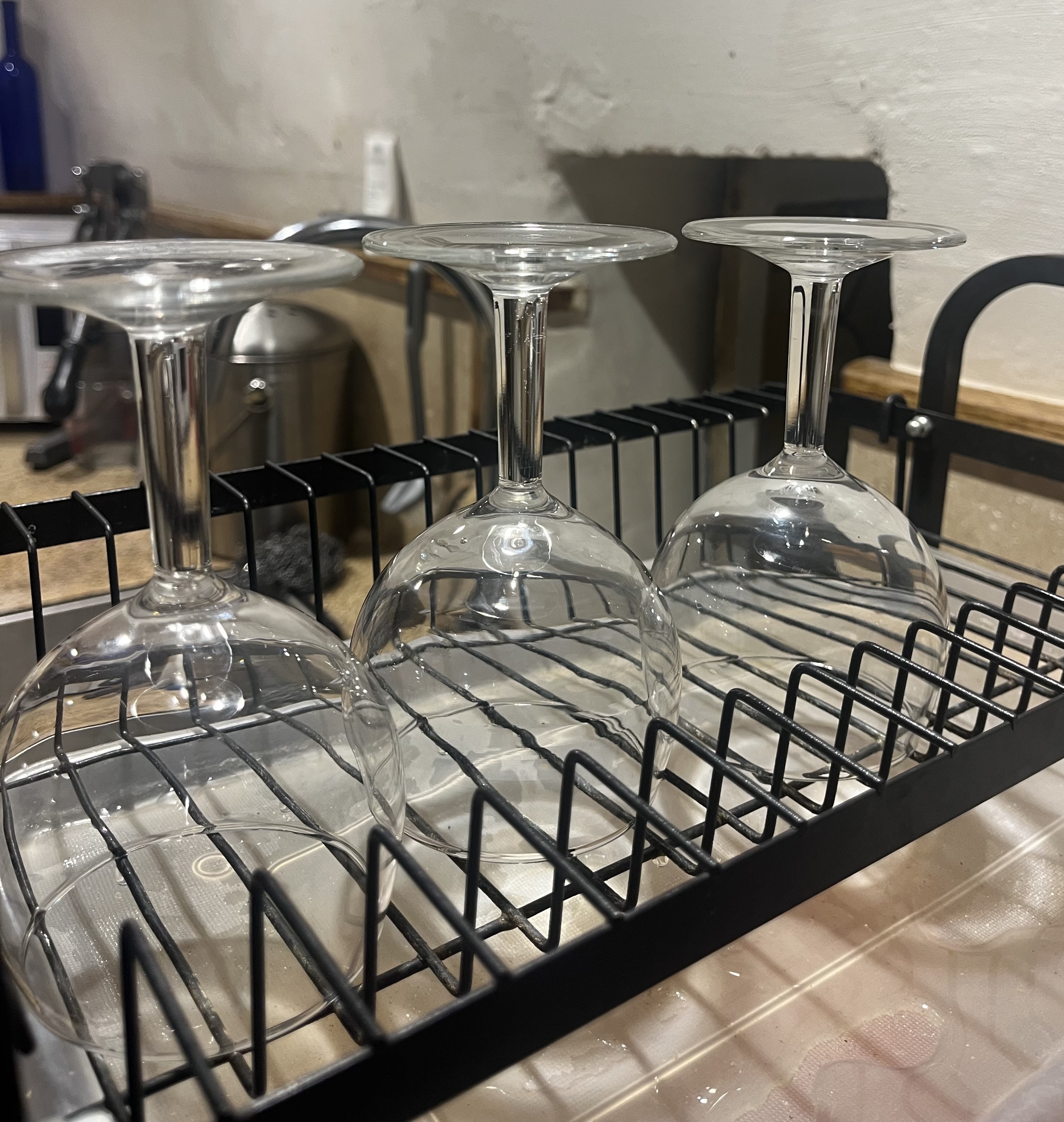
I chose something else worth a euro—three wine glasses.

J’ai choisi quelque chose d’autre qui valait un euro – trois verres de vin.

~

As magically as those beautiful black stones appeared in my life, they disappeared.

Aussi magiquement que ces belles pierres noires sont apparues dans ma vie, elles ont disparu.

It’s such a delicate thing, magic, so ephemeral. It exists in the liminal space between the world of the physical and literal, and the worlds of thought and imagination, where time and space are transcended. I held those stones in my hands. Now they only exist in my memory.

La magie est une chose si délicate, si éphémère. Elle existe dans l’espace liminaire entre le monde physique et littéral et les mondes de la pensée et de l’imagination, où le temps et l’espace sont transcendés. J’ai tenu ces pierres dans mes mains. Maintenant, elles n’existent plus que dans ma mémoire.

It seemed like my extraordinary streak of good luck was over—until I realized that we’d found a washing machine for our friend, and I’d come home with something, too: three wine glasses and a story.

Il semblait que ma chance extraordinaire était terminée – jusqu’à ce que je réalise que nous avions trouvé une machine à laver pour notre ami, et que j’étais rentré à la maison avec quelque chose, aussi : trois verres à vin et une histoire.

On my way home, I recounted the story to a neighbor who was feeling particularly exhausted. She got it, and I left her smiling.

En rentrant chez moi, je l’ai raconté à une voisine qui se sentait particulièrement épuisée. Elle a compris et je l’ai quittée en souriant.

A good story can be very magical indeed.

Une bonne histoire peut être très magique.

Peace, love and magic: some reflections on transitioning to fourth and fifth dimensional awareness

The dawning of the Age of Aquarius

A couple weeks ago, in response to a friend’s distress over the heart-wrenching news, I responded, “Maybe we’re moving from the three dimensional world into the fourth and fifth dimensions.”  

I said it lightly—and, sadly, I doubt that my friend was any less upset after I said it—but I do take refuge in the thought. It gives me comfort to imagine that, as the world as we know it becomes less and less sustainable, there’s more out there than meets the eye. 

After sending the idea into cyberspace, I spent the week reflecting on how such a shift might unfold. I stopped listening to the news, I focused on internal work, and I reflected on how the 3-D world might intersect with the 4 and 5 dimensional worlds.

It’s an area that’s interested me for as long as I can remember. Even as a child I had extraordinary dreams. I’m prone to synchronicity. I was more at ease in the world of make-believe than in the real world for many years. I love fiction, especially fiction with magical elements. Speculative and science fiction appeals, too, as do the edges of science and philosophy. It’s where I usually go, along with increasing my time in meditation and contemplation, when the world is too much.

So, for a week or so in mid-July, I paid more attention to my posture and my breath, I meditated more, and I tuned into the cosmic hum more often. Instead of the news, I listened to archetypal astrology—Richard Tarnas, Heather Ensworth, and Rick Levine—and I took lots of time for reverie.

In 1969, when the Fifth Dimension told the world about the dawning of the Age of Aquarius, astrologers believed it had already been happening in fits and starts for a long time. And the sun did shine in the late 60’s and early 70’s—for a little while anyway.

A whole generation of kids and young adults valued peace and love over money. I was in my late teens then, and I was completely swept away by hippie values. I still am. It’s heartbreaking that the promise often attributed to Jimi Hendrix, “When the power of love overcomes the love of power, the world will know peace,” hasn’t yet happened.

What astrologers are saying these days is that the transition to the age of Aquarius, which is indeed upon us, involves a major shift in consciousness, a change in essential values, and ultimately, a move from focusing on gathering goods to generating good.

Whether any of us alive on earth today will live long enough to enjoy such a world seems doubtful to me, but I see great value in releasing the expectation that life will return to the state it was in when we grew up. Opening one’s heart and mind to some of the infinite possibilities the future could bring seems like a much better option than hanging onto a vision of reality that’s crumbling into the past.

I love the idea that our perception of the measurable world will soon be enhanced by a greater understanding its more subtle aspects, as well as its place in the greater, less dense whole. 

The pull of the three-dimensional world 

Imagine my surprise then, when, in the midst of my dedication to exploring higher dimensions, the 3-D world intervened with an invitation to appreciate, if not acquire, a genuine treasure. 

Tom had recently come into a small inheritance. At the time, that money wasn’t three dimensional at all—it was some numbers on a screen. It occurred to me that rather than putting it in the bank, we might make it more productive by buying a building here in Cordes-sur-Ciel. Tom could move his little chocolate shop there, and an apartment or two would provide us with some income. I took time out from my reverie to look at what was on the market.

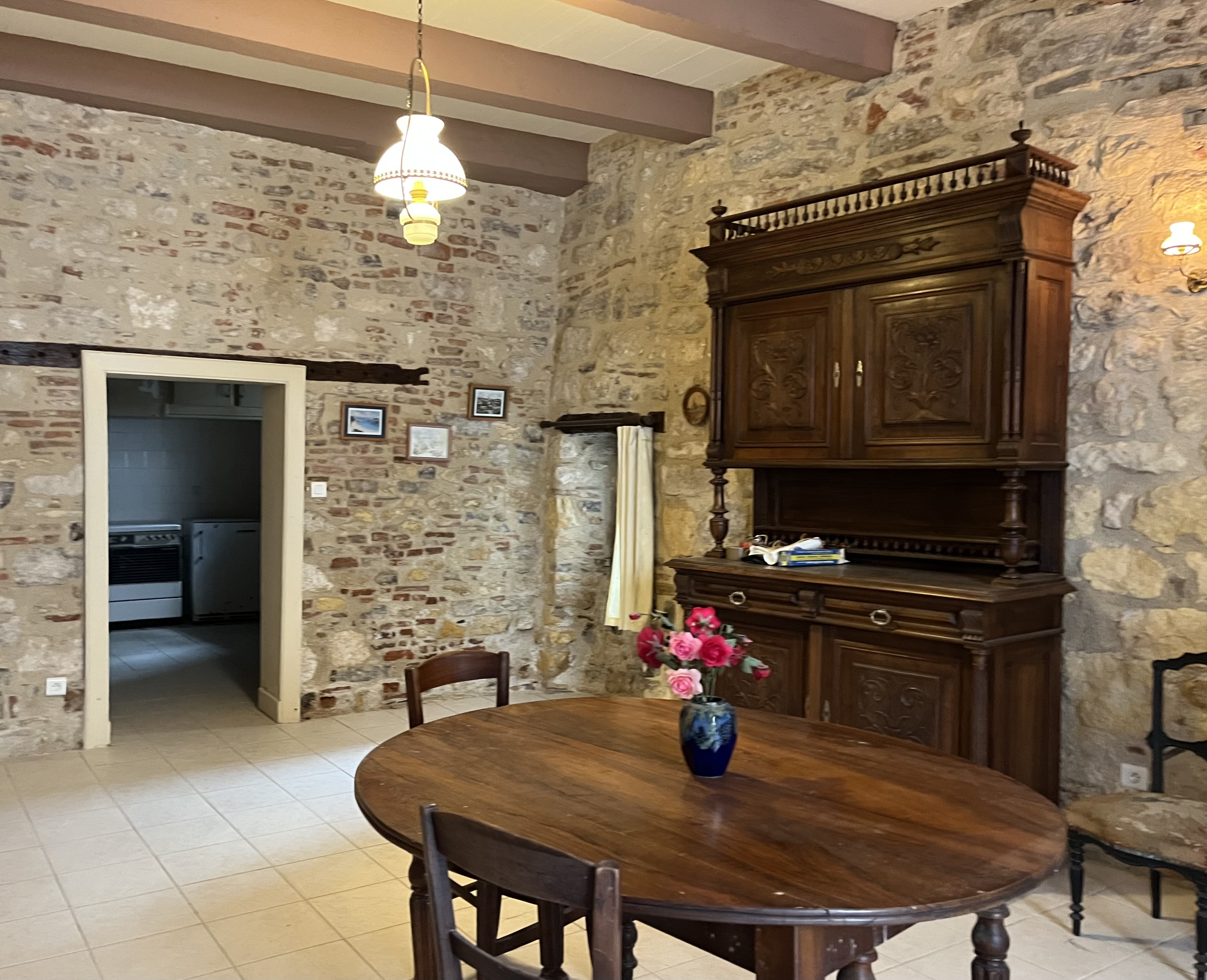
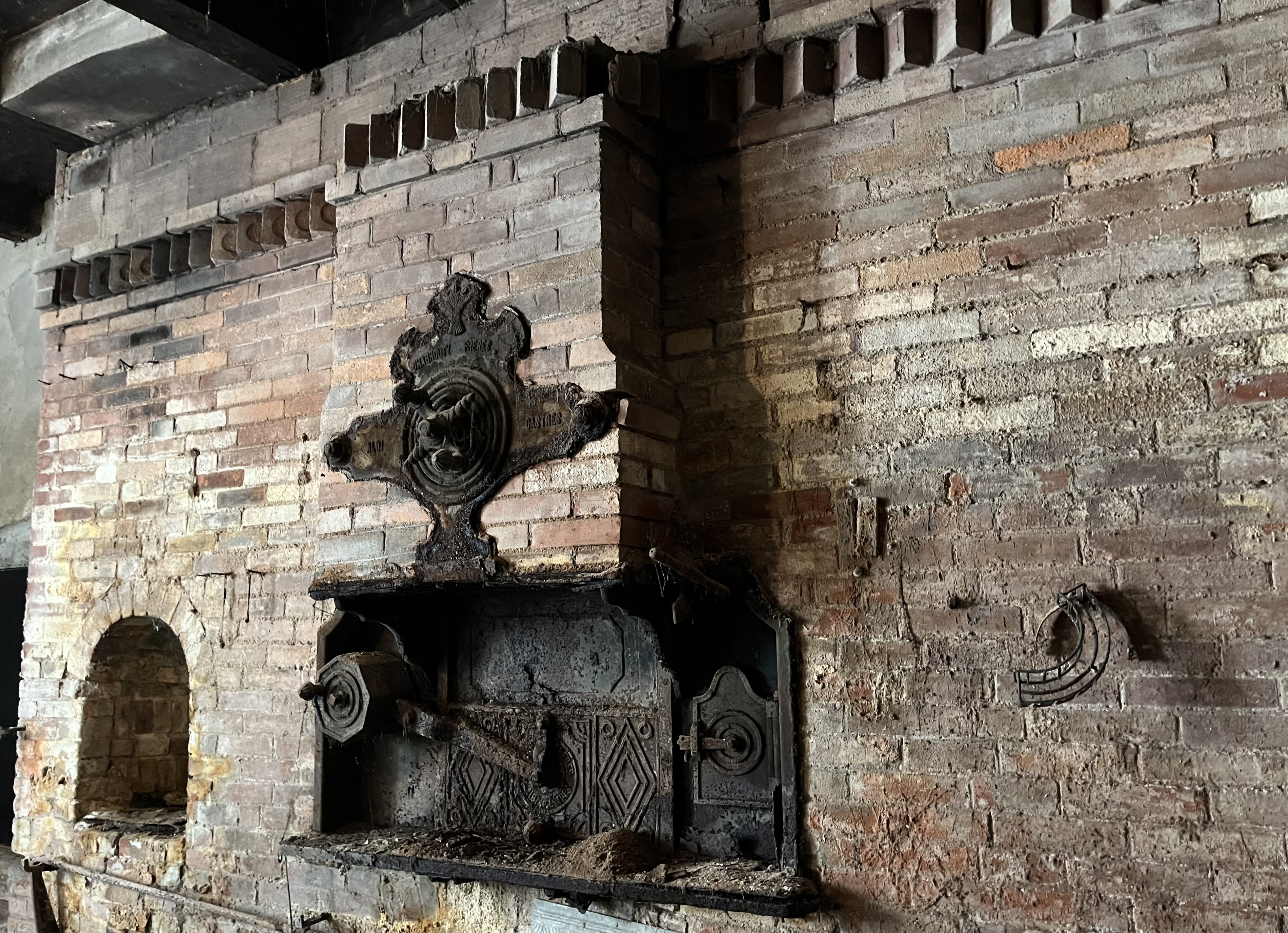
Who knew a magnificent piece of untouched old Cordes just 200 steps from our front door would immediately turn up? Such an opportunity! Unoccupied for 50 years but clean and sound, the owner had maintained it more or less as a memorial to her parents. Embossed wallpaper, plump feather beds, wool mattresses, lace curtains. And an old bakery.

Tom’s shop would go in this room. That’s a kitchen behind it. Perfect.

It is very, very charming, a magical place.

Filled with stuff like this.

And that that ancient bakery!

Of course there are more a few black holes that would need to be dealt with, like the low wooden shelf or seat in the downstairs bathroom that I thought might be a well. When we lifted the top off, layers and layers of newspaper, paint, and rust showered down. No point in looking in.

But it would be possible for someone to live in that house almost as is. Some plumbing would probably have to be done, but the first floor has 25-year old decent wiring and lighting. The bedrooms are delightful as they are, and so is the upstairs bathroom. A temporary kitchen of some sort could be set up, though the old wood and gas cookers, gems themselves, are there.

With tax and fees, the house and bakery would cost roughly 100 000€. Tax is 950€/year. So appealing! I almost couldn’t resist.

The morning after we saw it, however, the weight of the project hit me. We live so lightly now: small house, very small electric car, and everything we need in walking distance. 

Why would I even consider taking on a huge stone building, no matter how beautiful it is?? Then I realized how much of my mental and physical energy had already gone into that place over the last three days! 

I went back to listening to astrology and contemplating existence outside the confines of time and space.

Beyond the confines of the 3-D World

Einstein identified the fourth dimension as time, already a stretch to envision as a dimension, but the fifth is even harder to understand. Our civilization is so thoroughly engrossed in the gross world of matter that we can barely imagine it. Subtler worlds, if our physical science-based understanding gives them any credence at all, are only very slowly being discovered. Ganesh Baba often pointed to the discovery of electricity when talking about increasing understanding of subtle energies.

On the second day I spent with Ganesh Baba, he drew a diagram on a paper napkin that he told me encapsulated his entire cosmology. In brief, in an endless cycle, consciousness creates matter, and matter evolves into consciousness. 

(To align with the yogic teaching that good posture is essential to conscious evolution, he placed “Homo Erectus,” meaning having a straight back, above “Homo Sapiens.” The spine running up the center is replicated in the human body as the chakra system.)

Ganesh Baba described eight fields functioning in eight dimensions: matter, energy, space, time, life, mind, intelligence, and consciousness, each more subtle than the last. He identifies the fifth dimension as life. Indeed, neither time nor life is understood very well at this point of human evolution, and mind is an even greater mystery.

The Cycle of Synthesis is an attempt at a 2-D representation of an 8-D cosmos, a fractal universe, microcosm in macrocosm and vise versa. It is not static—rather, it is constantly in flow, twisting and turning, expanding and contracting, in an infinite number of directions, smaller and smaller, greater and greater, replicating itself in an infinite number of manifestations, each one connected to all the others.

As in a Moebius strip, the twists in the helix at the center of the drawing indicate shifts from one dimension to the next.

Passing through them is like water going down a drain. The water turns more and more quickly until suddenly it’s somewhere else. I think the transition human consciousness is going through is like that.

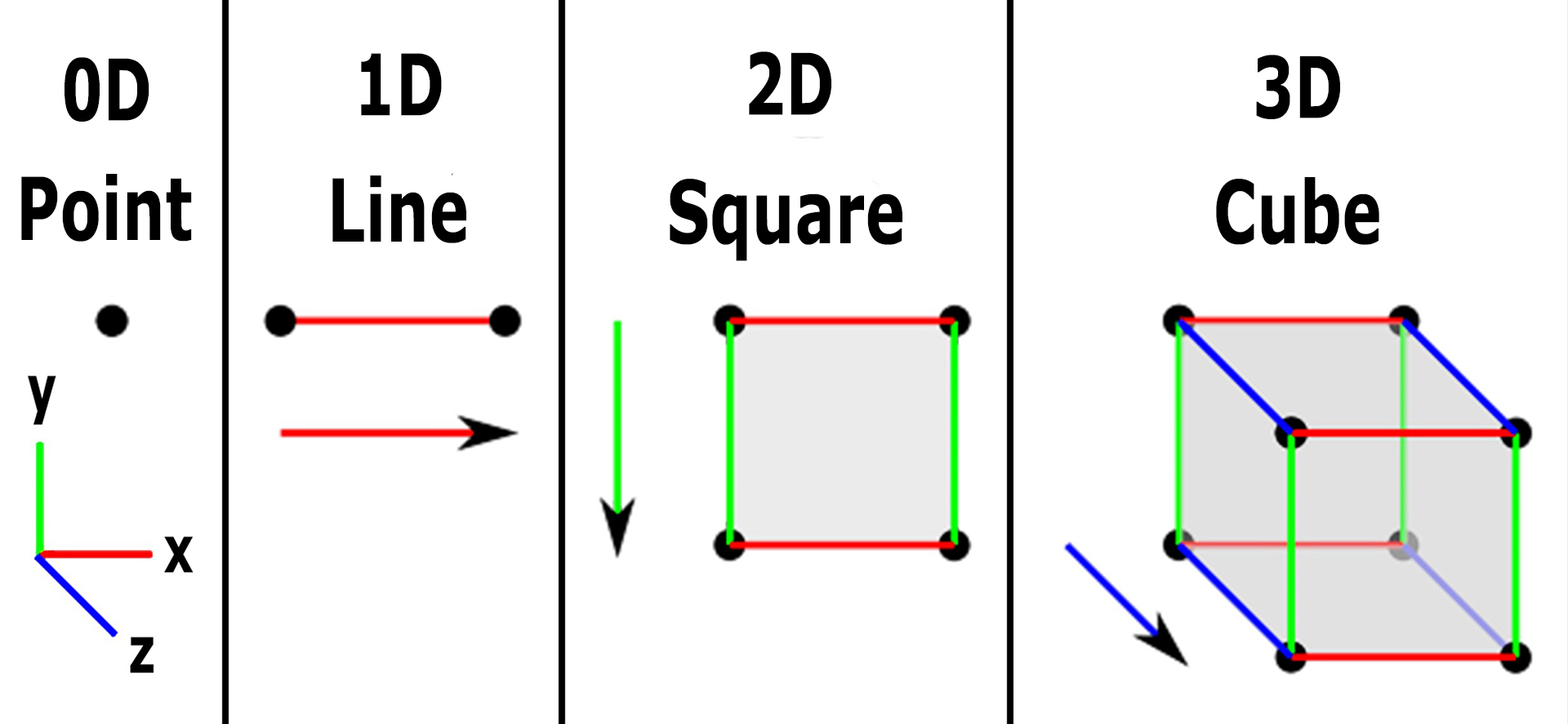
It’s interesting to consider that the perspective of the lower dimension is always subsumed into the perspective of the higher one, as when a point becomes a line, a line becomes a square, and a square becomes a cube.

If the point moves, a line exists. The line moves into a square, and the square moves to become a cube. Move the cube, and time exists. But beyond that?

What comes first? Consciousness or matter?

In most non-Western perspectives on existence, consciousness precedes matter. Even in the bible, God creates the earth. Assuming that only what can be measured is real is a recent twist in human understanding. It’s a limiting conception, though certainly a useful one in the practical world. If the great god of civilization, Science, wants to survive the coming twist, it will have to let go of the shores of time and space and greet the coming age of immeasurability with curiosity and eager anticipation.

I have less hope for the other worldwide religion of our era, the Economy, and its god, Money. I can easily see Mr. Moneybags falling off the edge of the earth to become a monster. An idea that particularly struck me during my studies at Pacifica Graduate Institute is that as dominant mythologies shift, for example from the “pagan” religions to Christianity, the old gods are forced underground, or off the edge of the earth, where they’re perceived as devils. It happens every time.

In Ganesh Baba’s model, following the downward arrow on the left, consciousness condenses into matter. Then, as it evolves back toward its source, more and more of the whole becomes comprehensible. As well as being reflected in the human body as the chakras, the Cycle of Synthesis mirrors Indian theory of the Yugas, a cycle of epochs in which the understanding of subtle things recedes as the earth moves away from the center of the universe, and increases again after it reaches its nadir and moves toward the center again.

So, if, as many astrologers are now saying, we are moving out of the Kali Yuga, the period of least understanding, into an era in which subtle energies will become more apparent, we will have to learn to navigate in the bio-psychic and intello-conscious fields in Baba’s diagram, the dimensions beyond space and time.

One way to do that is to begin by paying more attention to the interface, the twist, the liminal place, where fourth and fifth dimensional events show up in the 3-D world.

That’s why the dramatic incursion, in the form of that very attractive, very large three-dimensional stone house, into my fourth- and fifth-dimensional musings struck me. It was magic. That opportunity came into my physical world via a current of synchronicity. Its appearance overrode the laws of time and space, and I was very nearly beguiled.

What’s next?

Now, I’m on the lookout for magic. I’m asking a question before going to sleep, hoping for a response in my dreams. I’m actively looking for coincidence, actively seeking synchronicity.

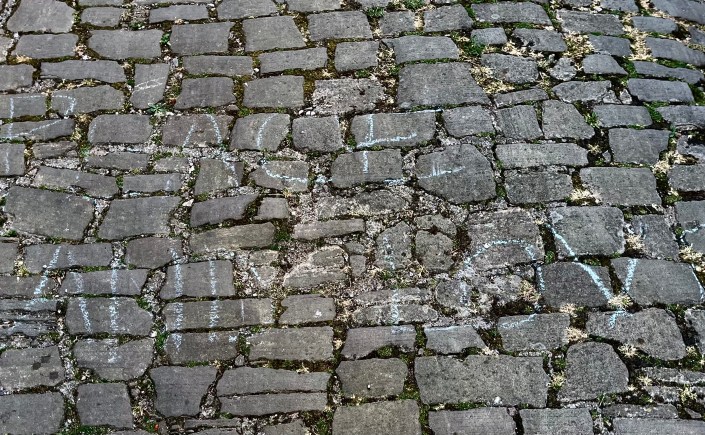
So it was that I noticed some writing in blue chalk on the cobblestones of Rue Saint Louis as I walked Mocha one morning this week, when I had just begun this essay. The message is a little hard to read, but the words are in English, even though I found it in our beautiful French village.

Rue Saint Louis

PEACE AND LOVE

It’s still the answer.

And now for something completely different…Emmaüs in Carmaux

Such a Dream

While I was staying at my daughter’s place in California, I woke up in the middle of the night and wrote down this dream.

July 12, 2024

I had such a dream.

In the dream, I owned a huge, rambling, falling down house, though some of the rooms were still good. A woman in her forties of North African or mixed-race descent—with light brown skin and beautiful curly black hair—came to the door with her teen-aged daughter. A group of other women and girls, all in long dresses, were with her. She explained to me that they could fix up my house, and I invited them in.

Room by room, they created a series of magical spaces full of color, filled with marvelously compelling furniture and objects, and cloths draped everywhere, each one unique. I went looking for my own room, and I found it, spacious, airy, comfortable, elegant. Oddly, I realized that the room was an illusion, even in the dream, but I loved it anyway. Next to it was Tom’s room, his piano in the middle of it. I knew he would be pleased.

I walked through room after room until I came to the end of the house. Through the window of the last room I could see a jumble of metal stairs and incomplete infrastructure, piled up, all in ruins. I realized it was part of my old house.

I set out to look for my own room again, but it wasn’t there. Instead I found a sort of throne room where all the women were sitting. When I entered, the head woman approached me, drew two longish sticks from a pot, and gave them to me. They were tipped with large cannabis buds.

I was happy but still looking for my room when I woke up. The place was vivid in my mind, rich and magical like Arabia of old or India of pre-colonial days.

I’m still feeling happy.

A few days after the dream, I had my best birthday ever, filled with family, friends, and food.

A few days after my birthday, Joe Biden stepped down, and Kamala Harris stepped up.

I hope dreams come true.

Chat Nomade

I’m busy getting ready for the first Chat Nomade, a pop-up cafe filled with cat art and objects. Nicole Barrière, Jude Brazendale, Marie-Josèphe Boyé and I are planning it for the first weekend of October, at Tom’s and my place. In November, it’ll be at someone else’s place.

At this point we’re working on the poster and making or collecting cat things.

Cordais friends, mark your calendars now and join us Saturday or Sunday afternoon between 2 and 5 the first weekend of the month for the Chat Nomade.

Je suis occupé à me préparer pour le premier Chat Nomade, un café éphémère rempli d’art et d’objets félins. Nicole Barrière, Jude Brazendale, et Josèpha Boyé et moi le prévoyons pour le premier week-end d’octobre, chez Tom et chez moi. En novembre, ce sera chez quelqu’un d’autre.

À ce stade, nous travaillons sur l’affiche et fabriquons ou collectons des objets “chat”.

Amis Cordais, à vos agendas dès maintenant et rejoignez-nous samedi ou dimanche après-midi entre 14h et 17h le premier week-end du mois pour Chat Nomade.

Two Suitcases – an update

It’s two years since I stopped writing the book I’d been weaving from strands of my parents’ story.

But I’m still working on it.

The project is called Two Suitcases after the two suitcases my parents took each time they escaped, first from Vienna, then Paris, and finally from southwest France, before settling in Philadelphia, where I was born.

Since life pitched me back into Mama Ganache in 2016, I haven’t written more than a few words of the book.

The project has a life of its own, however. The story often arrives when I’m in the middle of something else, teasing me with its possibilities. Perhaps it will be a trilogy: Vienna, Paris, the south of France. Or, there’s surely enough material for a series: maybe Vienna 1929-34, Vienna 1934-38, Paris 1938-40, The south of France 1940-42.

Now I’m setting long term plans aside and thinking, once I am settled in Cordes again, I’ll try to write vignettes, a series of short pieces revealing a bigger story.

Here’s an excerpt from some writing I did in 2015.

Inside, except for a few who stare glassy-eyed into the lighted station, the passengers in the railcar are reading quietly or asleep, some sprawled over two seats, more cramped into one seat with extra luggage under the feet. Trude and Fritz find their own seats and squeeze the two suitcases between others on the racks above. The car is cooling down quickly as it sits in the station, but Trude is wearing almost everything she owns and, snuggled against Fritz on the worn leather seat, she is comfortable enough. People are smoking cigarettes and someone is singing softly, perhaps to a child. She closes her eyes but cannot sleep, so she thinks of their geese, Babette, and especially of Ignatz, who has only a few weeks to live before he graces the Christmas table. At least she won’t be the one who has to pluck his feathers and roast him.

When she opens her eyes, the train is pulling out of the station, the city receding. Nazi flags are displayed in many windows. “What next?” Fritz asks quietly. Trude tries to smile encouragingly at him – she knows how fortunate they are to be on that train – but her whole being is weighed down by the news Henri shared in the car: the brutal camps in the north, the bombings, and the implementation of the Final Solution, the eradication of all Jews in Europe.

Swastikas in shop windows fly by as the train gathers speed.

Minutes later, the conductor comes through the car, punching holes in the tickets of the people who’ve just boarded. Trude’s emotions are so raw that she trembles with fear as he approaches, even though he isn’t asking to see papers or even speaking to the passengers. Her ticket and Fritz’s are punched without incident. She sighs deeply but cannot stop shaking.

Hendaye is nearly five hours away. She should sleep. Fritz is already snoring beside her. How can he sleep, she wonders, when things are so uncertain? The train might be stopped by the authorities anytime. Would their documents pass muster? She can’t set her fears aside – they are too real.

Moments after she drops into a light sleep, voices wake her. The nightmare begins: an officer in uniform is making his way down the aisle, checking passports.

The whole time I haven’t been writing, though, the story has been growing. Cooking. Filling out. Getting richer. Fermenting. Incubating. Gestating.

I haven’t stopped reading the literature of the time, both other writers’ takes on the times, of which it seems there are more daily, and the books my mother would have read at the time, like The Radetsky March. Currently, I’m reading Paul Hofmann’s social history, The Viennese – Splendor, Twilight, and Exile.

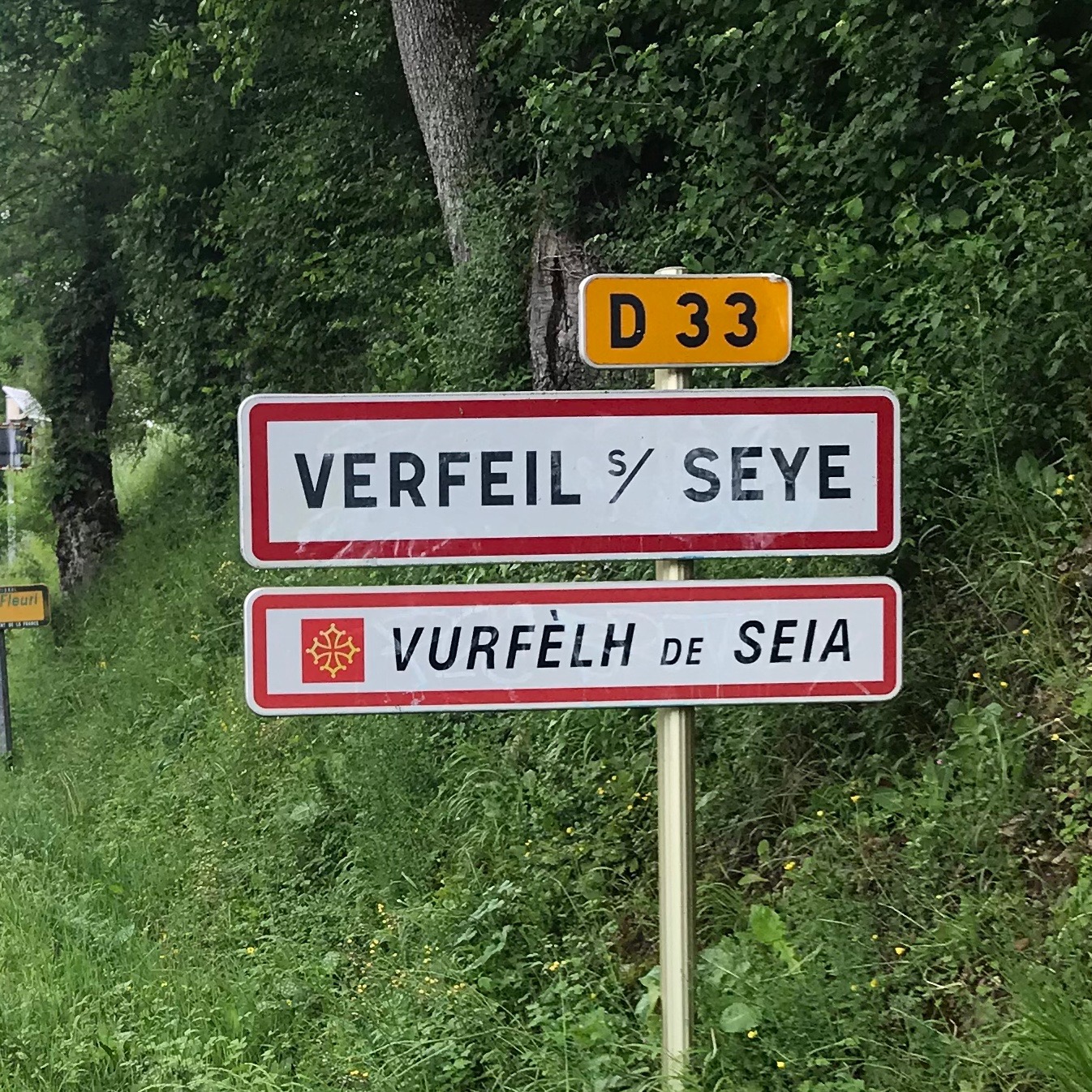
There is a great deal of tantalizing research to be done: for example, our house is Cordes is a twenty minute drive from the village of Verfeil-sur-Seye, where my parents were in hiding between 1940 and 1942. We’ve only visited once so far, but we’ve been told about a very lucid 102-year old who may remember the years when the refugees showed up in the village.

My quest for dual Austrian/American citizenship has been most fruitful in adding details to the story.

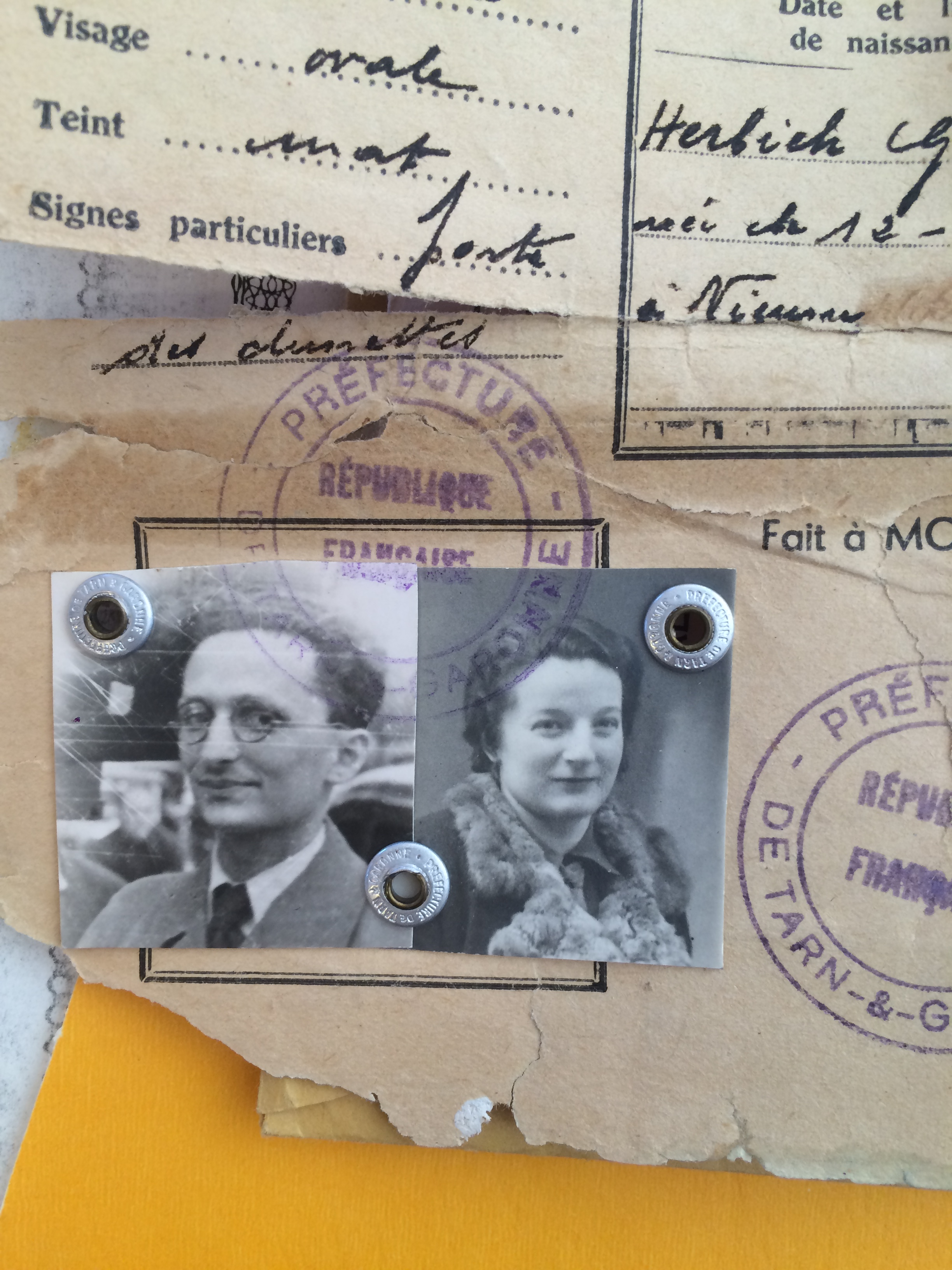
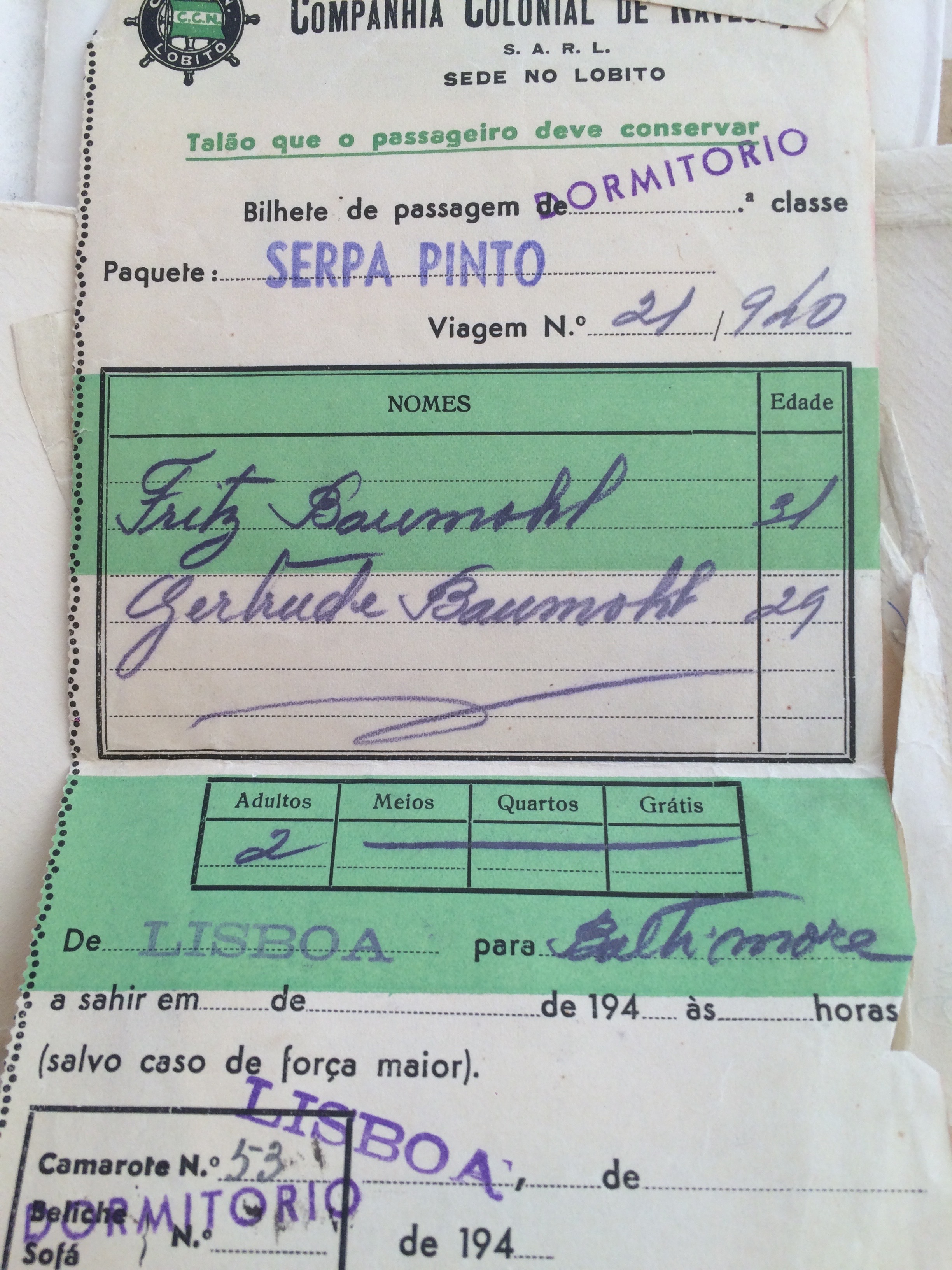
Since I began the application process, I’ve been sorting through the boxes of papers stored by my mother, moved from house to house, unopened for many years. I found the very useful folder of documents she and my father collected while applying to Austria for restitution in the 1960’s: birth certificates, school and employment records, old addresses in Vienna, and identification papers. There are visas, tickets, and bills of lading. My mother’s and aunt’s passports are there – Ida’s stamped with a big red J over the Third Reich symbol – though not my father’s. Such treasures.

French identification papers for travel, 1940

Tickets for the Serpa Pinto, the ship Fritz and Trudy took from Lisbon to Philadelphia in 1942

The criteria for qualifying for dual citizenship includes proving that my father never was a citizen of any country but Austria, and that he never fought in the army of another country. That opened whole new vistas in the story.

As part of the process of proving that Fritz didn’t volunteer to fight in the French army, I researched the French internment camp, Meslay du Maine, where he was held from September 1939 to June 1940. Eye-opening!

In order to explain why he was never naturalized in the US, I had the transcription of the 1953 court hearing in which he was denied American citizenship translated into German.

Stories upon stories.

But perhaps the greatest gift is the video of an interview one of our daughters did with my mother in 1996 as part of a school assignment about the war years. How extraordinary to see my mother alive, in her own kitchen, recalling the very years I’ve been thinking about so much!

So, stay tuned. This baby is going to be born.


The loss of story – further reflections on the crumbling of perceptual boundaries

When I consider the lessons of our divestment over the past several years, the house on McCollum Street, the house on Park Street, Mama Ganache, a lifetime of acquisitions – I find I always return to the center: what I am, I take with me.

What I am has nothing to do with the things and stories that surround me. It doesn’t need even one suitcase to contain it, much less two. When nostalgia for what I had begins to fill me, wherever I am, I can go to my heart and feel at home with who I am, and that is enough.

Ceiling tile for sale on a street in Morocco

It’s where I find hope, where I can recover that sense of eager anticipation the Hathors recommend in these times of failing expectations and beliefs, the loss of story, and crumbling perceptual boundaries.

One of the seminal books of my hippie years was a typewritten channeled teaching called Season of Changes. I’ve forgotten the details of the predictions, but I’m sure they’ve been borne out or will be soon enough. It was a dark view of the future, full of cataclysm and apocalypse. Written in question and answer format, the last responses concern how to respond to the changes. As I recall, the advice most forcefully given was to practice meditation.

It’s comforting to imagine that more people than ever are doing that, at least in my own bubble. It’s less comforting to remember how tiny a percentage of the world’s population my bubble contains.

But it’s sound advice. When the now threatening storm of storms is full upon us, when that moment of personal and collective apocalypse that we all feel coming finally arrives, it’s the meditators who will be able to hold the rudder.

Storm coming in at our house in Cordes

Meditation takes you to your center, to the center, the one we all have in common. It takes you out of the chaotic whirl of stories to the place of no story, where energy is conserved instead of fueling the miasma of outer experience.

It takes you beyond imagination, beyond the limits of space and time, and beyond the singular focus of our culture on the physical: on acquisition (growth vs. maintenance), on hierarchy (dominion vs. sharing), beyond your own little bit of the apocryphal elephant.

Letting go of the world as we know it, the world of perception, this particular consensus reality, is necessarily heart-breaking. It’s painful to separate from the things and people and stories we love, and love is, after all, what it’s all about.

The tricky part is to connect love to the universal rather than the particular.

And that’s where meditation can take you.